NEWS
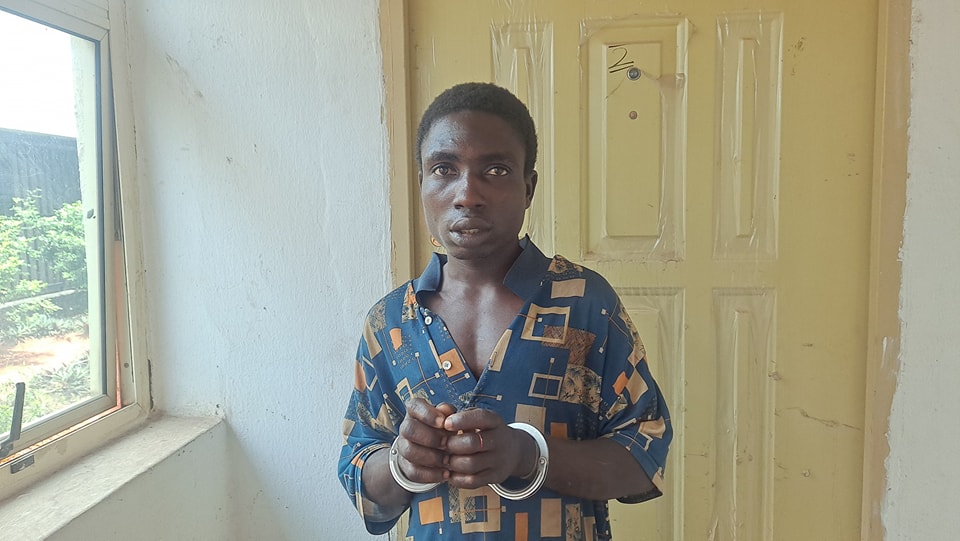
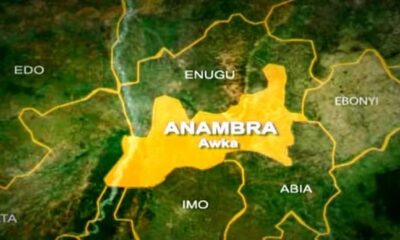
30-Year-Old Man Arrested For Repeatedly Def!ling 7-Year-Old Girl In Anambra
NEWS
Awka Stool Crisis: Commission Submits Report, Reinstates Nwosu as Lawful Monarch
By Ejike Abana, ABS Awka
A commission of inquiry constituted by the Anambra State Government has affirmed Chief Gibson Nwosu as the lawful traditional ruler of Awka, bringing fresh clarity to a protracted leadership crisis that has polarised the community and raised concerns about the integrity of customary governance processes.
The panel, chaired by retired Justice Paul Obidigwe, submitted its report to Governor Chukwuma Soludo after weeks of sittings marked by detailed submissions and testimonies. In all, the commission received 32 memoranda and heard 28 oral testimonies from stakeholders, including kingmakers, community leaders, and other interested parties.
Presenting the report, Mr Obidigwe said the panel found no lawful basis for the purported dethronement of Igwe Nwosu. According to him, the process fell short of the requirements of due process and breached the principle of fair hearing, rendering the action “unlawful, invalid, and of no legal effect.”
The commission further determined that the emergence of Chief Austin Ndigwe as a rival claimant to the stool did not comply with laid-down procedures. It held that both his selection and enthronement contravened statutory provisions guiding the appointment of traditional rulers in the state, thereby stripping his claim of legitimacy.
Mr Obidigwe described the crisis as not only a local dispute but also “an affront to constituted authority,” warning that disregard for established legal frameworks in traditional institutions could undermine public order and governance.
Background to the dispute
The Awka traditional stool tussle has lingered for months, with factions within the community divided over the legitimacy of the existing leadership structure. Attempts at internal reconciliation reportedly failed, prompting appeals to the state government to intervene.
The dispute reflects broader tensions often associated with succession processes in traditional institutions, where customary practices intersect with statutory regulations. In Anambra, as in many parts of Nigeria, the recognition of traditional rulers is subject to both community customs and state laws, creating potential flashpoints when procedures are contested.
Government response and next steps
Receiving the report, Governor Soludo said the state government would subject the findings to careful review and subsequently issue a White Paper to determine the official position and outline actionable steps.
Mr Soludo recalled that the government had initially refrained from вмешment, allowing the Awka community space to resolve the matter internally. However, he said the state stepped in after it became evident that local mechanisms had failed to produce a consensus.
He reiterated his administration’s commitment to upholding the rule of law, stressing that Anambra must remain a state where legal frameworks guide both formal governance and traditional institutions.
The governor also sent a broader signal to communities across the state, warning against situations where multiple individuals claim the same traditional stool.
“No community will be allowed to have more than one traditional ruler,” he said, adding that the government’s intervention was not intended to create winners or losers but to restore order and legality.
“There is no victor and no vanquished,” the governor stated, urging all parties to embrace reconciliation in the interest of peace and communal development.
Gbasgbos
Kaduna offers land titles to victims of demolitions under el-Rufai
The Kaduna state government has compensated the residents of
Malali Low-Cost, whose houses were demolished by the administration of Nasir
el-Rufai, with new plots of land.
Bashir Garba Ibrahim, director general of Kaduna Geographic
Information Service (KADGIS), who presented the land titles to the
beneficiaries, said that the gesture was aimed at fulfilling Uba Sani
administration’s commitment to ensure justice for the victims.
He said the compensation with the land titles is the outcome
of a stakeholders meeting, which took place on January 21, and resolved to
investigate the circumstances around the demolition.
While counselling against reselling the plots of land,
Ibrahim advised the beneficiaries to develop the land quickly.
“We want you to become homeowners and contribute to the
growth of our state,” he said.
While responding to the gesture of the state government on
behalf of the beneficiaries, Mohammed Auwal, chairman of the former Malali
Low-Cost residents, expressed gratitude to the governor for addressing their
concerns.
Auwal appreciated the director-general for facilitating the
new land allocation after years of struggle to get compensation.
The Kaduna State Development and Property Company (KSDPC)
had given the residents of Malali Low-Cost a seven-day notice to evict the
community in October 2020.
Although residents protested the short notice and the need
to give them the right of first refusal, the decision was shelved at the time.
However, in March 2021, another three-day notice was served
to the residents, and after the expiration of the notice, more than 80
structures were demolished.
NEWS
Eid-el-Fitr: Police Deploy Personnel, Tighten Surveillance in Enugu
The Enugu State Police Command has assured residents of adequate security arrangements ahead of the 2026 Eid-el-Fitr celebration, announcing the deployment of personnel and operational assets across the state.
In a statement issued on Wednesday, the Police Public Relations Officer, Daniel Ndukwe, said the Commissioner of Police in the state, Mamman Bitrus Giwa, extended greetings to Muslim faithful on the successful completion of Ramadan, while urging them to uphold the values of peace, tolerance, and sacrifice associated with the season.
Mr Ndukwe said the commissioner had ordered a “strategic deployment” of officers, intelligence resources, and other operational assets to ensure a peaceful celebration.
He noted that security presence would be intensified at prayer grounds, recreational centres, and other public places, alongside increased patrols across the state.
According to him, the commissioner also directed Area Commanders, Divisional Police Officers, and heads of tactical units to ensure effective supervision of security operations and strengthen collaboration with other security agencies.
“The command remains committed to the protection of lives and property,” the statement said, urging residents to remain law-abiding, vigilant, and to promptly report any suspicious activities to the police through designated emergency lines.
The police also called for continued public cooperation to sustain peace and security during and after the festivities.
Gbasgbos
Umahi invites EFCC, ICPC to probe ministry projects for transparency
The Minister of Works, Engr. David Umahi, has invited the Economic and Financial Crimes Commission (EFCC) and the Independent Corrupt Practices and Other Related Offences Commission (ICPC) to investigate all contracts and ongoing projects under the ministry to ensure transparency.
Speaking at a media briefing at the ministry’s Abuja headquarters on Wednesday, Umahi said relevant procurement rules were strictly followed from tendering to project execution and that the ministry has nothing to hide.
He explained that the ICPC’s preliminary report is ready, while the EFCC’s findings are awaited following its ongoing work summit.
“We are not hiding anything because we feel for the people. Any file they want, any information, is available. That is how it should be,” Umahi said. “There is nothing we do in the Ministry of Works that we cannot defend. We moved from asphalt to concrete to ensure roads last up to 100 years with minimal maintenance.”
The minister urged journalists to verify information before reporting, noting that roads cut or incomplete impede movement and affect citizens’ daily lives.
Umahi also praised President Bola Tinubu for prioritizing infrastructure and reaffirmed that all ministry projects follow due process and can withstand scrutiny at any time.
Gbasgbos
Release Nnamdi Kanu: IPOB Stages Protest in UK During Tinubu’s State Visit
Supporters of the Indigenous People of Biafra (IPOB) held a large-scale demonstration across central London on Wednesday, March 18, 2026, coinciding with Nigerian President Bola Tinubu’s historic two-day state visit to the United Kingdom.
The protest, organized by the IPOB UK chapter and described as a “mega protest,” ran from 9:30 AM to 5:30 PM. Demonstrators gathered at symbolic locations including Parliament Square, 10 Downing Street, the Commonwealth Office, and the Nigerian High Commission.
Carrying placards reading “Free Mazi Nnamdi Kanu” and “Release MNK Now,” many participants wore red caps and waved Biafran flags, a horizontal tricolour of red, black, and green featuring a golden rising sun in the centre.
The group demanded the immediate and unconditional release of their detained leader, Mazi Nnamdi Kanu, who has been in Nigerian custody since his 2021 extradition from Kenya.
Additional calls included a referendum on Biafran self-determination, an end to what they described as bad governance in Nigeria, and strong opposition to any royal honours or reception for President Tinubu during his visit, hosted by King Charles III and Queen Camilla at Windsor Castle.
In circulating video footage from the event, one protester declared: “Our message is very clear: Tinubu does not deserve a royal salute. That is our stand today, being the 18th of March.” Other clips featured chants and statements labelling the president as undeserving of royal recognition, amid accusations of presiding over repression and injustice.
The demonstration was billed as peaceful, with organizers inviting “all lovers of freedom, justice, and human rights” to participate. It highlighted ongoing frustrations within pro-Biafra circles over Kanu’s detention, despite court rulings and international advocacy for his release.
President Tinubu’s visit marks the first Nigerian state visit to the UK in 37 years and aims to strengthen bilateral ties, economic diplomacy, and cooperation.
Gbasgbos
Six Sanwo-Olu aides, commissioners set to resign for 2027 elections
Ahead of the 2027 general elections, six Lagos State government commissioners, special advisers, and senior aides to Governor Babajide Sanwo-Olu have announced plans to resign to pursue political positions.
The officials, all aspiring under the All Progressives Congress (APC) platform, intend to contest for seats in the House of Representatives and Lagos State House of Assembly in their respective constituencies during primaries scheduled between April 23 and May 30, 2026.
Those who have publicly declared their ambitions include:
Mr. Kayode Roberts, Commissioner for Local Government, Chieftaincy Affairs and Rural Development – contesting Ojo Federal Constituency
Sola Giwa, Special Adviser on Transportation – Lagos Island II Federal Constituency
Barr. (Mrs) Barakat Odunuga-Bakare, Special Adviser on Housing – Surulere I House of Assembly
Babajide Obanikoro, Special Adviser on Parastatals Monitoring – Lagos Island I Federal Constituency
Mr. Lekan Balogun, Special Adviser on Economic Planning and Budget – Apapa Federal Constituency
Damilola Ayinde-Marshal, Senior Special Assistant on Tourism – Surulere II House of Assembly
A source confirmed that posters promoting their candidacies have already been displayed across strategic locations in their constituencies. Other cabinet and non-cabinet members are expected to declare their intentions in the coming days.
The aspirants have strong political pedigrees. Roberts, popularly known as “Bibire,” is a former Oto-Awori LCDA chairman. Giwa is a former Lagos State House of Assembly member and pioneer manager of LASTMA. Obanikoro previously represented Eti-Osa in the House of Representatives. Balogun is the son of a former APC chairman in Lagos, Odunuga-Bakare is a lawyer and political loyalist to Femi Gbajabiamila, and Ayinde-Marshal, daughter of Fuji musician KWAM I, recently announced her candidacy on Instagram.
The resignations follow President Bola Tinubu’s directive that all political appointees intending to contest in the 2027 elections must step down by March 31, 2026, to comply with the Electoral Act and ensure a level playing field.
NEWS
Nigerians Free to Record Police, Court Rules
The Federal High Court sitting in Warri, Delta State, has ruled that Nigerians have the constitutional right to record police officers while performing their duties in public, in a judgement seen as a boost for accountability and civil liberties.
Delivering the ruling on Tuesday in suit No. FHC/WR/CS/87/2025 obtained by Premium Times, Justice H. A. Nganjiwa held that police officers must wear visible name tags, display their force numbers, and refrain from harassing, intimidating, arresting, or confiscating devices from citizens recording their activities.
The court also awarded the applicant, Maxwell Uwaifo, N5 million in damages for the violation of his fundamental rights, alongside N2 million as cost of litigation.
All the reliefs sought by the applicant were granted, reinforcing the right of citizens to document police conduct in public spaces without fear of reprisal.
Reacting to the judgement, Uwaifo described it as far-reaching.
“This judgement has significant implications for policing standards, civil liberties and public accountability across Nigeria,” he said in a statement to Premium Times.
“The court made far-reaching pronouncements on police accountability and citizens’ constitutional rights.”
The suit, filed as a public interest litigation, challenged the legality of police stop-and-search operations carried out without officers displaying proper identification.
Respondents in the case included the Nigeria Police Force, the Police Service Commission, the Inspector-General of Police, and the Attorney-General of the Federation.
Filed under the Fundamental Rights (Enforcement Procedure) Rules, 2009, the action cited several provisions of the 1999 Constitution, including Sections 34, 35, 36, 37, 38, 39, 41 and 46, as well as relevant articles of the African Charter on Human and Peoples’ Rights.
In the originating summons, the applicant asked the court to determine whether citizens can lawfully record police officers and whether harassment or arrest for such actions amounts to a violation of fundamental rights.
Source: Vanguard
Gbasgbos
8,000 studying in Nigeria, 220 in UK under amnesty programme -Mohammed Idris
Mohammed Idris, the minister of information and national
orientation, says about 8,000 Nigerians are studying in the country, while 220
others in the United Kingdom under the presidential amnesty programme (PAP).
Idris spoke on Wednesday when he met beneficiaries of the
programme in the UK on the sidelines of President Bola Tinubu’s state visit at
the invitation of King Charles III.
Also in attendance was Heineken Lokpobiri, minister of state
for petroleum resources.
PAP was established in 2009 by the late President Umaru Musa
Yar’Adua to address militancy, insurgency, and unrest in the Niger Delta.
The move followed the disruption of oil production through
kidnappings, bombings, and other activities by armed groups over alleged
environmental damage, lack of development, and resource control in the region.
In a statement shared via X, the information minister
expressed delight at meeting some of the beneficiaries of the presidential
programmes nearly two decades after its establishment.
“It is very heartwarming to witness the impact of the
program first hand and interact with beneficiaries,” he wrote.
“The President’s desire is to ensure that all Nigerians,
including and especially the youth, are given the right opportunity to thrive
and to contribute meaningfully to development of the country.”
Idris said the Niger Delta was once filled with deprivation,
degradation and disorder, but through initiatives like the PAP and others, that
story has changed for the better.
“The Programme Administrator/Coordinator, Dr. Dennis Brutu
Otuaro, informed me that there are over 8,000 students studying in Nigeria at
the moment, and over 220 undergoing various studies in the UK,” the minister
added.
He described PAP as “one of the best programmes” Nigeria has
ever delivered, adding that the Tinubu administration will continue to
reposition and strengthen the programme.
Gbasgbos
Markets react in minutes, and the rumour moves faster than the statement
In the world of finance, speed is everything. Nigerian markets, like their global counterparts, can shift within moments of breaking news or a sudden policy update.
Every release from government officials or economic agencies is watched closely. Traders, analysts, and everyday investors all look for clues about what might happen to share prices or the naira.
But there’s another force at play: rumours. Even before the facts reach the public, whispers travel quickly—sometimes sparking strong reactions before any official statement appears.
This article explores how fast reactions and unverified reports intersect, and why understanding both is essential for anyone following Nigeria’s unpredictable markets.
It doesn’t take long for rumours to reach the floors of Nigeria’s financial markets. Sometimes, all it takes is a single message in a chat group or a quick post on social media for speculation to start swirling.
Traders and investors often move on whispers before any official news is released. The rush to act can turn an unconfirmed report into a self-fulfilling event, sending prices swinging within minutes as everyone tries to get ahead of the curve.
This environment rewards speed, but it also makes mistakes more likely. With so much riding on expectations rather than facts, rapid decisions can backfire if the news turns out differently than the rumour suggested.
Many now look to online sources like https://apuestas.guru/ to track the latest speculation. These platforms help market watchers keep up with the constant flow of unofficial information, even if it means sifting through noise to find something useful.
The line between informed trading and pure guesswork is becoming harder to spot. As a result, sharp market moves often begin long before any statement is issued, leaving both opportunities and risks in their wake.
This environment of speculation suddenly shifts the moment an official announcement drops.
Within seconds, trading floors in Nigeria and around the world erupt into action as everyone scrambles to process the new information.
Asset prices can swing sharply in just a few minutes, reflecting the market’s appetite for certainty—even if it’s only partial.
Today’s exchanges are built for this pace, relying on sophisticated algorithms and high-speed trading systems to react before most human traders have even finished reading the headlines.
According to the Council of Economic Advisers study, the bulk of price movement in major markets happens in the very first five minutes following a policy statement or economic report.
After that brief window, the initial shock wears off and prices tend to stabilize, leaving less room for rapid gains or losses based on raw reaction.
At this point, speculation takes a back seat—those who spent hours guessing are either vindicated or left behind.
The market’s focus quickly pivots from rumor-fueled bets to interpreting real numbers and official language.
It’s a stark reminder that, in the world of high-speed finance, the fastest response often wins, but only if it’s rooted in reality.
Yet the story rarely ends with the first market jolt after an announcement.
In Nigeria and globally, prices don’t always settle as quickly as you’d think.
Instead, it’s common to see equities or currency rates keep shifting for days or even weeks, as traders and investors gradually digest what the news really means.
This pattern, often called Post-earnings-announcement drift, shows that the process of absorbing information is messier and slower than those first five minutes suggest.
Sometimes, the market’s initial reaction turns out to be an overcorrection—maybe a panic sell-off or an overly optimistic surge.
As more data and analysis come in, expectations start to realign with reality, and prices adjust again, but at a slower, more deliberate pace.
For investors, this means that the true impact of an announcement can remain uncertain long after the headlines fade.
There’s always a risk that noise and emotion dominate early moves, while the real story only unfolds with time and hindsight.
Staying patient and looking for those slower shifts can sometimes reveal opportunities—or dangers—that a snap reaction would miss.
But the story doesn’t end on the trading floor. As news and speculation ripple outward, rumours quickly become part of daily talk well beyond the realm of investors.
In Nigeria, these whispers often shape conversations in offices, markets, and even family gatherings. People share what they’ve heard—sometimes half-formed, sometimes wildly exaggerated—and those stories influence how individuals see their financial future.
It’s not unusual for a persistent rumour to change the way people spend or invest, especially when the official news still feels uncertain. In times of heightened volatility, even a vague sense that “something big is coming” can push people to act on instinct rather than fact.
Past events like the markets tumble after tariffs stand as reminders of how fast collective mood can shift. An unverified story may spark concern, leading to sudden changes in buying habits or investment decisions.
These social waves can sometimes reinforce the initial price swings, creating a feedback loop where fear or hope spreads faster than any official statement. The real challenge for Nigerians is to stay alert, separating genuine risks from the fleeting noise that can so easily take hold.
That feedback loop of fear or hope makes it even more important for traders and everyday Nigerians to pause before responding to the next headline or rumour.
Markets move in minutes, but acting without checking the facts can lead to costly mistakes or missed opportunities.
Stories like the market slump Trump urges case show just how quickly confusion can take hold when news is unclear or contradictory.
With so much information out there, it’s easy to get swept up in the noise and lose sight of what’s actually happening.
For investors in Nigeria and beyond, success now means asking tough questions about every claim—no matter how urgent it sounds.
It’s not just about being first to react, but about knowing when to wait, check sources, and think critically before making a move.
In the end, the fastest move isn’t always the smartest.
-
NEWS2 years agoA MUST READ!! What Peter Obi Discussed With Atiku, Saraki, Lamido During Visits – Aide Reveals
-
MUSIC4 years agoMUSIC: Mohbad – Back Side [Free Download]
-
MUSIC4 years agoMUSIC: Papiwizzy – Oluwalonsola Ft Zlatan and Papisnoop [Download Mp3]
-
MUSIC2 years agoMUSIC: DEBHIE FEAT. EMMYBLAQ – TURN UP (DOWNLOAD HERE)