BUSINESS
Nigeria’s Inflation Rate Rose To 24.23 % In March- NBS
Published
1 year agoon
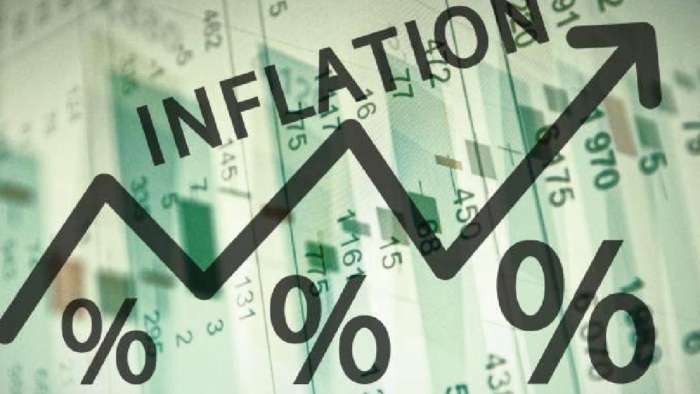
The National Bureau of Statistics (NBS), says Nigeria’s headline inflation rate rose to 24.23 per cent in March 2025.
The NBS disclosed this in its Consumer Price Index (CPI) and Inflation Report for March 2025, which was released in Abuja.
According to the report, the headline inflation showed an increase of 1.05 per cent compared to the 23.18 per cent recorded in February 2025.
Furthermore, the report said on a month-on-month basis, the headline inflation rate in March 2025 was 3.90 per cent, which was 1.85 per cent higher than the rate recorded in February 2025 at 2.04 per cent.
“This means that in March 2025, the rate of increase in the average price level is higher than the rate of increase in the average price level in February 2025.”
The report said the increase in the headline index for March 2025 on a year-on-year and month-on-month basis was attributed to the increase in some items in the basket of goods and services at the divisional level.
It said these increases were observed in food and non-alcoholic beverages; restaurants and accommodation services; transport; housing, water, electricity, gas, and other fuel; education services; health; and clothing and footwear.
Others are information and communication; personal care, social protection and miscellaneous goods and services; furnishings, household equipment and maintenance; insurance and financial services; alcoholic beverages, tobacco and narcotics, recreation sports and culture.
The report said the food inflation rate in March 2025 was 21.79 per cent on a year-on-year basis.
However, on a month-on-month basis, food inflation rate in March was 2.18 per cent , which increased by 0.50 per cent compared to the 1.67 per cent recorded in February 2025 .
The NBS said the increase in the food inflation figure was atributed to the rate of increase in the average prices of Ginger (fresh), Garri (Yellow), Broken Rice (Ofada), and Honey (Natural Production).
Others are Crabs, Potatoes, Plantain Flour, Periwinkle (Unshelled), and Pepper (Fresh) among others,
The report said “all items less farm produce and energy’’ or core inflation, which excludes the prices of volatile agricultural produce and energy, stood at 24.43 per cent in March 2025 on a year-on-year basis.
“While on a month-on-month basis, the Core Inflation rate was 3.73 per cent in March, which increased by 1.21 per cent compared to the 2.52 per cent recorded in February.”
The NBS said on a month-on-month basis Farm Produce rate stood at 2.64 per cent compared to the 1.77 per cent recorded in February 2025.
The report said Energy rate stood at 9.21 per cent in March on a month-on-month basis, compared to the – 0.99 per cent recorded in February.
It said Services stood at 3.344 per cent in March 2025 on a month-on-month basis, compared to 3.38 per cent in February.
“While Goods had a rate of 3.89 per cent on a month-on-month basis compared to the 1.29 per cent recorded in February.”
The report said on a year-on-year basis in March 2025, the urban inflation rate was 26.12.
“On a month-on-month basis, the urban inflation rate was 3.96 in March 2025, which increased by 1.56 per cent compared to February at 2.40 per cent.
The report said on a year-on-year basis in March, the rural inflation rate was 20.89 per cent.
“On a month-on-month basis, the rural inflation rate was 3.73 per cent in March, which increased by 2.57 per cent compared to February at 1.16 per cent.”
On states’ profile analysis, the report showed that in March , all items’ inflation rate on a year-on-year basis was highest in Kaduna at 33.33 per cent, followed by Osun at 32.08 per cent , and Kebbi at 30.74 per cent.
It, however, said the slowest rise in headline inflation on a year-on-year basis was recorded in Akwa Ibom at 12.81 per cent, followed by Bayelsa at 14.02 per cent, and Sokoto at 14.83 per cent.
The report, however, said in March 2025, all items inflation rate on a month-on-month basis was highest in Kaduna at 18.85 per cent, followed by Osun at 16.49 per cent, and Oyo at 14.44 per cent.
“Sokoto at -8.66 per cent, followed by Nasarawa at -4.38 per cent and Kwara at -3.69 per cent recorded the slowest rise in month-on-month inflation.”
The report said on a year-on-year basis, food inflation was highest in Oyo at 34.41 per cent, followed by Kaduna at 31.14 per cent, and Kebbi at 30.85 per cent.
“Bayelsa at 9.61 per cent, followed by Adamawa at 12.41 per cent and Akwa Ibom at 12.60 per cent recorded the slowest rise in food inflation on a year-on-year basis.’’
The report, however, said on a month-on-month basis, food inflation was highest in Oyo at 19.74 per cent, followed by Kaduna at 17.24 per cent, and Kebbi at 14.03 per cent.
“Sokoto at -14.10 per cent, followed by Nasarawa at -9.91 per cent and Edo at -5.78 per cent, recorded the slowest rise in inflation on a month-on-month basis.”
It would be recalled that the NBS recently rebased the CPI and released the rebased CPI results for January 2025 in February.
The Statistician-General of the Federation, Adeyemi Adeniran said the rebasing was designed to ensure that Nigeria’s economic indicators accurately reflect the current structure of the economy.
This according to him, was also to incorporate new and emerging sectors, updating consumption baskets, and refining data collection methods.
Adeniran said part of the process of rebasing the CPI included bringing the base year closer to the current period, from 2009 to 2024.
NAN
You may like
-
2027 Polls: United States Says “We’re Watching” — Riley Moore
-
Record Breaker: How She Became a Chartered Accountant at 13
-
It’s Not Debt! World Bank Says This Is Nigeria’s Real Problem
-
How a Weak Naira is Funding Terror: BDCs Under Spotlight, Kurfi Warns
-
APC Unveils Situation Room to Monitor All 176,846 Polling Units
-
Wike Fires Back: PDP Remains Nigeria’s Only Opposition Despite Bye-Election Defeat
BUSINESS
Just Weeks After the Last Cut, Dangote Makes Another Surprise Move on Fuel Prices
Published
2 weeks agoon
June 25, 2026
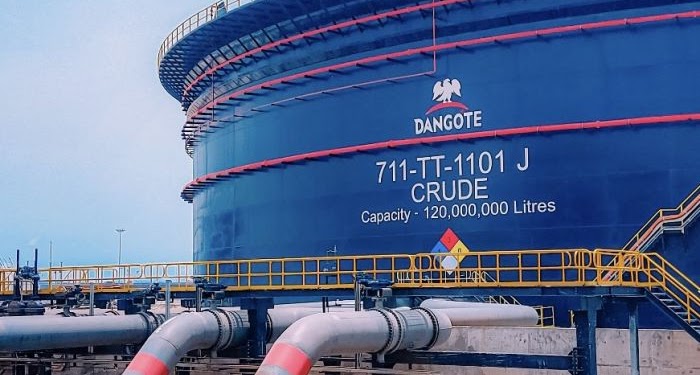
Dangote Refinery has again reduced its gantry petrol price nationwide to N1,125 per litre from N1,175 per litre.
The spokesperson of Dangote Group, Anthony Chijiena, confirmed the latest reduction on Thursday.
This means that the refinery dropped its petrol gantry price by N50 per litre.
“It is true our petrol gantry price was reduced by N50 per liter,” Chijiena disclosed.
Similarly, the coastal petrol supply price of Dangote
Refinery decreased from N1,495,215 per metric tonne to N1,428,165 per metric tonne.
The development comes as crude oil prices dropped
significantly to $69 and $73 per barrel, the same rates as pre-Middle East crisis times.
Recall that on June 16, the Dangote Refinery had reduced its gantry petrol price by N75 per litre, triggering a nationwide retail fuel reduction days later. This brought the total price reduction by Dangote Refinery in two weeks since global prices eased to N125 per litre.
Currently retail fuel prices stand at between N1,241 and N1,305 per litre in Abuja and its environs.
However, Nigerians are clamouring for a further drop in retail fuel to around N800 and N900 per litre, the rate before the Iran-United States-Israel war, which escalated on February 28, 2026.
BUSINESS
What exactly is South Africa doing differently, and can Nigeria follow the same path? – Peter Obi
Published
3 weeks agoon
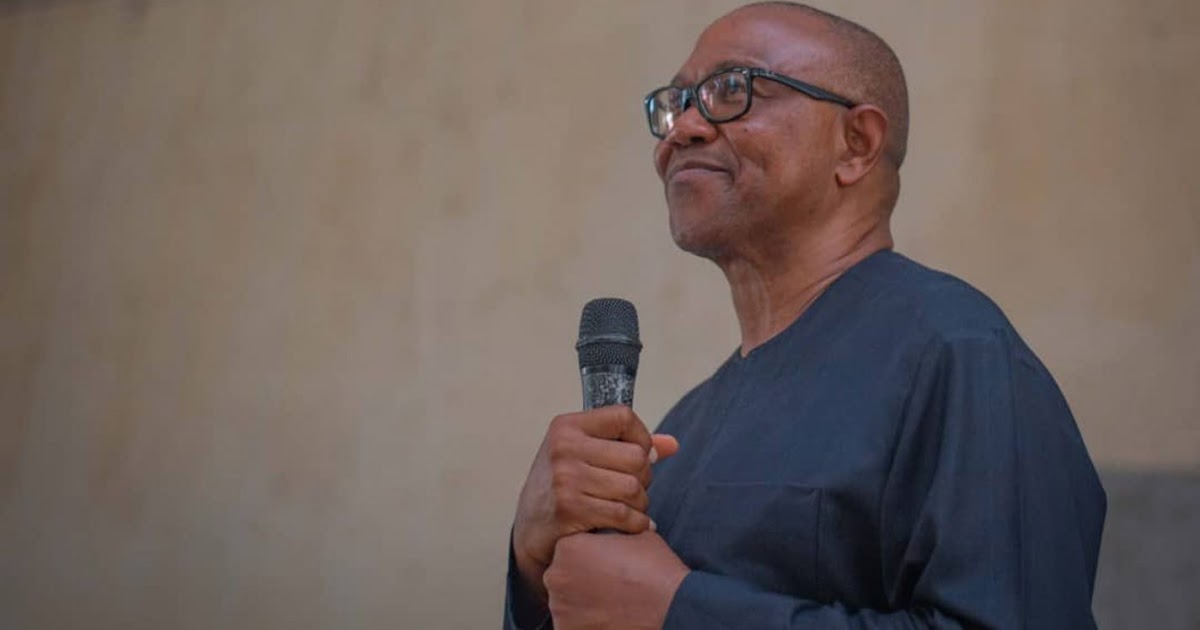
June 18, 2026The Nigeria Democratic Congress, NDC, presidential candidate, Peter Obi, has charged Nigeria to emulate South Africa in its
borrowing patterns.
Obi gave the charge on Thursday in a post on his verified X handle, noting that borrowing itself is not a bad thing but the transparency is
utilising the borrowed funds.
The former Anambra State governor described the South African pattern as what accountable borrowing should look like, noting that the
purpose is clear, the projects are identifiable, and the expected benefits to citizens are measurable.
According to him, such investments directly improve living conditions, enhance productivity, and stimulate economic growth.
“I have consistently maintained that borrowing, in itself, is not a bad thing. Every nation borrows. The critical issue is not the act of
borrowing, but what the borrowed funds are used for and whether citizens can clearly see and measure the impact of such borrowing in their daily lives.
There is a lot to learn in the open and transparent manner in which South Africa handled its recently secured $1 billion loan from the New
Development Bank, with a clearly defined purpose.
“This is indeed what accountable borrowing should look like; the purpose is clear, the projects are identifiable, and the expected benefits
to citizens are measurable. Such investments directly improve living conditions, enhance productivity, and stimulate economic growth.
In Nigeria, however, the opposite is the case: public debt has risen dramatically under the current administration, and its deployment is
shrouded in secrecy from the people who will indeed pay back the loan. Today, our total public debt has increased from about ₦87 trillion in 2023 to nearly N200 trillion.
Yet, despite this unprecedented accumulation of debt, Nigerians are often left without a clear and detailed account of how these
borrowings are being deployed to improve critical sectors such as education, healthcare, power, security, and infrastructure.
Borrowing must never become an end in itself. Every loan obtained in the name of the Nigerian people must be tied to specific, productive investments capable of generating economic value, creating jobs, reducing poverty, and improving the welfare of citizens.
Good governance demands transparency and accountability. The government must be able to clearly explain what was borrowed, where it was invested, and what measurable outcomes have been achieved. The ordinary Nigerian should be able to see and feel the benefits of every debt incurred on their behalf.
At a time when millions of Nigerians are struggling with rising costs of living, unemployment, insecurity, and declining purchasing
power, fiscal discipline and prudent management of public resources are no longer optional; they are imperative.
“Every borrowing decision should answer one simple question: How does this improve the life of the ordinary Nigerian? If that question
cannot be convincingly answered, then we risk merely transferring today’s burdens to future generations,” he wrote.
The Anambra State Electricity Regulatory Commission (ASERC) has assured residents of Nnewi of improved and reliable electricity supply in the near future.
Managing Director of the Commission, Prof. Frank Okafor, gave the assurance during a two-day public consultation on draft electricity regulations held at Umuenem Hall on Wednesday.
He said the engagement was part of efforts to build a more effective and responsive electricity market across the state, while also addressing long-standing concerns of consumers.
Speaking to stakeholders and industry players, Prof. Okafor noted that the Commission is taking practical steps to boost power supply, especially through investment in key distribution infrastructure in partnership with FirstPower Distribution Company Limited, a subsidiary of the Enugu Electricity Distribution Company (EEDC).
He explained that ASERC was established under the Anambra State Electricity Law of 2025 as an independent regulator responsible for overseeing electricity operations across the state.
According to him, the Commission handles licensing, tariff regulation, enforcement of standards, and consumer protection.
“We operate as an independent and transparent regulator. Our decisions are made in the public interest with fairness and accountability,” he said.
Prof. Okafor added that ASERC is committed to ensuring electricity in the state is reliable, safe, and affordable, while also attracting private investment and promoting renewable energy solutions.
He acknowledged complaints from residents over poor power supply despite regular bill payments and assured that such concerns are being addressed.
“This engagement is about listening and responding. We want consumers’ voices reflected in our policies,” he stated.
The consultation attracted representatives of FirstPower Distribution Company, lawmakers including Honourable Golden Iloh, community leaders, civil society groups, media practitioners, and electricity consumers from across Anambra South.
For many participants, the meeting signalled hope for improved electricity supply in Nnewi.
BUSINESS
UK, Enugu Gov’t, Introduce Smart Metre to Curb Energy Theft, Revenue Losses
Published
4 months agoon
March 25, 2026
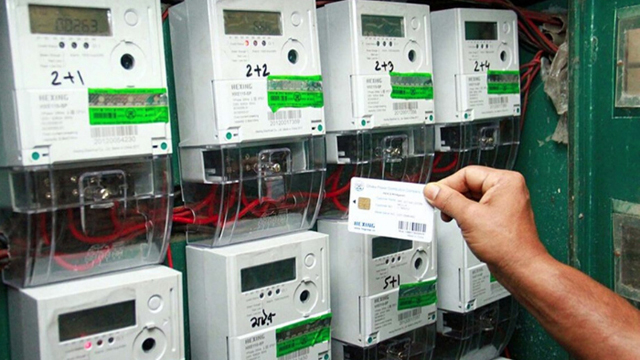
The Enugu State Government and the United Kingdom, through its United Kingdom Nigeria Infrastructure Advisory Facility (UKNiAF) have successfully carried out a pilot programme introducing an AI-enabled smart metering system to curtail energy theft and eliminate revenue losses in the power sector.
This was made known at the Enugu State Investor Forum themed “Driving Revenue Assurance and Private Investment through Data-Driven Metering,” which took place at the International Conference Centre, Enugu, on Tuesday.
The event funded by the UK International Development and implemented by Tetra Tech brought together key sector stakeholders, including electricity distribution companies, investors, and policymakers, to explore opportunities for expanding smart metering and improving electricity access in Enugu State.
It also focused on strengthening Nigeria’s capacity to deliver sustainable and climate-smart infrastructure, with Enugu State as a key beneficiary.
Speaking at the event, Chairman and Chief Executive Officer of the Enugu State Electricity Regulatory Commission, Mr Chijioke Okonkwo, said the project was designed to address persistent challenges of revenue leakages, energy theft, and poor billing efficiency in the power sector.
He disclosed that a pilot scheme involving the deployment of 846 smart meters had already been carried out in the Ugwuaji axis of the state capital, covering surrounding semi-urban communities.
According to Okonkwo, the pilot enabled full tracking of electricity consumption from transformers to individual households.
“This system allows us to drastically reduce, if not eliminate, commercial and collection losses, which have long hindered the growth of the power sector,” he said.
He explained that the AI-enabled meters provide real-time data on energy usage, empower consumers to monitor their consumption, and help operators quickly detect faults or irregularities, including theft and equipment vandalism.
The regulator noted that the initiative also opens opportunities for private investors and energy retail companies to participate in Enugu’s electricity market, particularly in underserved areas.
“We are inviting investors to take advantage of this opportunity by deploying smart meters, expanding distribution networks, and even establishing embedded power generation within the state,” he added.
He said current market prices for meters stand at approximately N130,000 for single-phase units and about N230,000 for three-phase units, adding that flexible payment structures could be arranged to ease adoption.
Also speaking, Team Leader of UKNiAF, Mr Frank Edozie, described the project as a “demonstrator” of how artificial intelligence could enhance transparency and accountability in electricity revenue collection.
“The system ensures that all revenues due to the sector are properly collected and accounted for. It also detects any breach in energy or financial flows, making it a strong revenue assurance mechanism,” Edozie said.
He observed that Enugu was selected for the pilot due to its leading role in implementing reforms under Nigeria’s Electricity Act 2023, which empowers states to develop independent electricity markets.
According to him, the pilot project, which commenced in November 2025, had already shown encouraging results, including significant improvements in revenue recovery and reduction in losses.
In his remarks, Managing Director of MainPower Electricity Distribution Limited, Dr Ernest Mupwaya, said the initiative addresses two critical issues in the power sector—metering gaps and revenue protection.
He emphasised that without efficient metering and strong revenue assurance systems, investments in the power sector would remain unattractive and unsustainable.
“Smart metering, combined with advanced monitoring systems gives utilities visibility across their networks, making it easier to detect losses and improve operational efficiency,” he said.
Mupwaya added that the project has demonstrated the viability of attracting private financing into metering infrastructure, noting that improved revenue collection would enable operators to repay investments over time.
Earlier, Enugu State Commissioner for Trade, Investment and Industry, Sam Ogbu-Nwobodo, said the state was selected for the initiative due to ongoing reforms and progress in its electricity market.
He explained that the successful pilot had shown that smart metering could guarantee revenue assurance across the electricity value chain—from generation to distribution—thereby boosting investor confidence.
“The system assures investors that they will recover their investments, which is critical for attracting funding into power generation, transmission, and distribution,” he said.
BUSINESS
In London, Mbah Ignites Investors’ Interest in Enugu
Published
4 months agoon
March 23, 2026
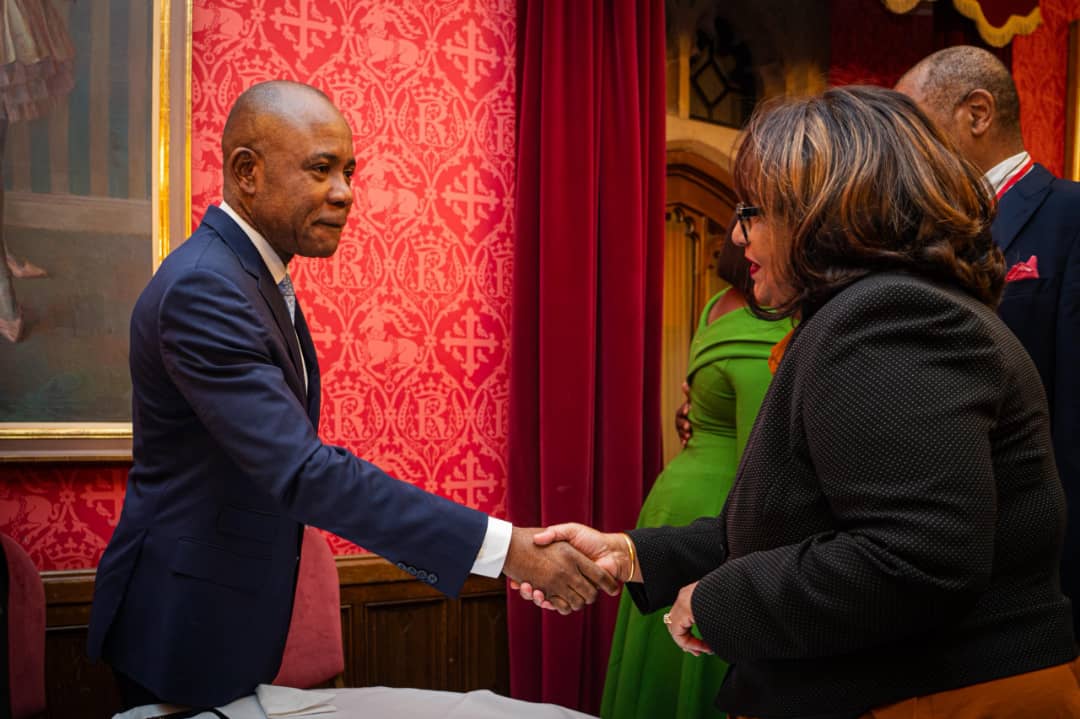
Governor of Enugu State, Dr. Peter Mbah, has ignited foreign investors’ interest in the state with prospective investors expressing the readiness to immediately key into opportunities across various sectors of the state’s economy.
Mbah said investors should expect between 25 and 40 percent return on their investments, noting that global manufacturers and international partners were already establishing a presence in the state, recognising its strategic position as well as the opportunities and reform agenda that were underway.
The governor, who was on the president’s entourage during the state visit to the United Kingdom, UK, spoke at the UK-Nigeria Project Agglomeration Compact 2026 delivered by Mutandis Africa, a pan-African investment and trade facilitation platform in collaboration with the Dr. Zacch Adedeji-led Nigeria Revenue Service (NRS) in the House of Lords on the sidelines of Tinubu’s visit.
The investment forum brought Enugu State, senior federal government officials, and private sector leaders to engage directly with the UK’s senior investor community, including private equity funds, sovereign wealth investors, development finance institutions, infrastructure platforms, pension capital, and family offices.
He said, “We have numerous projects that have been curated for international investors: the international airport currently being expanded in Enugu is designed to serve a regional population of approximately 30 million people, thus transforming Enugu into a gateway for the entire southeast economic corridor, linking surrounding states whose economies are themselves growing rapidly.
“In tourism and hospitality, Enugu’s natural landscape, a hill-top city surrounded by waterfalls, caves and remarkable scenery, is being repositioned as a destination for both leisure and business travel. New hotels, a conference centre and revitalised resorts are being developed to support this vision.
“In agriculture, we are modernising production through agritech and commercial farming initiatives that strengthen food security while building export-oriented value chains.
“Power drives every modern economy. Today, more than 50% of the region still lacks reliable electricity, creating an opportunity to deliver dependable power to over 15 million people.
“In healthcare and education, we are expanding services across communities to build the skilled workforce and stable environment that serious investment requires.
“And at the heart of this transformation lies one of our most ambitious developments: a new smart city spanning approximately 10,000 hectares, currently breaking ground, designed to become a modern commercial and residential hub for the region.”
Mbah further hailed President Tinubu’s reforms, especially the structural shift where he said states were being increasingly empowered to act as economic engines in their own right.
“Importantly also, under President Tinubu’s leadership, bold reforms have been implemented to restore macroeconomic stability and improve investor confidence. The foreign exchange market has been unified, fiscal reforms are strengthening transparency, and the Nigeria Tax Act is helping to create a modern fiscal architecture designed to support long-term investment,” he added.
He said Tinubu’s UK visit signaled a paradigm shift that now enables subnational governments to also drive economic growth.
“For Nigeria, it signals a new era in which sub-national governments are not simply administrators, but active stewards of economic growth.
“For investors, it marks an opportunity to engage not only with a country, but with dynamic regions within that country that are building credible, bankable opportunities,” he said.
Speaking, Chairman of the Nigerian Exchange Group, NGX, Dr. Umaru Kwairanga, and the Group Managing Director/CEO of the United Bank for Africa, Oliver Alawuba, reinforced Governor Mbah’s message and Enugu State’s current strategic positioning as one of Nigeria’s leading sub-national economies.
Kwairanga said the NGX was on track to deliver three times its performance in 2025 due to rising investor confidence and key policy drivers, particularly the ongoing banking sector recapitalisation.
Speaking on the outcome, Founder/CEO of Mutandis Africa, Chinelo Anohu, said investors, who were drawn from various global economies, were very eager to key into the various opportunities, with special focus on aviation sector and real estate sector opportunities. They are also keen on bringing in smart solutions that would support Enugu’s Smart Schools and Smart City.
“The governor’s astute delivery of opportunities in the state and mastery of relevant data were quite compelling. Post-event event transaction processes will commence immediately,” she added.
BUSINESS
Rising Fuel Prices Show Consequences of Poor Planning — Peter Obi
Published
4 months agoon
March 13, 2026
Presidential hopeful of the African Democratic Congress (ADC), Mr. Peter Obi, has blamed Nigeria’s vulnerability to global economic shocks on the country’s failure to maintain strategic petroleum reserves.
In a statement shared on his social media platform, Obi said recent tensions arising from the conflict involving Iran, the United States, and Israel have pushed up global oil prices, which quickly translated into higher fuel prices in Nigeria.
He noted that petrol, which sold for less than ₦1,000 per litre a few weeks ago, now costs over ₦1,200 per litre, while diesel has risen from below ₦1,000 per litre to more than ₦1,500 per litre.
According to Obi, the rapid increase demonstrates how quickly external shocks affect Nigeria because the country lacks economic buffers.
He explained that many countries—whether oil-producing or not—maintain strategic petroleum reserves that can be released during disruptions in the global oil market to stabilize supply and prices. Nigeria, however, does not have such reserves, meaning the impact of global market changes is felt almost immediately.
Obi argued that the situation reflects a broader problem of inadequate national planning, stressing that countries that plan ahead create safeguards against economic shocks, while those that fail to plan remain vulnerable.
He concluded that the lesson remains clear: when a country fails to plan, it has effectively planned to fail
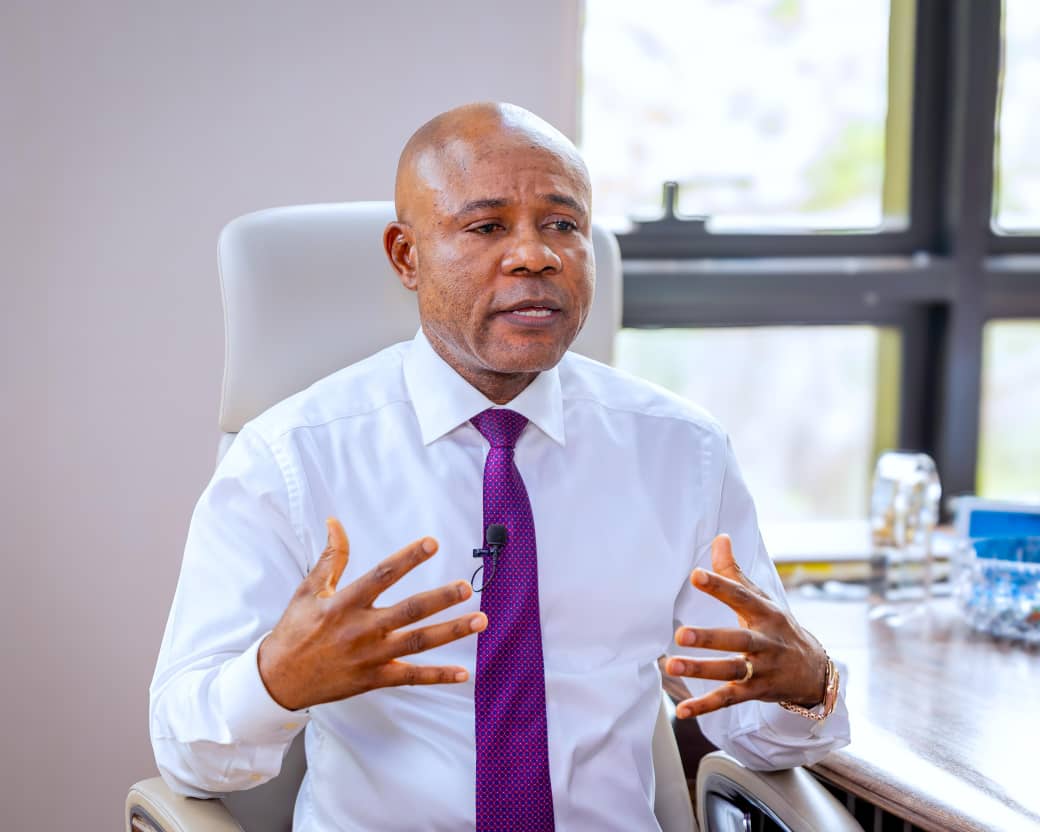
Governor of Enugu State, Dr. Peter Mbah, has rejected the claims of high taxation in the state, describing them as a pathetic misconception promoted by the opposition and beneficiaries of the old order, who manipulated revenue collection to fatten their private pockets.
Mbah insisted that his administration had grown the states Internally Generated Revenue, IGR, by widening the tax net to bring in more taxable persons, blocked revenue leakages, and tackled sharp practices that hitherto drained public revenues by introducing Consolidated Demand Notice, e-ticketing as well as recovery, optimisation, and monetisation of the state’s assets.
He stressed that the Enugu State Government did not have power to increase or reduce taxes under the 1999 Constitution, as it was the exclusive preserve of the federal government.
The governor provided the clarifications in an exclusive interview aired by Afia Television, Wednesday evening.
“First, as a state, we are not able to legislate on taxation. It is in the exclusive legislative list, which can only be legislated on by the National Assembly. Whether it is your Personal Income Tax, your Company Income Tax, your Value Added Tax or your Withholding Tax, those taxes can only be legislated on by the National Assembly,” he clarified.
Mbah said that those framing the false narratives could not come to terms that his administration could scale up the state’s IGR from N26.8bn the state recorded in 2022 to N37.4bn by the end of 2023, N180.5bn in 2024, and N406.7bn in 2025.
“I think for those framing this false narrative, it is beyond their imagination that we could optimise our dormant assets and grow our revenue exponentially.
“They fail or refuse to take note of the fact that in 2025, for instance, tax revenue accounted for for only N51.5bn or 12.6 per cent of the N406.7bn IGR, while non-tax revenue was N355.2bn or 87.4 per cent,” the governor added.
As for the areas within the states’ competence, such as rates and levies, Mbah explained that his administration had already taken steps to crash the payable amounts for certain services provided by Enugu State Government.
“For those rates and fees, we constituted a committee that also included market leaders, organised labour, Chamber of Commerce and Industry, among others, which went around to get what the other states within the South East were charging. It turned out that Enugu is the lowest in the South East. But that notwithstanding, we crashed that rates even further by 70 per cent especiallyin land sectors,” he stated.
He, however, acknowledged the activities of illegal revenue collectors, saying the recently passed Enugu State Harmornised Taxes and Levies (Approved List for Collection) Law, 2026, would finally eliminate road blocks and unauthorised collections that have burdened residents of the State.
He added that the government will up enforcement and public enlightenment to checkmate the activities of extortionists.
“Under our laws, we have consolidated all these services and you only just have one payment that you make and you are done with all the services that the government provides.
“Some people still go about extorting money from helpless citizens because this is a practice that has gone on over the years. But we have constituted a standing task force to track and bring them to book. We also want the citizens to report them. We now have several toll-free lines where citizens can call freely. They do not have to have airtime to place such calls,” he concluded.
BUSINESS
Enugu Air Receives Air Operator Certificate, Targets Regional Flights by Year End
Published
4 months agoon
March 10, 2026
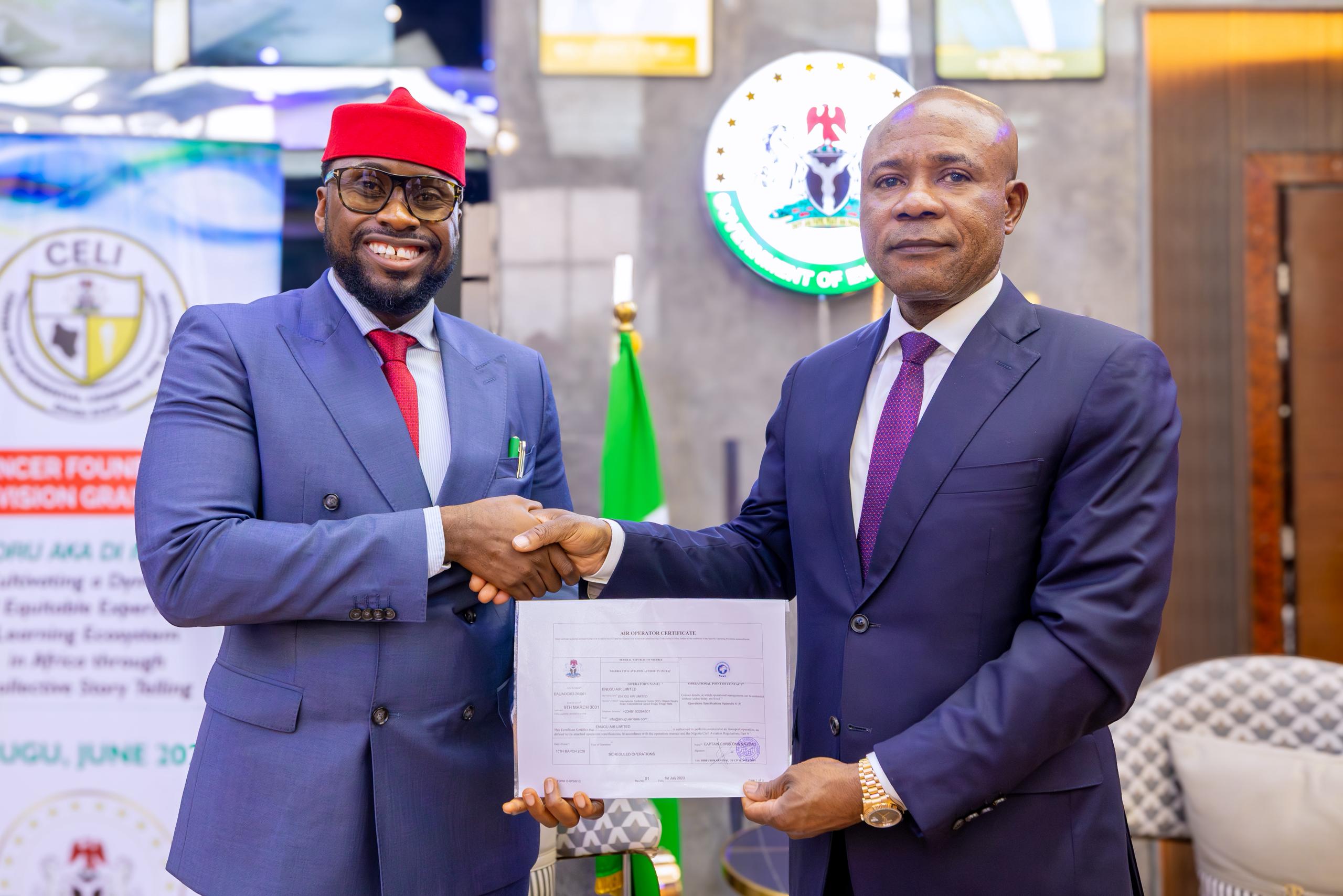
Enugu Air, on Tuesday, received the Air Operator Certificate, AOC, from the Nigerian Civil Aviation Authority (NCAA), a development it described as a significant step in the realisation of Governor Peter Mbah’s vision to position Enugu as a regional hub for commerce, logistics, and aviation in West and Central Africa.
Presenting the AOC to Enugu Air’s Accountable Manager/ CEO, Captain Tolu Ita, at the Nigerian Civil Aviation Authority, NCAA, headquarters in Abuja, the agency’s Director General, Captain Chris Najomo, described the development as historic in the Nigerian aviation industry, noting that Enugu Air successfully completed the rigorous certification process in just five months and three weeks, significantly faster than the typical industry timeline of 15 to 24 months.
According to the Captain Njomo, the fully state-owned airline also distinguished itself by commencing operations with a complete fleet of six aircraft, which he said was a rare feat for a newly certified airline in the country.
The DG emphasised that the certification process involved extensive evaluation across multiple NCAA departments and confirmed that Enugu Air had met all regulatory requirements, demonstrating full compliance with Nigeria’s aviation safety and operational standards.
He commended the vision and leadership of Governor Mbah, describing the speed and discipline with which the airline project was executed as evidence of purposeful governance.
The DG also acknowledged the dedication of the Enugu State team and urged the airline’s management to continue maintaining the highest standards of safety, regulatory compliance, and operational excellence.
In her remarks, the Accountable Manager/CEO of Enugu Air, Captain Tolu, expressed appreciation to Governor Mbah for the vision of Enugu Air and also commended him for creating the enabling environment and providing the leadership support that made the record-breaking certification possible.
While thanking NCAA for the professionalism and support shown throughout the certification process, she reaffirmed the airline’s commitment to building a reliable, efficient, and globally competitive carrier that would serve passengers with the highest standards of safety and service.
Speaking, the Commissioner for Transportation, Enugu State, Dr. Obi Ozor, stressed that Enugu Air remained a strategic component of Governor Mbah’s broader transport and logistics transformation agenda aimed at unlocking economic opportunities across Enugu State, the wider South-East region, and Africa.
He noted that the airline would grow its fleet to 20 aircraft and also commence regional operations before the end of 2026, playing a critical role in connecting Enugu to key domestic and international markets and facilitating trade, tourism, investment, and mobility.
He commended Enugu Air’s operating partner, XEJet Limited, for its role in guiding the airline through the rigorous regulatory certification process required for the issuance of the Air Operator Certificate.
Speaking, the Group Chief Executive Officer of XEJet Limited, Emmanuel Iza, who congratulated the airline for the feat, expressed pride in the Enugu Air/XEJET Limited partnership that produced the result.
“This milestone demonstrates what can be achieved through strong partnerships between government and the commercial aviation sector in advancing air transport development,” Iza stated.
On his part, the Board Chairman of Enugu Air, Barrister Ricky Agu, assured the NCAA that the state government would continue to provide the support required to ensure that Enugu Air operates at world-class standards.
The AOC presentation was witnessed by senior aviation regulators and other members of the Enugu State delegation, including the Special Assistant to the Governor on Transport, Iphie Ugonabo, and members of the airline’s management team.
BUSINESS
Mainpower Secures 20-Year Electricity License in Enugu
Published
4 months agoon
March 7, 2026
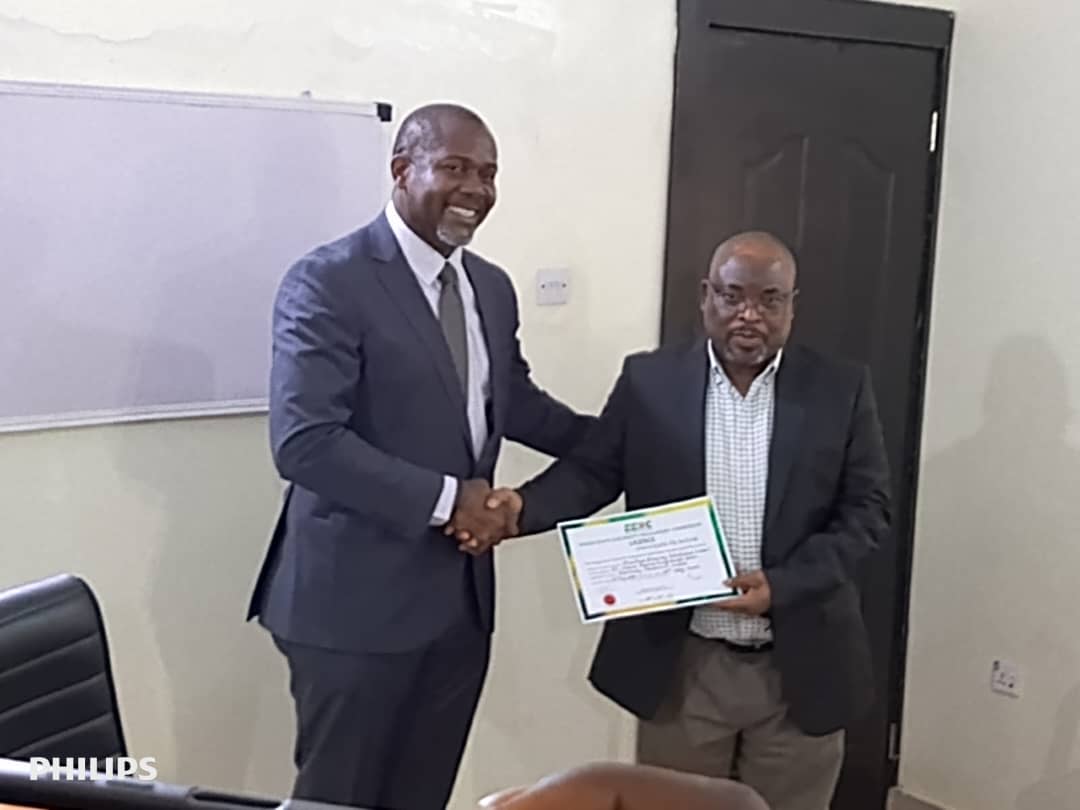
Mainpower Electricity Distribution Limited (MEDL) has secured a 20-year operating license from the Enugu Electricity Regulatory Commission (EERC) to provide electricity distribution services across Enugu State.
The license was issued in Enugu by Mr. Chijioke Okonkwo, Chief Executive Officer of EERC, who described Mainpower as the first Sub-Distribution Company (SubCo) to be granted an operating license in the state.
“This achievement is a milestone for the Enugu electricity sector and a testament to the visionary leadership of Governor Peter Mbah, who championed the Enugu State Electricity Policy 2023 and facilitated the enactment of the Enugu State Electricity Law, 2023,” Mr. Okonkwo said.
He highlighted that Enugu State’s electricity market is structured to encourage multiple participants across the value chain, including fuel suppliers, generation companies, distribution operators, retail electricity providers, and metering services.
“The Enugu State electricity market operates on a willing buyer – willing seller model, supported by commercially viable agreements such as bilateral contracts and power purchase agreements. This framework ensures efficiency, accountability, and profitability while delivering reliable electricity services to consumers,” Okonkwo explained.
He further noted that as the dominant player in Enugu State’s electricity market, Mainpower has a critical role in developing the market model, fostering competition, and supporting the integration of other market participants.
“Mainpower is expected to grow its operations in alignment with the state’s electricity policy, while evolving to accommodate other players and boost competition across service areas,” Okonkwo added.
Receiving the license, Dr. Ernest Mupwaya, Managing Director of Mainpower, expressed gratitude to the EERC and Governor Mbah for the confidence placed in the company. He described the licensing as a demonstration of Enugu State’s commitment to establishing a responsive, efficient, and sustainable electricity market under the new framework established by the Electricity Act.
Dr. Mupwaya emphasized that the success of any electricity market is closely linked to the performance of distribution companies. “Transformational efforts within distribution companies must be supported by all stakeholders. Regulators must provide clear and predictable frameworks; governments must sustain sector reforms; investors must fund infrastructure development; and customers must support the system through responsible consumption and timely payment for services,” he said.
He outlined Mainpower’s strategic focus for the next two decades, which includes enhancing network reliability, accelerating metering programs to improve transparency, strengthening revenue assurance, embracing digital transformation, and improving operational efficiency.
Dr. Mupwaya further assured EERC that the company would place a strong emphasis on customer engagement, satisfaction, and feedback, noting that electricity distribution is not only a technical service but also a customer-centric business.
“With this license, Mainpower Electricity Distribution Limited is committed to driving the growth of Enugu State’s electricity market while delivering reliable, sustainable, and affordable power to residents,” he concluded.
JUST IN- Kidnapped Oyo Pupils and Teachers Finally Regain Freedom
Big Change Ahead? FG Set to Replace Multiple Emergency Lines with Just One Number
Just In: Senator Uche Ekwunife Lands Powerful National Appointment
Miyetti Allah President in Trouble as EFCC Files $2.63m Money Laundering Charges
Reps Move to Punish South Africa Over Xenophobic Attacks
“I Told Them To Kill My Brothers” – Governor Speakes on N300m Ransom Refusal
PBAT Door-To-Door Movement Gets Big Boost as Akpabio, Abbas, Others Inaugurate Exco
Big Change! US Applicants Can No Longer Use Agents for Nigeria Visa
Oshiomhole Drops Truth Bomb: Governors Powerless Without State Police
Wike: FCT Civil Servants Are Angry Because I Stopped Money Diversion
PHOTOS: How Security Forces Trapped Wanted Bandit Abubakar Usman in Delta Forest
Borno Bleeds: Terrorists Launch Coordinated Attack on Army, Police, Hospital
Presidency Sparks Debate: ‘You’re Doing Better Than Nigerians Abroad’
Protect Obi, Release El-Rufai – Atiku Tells FG
US Publishes Photos, Names of 124 Nigerians Set for Deportation
Navy Strikes Again! 39,500 Litres of Stolen Crude Oil Recovered in Rivers
Burna Boy Makes History: To Headline First World Cup Final Halftime Show
Oshiomhole Drops Truth Bomb: Governors Powerless Without State Police
Wike: FCT Civil Servants Are Angry Because I Stopped Money Diversion
Miyetti Allah President in Trouble as EFCC Files $2.63m Money Laundering Charges
Trending
-
NEWS2 years agoA MUST READ!! What Peter Obi Discussed With Atiku, Saraki, Lamido During Visits – Aide Reveals
-

MUSIC5 years agoMUSIC: Mohbad – Back Side [Free Download]
-
MUSIC5 years agoMUSIC: Papiwizzy – Oluwalonsola Ft Zlatan and Papisnoop [Download Mp3]
-
MUSIC3 years agoMUSIC: DEBHIE FEAT. EMMYBLAQ – TURN UP (DOWNLOAD HERE)