FOREIGN NEWS
Former US Vice President Dies At 84
FOREIGN NEWS
Mixed Reactions Trail Reported Death of Iran’s Supreme Leader
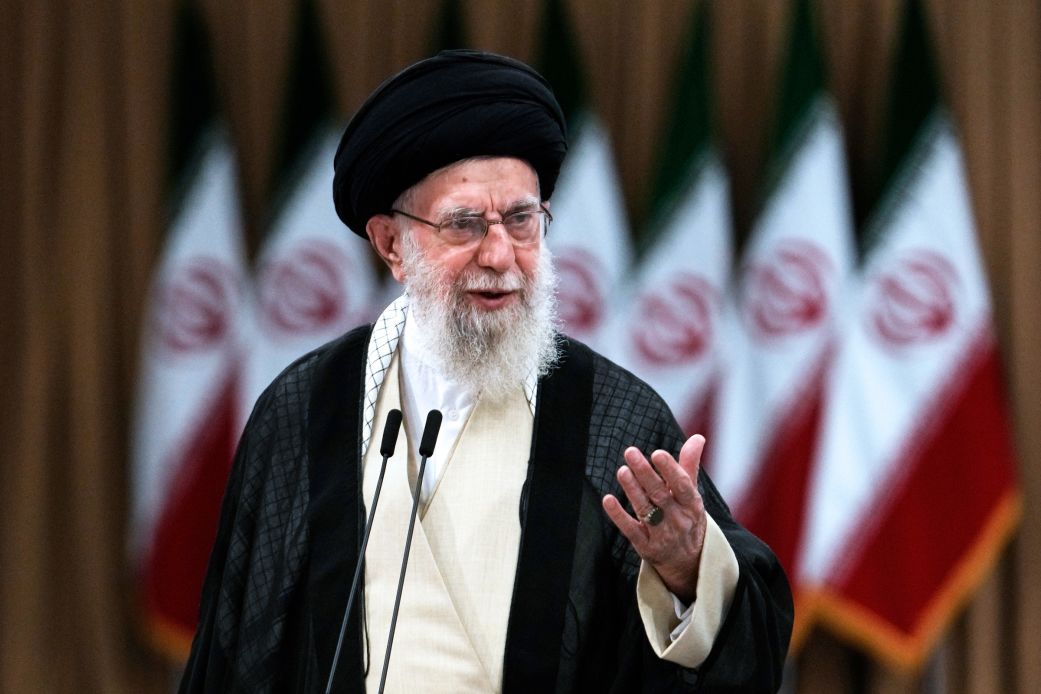
Iran is witnessing sharply divided public reactions following reports that the country’s Supreme Leader, Ayatollah Ali Khamenei, has been killed in coordinated military strikes allegedly carried out by the United States and Israel.
Iranian state media early Sunday confirmed the death of the 86-year-old cleric, announcing a nationwide mourning period and broadcasting religious programmes alongside tributes highlighting his leadership since 1989.
Khamenei had served as Iran’s highest political and religious authority for over three decades, shaping the Islamic Republic’s domestic and foreign policies.
However, reports from international news organisations, including BBC Persian and Reuters, indicate that reactions across the country have been mixed.
In parts of central Iran, including the city of Isfahan, verified videos show groups of people cheering and honking car horns overnight.
Similar scenes were reported in Karaj, near the capital, where small gatherings were seen around bonfires with fireworks lighting the night sky.
Some footage suggested that relatives of protesters killed during previous anti-government demonstrations were among those celebrating.
Conversely, in the capital, Tehran, images carried by state-aligned news agencies showed large crowds mourning, many holding portraits of the late Supreme Leader. Flags were lowered to half-mast, and heightened security presence was observed in key locations as authorities began formal mourning ceremonies.
Independent verification of the nationwide mood remains limited due to restricted access for foreign media and reported internet disruptions in parts of the country.
The reported strikes mark a major escalation in tensions between Tehran and its adversaries.
United States President, Donald Trump, is said to have acknowledged the operation, describing it as part of broader military action. Iranian officials have condemned the strike as an act of aggression and vowed retaliation.
Under Iran’s constitution, the responsibility for appointing a new Supreme Leader lies with the Assembly of Experts, the clerical body charged with selecting and supervising the country’s highest authority.
FOREIGN NEWS
Gaza: WHO calls for probe following deadly strikes on Nasser
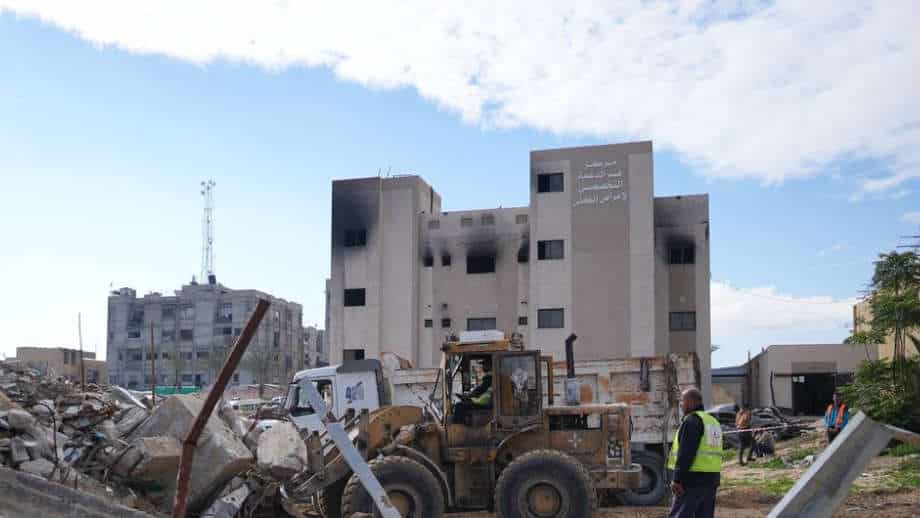
The World Health Organisation (WHO)has renewed its call for a ceasefire in Gaza following two deadly Israeli air strikes on the Nasser Hospital in the southern Strip on Monday.
At least 20 people were killed, including four health workers and five journalists, WHO Director-General Tedros Ghebreyesus said in a tweet.
Fifty other people were injured, including critically ill patients who were already receiving care.
“While people in Gaza are being starved, their already limited access to healthcare is being further crippled by repeated attacks,” Ghebreyesus said.
“We cannot say it loudly enough: STOP attacks on healthcare. Ceasefire now.”
He said the hospital’s main building, which houses the emergency department, inpatient ward, and surgical unit, was hit.
The strikes also damaged the emergency staircase.
The head of UN Palestine refugee agency UNRWA also took to social media in the wake of the news.
“Silencing the last remaining voices reporting about children dying silently and famine with the world’s indifference and inaction is shocking,” Commissioner-General Philippe Lazzarini said.
He called for compassion to prevail, saying “let us undo this manmade famine by opening the gates without restrictions, protecting journalists and humanitarian and health workers,” stressing the need for political will now.
The UN recently noted that more than 240 journalists have been killed in Gaza since the war began nearly two years ago following deadly Hamas-led attacks on Israel.
Roughly 1,200 people were killed and 250 hostages were taken to the enclave, some of whom remain in captivity.
Similarly, UN Secretary-General António Guterres strongly condemned the deadly airstrikes and called for a prompt and impartial investigation.
“These latest horrific killings highlight the extreme risks that medical personnel and journalists face as they carry out their vital work amid this brutal conflict,” UN Spokesman Stéphane Dujarric said in a statement.
The UN Office for the Coordination of Humanitarian Affairs (OCHA) said that among the reporters killed was female journalist Mariam Abu Dagga who partnered with the agency in 2024 on a photo essay depicting the dire situation in Gaza.
The Secretary-General reiterated that medical personnel and journalists must be able to perform their essential duties without interference, intimidation, or harm, in full accordance with international humanitarian law.
He also renewed his call for an immediate and permanent ceasefire in Gaza, unfettered humanitarian access across the enclave, and the immediate and unconditional release of all hostages.
FOREIGN NEWS
$4trn funding gap threatens SDGs —UN
Top United Nations (UN) officials on Monday in New York called for urgent action to rescue the UN’s Sustainable Development Goals (SDGs) and revive international cooperation.
Speaking at the Economic and Social Council (ECOSOC) annual forum on financing for development, they warned that a staggering 4 trillion dollars annual financing gap threatened global development goals.
The officials: UN Secretary-General, António Guterres; President, General Assembly Philémon Yang; and President, ECOSOC, Bob Rae, stressed the need for more resources and a global financial overhaul.
Without an effective response, they stressed, the world risked falling even further behind on ending poverty, fighting climate change, and building new sustainable economies.
Last week, the World Bank and International Monetary Fund (IMF) held Spring Meetings where global growth, trade tensions and the rising debt burden in developing countries were front and centre.
“This year’s ECOSOC Forum comes at a pivotal time,” Guterres told delegates, warning that global cooperation itself was under threat.
He pointed to rising trade tensions as a major risk, noting that fair trade was a clear example of the benefits of international collaboration.
Guterres said the surge in trade barriers posed a “clear and present danger” to the global economy.
He said this was evident in recent downgrades to global growth forecasts by the IMF, the World Trade Organization (WTO), and UN economists.
“In a trade war, everybody loses – especially the most vulnerable countries and people, who are hit the hardest,” he said.
Guterres highlighted how many donors were pulling back from aid commitments while soaring borrowing costs drained public investments, putting the SDGs “dramatically off track.”
“With just five years to reach the SDGs, we need to shift into overdrive,” he stressed.
UN chief urged countries to deliver bold outcomes at the upcoming Fourth International Conference on Financing for Development, in Seville, Spain.
“Against this turbulent background, we cannot let our financing for development ambitions get swept away,” Guterres stated.
ECOSOC President Bob Rae echoed these concerns, emphasising that over three billion people live in countries where governments spend more on interest payments than on health or education.
“We desperately need a more affordable debt architecture – it’s that simple,” he said.
Rae called for urgent reforms that would allow countries a fair chance to repay what they owed while investing in their futures.
He also sounded the alarm over rising trade barriers citing recent moves by major economies, like the United States, to impose new tariffs.
“Trade is not a four-letter word, it is a positive way for countries to exchange goods and services and emerge from poverty,” Rae said.
He urged countries not to see trade as a zero-sum game, where there are only winners and losers.
Rae admonished them to embrace fair, open trading systems as a path to shared prosperity.
General Assembly President Philémon Yang underscored the consequences of rising debts and shrinking fiscal space.
According to him, in more than 50 developing countries, governments now spend over 10 per cent of their revenues on debt servicing.
The UN economist said that in 17 of them, debt servicing gulps over 20 per cent, which is a clear warning sign of default.
“Our inability to reform the international financial architecture is severely restricting capital access,” Yang warned.
He stressed that closing the financing gap now estimated at over 4 trillion dollars annually was critical to achieving the SDGs.
“Time is of the essence. Let us use this ECOSOC Forum to bridge divides, build trust, and lay the foundation for success,” he said.
The 17 Sustainable Development Goals are all interconnected, for instance progress on SDG 2 to end hunger is closely tied to advances in health and education.
As negotiations continue towards an agreed outcome in Seville, Secretary-General Guterres highlighted three priority areas.
They include tackling unsustainable debt, strengthening multilateral development banks and unlocking new streams of sustainable finance.
He called for mobilising more domestic resources, innovative financing solutions, better controls on illicit financial flows and stronger partnerships with the private sector.
ECOSOC President Rae added that the conversation must move beyond declarations to concrete, measurable action.
“We need innovation, creativity and partnerships that deliver lasting and transformative impact,” he said.
The Fourth International Conference on Financing for Development will hold from June 30 to July 3 in Seville, Spain.
It represents a critical opportunity to rebuild the global financial system to unleash the investments urgently needed to achieve the SDGs.
FOREIGN NEWS
Cardinals Meet To Discuss Pope’s Funeral Arrangements
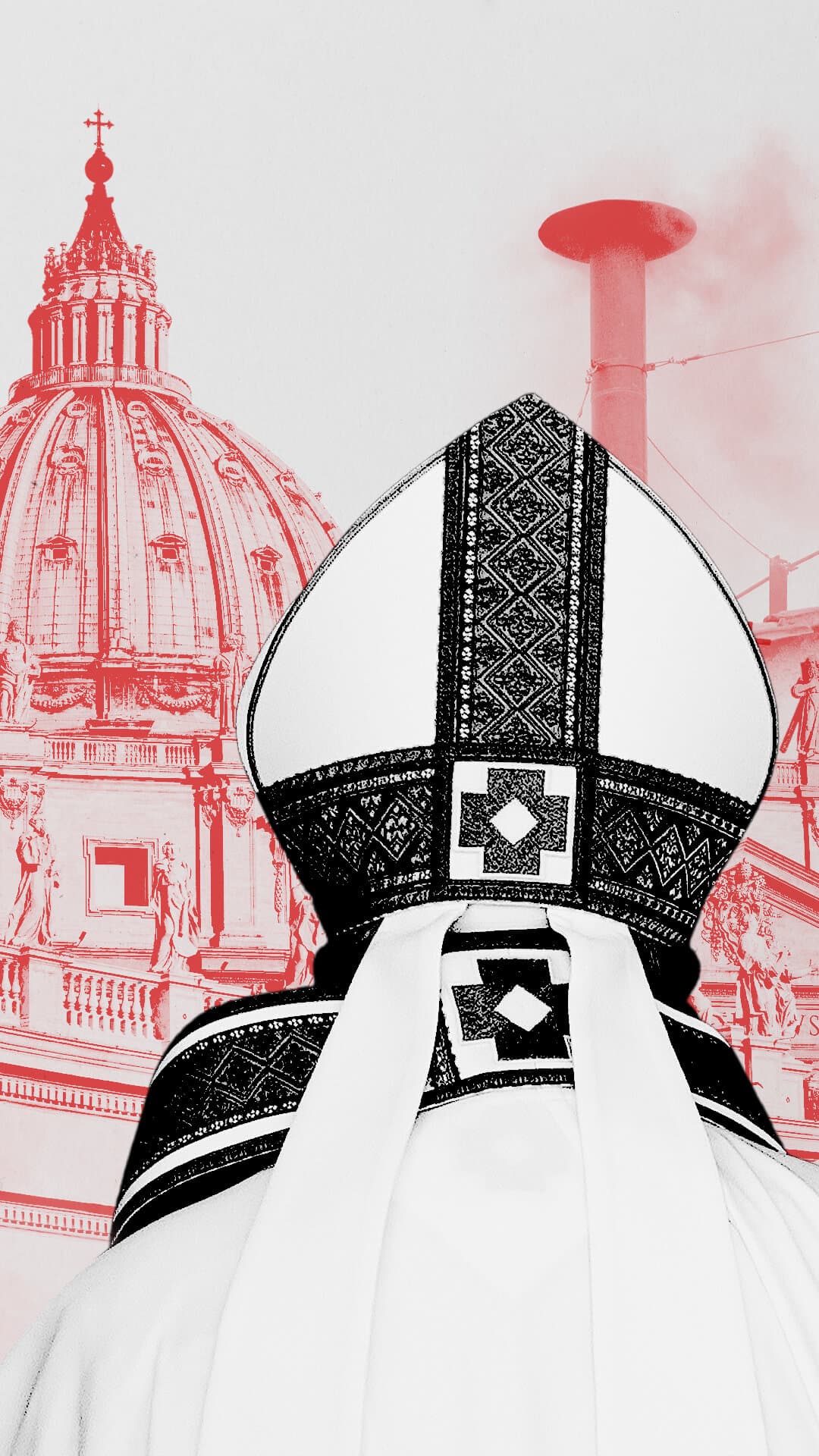
A number of cardinals are due to meet in Rome today to discuss arrangements for the funeral of Pope Francis, after he passed away on Easter Monday aged 88.
The cardinals are to decide on the exact time of the burial of the late head of the Catholic Church, which usually takes place four to six days after death.
Although it has been customary for a deceased pope to be buried in St. Peter’s Basilica, Francis is expected to be laid to rest outside the Vatican in the Basilica of Santa Maria Maggiore, one of his favourite places.
Heads of state and government from all over the world are expected to attend the funeral.
Francis’ body is currently still in the chapel of the Santa Marta guesthouse, his residence in the Vatican.
The body is then likely to be transferred to St. Peter’s Basilica on Wednesday where the faithful will have the opportunity to pay their last respects, according to the Vatican.
Pope Francis, who led the Catholic Church for 12 years, died on Easter Monday at 7:35 (0535 GMT) following a stroke, according to the Vatican.
As spiritual leader of the world’s 1.4 billion Catholics, Jorge Mario Bergoglio was the first pope from Latin America, the first Jesuit, and the first to be named after St. Francis of Assisi, a medieval monk who lived in poverty.
Leaders from around the world paid tribute to Francis following his death, praising him for his humility and compassion.
FOREIGN NEWS
Nigeria extols Senegal @65
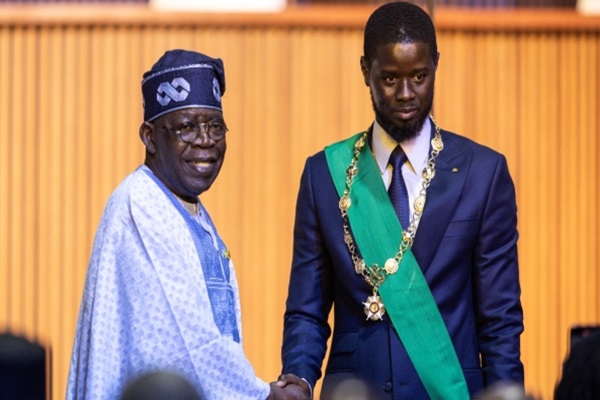
The Minister of Foreign Affairs, Amb. Yusuf Tuggar, has extolled the government and people of Senegal on occasion of the country’s 65th Independence Day anniversary.
Tuggar made this known in a statement by Mr Kimiebi Ebienfa, Spokesperson of the Ministry of Foreign Affairs, on Friday in Abuja.
The minister, in the statement, congratulated his counterpart, the Minister of African Integration and Foreign Affairs of Senegal, Mrs Yassine Fall.
Tuggar said, “As Senegal marks another year of sovereignty and progress, Nigeria celebrates with you and commends the enduring spirit of resilience, unity and democratic values that defines the Senegalese people.
“The longstanding bilateral relations between our two nations, rooted in shared history, cultural ties and mutual cooperation, continue to strengthen the bonds of friendship and solidarity within the West African subregion and across the African continent.
“Nigeria remains committed to deepening collaboration with Senegal in the areas of mutual interest, including trade, security, education, and regional integration under the auspices of ECOWAS and the African Union.
“We applaud Senegal’s contributions to peace, security and development in Africa and look forward to even greater achievements in the years ahead.
“Therefore, on this special day, we reaffirm Nigeria’s unwavering solidarity and commitment to fostering stronger ties with Senegal for the collective prosperity of our people.”
The Day is often celebrated yearly to mark the transfer of power agreement signed between Senegal and France on April 4, 1960.
This was after Senegal and the French Soudan merged in January 1959 to form the Mali Federation, which became fully independent on June 20, 1960.
FOREIGN NEWS
Germany closes embassy in South Sudan as fighting worsens
Germany is temporarily closing its embassy in South Sudan as a result of the worsening conflict in the east African country.
“After years of fragile peace, South Sudan is once again on the brink of civil war,” said Foreign Minister Annalena Baerbock on the social media platform Bluesky.
Baerbock said the German government’s crisis management team decided to close the embassy in the capital Juba due to the worsening situation.
“The safety of our colleagues is our top priority,” she added.
South Sudan secured its independence from Sudan in 2011 but soon fell into a brutal civil war.
In 2020, President Salva Kiir and his opponent Vice President Riek Machar formed a joint transitional government, but the deal is now in danger of failing.
A militia containing members of the Nuer ethnic group, to which Machar belongs, has been fighting government soldiers for weeks near the border to Ethiopia.
Government forces have bombed civilian targets, while UN helicopters were shot at during a rescue mission.
Dozens of people have been killed in the fighting, with the military accusing Machar’s party of fuelling the conflict, while the vice president accused Kiir of attacking his supporters.
Although the fighting is taking place more than 1,300 kilometres away from the capital, the violence could spread to other parts of the country.
Parties in neighbouring Sudan are also threatening to get involved.
“President Kiir and Vice President Machar are plunging the country into a spiral of violence,” said Baerbock.
“They have a responsibility to stop the senseless violence and finally implement the peace agreement.”
In recent days, diplomats from the EU, the United States, and other Western countries have offered to mediate between Kiir and Machar. (dpa/NAN)
FOREIGN NEWS
Pope’s condition no longer critical — Vatican
Pope Francis’ condition is no longer critical, a Vatican source said on Friday, following a series of clinical improvements for the 88-year-old pontiff, who has been suffering from pneumonia in both lungs.
The Argentine pope has spent the past two weeks at Rome’s Gemelli Hospital, with the Vatican reporting gradual improvements in his health in recent days.
A Vatican source stated on Friday that “the critical phase has passed, for the moment,” while cautioning that Francis’s overall condition “remains complex” and his prognosis is still “reserved.”
Earlier on Friday, the Vatican reported that the pope had spent another peaceful night in hospital.
After being hospitalised on 14 February due to breathing difficulties, concerns grew as his condition worsened into pneumonia in both lungs.
However, there has been no recurrence of the breathing issues he suffered at the weekend, and the Vatican has since provided increasingly optimistic medical updates.
On Monday, it announced that Francis had shown a “slight improvement,” and on Tuesday, it described his condition as “critical but stable”—the last time the term “critical” was used.
By Wednesday, the Vatican reported a “further, slight improvement,” and on Thursday, it confirmed that “the Holy Father’s clinical condition continues to improve.”
Prognosis Still ‘Reserved’
Despite these improvements, the Vatican has not yet changed the pope’s prognosis from “reserved,” meaning doctors are still cautious about predicting changes in his health.
Medical experts warn that Francis’s age and his chronic respiratory condition mean that a full recovery could take time.
“Given the complexity of the clinical picture, further days of clinical stability are necessary before the prognosis can be resolved,” the Vatican said on Thursday.
Francis—who has served as pope since 2013—has continued to work from the hospital, where he is staying in a special papal suite on the 10th floor.
The Vatican added that he has been doing breathing exercises between periods of rest and prayer.
This hospital stay is the fourth of his nearly 12-year papacy and the longest to date. In recent years, he has undergone colon surgery and a hernia operation, while persistent knee and hip pain have left him reliant on a wheelchair.
There has been speculation about whether Francis might resign, particularly given his packed schedule during preparations for the upcoming Holy Jubilee year.
“If the pope recovers, many believe he will want to complete the Jubilee year. However, once he turns 89, he may face the question of whether to resign,” Italian Vatican expert Marco Politi told AFP.
AFP
FOREIGN NEWS
Minister of State For Foreign Affairs Meets Namibia’s First Female President-Elect
Nigeria’s Minister of State for Foreign Affairs, Bianca Odumegwu-Ojukwu, has arrived in Windhoek, Namibia, where she met with that country’s first female president-elect, Dr. Netumbo Nandi-Ndaitwah.
Upon arrival at Hosea Kutako Airport, she was warmly received and taken directly to the president-elect’s official residence.
The meeting focused on strengthening bilateral relations between Nigeria and Namibia, reinforcing diplomatic ties, and expanding cooperation in key areas.
Dr. Netumbo Nandi-Ndaitwah, who previously served as Namibia’s Minister of Foreign Affairs and later as Vice President, recently emerged as the country’s president-elect following the general elections.
Discussions during the meeting covered a wide range of topics, including the revival of the Technical Aid Corps Program, facilitating visa-on-arrival for business travelers, and ensuring support for Nigeria’s candidates in the upcoming African Union (AU) Summit in Addis Ababa and the International Court of Justice (ICJ) elections.
Bianca Ojukwu highlighted the importance of the Nigeria-Namibia Joint Permanent Commission, which is currently in progress in Windhoek.
She noted that the commission provides a vital platform to enhance cooperation across multiple sectors, fostering stronger diplomatic and economic ties between both nations.
Her visit is expected to further strengthen Nigeria-Namibia relations, ensuring mutual growth and development under the leadership of Dr. Nandi-Ndaitwah.
FOREIGN NEWS
US suspends tariffs after Colombia agrees to deportation flights
The US will not go ahead with tariffs on Colombia, after Bogota agreed to accept – without restrictions – deported migrants, the White House says.
Donald Trump had ordered 25% tariffs on all Colombian goods after its president barred two US military deportation flights from landing in the country on Sunday.
Colombian President Gustavo Petro had initially responded by saying his country would accept repatriated citizens on “civilian planes, without treating them like criminals”.
A White House statement says Columbia has now agreed to accept migrants arriving on US military aircraft “without limitation or delay”. Colombia said a dialogue would be maintained to “guarantee the dignity of our citizens”.
The White House has hailed the agreement with Colombia as a victory for Trump’s hard-line approach, after the country’s two leaders traded threats on social media on Sunday.
Colombia’s foreign ministry said it had “overcome the impasse” with the US just hours after Petro published a lengthy post on X condemning what he called Trump’s “blockade”.
Petro had earlier denied entry to US military deportation flights, saying that migrants should be returned “with dignity and respect”.
In response, Trump announced “urgent and decisive retaliatory measures” in a post on his social media site Truth Social, including tariffs and visa sanctions.
Petro responded on X with a post announcing his own tariffs and celebrating Colombia’s heritage.
“Your blockade does not scare me, because Colombia, besides being the country of beauty, is the heart of the world,” he said.
Within hours, the two sides appeared to have resolved the row, and the White House said Columbia had agreed to “all of President Trump’s demands”.
Trump’s proposed tariffs had been “fully drafted” and would still be implemented if Colombia does not honour this agreement, according to the White House.
Trump had also announced visa sanctions and enhanced inspections on Colombians at the border. These will remain in place “until the first planeload of Columbian deportees is successfully returned”, the White House said.
Colombia’s foreign minister Luis Gilberto Murillo said the country would “continue to receive Colombians who return as deportees, guaranteeing them decent conditions, as citizens subject to rights”.
Petro’s presidential plane has been prepared to facilitate the return of the Colombians who would have arrived in the country earlier on the blocked military flights, he added.
Murillo will travel to Washington for high-level meetings in the coming hours, according to a foreign ministry statement.
Trump’s press secretary Karoline Leavitt posted this picture on X on 24 January announcing that deportation flights had begun.
The feud between the two nations came after Trump’s administration vowed to carry out “mass deportations”. The president signed multiple executive orders related to immigration on his first day in office.
Some of Trump’s executive orders were signed with the aim of expanding Immigration and Customs Enforcement’s (ICE) ability to arrest and detain unlawful migrants on US soil.
Federal agents conducted “targeted” immigration arrests in Chicago on Sunday, an ICE spokesperson said in a statement.
The agents were accompanied by the newly appointed “border czar” Tom Homan, US officials told CBS News, the BBC’s US partner.
Homan said Congress should increase funding for the border effort, which included a need for 100,000 beds in migrant detention centres.
On Thursday, the US Congress passed the Laken Riley Act, which will greatly expand immigration authorities’ power to detain migrants.
Democratic congresswoman Alexandria Ocasio-Cortez said the bill represents a “fundamental erosion of civil rights”.
BBC
-
NEWS2 years agoA MUST READ!! What Peter Obi Discussed With Atiku, Saraki, Lamido During Visits – Aide Reveals
-

MUSIC4 years agoMUSIC: Mohbad – Back Side [Free Download]
-

MUSIC4 years agoMUSIC: Papiwizzy – Oluwalonsola Ft Zlatan and Papisnoop [Download Mp3]
-
MUSIC2 years agoMUSIC: DEBHIE FEAT. EMMYBLAQ – TURN UP (DOWNLOAD HERE)