Connect with us

NEWS

Why These Abuja Street Hawkers Are Ignoring FCTA And Risking Arrest

Published

on


ABUJA- It is 1:45pm on Herbert Macaulay Way, one of the busiest roads in the Federal Capital Territory of Nigeria. Top ranging vehicles ply here as a routine because of the presence of the National Oil company on this road. On this particular day a black colour Sports Utility Vehicle idles outside the popular NNPC Towers. Men in suits pace around them, shouting into phones.

Across the road, cars crawl into a Total filling station. Horns blare ceaselessly in a bid to draw attention. But that causes more distraction of its own. However, beside the station, nylon sheets are spread on the ground. Sachet drinks, groundnuts, cucumber, roasted yam, boiled cassava and roasted corn are arranged in rows. Umbrellas and old campaign posters with faded faces provide shade for traders and customers. This is like a full market in session but it is not. It is actually the mini-market that hawkers have unwittingly created to make a living amid the soaring sun.

“This sun can fry an egg,” Paul, a regular at the roadside eatery, says as he fans himself with a file. He shops here as a means of avoiding the high stakes supermarkets that dot the length and breadth of the city.

Less than a metre away, Mama Ada, 52, arranges boiled corn and coconut in a plastic basin. Her customers are bankers, drivers and dispatch riders from offices in the old NITEL building. She is calling out prices when two white Abuja Environmental Protection Board, AEPB, vans screech to a stop nearby.

Fifteen-year-old Hauwa is coming from the other direction with a plastic bowl on her head. Inside the container are various goods for her customers – Water, Gala, chewing gum and sweets inside. Men in a black car jump down and Hauwa drops everything and flees with the speed of light to avoid being taken away. She disappears between taxis in seconds, leaving her tray and her goods behind. Sachets of water and other items scatter on the road. A driver menacingly swerves to avoid brushing them.

Other traders who see the task force in time also took off. Mama Ada drags her basin behind an SUV. A young man with phone chargers tucks his wares into a backpack and disappears into the crowd. In less than two minutes, the stretch is almost empty. This has become the daily routine of hawkers, who had since been barred by the FCTA and the Abuja Environmental Protection Board, AEPB. But they have refused to leave the road irrespective of measures churned out by the authorities.

They flog the busy areas such as Wuse, Garki, Area 1, Berger, Area 3, Jabi. Hawkers defy government bans to sell in traffic, at bus stops and around government buildings.

‘How Do We Feed?’

For Hauwa, life as a teenager has been difficult and requires struggling to survive. She shares a single room with her two siblings and three cousins in a slum outside Mpape. The room has no running water. They fetch from a borehole 10 minutes away. At night, they sleep on mats on the floor. Her parents are farmers in Niger State. Two years ago, bandits attacked their village. They took food, money and two goats. Months later, drought destroyed the rest of the harvest. “School finish for JSS2,” Hauwa says quietly. “No money again.”

She followed her aunt to Abuja. The aunt sells vegetables in Garki Market and sleeps in a shop. “People say money dey for Abuja. Nobody go tell you say e hard for poor person to get am,” she says, switching between broken English and Hausa as she sets up another tray 30 minutes after the raid. She borrowed the tray from another hawker.

She admits that on a good day she makes between N3,500 and N6,000. Every Friday she sends N10,000 to N15,000 home through a bus driver to her aged parents.

“My capital na N8,000,” she says, wiping sweat with the back of her hand. If they break my tray today, na two weeks food gone.”

READ ALSO:  APC Will Take Over Abia In 2027 – Deputy Speaker Kalu

She knows the risks. Last month, a friend was hit by a motorcycle while running from AEPB in Wuse. The girl spent four days in hospital. No one paid the bill. The friend now hawks with a limp.

Yet Hauwa is back on the same spot. “If I no come, how we go chop?” she asks.

Her story is not different from that of Felicia who hails from Nasarawa State. “I am a secondary school student. I am selling this groundnut to help my family.” According to her, she has been “lucky enough” to evade the several raids by AEPB enforcement officers because, “I only sell cooked groundnuts and I don’t go near areas where they patrol.”

‘Task Force Collect My Okada’

At Berger roundabout, Musa, 28, moves between cars selling phone chargers, screen guards, earphones and car perfumes. He is fast. He knows which window will open and which driver will wave him off.

Before the okada ban in 2023, Musa was a commercial motorcyclist in Mabushi. On a good day, he makes about N10,000. Then the FCTA banned commercial motorcycles from the city centre and he quickly moved away into hawking, which appears as a fast-moving business in the FCT.

“Colleagues say Area 1 dey move. I follow them,” he says.  Now he averages N3,000 to N4,000 daily. On days when task force raids are serious, he returns home with less than N1,000.

“Now if I see N4,000 I thank God. Government say no okada. Wetin I go do? I get wife and three children for Nyanya,” he says.  He finished primary school in Kankiya, Katsina State. He also studied Arabic under his late father, an imam.

“I go school. Now I dey run from task force like thief. But hunger no dey hear grammar,” he says.  He considered returning to farming during dry season. But his village is close to a forest where bandits operate. Two of his cousins were kidnapped last year. Ransom was paid before they were reluctantly freed and that memory still haunts him even after relocating from his state to Abuja.  He rents a room in Nyanya for N200,000 a year. He wakes at 4:30am to catch the first bus. He returns after 9pm.

“They seized my phone once, and I paid N7,000 to collect it. That week, my children no chop well.”  Musa says he has applied to several driving jobs. “They ask for experience, license, and money for ‘processing’. I no get.”

Mama Blessing, 45, is a familiar face at a traffic light in Wuse II. She sells roasted yam, plantain, peppered beef, dried fish and sachet drinks. She has a small charcoal stove and a cooler strapped to a trolley. This year, AEPB has seized her wares severally but she is determined to keep the business running no matter how hard they push her.

“Sometimes they say pay N10,000 before you collect am. If you no get, them go scatter everything. You go lucky if them no carry you go office,” she says.

She lives in Gwagwalada and manages to pay the annual rent of N350,000. She leaves home at 5am and returns after 10pm. Transport alone costs N1,500 daily.

“Na here better market dey,” she says when asked why she travels from the outskirts to come and sell in the city. “For Gwagwalada, people no dey buy like this.”

Her husband died in 2021 after a brief illness. They have three children, who are all in secondary school. The eldest wants to study nursing.

“I dey manage. Sometimes I borrow money to buy yam and plantain. If they seize am, na wahala,” she says.

She tried selling in Gwagwalada market. “Sales no dey. People dey wait till month end. Here, even civil servant go buy N500 yam when traffic hold am.”

On days AEPB task force does not come, she makes N8,000 to N12,000. After food, transport and savings for rent, she has little left.

READ ALSO:  Blackout averted as electricity workers suspend strike after FG’s intervention

BUYERS KEEP THEM ALIVE

In Abuja’s daily gridlock, hawkers are part of the system. In 40-minute traffic jams, N50 sachet water, N100 Gala, N200 plantain chips and N500 roasted corn sell fast.“It’s easier,” says Mr. Emmanuel, a civil servant from Lugbe. “And you pity them too. These children suppose dey school. But wetin you go do? If you buy, you help somebody.”

A banker who works on Herbert Macaulay Way says she buys from Mama Ada twice a week. “Corn and coconut is what I buy for my lunch. It’s cheaper than the canteen and it’s fresh.”  For many drivers, buying is also about time. “If I enter market, I go waste one hour. Here, they bring it to me,” says Danjuma, a taxi driver.

The trade thrives on convenience and compassion. But it also thrives on desperation.

FCTA: ‘ABUJA IS NOT A MARKET’

Over the years, the Federal Capital Territory Administration has tried to enforce the ban on street hawking. Officials say there is no place for it in a modern capital.  They argue that hawking blocks drains, causes traffic, litters the streets and attracts crime.  To streamline its work, the Board maintains outposts in key areas across the city centre backed by mobile teams that conduct periodic raids.

A former Director of AEPB, Dr. Baba Lawal, who has since retired was quoted as saying, “Abuja was not designed for this. We have markets in every district. We have skills centres. We are not fighting the poor. But we cannot allow the city to turn to a motor park.”

“Every week we seize goods and we talk to them. We even counsel them. Two hours later they are back. Until people stop buying in traffic, this will continue.”

The AEPB impounds hundreds of trays, coolers and goods monthly. Offenders pay fines ranging from N5,000 to N20,000 before retrieving seized items. Repeat offenders are taken to court. Successive administrations have built markets in Kubwa, Gwagwalada, Kado, Wuse and Garki. The FCTA also runs skills acquisition centres in some parts of the city where physically-challenged persons taken off the streets are given life skills.  Many of the hawkers argue that the markets are either “too far or the rent is high.” A lock-up shop in Garki can go for N150,000 to N300,000 annually, plus agreement fees.

THE OTHER SIDE

For all the talk about city planning, the human cost is clear.  At an FCT shelter in Bwari, a welfare officer who asked not to be named says most of the children picked up by AEPB are not from Abuja.

“They come because of insecurity, hunger or to meet relatives. Parents think Abuja has money. Abuja is expensive,” she says.

The shelter houses boys and girls between ages 10 and 17 rescued from the streets. Some are reunited with families. Others stay for months.

“It’s not clean,” she says. “Girls get harassed. Boys get into fights. Some get knocked down by vehicles.”

Not too long ago, a thirteen-year-old boy was hit by a car at Area 3 while trying to run away from the task force. He spent two weeks in hospital with a broken leg. A church group paid the bill.

The officer says the cycle continues because there is no alternative. “We counsel them. We tell them to go to school. But when they go home, there is no food for them and they return to the street to struggle for survival,” the official maintains.

‘TELL US WHERE TO GO AND WHAT TO EAT’

Although government officials keep mentioning that there are alternatives areas such as Kubwa, Gwagwalada and Area 10 skills centres, Wuse, Garki and Kado markets with lock-up shops, which street traders can patronize for their business, the traders complain that they have no idea on how to access those places and what it costs to do so.

READ ALSO:  Enugu Community Protests Alleged Conversion of Land To Private Use

“Government say make we no hawk. Government never tell us wetin we go chop,” Mama Blessing, a roadside corn seller, says, turning her items of trade on fire as she spoke.

But Musa is tired of the talk and he does not believe the government is serious about addressing their needs. “Give us loan. Give us shop. Then talk. You no fit tell person wey dey hungry to wait,” the hustler says

Many others like Musa have tried to survive the hassles on Abuja roads but for how long can they continue without any serious and practical intervention by the relevant authorities? they ask.

For instance, Hauwa’s aunt registered for an empowerment programme being promoted by a local politician last year. She was told to pay N5,000 for forms but nothing came out of it at the end of the day. She is still lamenting how she lost her money to something she now believes was scam dressed like empowerment.

Similarly, Mama Ada, who applied for a space in Garki Market as far back as 2023, said she was put off when the officials demanded for a compulsory N150,000 payment for the “processing” of her application and she lost out because she could not afford the cash.These antics by those who are supposed to help sort out things, have tended to kill initiatives and dampen the creativity of innocent persons.

The Executive Director of the Civil Society Legislative and Advocacy Centre, CISLAC, says banning hawking without addressing unemployment will not work.

“You cannot criminalise poverty,” he says. “Abuja’s economy is built on government and you must understand that when government jobs are few and the cost of living is high, people will certainly find a way to survive.”

He suggests designated vending zones, micro-credit and linkage to markets, adding, “You don’t chase people away; you organise them.”

Economists note that Abuja’s informal sector employs thousands. A 2024 NBS report puts informal employment in the FCT at over 60%. For many, hawking is the only entry point.

A CITY OF TWO WORLDS

By day, Abuja projects order. New flyovers in Wuye and Jahi. Glass buildings in the Central Business District. Police vans patrol major roads. Diplomats and ministers move in convoys. But, in the evening, another Abuja emerges.

At 7pm, the AEPB vans leave. Traffic eases. Hauwa is back at Area 1 with a borrowed tray. She needs N2,000 before going home. Mama Ada made N3,200 today. She will use N1,000 for transport, N1,000 for food, and save the rest.

Musa counted N3,800. He will send N2,000 home and keep the rest for food and bus fare. Mama Blessing covers her stove as the night business ends but she will undoubtedly return at 6am to continue the daily routine of hustling to survive just like others in her group, who see Abuja as the only place where people buy well on the street.

Irrespective of what the FCT and its numerous agencies do to deter them, the hustlers remain under the sun, in the rain, and under streetlights. But, while they run between cars and trucks to avoid being crushed, they are quick to escape before the task force men can pick them or their wares.

In a city designed to be a model capital, they represent a reality officials detest and try to eradicate but with serious headache.

Street vendors interviewed for this report said they are aware of the law but have no alternative than to use available public space for survival.

“If government give us place where people go pass and rent no too much, we go leave road,” Mama Ada said.

Until the economy changes, until there are jobs and affordable markets, Abuja’s last hawkers will keep running.  Because for them, the choice is simple: obey the ban and go hungry, or risk arrest and feed their families.

Ojogwu Godwin Chukwudi hailed from Delta State. A young talented personality, Alumnus of Delta State university,Abraka Studied Library and information science. He is an intellectual cyber communicator expert and a prolific blogger professional.

Click to comment

Leave a Reply

Your email address will not be published. Required fields are marked *

NEWS

NNPC Shocks Nigerians As Profit Skyrockets To N7.2tn, Remits N22.3tn

Published

on

The Nigerian National Petroleum Company Limited recorded a 33 per cent increase in profit after tax, to N7.2tn in 2025, despite a decline in revenue amid falling crude oil prices and reduced product volumes.

The Group Chief Executive Officer of NNPC Limited, Bayo Ojulari, disclosed this on Tuesday in Abuja during a media interaction to present the company’s 2025 audited financial results, achievements, and strategic vision.

Ojulari said the company’s profit after tax rose from N5.4tn in 2024 to N7.2tn in 2025, representing an increase of N1.8tn. Revenue stood at N34.5tn, while earnings per share reached N35.9. Taxes, royalties and other remittances to the government increased by 39 per cent to N22.3tn.

He said, “We have released the NNPC Limited 2025 audited financial results. I want to explain what they mean. What drove them and where we go from here. The central result is clear. Profit after tax rose 33 per cent, from N5.4tn in 2024 to N7.2tn in 2025. Revenue was N34.5tn. While taxes, royalties and other remittances to government rose 39 per cent to N22.3tn.”

Explaining the results, Ojulari said the company’s improved profitability came despite revenue pressures from lower international crude oil prices and reduced product volumes following changes in the domestic petroleum market.

“Revenue declined as crude oil prices fell for those, as you recall, in 2025. But we also had some decline that resulted from a wide product volume reduction. Following the market regulation, as you know, with the removal of subsidy,” he said.

READ ALSO:  DO YOU AGREE? Tinubu Inherited A Dead Economy From Buhari” – Soludo

He added that operational improvements and financial discipline helped the national oil company increase its profit despite the challenging conditions.

“Yet, profit grew because we improved the way we operate. And we maintained discipline across our businesses,” Ojulari stated.

The results showed that the company’s profit growth outpaced the increase in government remittances, which rose by 39 per cent, while its operational performance also improved.

On production, Ojulari said crude oil and condensate output peaked at 1.77 million barrels per day, the highest level in five years. Nigerian gas supply also reached a three-year high of 7.2 billion standard cubic feet per day.

“These gains reflect sustained attention to our assets, infrastructure and our focus on delivering visible results,” he said.

According to the GCEO, the improved financial and operational performance would strengthen NNPC’s capacity to invest in its businesses, contribute to government revenue and support Nigeria’s energy security.

He, however, warned that the company must sustain the gains and improve its performance in subsequent years.

“The numbers matter because of what they enable. Stronger performance gives NNPC Limited more capacity to invest, more capacity to contribute to public revenue and strengthen Nigeria’s energy security. It also gives us higher standards to meet,” Ojulari said.

He added, “As we deliver exceptional results, the following year we strive to even beat those records.”

Ojulari said the improved results also raised expectations for the company, making it necessary to strengthen its capacity to sustain growth.

“So having a good performance is not just easy. It means that the bar has been set one level higher. So we now need to focus on building the capacity to deliver,” he said.

READ ALSO:  Enugu Govt Concludes Training of Over 18,000 Teachers as Smart Schools Resume September

The profit growth came despite revenue pressures from lower international crude oil prices and reduced product volumes following changes in the domestic petroleum market.

The figures indicate that NNPC improved its bottom-line performance even as its revenue came under pressure, although the company did not provide a breakdown of the contribution of individual business segments to the profit increase in the figures presented.

Continue Reading

NEWS

Tragedy In Captivity: Kidnapped Farmer Delivers Baby As Bandits Demand N94m Ransom

Published

on

One of the abducted 47 farmers in Tugan-Rimi, Mariga Local Government Area of Niger State, has been delivered of a child in captivity.

The chairman of Mariga LGA, Aliyu Bagga Muhammadu, confirmed the incident on Tuesday.

The 47 farmers were abducted, while harvesting groundnuts on their farms on Saturday, September 26, 2026.

According to Muhammadu, the bandits are demanding N94 million ransom from families of the abducted farmers.

He said that the bandits are demanding N2 million for each of the abductees.

“My local government is faced with a serious security challenge. The information at my disposal indicates that women were harvesting groundnuts on their farm, when bandits invaded the area and assembled them and took them away. They also saw some men working on their farms and took them away. But women formed the majority of those kidnapped. One of the women had given birth in Captivity,” he said.

He added that security operatives have been mobilized and are following the trail of the abductors to ensure the safe release of the victims.

He noted that the joint security operatives had earlier engaged the abductors around Kasuwan Garba and Beri axis during which one of the vigilantes sustained injuries.

It was further revealed that the armed men were reportedly seen moving through areas between Mangoro and Wamba after allegedly emerging from the Dogon Dawa axis.

The Spokesperson for the Niger State Police Command, SP Wasiu Abiodun, confirmed the incident, saying that over 20 people were kidnapped.

READ ALSO:  APC Will Take Over Abia In 2027 – Deputy Speaker Kalu

“On 28th Sept 2026, a report indicated that on 27th Sept 2026 at about 3pm, suspected bandits abducted over twenty persons at Mukura village, Kasuwan-Garba District of Mariga LGA. Joint security rescue efforts are ongoing,” he said.

Continue Reading

NEWS

Tinubu Makes Big Move For Nigerian Researchers – Seeks Senate Approval For National Research Fund

Published

on


President Bola Tinubu on Tuesday transmitted the National Research and Development Fund (Establishment) Bill, 2026, to the Senate for consideration and passage into law.

The proposed legislation seeks to consolidate fragmented research and development funding across Ministries, Departments and Agencies into a central fund through which research institutions and academic bodies can access financing.

The letter transmitting the Bill was read by the President of the Senate, Senator Godswill Akpabio, during plenary.

Akpabio said the Senate would expedite consideration of the proposal to facilitate its passage.

In the letter, Tinubu said the proposed fund would improve research financing, promote collaboration among research agencies, academia and the private sector, and ensure that funding was directed towards strategic national priorities.

The President said the Bill was designed to “consolidate research financing, ensure more efficient utilization of resources” and bring fragmented research and development funds across MDAs under one central mechanism.

The letter partly read, “The Bill is prepared in a bid to consolidate research financing, ensure more efficient utilization of resources, and to consolidate the fragmented Research and Development Funds across Ministries, Departments and Agencies (MDAs) into the National Research and Development Fund to serve as a central mechanism through which research agencies and academic institutions can access funding.

“The establishment of the National Research and Development Fund will serve as a competitive central funding mechanism. It seeks to foster strategic collaboration among research agencies, academia and the private sector.

“Going further, the Bill establishes the National Research and Development Fund as an Agency under the supervision of the Federal Ministry of Innovation, Science and Technology, with direct funding from the Nigerian Content Development Fund.”

READ ALSO:  Enugu Community Protests Alleged Conversion of Land To Private Use

Continuing, Tinubu said the proliferation of research institutions, each operating with separate mandates and budgetary allocations, had made it necessary to improve the management of available resources for the development of science, technology and innovation.

The President said the Bill had been reviewed by relevant stakeholders, including the Ministries of Education, Innovation, Science and Technology, and Justice.

“It is pertinent to note that with the current proliferation of research institutions and agencies operating within the research and development commercialization landscape, each agency operates with a separate mandate and budgetary allocations.

“In consequence of the above, the National Research and Development Fund (Establishment) Bill, 2026 is hereby forwarded to the Senate for legislative action by the National Assembly.

“While it is my hope that the Senate will consider the Bill and its passage into law expeditiously, please accept, Distinguished Senate President, Distinguished Senators, the assurances of my highest consideration,” he stated.

Tinubu said the review was aimed at ensuring that the proposed legislation aligned with national education and scientific innovation priorities.

The President also urged the Senate to consider and pass the Bill expeditiously.

Continue Reading

NEWS

74-Year-Old Ex-Kogi Senator Stuns Many As He Weds 18-Year-Old Lover

Published

on

Former Kogi Senator, 74, finds love again, weds 18-year-old lady

Former Kogi State Senator, Dangana Ocheja, 74, has found love again in the arms of an 18-year-old lady, Winifred.

According to businessman Isaac Fayose, who congratulated the couple via social media, the bride is Senator Ocheja’s granddaughter’s best friend.

The couple had their white wedding on September 19 in Abuja while their traditional wedding held on September 13.

Sen. Emmanuel Dangana Ocheja, a lawyer-turned politician represented Kogi East senatorial district in the 7th National Assembly (2011-2015)!and a member of the All Progressives Congress.

Congrats to them!

Former Kogi Senator, 74, finds love again, weds 18-year-old lady

READ ALSO:  Six Lawmakers Dump PDP, Labour Party For APC
Continue Reading

NEWS

Tinubu Drops NDDC 2026 Budget Bombshell to Reps

Published

on


President Bola Tinubu has forwarded the 2026 statutory budget proposal of the Niger Delta Development Commission (NDDC) to the House of Representatives for consideration and passage.

The proposal was contained in a letter dated August 20, 2026, addressed to the Speaker of the House of Representatives, Rep. Tajudeen Abbas, and received by the National Assembly on September 24, 2026.

In the letter, Tinubu said the budget proposal was prepared by the Minister of Niger Delta Development in line with Section 121 of the 1999 Constitution, which provides for the submission of budget estimates for consideration by the National Assembly.

The President said the proposal was based on the NDDC’s revenue and expenditure projections and aligned with the fiscal and developmental policies of the Federal Government as well as the Renewed Hope Agenda.

He added that the proposal also took into consideration the 2024–2026 Economic Recovery Growth Plan and key assumptions underpinning the 2026 Appropriation Act.

According to Tinubu, the NDDC’s 2026 spending priorities would focus on sectors considered critical to improving living conditions and reducing poverty in the Niger Delta.

He listed youth empowerment, energy and power supply, education, industrial and enterprise development, healthcare, security and increased agricultural productivity as areas of priority.

“The House of Representatives is invited to note that the NDDC is prioritising improvement in Youth Empowerment, Energy and Power Supply, Education, Industrial and Enterprise Development, Health, Security and increased productivity in Agriculture in order to lift a significant number of our citizens out of poverty,” the President said.

READ ALSO:  Police Bust Truck Carrying 47 Sacks of Military Camo to South-East

Tinubu expressed confidence that the House would give the proposal timely consideration and passage.
The submission comes as the National Assembly begins consideration of statutory budget proposals from government agencies ahead of the 2026 fiscal year.

The NDDC is responsible for coordinating development interventions across the nine Niger Delta states, with its programmes covering infrastructure, human capital development, health, education, agriculture and other sectors.


Continue Reading

NEWS

SHOCKING: Edo Governor Reveals He Started Casting Out Demons At Age 17

Published

on

The Edo State Governor, Monday Okpebholo, has said he started casting out demons at the age of 17 or 18, while linking his early religious experience to his stance against insecurity and cultism in the state.

Okpebholo made the remark during a Sunday service at The VOTAGE Church, also known as The Voice of This Age, at the WINLOS Centre in Benin City. The video of his remarks resurfaced and began trending on social media on Tuesday.

Edo State Governor, Monday Okpebholo
Edo State Governor, Monday Okpebholo, Reverend Ohis and his wife Pastor Anwinli Ojeikere. Photo credit: Instagram | The VOTAGE

“When I see young ones standing in the presence of God, I remember at the age of 17/18, I’ve also started casting out demons,” Okpebholo said.

He added, “So fighting insecurity, most especially cultism, is not a new thing to me. It’s something that has been happening.”

The VOTAGE Church confirmed the governor’s attendance at the service in a post on Instagram on Sunday, saying it was honoured to host him.

Edo State Governor, Monday Okpebholo
Monday Okpebholo during a prayer session. Photo credit: Instagram | The VOTAGE

The church said the service was a time of prayer for the “peace, progress and prosperity of Edo State,” and thanked the governor for worshipping with the congregation.

Edo State Governor, Monday Okpebholo
Monday Okpebholo. Photo credit: Instagram | The VOTAGE

Okpebholo also confirmed his attendance in a post on X, saying he worshipped at Living Faith Church on Sapele Road before later attending The VOTAGE Church in Benin City.

He said the congregation prayed for the continued peace and protection of Edo State, wisdom and strength for those entrusted with leadership, and God’s blessings on the people and families in the state.

READ ALSO:  IGP Dismisses Officers, Orders Prosecution Over Delta Suspect Killing

Watch video here:

Continue Reading

NEWS

Police Arrest Man Producing Fake Dry Gin In Akwa Ibom

Published

on


The Akwa Ibom State Police Command has arrested a 40-year-old man for alleged production and distribution of adulterated alcoholic beverages and recovered five cartons of suspected fake dry gin in Ikot Ekpene.

The suspect, identified as Ubong Ntiense, a native of Ibiaku Village in Ibiono Ibom Local Government Area and resident along Abak Road, was arrested on September 26, 2026, at about 1:45 pm by operatives of the command during a stop-and-search operation along Aba Road.

In a statement by the Police Public Relations Officer, DSP Timfon John, made available to journalists on Monday, the police said the suspect was intercepted while allegedly conveying the products to Essien Udim Local Government Area for delivery.

The statement read, “The Akwa Ibom State Police Command has intensified its ongoing crackdown on the production, distribution and circulation of counterfeit and adulterated alcoholic beverages across the State, with the arrest of a 40-year-old man and the recovery of five cartons of suspected fake/adulterated dry gin in Ikot Ekpene.

“The suspect, identified as Ubong Ntiense, aged 40 years, a native of Ibiaku Village, Ibiono Ibom Local Government Area, and resident along Abak Road, was arrested on 26 September 2026 at about 1345 hours by operatives of the Command.”

The police said a thorough search led to the recovery of five cartons of suspected adulterated dry gin bearing the fake label, “Pointers Special Dry Gin”, with each carton containing 24 bottles, bringing the total to 120 bottles.

According to the police, the suspect and the recovered exhibits were taken to the station for preliminary investigation, where he allegedly confessed to being involved in the production of the fake alcoholic drinks.

READ ALSO:  Enugu Govt Concludes Training of Over 18,000 Teachers as Smart Schools Resume September

The police spokesman said following his confession, operatives secured and executed a search warrant at his residence and premises, where substances and materials allegedly used in the production of the adulterated drinks were recovered as exhibits.

“Based on information obtained during the investigation, Police operatives secured and executed a search warrant at the suspect’s residence and premises, where substances and other materials allegedly used in the production of the adulterated drinks were recovered as exhibits”, part of the statement said.

The Commissioner of Police in the state, CP Baba Azare, directed that the investigation be conducted thoroughly and professionally, with a view to identifying other persons connected to the production and circulation of the counterfeit products.

The commissioner described the production and distribution of adulterated alcoholic beverages as a serious public safety concern, noting that unsuspecting members of the public may consume such products without knowledge of their contents or origin.

He warned individuals, distributors, retailers and organised networks involved in the manufacture, transportation or sale of counterfeit drinks to desist immediately, stressing that the command would continue to deploy intelligence-led operations and surveillance to disrupt such activities.

The CP urged members of the public to exercise caution when purchasing alcoholic beverages and promptly report suspicious production or distribution activities to the police or relevant regulatory agencies.

Continue Reading

NEWS

Innocent Man K!lled In Ogun After Being Mistaken For Cultist

Published

on

Man k!lled after being mistaken for cultist in Ogun

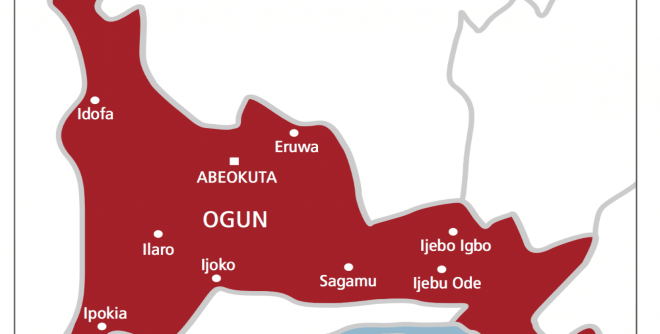
A man identified simply as Seyi has been killed by suspected cultists who allegedly mistook him for a member of a rival group at Ijako Market in Owode-Ijako, Ogun State.

The incident reportedly occurred on Wednesday, September 23, when suspected cult members stormed the area in search of another man identified as Dammy. A police source, who spoke on condition of anonymity because he was not authorised to comment publicly, told Punch the attackers arrived at a location behind the market and opened fire on Seyi.

“We got a report that the incident happened just behind the market. Some boys came to the market looking for a certain target. They got to the spot where the boys were, and they shot the victim,” the source said. The source also said the incident was believed to be connected to the drug trade, adding that police had begun investigating the killing and were working to identify and arrest those responsible.

An anti-cultism advocacy platform, Naija Confra, separately alleged that the attackers had been searching for Dammy when Seyi was killed. The group claimed Seyi was also attacked with an axe after being shot. “It was reported that as soon as the NBM attackers arrived, they echoed ‘Aye Axemen’ and mentioned Dammy’s name before someone was killed,” the platform said. “People initially thought it was Dammy who had been killed until they saw the body and realised it was Seyi.”


READ ALSO:  Police Arrest Judge’s Abductors In Bayelsa
Continue Reading

NEWS

Nationwide Health Crisis Looms As Resident Doctors Issue 2-Week Strike Notice to FG

Published

on

Resident doctors give FG 2-week strike notice to meet their demands

The National Association of Resident Doctors has given the Federal Government two weeks to resolve outstanding welfare and professional issues affecting its members, warning that failure to act could lead to industrial action. The ultimatum was contained in resolutions reached at NARD’s 46th Annual General Meeting in Calabar and presented by the association’s National President, Dr Emmanuel Ogar.

The resident doctors expressed concern over what they described as the slow implementation of agreements previously reached with the Federal Government, saying the prolonged delays had become unacceptable. NARD demanded urgent action on remuneration, career progression, professional allowances, excessive workload, manpower shortages and the general welfare of resident doctors. The association called for the immediate implementation of agreements reached with the government, particularly those relating to improved conditions of service and professional development.

It also urged the government to conclude the review of existing remuneration and professional salary structures for doctors, arguing that the current framework no longer adequately reflects prevailing economic conditions. NARD demanded appropriate compensation for doctors handling additional responsibilities because of manpower shortages in hospitals.

The association called for standardised templates for calculating compensation for excess workload, as well as reliable data to support payments to doctors performing duties beyond their normal responsibilities. It also raised concerns about attacks on healthcare workers and called for the full implementation of policies and anti-assault measures designed to protect doctors and other medical personnel in health facilities.

NARD said the continued migration of doctors and other healthcare professionals from Nigeria had worsened existing manpower shortages and increased pressure on those remaining in the country. The association urged the Federal Ministry of Health and Social Welfare to urgently address factors contributing to the migration of medical professionals.

READ ALSO:  DO YOU AGREE? Tinubu Inherited A Dead Economy From Buhari” – Soludo

State governments were also urged to prioritise the welfare of doctors and other healthcare workers employed by their institutions and ensure the implementation of relevant welfare policies. NARD called for improved infrastructure, adequate medical equipment and better working conditions in healthcare institutions, saying these measures were necessary to improve patient safety and healthcare delivery.

The association also urged the National Assembly to strengthen budgetary provisions for healthcare, stressing that adequate funding remained critical to addressing challenges facing the sector. It demanded the prompt payment of salaries and other entitlements owed to house officers and called for their inclusion in relevant welfare arrangements.

On the use of electronic clocking systems in hospitals, NARD said it was not opposed to the technology provided it was properly implemented and used to support accurate data management rather than as a punitive measure against medical personnel. The association said several agreements and commitments made by the Federal Government remained unresolved despite repeated meetings and assurances.

It therefore urged the government to use the two-week window to address the outstanding issues and prevent a breakdown of industrial harmony in the health sector. NARD said resolving the disputes would improve doctors’ welfare, reduce burnout and ultimately enhance the quality of healthcare available to Nigerians.

The association also elected new national officers at the meeting, with Dr Emmanuel Ogar emerging as president alongside other members of the National Executive Council. NARD urged the new leadership to pursue the implementation of its resolutions and maintain engagement with the government towards securing improved conditions of service for resident doctors.

READ ALSO:  Six Lawmakers Dump PDP, Labour Party For APC

Continue Reading

Trending