Connect with us

NEWS

Kidnapped Online, Enslaved in Asia: The Dark Secret Targeting Nigerian Youths

Published

on


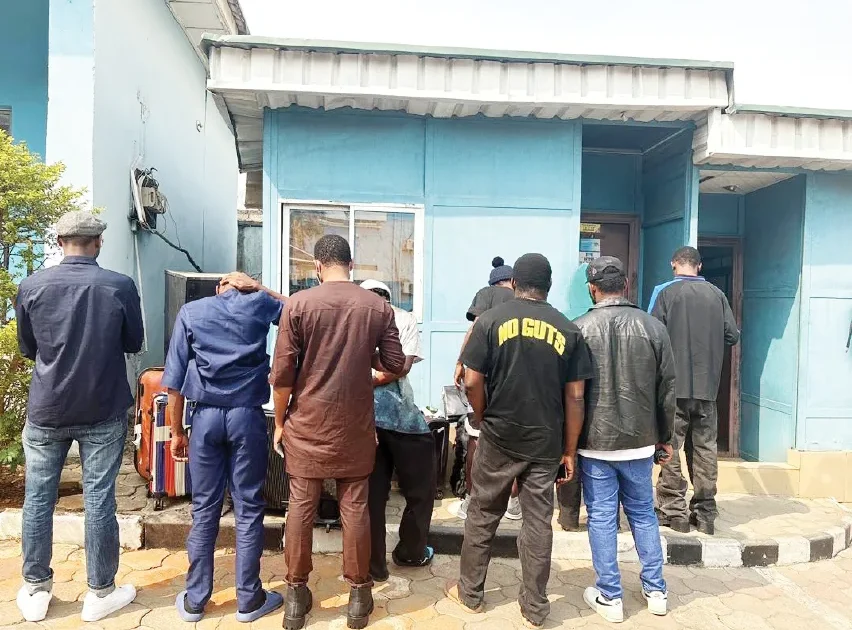
When Sabiu demanded to leave the compound, his boss gave him an answer that still haunts him: “I had paid $5,000 to buy you.” What began as a promised job in Laos had become captivity. His passport was gone, his savings were stolen and armed guards watched over a workforce forced to scam strangers online. His story is one of several uncovered in this investigation by STEPHEN ANGBULU into the trafficking of Nigerian youths through social media into the brutal cybercrime camps of Southeast Asia

The last wrap of weed Sabiu sold in the Golden Triangle fetched him 20 Yuan, about $2.70. It was enough for a plate of noodles, which was all he ate most days, once, at night.

It was October 2024, and the 26-year-old who hails from Borno State had been surviving this way for months in Bokeo Province, Laos, a mountainous Southeastern nation in Asia bordering China, Vietnam, Myanmar, Thailand, and Cambodia. He was sleeping on bus station benches when he ran out of rent money, eating leftover food from restaurants, charging his phone by sitting in eateries until attendants chased him away, and selling marijuana at a small markup to other displaced Africans who had stumbled out of the same cyber-scam compounds that had held him captive. He had tried to kill himself once already, swallowing poison mixed into pineapple juice. It only gave him diarrhoea, after which he returned to scavenging.

A Laotian shopkeeper, a Buddhist who did not trust Black people, began letting Sabiu take noodles on credit after noticing that he, unlike other foreigners, always removed his shoes before entering the shop.

“He told me my character was different,” Sabiu said. It was the closest thing to kindness he had experienced in months.

“At some point, I was chatting with ChatGPT, asking it the easiest way I could just end it. It would not give me the answer. It just kept recommending agencies that could help me. That was how I found IOM,” Sabiu told our correspondent during a sit-down interview.

Before the weed supply dried up when his Laotian friend was arrested, Sabiu had built a fragile economy of survival. He buys at 30 yuan, sells at 50 and pockets the difference. It was, by his own reckoning, the most dignified phase of the six months he spent outside the cybercrime compound that had swallowed his scholarship, his savings, and nearly his life.

Scholarship that didn’t happen

Sabiu’s journey to that desolate point began in a university classroom. In 2023, he secured a scholarship to Jiangxi University of Science and Technology in China to study engineering. But the scholarship, he discovered upon arrival, covered only one year of Chinese language instruction. The remaining four years of tuition would fall on him. His father told him to return home. But Sabiu, who had “tried everything to leave Nigeria behind,” refused.

“I tried to be responsible. I tried to man up,” he said.

With a good command of Mandarin and English, Sabiu rose to the challenge. He taught English to private students in Xinyi city. He worked as a cargo inspector in Guangzhou’s business district, earning small commissions wrapping goods for export. But his student visa barred him from legal employment, and when Chinese immigration began cracking down, even those meagre earnings dried up.

“Unfortunately, in China, if you have a student visa, you cannot work for part time anywhere. So, your job will be illegal by the books. First, I got a job teaching English to a 17-year-old boy in my city, Xinyu in Jiangxi Province.

“But shortly after I started teaching English there, the family relocated to Guangzhou. This was when I became really broke,” he narrated.

It was during one of his trips to Guangzhou that he met a Chinese businessman who introduced himself as Wang Xu. The man was friendly, spoke English, and invited Sabiu to dinner. Over beer, Sabiu, a Muslim, does not drink, Wang Xu listened to his story and offered him a job, a three-month contract as a telecom representative in Laos during the summer break. The work, as he was told, involved helping tourists subscribe to local phone networks.

READ ALSO:  LASTMA Official Set On Fire By Commercial Bus Driver And His Conductor In Lagos (Photos)

“Everything sounded legit. He told me people in Laos do not speak English, so tourists need help subscribing to their SIM cards. I was like, okay, I am interested,” Sabiyu recalled.

He added, “My desperation took over me. I did not think twice.”

Given his aptitude and skills, Sabiu was by every measure the exact kind of bright and resourceful young Nigerian that traffickers operating Asia’s cybercrime underworld have begun to target.

“They do not just pick anyone anymore,” a senior NAPTIP operative who facilitated our correspondent’s access to Sabiu explained, adding, “They target intelligent youths with computer and IT skills, as well as those with clean health records.”

The operative, who spoke on condition of anonymity because he was not authorised to address the media, said between November 2024 and early 2025, the agency’s Intelligence and International Cooperation Unit intercepted close to 1,000 persons attempting to travel to the Middle East and Asia. But the Southeast Asian route, he said, represented something qualitatively different from the domestic servitude pipelines to Iraq and Saudi Arabia that NAPTIP had been combating for years.

“These are people with degrees, people who can code, people who understand trading platforms. And that is exactly why they are wanted,” the operative said.

Wang Xu bought Sabiu a train ticket to Sichuan Province, a 32-hour journey, arranged a hotel, paid for his Laos visa, and had an associate he identified as Wang Li escort him across the border. At the hotel in Sichuan, the Chinese receptionist gave Sabiu his first warning on this journey.

“He told me, ‘whatever you do, do not go to Myanmar. They kill people there.’ He said Laos is fine, but Myanmar, no. I told him I was going to Laos, not Myanmar. But something started feeling off,” Sabiu recalled.

He crossed into Laos by bus and was driven to Bokeo Province, to a place called the Golden Triangle, alleged to be one of the most notorious criminal enclaves on earth.

Bought for $5,000

The Golden Triangle Special Economic Zone is a sealed-off, Chinese-built enclave in northwestern Laos where the borders of Laos, Myanmar and Thailand converge at the Mekong River. Established in 2007 under a 99-year lease granted to Chinese businessman Zhao Wei, it was ostensibly designed as a trade hub.

In reality, however, it is allegedly a self-governed criminal city. The United States Treasury Department sanctioned Chinese businessman Zhao Wei in 2018 for running a transnational criminal organisation. As of 2024, up to 400 scam call centres operated within the zone. The US-China Economic and Security Review Commission revealed in 2025 that scam centres across Myanmar, Cambodia and Laos produced approximately $43.8bn in revenue in 2023, equivalent to 40 per cent of the GDPs of the three countries combined. The United Nations estimated that 220,000 people were being held as forced labourers in such centres across the region.

Sabiu described the Golden Triangle as mini state where the currency, signage and business language operated in Chinese. He said Laotian police couldn’t enter without permission from the zone’s management. For him, it felt like stepping back into China. Except this time, there was no way out.

On his first day, Sabiu was interviewed, not on his communication skills, but on his knowledge of cryptocurrency. After a 10-day probationary period, he was moved into the main compound. There, he saw persons from various nationalities; Ethiopians, Indians, Pakistanis, Filipinos, Brazilians, Russians, all typing at computer terminals, flanked by Myanmar bodyguards who, he said, “do not even smile at you.”

“They were just typing, and Myanmar bodyguards roaming around. They do not even smile at you. They have no sympathy. The moment you do something wrong, they can kill you. They just need an order.

“That was when I realised the whole thing was about scamming people online. We targeted Americans especially,” he said.

As Sabiu came to understand, the operation was a romance fraud on an industrial scale. Workers were instructed to find attractive female profiles on Instagram, women who looked 35 of age, with at least 500 uploaded photos. These images were used to build fake identities. An AI system processed selfies to enable real-time deepfake video calls via WhatsApp. A team of Russian women handled the calls. Once trust was established, the “girlfriend” would steer the target towards a rigged cryptocurrency platform that showed fabricated profits of 40 to 50 per cent on early investments. When the victim deposited their life savings, the money vanished.

READ ALSO:  BREAKING: Supreme Court Dismisses Obi’s Appeal, Affirms Tinubu’s Election

After his 10-day probation, Sabiu was handed a contract written in Chinese, which he could speak but not read. The guards pressured him to sign while his supervisor stepped out to smoke. Though he planned to work for three months, the contract he hurriedly signed bound him for two years. His passport was confiscated too under the guise of visa extension.

“That was the biggest mistake I ever made in my life,” Sabiu said, fighting tears.

“They took away my passport saying that they wanted to extend the visa. I had a tourist visa, which was only for two months. They said they wanted to extend it for three months. And that was it,” he added.

According to Sabiu, an Ethiopian detainee pulled him aside and warned, “Bro, if you know what is good for you, do not work in this company like me. That is the advice I can give you. They beat people and all they care about is money.”

It was the second warning, but it arrived too late. When Sabiu protested that his contract was only for three months, the Ethiopian shook his head and replied, “There is no company in Golden Triangle that will give you a contract for three months. Go and check what you signed.”

Sabiu confronted his boss, who told him to call Wang Xu. But the answer came back cold.

“Finally, he told me he had paid $5,000 to buy me,” Sabiu said.

He worked 17-hour per day. Toilet breaks were capped at 15 minutes. Those who fell asleep were tasered. His Indian friend Raju, who was “always smiling, always happy,” was dragged into an office one day after being caught collecting recruitment commissions from multiple companies.

“I heard a gunshot. They never brought him out. I messaged him. Till today he has not responded. This is one of my own wounds I was telling you about,” Sabiu said almost inaudibly, showing our correspondent the small, circular cigarette burn scar on his arm, a parting gift from his supervisor the day he begged to leave.

That night, Myanmar bodyguards escorted him to a car. They demanded his phone. When he refused, the driver punched him in the nose. They tasered him and drained his Binance cryptocurrency wallet of $9,000, his entire life’s savings, which was not enough to carry him through school. They dumped him by the Mekong River with nothing.

“I wanted to just jump in and kill myself,” he said. Instead of killing himself, however, he scavenged. He ate leftovers from restaurants. An Ethiopian man, himself an agent who sold people to the compounds, took pity on him and gave him shelter.

It took six months of homelessness, a recommendation from ChatGPT, and the intervention of the IOM, the Nigerian Embassy in Vietnam, NAPTIP and the National Intelligence Agency before Sabiu made it back home to Nigeria.

He returned to Nigeria in September 2025, broke and in debt, owing over N3m to a friend from a business deal that collapsed while he was trapped in Asia. He now lives with his father, a stroke patient, and uses his younger brother’s phone. He cannot return to Maiduguri where many of his creditors live.

The day before our interview, his mother found him vomiting blood in his room.

“People thought it was food poisoning from Ramadan. It was not,” he said.

‘They said I will earn $1,500 monthly’

Sabiu’s experience is not an outlier. It sits within a rapidly expanding frontier of trafficking that NAPTIP’s Director-General, Binta Bello, flagged as a national emergency. In February 2026, NAPTIP repatriated 23 Nigerian youths from Thailand who had been trafficked for cyber-enabled crimes. Agency data showed 93 convictions in 2025 and over 2,500 interceptions of potential victims.

READ ALSO:  NDC Deregistration: Peter Obi’s Camp Announces Next Move

The pipeline is industrial in scale and chillingly efficient in design; efficient enough to deliver 28-year-old Offor from a quiet life in Abia State into the dense humid jungles of Myanmar. Offor lost his father in January 2025. In April, while scrolling Facebook, he saw a sponsored advert for an online marketing job with a Chinese company called Tanjin in Thailand, offering $1,500 a month. He tapped the link, joined a WhatsApp group run by an admin called “Oscar,” and was interviewed on video by an Asian woman named “Mary” sitting at a professional-looking desk.

“She could speak English. She was Asian. She asked me my age, if I knew how to use a computer. I told her I could use Microsoft Word, a little of Excel too,” Offor said. He passed the interview. His mother, cautiously optimistic, told him, “Since the company says you are not going to spend any money, maybe you can try it.”

An agent called John, whom Offor would never meet, arranged his visa, NDLEA clearance and flight ticket. On September 5, 2025, Offor boarded an Ethiopian Airlines flight from Abuja to Bangkok. At Suvarnabhumi Airport, an immigration officer walked straight to him, holding up the selfie he had taken on the plane and sent to Oscar minutes before take-off.

“They will tell you to snap a picture of yourself and send at every point in the journey. It was when I reached the airport in Abuja that Oscar sent me my Visa and a token of $500.

“So in Thailand, this female officer showed me my picture. The same picture I took inside the plane. I was wearing this same white native,” he said, flapping the hem of his native wear. His passport was stamped without the standard interview and no questions were asked.

What followed was a 24-hour descent into the underworld. Over the course of 12 hours, Offor said was transferred between seven Toyota Hilux vehicles, each handover at an increasingly remote location, each new driver armed. Then he arrived at a small camp where, for the first time, he met others like him, trafficked from various countries, including a Nigerian couple. At dusk, the vehicles could go no further. The terrain had given way to swampy rice paddies and steep, muddy hills.

“We had to remove our slippers and go barefoot. You had to crawl up the hills. We broke sticks inside the bush to use as climbing hooks. These people, the guides, were doing it so easily. It was clearly their regular job,” Offor said.

They trekked for six hours through dense forest, across two rivers waist-deep, in total darkness, with armed guides who communicated only through hand signals and torch beams that vanished ahead if you fell behind. Several people sustained injuries from falls on the slippery terrain, he said. The Nigerian man he had befriended was exhausted. Offor kept encouraging him in Igbo: “We do not have any choice. If we run, where are we running to? Look at the distance we have driven.”

Offor said they arrived at CK Hills Hotel in Myanmar at 5am, caked in mud. At daybreak, a vehicle conveyed them from the hotel to a fenced compound guarded by soldiers he would later identify as the Democratic Karen Benevolent Army, a Karen ethnic armed group operating in Myanmar’s volatile border regions that the syndicate had contracted to provide military-grade security.

The DKBA soldiers carried rifles and machine guns, he narrated. They are one of several ethnic armed groups born out of Myanmar’s decades-long civil conflict which has splintered into factions, some of which have struck deals with Chinese-run criminal syndicates, providing armed protection in exchange for revenue.

Their presence meant that the facility was not merely a workplace for Offor and his colleagues but a militarised encampment from which escape was practically impossible. Inside, private security personnel wielded tasers and batons. Nearly a thousand people including Chinese, Nigerian, Indian, Pakistani, Ugandan, Kenyan were held there, each assigned a desktop computer, forced to execute fraud targeting wealthy foreigners.

Ojogwu Godwin Chukwudi hailed from Delta State. A young talented personality, Alumnus of Delta State university,Abraka Studied Library and information science. He is an intellectual cyber communicator expert and a prolific blogger professional.

Click to comment

Leave a Reply

Your email address will not be published. Required fields are marked *

NEWS

No More Business As Usual! Obi, Ameh Drop Bombshell Demand For 2027

Published

on

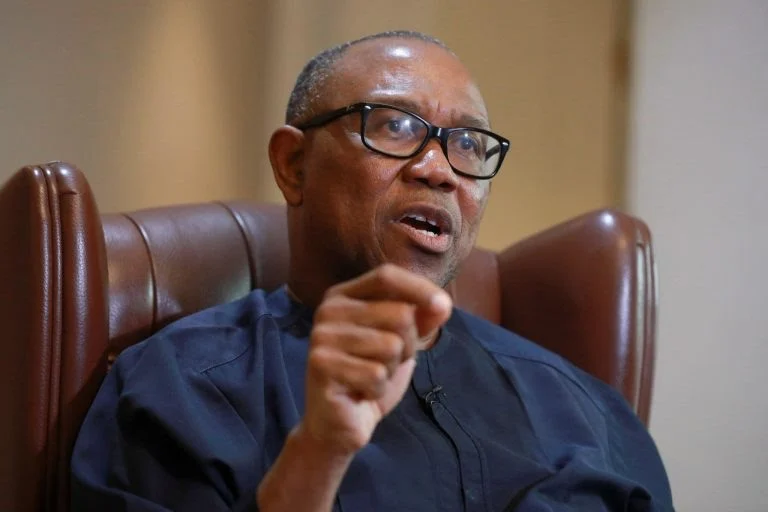
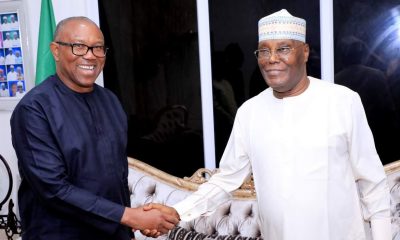
The presidential candidate of the Nigeria Democratic Congress, Peter Obi, and the party’s Kogi East Senatorial Candidate, Peter Ameh, have called on the Independent National Electoral Commission to ensure that the 2027 general elections are free, fair, transparent and credible.

The duo made the call on Sunday in Ogugu, Olamaboro Local Government Area of Kogi State, during a thank-you tour organised for Ameh following his emergence as the NDC senatorial candidate for Kogi East.

Obi, who was warmly received by thousands of supporters in Ogugu, urged INEC to resist any attempt to manipulate the electoral process in favour of any political party, stressing that the wishes of Nigerian voters must be respected.

He said, “The reception is very warm. What is most important is that we want this campaign to be issue-based. We want all candidates to go round Nigeria and ask questions about the challenges confronting the people.

“We want to change the dynamics where people go around and ask Nigerians about their problems. When I was coming to Kogi State today, I stopped at Ugbolafo, Otukpa Junction, and asked some of our elderly people what their challenges were. This is what I want other presidential candidates to do.

“I am moving around Nigeria to see how we can do the right thing. I want the next set of governance to focus on how our children will be in school, how our environment will be secured, and how our people can earn a decent living.”

Speaking to journalists, Obi expressed concern over the worsening economic and social conditions in the country, saying Nigeria needed visionary leadership capable of taking the country out of its current difficulties.

READ ALSO:  BREAKING: Supreme Court Dismisses Obi’s Appeal, Affirms Tinubu’s Election

According to him, “I am not worried about what the outcome of the 2027 general election will be. What worries me is the people and how they will protect their votes on election day.

“The votes of the people must be counted. There is hunger and poverty in the land, and that is why I came here to see what we can do to ameliorate the suffering of our people.

“My charge to the people here is that they must ensure that there is a free, fair and credible election. This time around, our votes must count. Nigerians must elect those who will lead them.”

Obi urged voters to choose leaders based on competence, capacity, character, compassion and commitment to national development.

“They must do it based on competence, capacity, character, compassion and commitment to turning Nigeria around,” he said.

He further expressed concern over the living conditions of Nigerians, particularly those in rural communities, noting that the country’s vast agricultural potential had not been adequately harnessed.

“As I moved around, I felt pain seeing how Nigerians are living. Look at our rural areas with huge farmlands. Nobody is supporting the farmers in all ramifications to enable them to produce the food we need to feed the nation,” Obi said.

He reiterated that Nigeria required leadership with a clear vision and the capacity to reverse what he described as the country’s backward trajectory.

Also speaking, the NDC Kogi East Senatorial Candidate, High Chief Peter Ameh, said the people of the region had no reason to remain impoverished given the area’s fertile land and abundant mineral resources.

READ ALSO:  Enugu Govt Relocates Coal Camp Spare Parts Market

Ameh said, “Kogi East is really blessed. We should not have decayed infrastructure. Despite having coal in Ankpa, the roads are bad, and people cannot access Enjema properly, despite over 200 trucks leaving the coal site daily.

“It is painful that we find ourselves in this deplorable state, but we can do something about it. We can have representatives in the legislature who will be at the National Assembly to speak for the people and raise the challenges confronting our communities.”

Ameh also lamented the state of primary healthcare facilities across Kogi State, describing the situation as unacceptable.

“Our primary healthcare system here in Kogi is dead across the nine local government areas. It is time for us to look at the track records of the candidates contesting elections and assess who can genuinely represent the people at the National Assembly,” he said.

“For me, I have already buried my personal interest in ensuring that the interests of the people become our interest. The people must come first.”

The senatorial candidate alleged that previous votes cast by the people had been “stolen”, urging voters to remain vigilant and protect their ballots during the 2027 elections.

“They have served us before, but these votes were stolen. Today, we are charging the people to go out, vote and protect their votes because it is through the votes they cast that we will have good roads and basic amenities that will provide for our children and secure their future,” Ameh said.

He called for renewed investment in public health institutions and schools, saying the people deserved better social infrastructure.

READ ALSO:  Enough Is Enough! Lagos Assembly Demands Crackdown On Vandals

“It is necessary that our public health institutions and schools continue to have a new lease of life. Our people understand that it is time to bring in new people who are experienced, who have been able to transform their areas of responsibility and have demonstrated capacity at various levels of leadership.

“Such people should come on board and protect our collective interests,” Ameh said.

Continue Reading

NEWS

2 TONNES GONE! NDLEA Busts Ex-Convict In Massive Cannabis Bust

Published

on

The National Drug Law Enforcement Agency has arrested a convicted cocaine trafficker who allegedly disguised himself as an herbal tea businessman and intercepted a 20,000-litre fuel tanker fitted with a concealed compartment containing over two tonnes of cannabis.

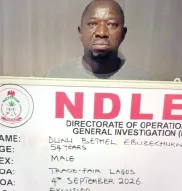
A statement on Sunday by the agency’s spokesman, Femi Babafemi, said the suspect, identified as 34-year-old Dunu Ebubechukwu, was arrested in a sting operation at Article Market, opposite Trade Fair Market, Ojo, Lagos, on Friday, September 4, 2026.

According to the NDLEA, Ebubechukwu was tracked following the interception of 1.2kg of cocaine concealed in phone chargers and destined for Riyadh, Saudi Arabia, at a courier company in Lagos on July 31.

The agency said the suspect admitted to masterminding some illicit drug shipments in the past and discarded his telephone SIM card after learning that the latest consignment had been intercepted.

The statement partly read, “The suspect, arrested in a sting operation at Article Market, opposite Trade Fair Market, Ojo area of Lagos, on Friday, September 4, 2026, while posing as an herbal tea businessman, was identified as 34-year-old Dunu Ebubechukwu.

“In his statement, he admitted being the mastermind of some illicit drug shipments in the past while stating that he discarded his telephone SIM card once he learnt his latest consignment had been intercepted by the NDLEA. Further investigation revealed the suspect is no stranger to the Agency: he was first arrested in 2011 at the MMIA Ikeja, Lagos, after ingesting ingesting 900grams of cocaine and 130grams of heroin in an attempt to fly to Austria under the name Dunu Chukwuyenre Enoch.

“A search of his residence in Ejigbo, Lagos, also led to the recovery of phone chargers similar to those used to conceal the intercepted cocaine, with their internal components removed to create space for drugs.”

READ ALSO:  Flood, Herdsmen Attack Victims In Enugu Hail Governor Mbah Over Assistance 

Babafemi disclosed that Ebubechukwu was prosecuted, convicted and sentenced to five years in prison, but later changed his name from Dunu Chukwuyenre Enoch to Dunu Bethel Ebubechukwu before returning to the illicit drug trade.

“He was prosecuted for the crime, convicted and sentenced to five years in jail. He thereafter changed his name to Dunu Bethel Ebubechukwu and returned to the criminal trade.

“A search of his residence located at 6 Yemishola Street, Ejigbo, Lagos, on Friday, September 4, led to the recovery of phone chargers similar to those used to conceal the intercepted cocaine, with their internal components removed to create space for drugs,” he said.

In another major operation, Babafemi said NDLEA operatives intercepted a 20,000-litre fuel tanker marked MKA 960 XC along the Akoko/Lokoja Expressway in Ondo State on Friday.

He said the driver refused to stop when ordered and later abandoned the tanker at a church premises in Ugbe Akoko before fleeing into the bush.

A search of the vehicle uncovered a concealed compartment containing 165 bags of cannabis weighing 2,145kg, alongside its legitimate fuel cargo reportedly destined for Jos, Plateau State.

“In one of the week’s most brazen discoveries, a 20,000-litre fuel tanker marked MKA 960 XC, and notorious for evading arrest in the past, was chased down by NDLEA officers along the Akoko/Lokoja Expressway in Ondo State on Friday, 4th September, after its driver refused to stop. The driver later abandoned the vehicle at a church premises in Ugbe Akoko and fled into the bush.

“A search of the tanker revealed a false compartment concealing 165 bags of cannabis weighing 2,145kg alongside its legitimate fuel cargo destined for Jos, Plateau State,” the statement said.

READ ALSO:  Tinubu inaugurates 118.8km Ebonyi section of Trans-Saharan Super highway

At the Lagos airport, Babafemi said operatives recovered 966,200 tablets of Tramadol 225mg worth over N1.1bn in street value.

“The drugs were concealed among thrift trousers in a 21-carton consignment from Pakistan,” Babafemi said.

He said another 57.8kg of Loud, a synthetic strain of cannabis valued at over N173m, was recovered from cartons of disposable hand gloves in a shipment from Singapore that had remained unclaimed for weeks.

At the Lagos seaport, he said operatives also intercepted 598.08kg, comprising 890 packets, of cannabis-laced cookies and gummies in a 40-foot container on Wednesday.

“The consignment was linked to three suspects already in custody over the seizure of 842.54kg of similar cannabis-infused cookies,” he added.

In Adamawa State, Babafemi said NDLEA operatives recovered 864,000 opioid pills, mainly Tramadol, from a residence linked to a fleeing suspect, Patrick KC Frank, whose Honda Civic allegedly rammed an NDLEA patrol vehicle before he escaped.

He said the agency also arrested 35-year-old Calistus Ebubechukwu in Michika with 2kg of methamphetamine, describing him as a major supplier of the substance from Lagos to the Mubi and Michika axis.

At the Namtari checkpoint in Mubi, Babafemi said another suspect, Attahiru Hussaini, was intercepted with 750,027,530 pills of Tramadol and other opioids concealed in a soap-laden Ford Galaxy bus.

In Lagos, he said operatives recovered 2,386.9kg of cannabis, 350g of cocaine, over 100kg of assorted Tramadol, 9.7 litres of codeine syrup and 4kg of Rohypnol at Gbaji, while two suspects, Damilare Francis and Emeh Emmanuel, were arrested with 720kg of cannabis at Agbara.

In Kogi State, three suspects—Saidu Mustapha, 35; Zaharadeen Salisu, 29; and AbdulSalam Abdullahi, 25—were arrested with 636kg of cannabis concealed in chicken manure aboard a bus travelling from Owo, Ondo State, to Jos, Plateau State.

READ ALSO:  LASTMA Official Set On Fire By Commercial Bus Driver And His Conductor In Lagos (Photos)

Similarly, 58-year-old Kelechi Unachukwu was arrested along Zaki-Biam Road in Wukari, Taraba State, with over 109kg of assorted controlled drugs, including tramadol, diazepam, pentazocine, phenobarbital, Exol-5, nitrazepam, bromazepam and pregabalin.

The drugs were allegedly being transported in his Toyota Corolla from Onitsha, Anambra State, to Yola, Adamawa State.

In Kaduna, he said the NDLEA operatives intercepted a truck loaded with bags of cement along the Zaria-Kano Expressway and recovered 1,179kg of skunk.

He added that operatives arrested 25-year-old Hamza Dahiru in Bauchi in a follow-up operation after the seizure of 322.5kg of cannabis at Deba town, Gombe State, on September 1.

In Ekiti State, he said operatives uncovered and destroyed a four-hectare cannabis farm in Efon-Alaaye forest, arresting Chuks Alex, 50, and Asafa Adekunle, 35, and recovering 117kg of already harvested cannabis.

In Enugu State, he said a 20-year-old suspect, Obinna David, was arrested at Ugbema Junction with 40,590 capsules of Tramadol.

The NDLEA Chairman and Chief Executive Officer, Brig. Gen. Buba Marwa (retd.), commended the officers involved in the operations and urged them to sustain the agency’s intelligence-driven approach to drug control.

Marwa warned that drug traffickers attempting to evade detection by assuming new identities or operating under legitimate business fronts would continue to be tracked down.

He also urged the agency’s commands and formations to maintain a balanced approach combining enforcement operations with its War Against Drug Abuse sensitisation campaigns in schools, worship centres, workplaces and communities.

Continue Reading

NEWS

Why Trump Wants New Mexico Renamed To “New America” — You Won’t Believe His Reason

Published

on

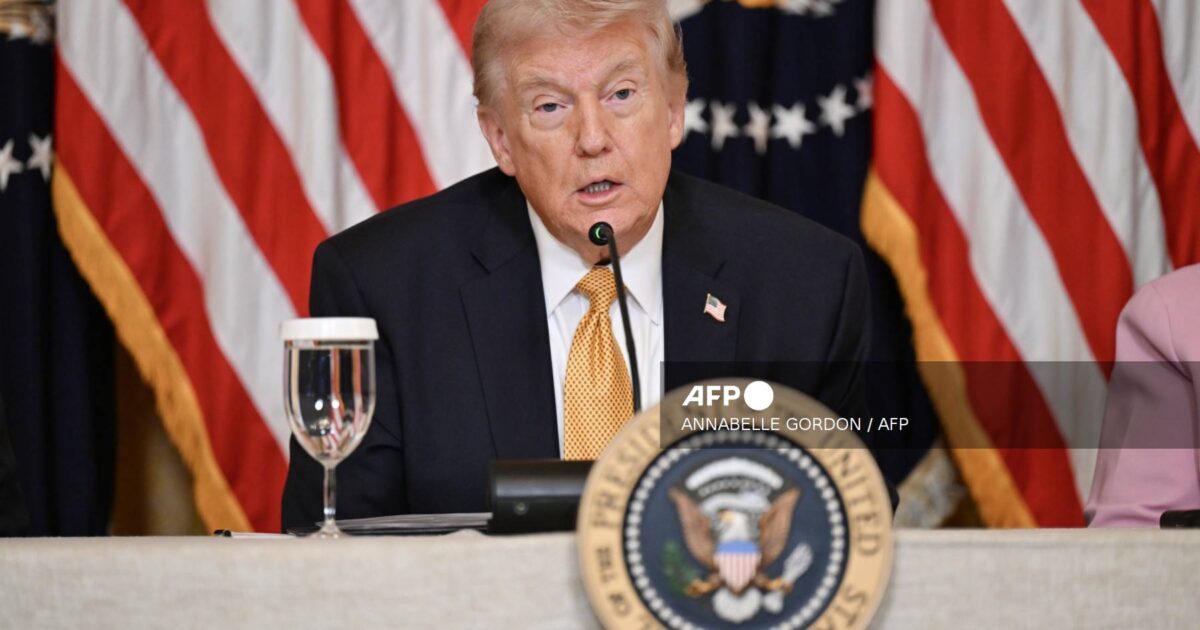
United States President Donald Trump’s name-changing spree found an unlikely new target on Sunday when he suggested the state of New Mexico could become “New America.”

His proposal, which was immediately dismissed by the state’s governor, comes days after he signed an order to rename Lake Ontario as “Lake America” in the middle of a trade war with neighboring Canada.

“Many people suggested changing the name of New Mexico… to NEW AMERICA,” the Republican president posted on social media. “So much more prestigious and beautiful for the people of that potentially incredible State. Wow, I Love It!!!”

The White House reposted an image showing the Mexico part of the state’s name crossed out and replaced with “America.”

Some US media reports said the idea originated as an internet hoax.

State governor Michelle Lujan Grisham told Fox News that the name “isn’t up for debate — it’s been ours since before the United States existed.”

She said the president wanted to “distract Americans” from issues such as soaring gas prices.

Trump last week suggested renaming the Strait of Hormuz as “Trump Strait” as the war with Iran continues — then hours later implied he was not serious about the plan.

He renamed the Gulf of Mexico as the “Gulf of America” on his first day back in the White House in 2025 in a move rejected by Mexico.

Canada has also rejected the attempt to rename Lake Ontario.

AFP


READ ALSO:  SO SAD!! Veteran Broadcaster Aisha Bello Mustapha Is Dead
Continue Reading

NEWS

What’s Happening? Osun Election Tribunal Gets Zero Petitions After 21 Days

Published

on

The Osun governorship election petition tribunal has received no petition challenging the outcome of the August 15 governorship poll during the 21-day window stipulated by the constitution.

The 21-day window for filing petitions to challenge the outcome of the poll ended on Saturday, and none of the 14 parties who got defeated in the poll challenged the result.

The PUNCH reports that the incumbent Osun State Governor, Ademola Adeleke, who contested the poll on the platform of the Accord, was declared elected by the State Returning Officer of the Independent National Electoral Commission, Prof Joshua Ogunwole, in the August 15 governorship poll.

Adeleke won the governorship poll with a total of 511,067 votes to defeat his closest challenger, Bola Oyebamiji of the All Progressives Congress, who polled 444,815 votes.

Fifteen political parties fielded candidates in the poll.

Shortly after the results of the poll were announced, the office of the Election Petition Tribunal that will hear matters opened for operation on the premises of the State High Court in Oke Fia, Osogbo, Osun State.

On Saturday, the last day for filing petitions challenging the outcome of the poll, The PUNCH visited the tribunal office, where the registry was open for business.

However, a staff member who responded to enquiries told our correspondents that no petition had been received.

Efforts to get the reaction of the Osun APC to the development failed, as calls to the party’s spokesperson, Kola Olabisi, went unanswered.

A response to a WhatsApp message sent to him seeking the party’s position on the refusal of opposition parties to challenge Adeleke’s victory was still being awaited as of the time of filing this report on Sunday.

READ ALSO:  SO SAD!! Veteran Broadcaster Aisha Bello Mustapha Is Dead

Speaking exclusively with The PUNCH on Sunday, a member of the APC legal team, who craved anonymity since he was not authorised to comment on the matter, said the party refused to challenge Adeleke’s victory in the interest of peace.

“Not that we don’t have grounds to challenge Adeleke’s election. There are good grounds to challenge the outcome of the poll. But the party hierarchy and the legal team, after deliberations, resolved not to file any petition.

“Power belongs to God, and He gives whoever He wants. We decided not to file any petition in the interest of peace,” he said.

Speaking on the development, the Osun Accord chairman, Victor Akande, said in a telephone interview that by refusing to challenge Adeleke’s victory at the poll, the opposition candidates had demonstrated political maturity.

“We appreciate the maturity of the candidates of the opposition for not challenging the outcome of the poll.

“That itself is good for democracy, if an election stops at the poll. The idea of going to court to regain a mandate is sometimes not good for democracy,” Akande said.

Also commenting, the governorship candidate of the Social Democratic Party, Olugbenga Ajala, said in a telephone interview on Sunday that the election and the processes leading to it were considered fair enough.

Ajala said, “The election came, and it’s gone. Fair enough; we have to be content with the outcome of the poll because we believe the best candidate won, and we also believe that the president is fair enough.

“If the election has not been fair enough, we would have headed for the tribunal, but we give thanks to God that the process can be seen by all to be very fair. That is why no party or candidate is coming forward with any petition.”

READ ALSO:  NDC Deregistration: Peter Obi’s Camp Announces Next Move

Continue Reading

NEWS

“Stay In Your Lane” — Oyo APC Dares Makinde Over 2027 Tinubu Challenge

Published

on

The All Progressives Congress in Oyo State has declared that Governor Seyi Makinde lacks the capacity to challenge President Bola Tinubu in the 2027 presidential election.

The party described Makinde’s presidential ambition as a political drama designed to entertain and distract Nigerians, alleging that public funds were being wasted on the governor’s pursuit of the presidency.

The Oyo APC, in a statement by its Publicity Secretary, Olawale Sadare, in Ibadan, on Sunday, warned that those behind the alleged misuse of state resources would be made to refund every kobo at the appropriate time.

The APC’s latest submission came on the heels of a statement made by Makinde on Saturday that he would be available to receive chieftaincy titles after completing his tenure in May 2027, as he would be free and have nothing serious to do again at that time.

The PUNCH reports that Makinde disclosed this while speaking shortly after he was installed as the Aare Asoludero of Ibarapaland by the Eleruwa of Eruwa during the monarch’s first coronation anniversary in Eruwa, the headquarters of Ibarapa East Local Government Area of the state.

Makinde was also reported to have warned traditional rulers and institutions against partisanship in the 2027 election.

The statement cautioned the governor against issuing threats to citizens of the state, including traditional rulers and religious leaders, “simply because they receive APC candidates and supporters in the palaces and places of worship.

“It is important for us to reiterate that Governor Makinde does not possess the wherewithal to slug it out with President Bola Tinubu in 2027, but he (Makinde) is only out to make some noise and distract the global community.

READ ALSO:  Flood, Herdsmen Attack Victims In Enugu Hail Governor Mbah Over Assistance 

“Unfortunately, he cannot achieve his aim of emerging as the Political Comedian of the Year without wasting the resources of the Pacesetters State, and this would not augur well for the good people of the state.

“Makinde knows, in his mind, that contesting for the Nigerian presidency is not a child’s play, while he does not possess the personal quality, experience and strategy to be the next president in 2027; yet, he is parading himself as the presidential candidate of the structureless Allied People’s Movement.

“Makinde can afford to display campaign posters and billboards in parts of Oyo and Bauchi states for obvious reasons, but the best he can get, even if he gets himself on the ballot, is to come in a distant 8th position.

“Most Nigerians, including leaders of thought and eminent personalities, know that President Tinubu is the best for the country, even as the focus on his likely successor would shift to the North after his reelection in 2027.

“This implies that the person of Seyi Makinde cannot be trusted to rule the world’s most populous black nation at a time like this.

“However, Makinde is being monitored as he embarks on a political journey that has failed before its commencement, and he will be made to cough out all the public funds wasted on it,” Sadare said.

Continue Reading

NEWS

The Return Of Koroma: Ex-President Lands In Freetown After Nigeria Exile

Published

on

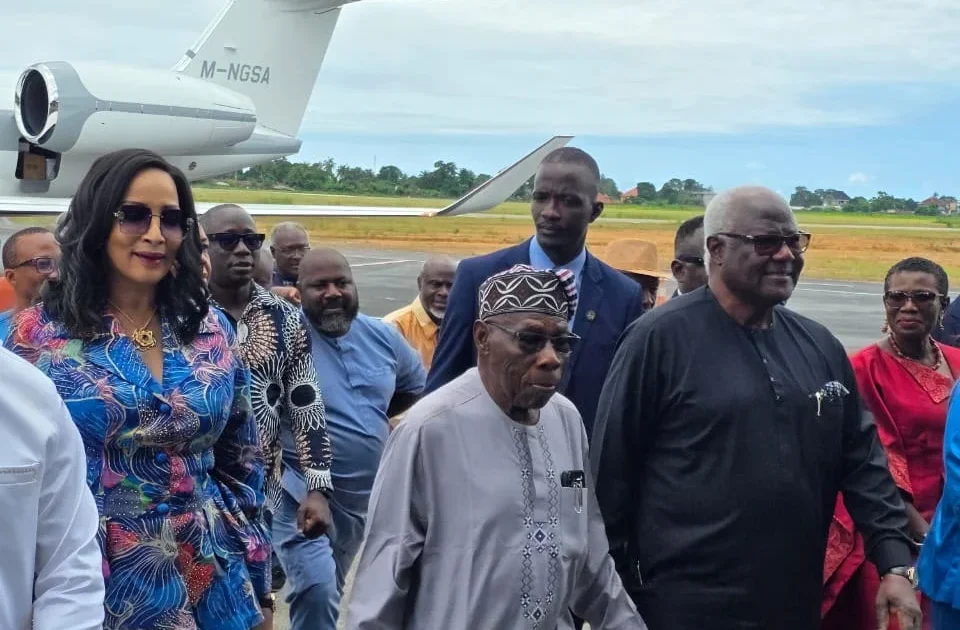
Nigeria has facilitated the return of former Sierra Leone President, Ernest Bai Koroma, to Freetown after more than two years of temporary relocation to Nigeria.

The Minister of Foreign Affairs, Bianca Odumegwu-Ojukwu, disclosed this in a statement signed by her Special Assistant on Communication and New Media, Magnus Eze, on Sunday, adding that she had accompanied Koroma to Sierra Leone on the instruction of President Bola Tinubu.

She said Koroma’s return marked the conclusion of a regional diplomatic and confidence-building process involving the Economic Community of West African States, the Nigerian Government and other stakeholders.

According to the minister, Koroma relocated to Nigeria in January 2024 following engagements by ECOWAS aimed at promoting peace, stability and political understanding in Sierra Leone.

She said the process helped create conditions for improved understanding between President Julius Maada Bio and the former president, paving the way for Koroma’s temporary stay in Nigeria.

“His conduct throughout this period reflected restraint, statesmanship, and commitment to a peaceful outcome,” Odumegwu-Ojukwu said.

The minister noted that sustained engagements during Koroma’s stay in Nigeria contributed to resolving the issues that had necessitated his relocation.

She expressed appreciation to Bio, Koroma and the people of Sierra Leone for their cooperation and commitment to peace.

Odumegwu-Ojukwu said Nigeria remained committed to regional harmony, constitutional order and democratic stability.

She expressed confidence that Koroma’s return would further strengthen national reconciliation and peace in Sierra Leone.

Former President Olusegun Obasanjo also joined the minister in escorting Koroma back to Freetown.

READ ALSO:  LASTMA Official Set On Fire By Commercial Bus Driver And His Conductor In Lagos (Photos)

Earlier, former President Goodluck Jonathan announced the return of former Sierra Leonean President Koroma to his home country.

Jonathan disclosed this in a post on X on Sunday, saying he had seen off Koroma as he began his journey back to Sierra Leone.

“This morning, I had the pleasure of seeing off my dear friend and brother, His Excellency President Ernest Bai Koroma, as he begins his journey home to Sierra Leone,” Jonathan said.

He said Nigeria had been Koroma’s “home away from home” for more than two years, expressing gratitude that the country was able to provide him with friendship and support during the period.

“Working quietly with others, we encouraged dialogue and engagement with the Sierra Leonean authorities to help create the conditions for his safe and dignified return.

“As we say farewell today, I am particularly happy that he is returning home to Freetown,” he said.

Jonathan wished the former Sierra Leonean leader a safe journey and expressed hope that his return would contribute to reconciliation in the country.

“President Koroma, I wish you a safe journey, peace of mind and every success in this new chapter.

“May your return be a moment of renewed hope and reconciliation for you, your family and the people of Sierra Leone,” he said.

Koroma, who governed Sierra Leone from 2007 to 2018, relocated to Nigeria in 2024 after being charged with treason and other offences over a failed coup attempt in November 2023.

He denied the allegations.

While facing trial, Koroma was granted permission to travel to Abuja, Nigeria, for medical treatment.

READ ALSO:  Flood, Herdsmen Attack Victims In Enugu Hail Governor Mbah Over Assistance 

The arrangement was brokered by regional mediators from the Economic Community of West African States amid heightened political tensions in Sierra Leone.

Although his medical leave was initially expected to last three months, he remained in Nigeria for more than two years amid legal restrictions and diplomatic engagements.

However, Sierra Leone’s Ministry of Justice discontinued the criminal proceedings and dropped the treason charges against Koroma in July 2026, paving the way for his return.

Sierra Leonean Vice President Mohamed Jalloh had earlier announced Koroma’s return during a gathering of local leaders and residents in Makeni, a stronghold of the former president.

“In the spirit of peace and national cohesion, the former president Dr Ernest Bai Koroma will return to the country this weekend,” Jalloh said.

The November 2023 attacks left at least 21 people dead and allowed hundreds of prisoners to escape before security forces regained control.

Two dozen soldiers and Koroma’s former bodyguard were later sentenced to prison terms ranging from 50 to 100 years by a military court over their alleged involvement in the mutiny.

Koroma briefly returned to Sierra Leone in July after the charges against him were dropped, attending an ECOWAS summit at the invitation of President Julius Maada Bio.

His full return comes ahead of Sierra Leone’s 2028 general elections and amid government efforts to promote national reconciliation and political stability.

Continue Reading

NEWS

No More Delays! Okpebholo Vows 5-Minute Response To Any Threat In Edo

Published

on

Edo State Governor, Monday Okpebholo, has assured residents that his administration is putting measures in place to enable security agencies to respond to threats within five minutes across the state.

The governor’s Chief Press Secretary, Patrick Ebojele, disclosed this in a statement on Sunday, saying Okpebholo gave the assurance during a service at Living Faith Church, also known as Winners Chapel, along Sapele Road, Benin City.

Okpebholo said his administration would continue to prioritise the safety of residents and improve security across the state within the next month.

He said dedicated emergency numbers would soon be made available to the public, urging residents and others in distress to use the numbers to seek immediate security assistance.

“We will continue to work for Edo people. In terms of security, Edo will be safer in the next month. We will be able to respond to security threats in any part of the state within five minutes,” Okpebholo said.

He added that the administration’s goal was to make Edo safer than it met it by tackling kidnapping, robbery and other criminal activities.

The governor thanked the church for its prayers and support for his administration, saying he was pleased to be a member of Winners Chapel.

He also said his administration was committed to ensuring that residents could live and conduct their businesses safely in the state.

The pastor of the church, Emmanuel Ebiye, commended the governor for his developmental agenda and efforts to improve the state.

Ebiye also thanked Okpebholo for donating food items, including rice and cooking oil, to churches, saying the items would be distributed to members.

READ ALSO:  Nedu Serves VeryDarkMan N500m Compensation Notice For Defamation

“We appreciate your transformation, development and growth experience across all sectors in the state. I pray for grace to be with you. Thank you for all you are doing for Edo people,” he said.

Okpebholo and his entourage later visited Rock of Ages Christian Assembly International along Sapele Road, where its General Overseer, Charles Osazuwa, said the 2027 general election would be peaceful and Nigeria would remain united.

Osazuwa urged Nigerians not to listen to what he described as prophecies of doom about the country, saying elections would come and go without disrupting the nation’s continuity.

He also urged Christians to acquire skills and pursue activities that would enable them to contribute to the economy, while calling on leaders to invest in human capital.

He cited scholarships he received during the administrations of Chief Obafemi Awolowo and Ambrose Alli as examples of how education could empower people.

Meanwhile, Okpebholo said the procurement process for the construction of roads, including what he referred to as “mechanics and peanut roads,” was almost complete and work would soon begin.

He said contractors would be expected to work through the rainy season to accelerate the completion of the projects.

The governor also said the state was making progress in tackling insecurity and urged residents to pray for President Bola Tinubu over the removal of the fuel subsidy, which he linked to improved road infrastructure across the country.

Continue Reading

NEWS

Adeleke Jets Out On Vacation But Drops Big Order: Probe Into Chieftaincy Crisis

Published

on

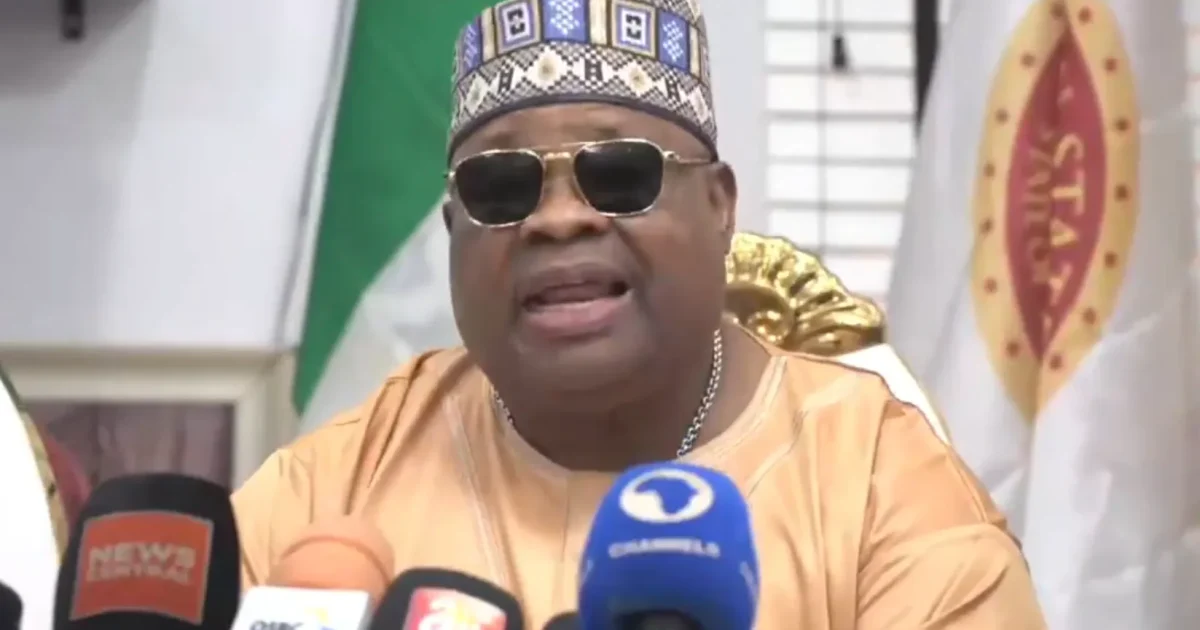
Osun State Governor, Ademola Adeleke, has ordered a probe into the disputed kingship of Koka town in Obokun Local Government.

This was contained in a statement signed by the spokesperson to the governor, Olawale Rasheed, obtained in Osogbo on Sunday, where he also disclosed that Adeleke has commenced vacation.

Olawale said Adeleke left the country for vacation in Europe, during which he will also embark on medicals.

The governor’s spokesperson said during the vacation, the governor will be spending time in the United Kingdom and other destinations that will be announced.

“I am taking a short break to refresh and get further prepared to serve the good people of Osun State,” the governor stated.

The statement further read, “He, however, directed the Ministry of Local Government and Chieftaincy Affairs to probe the circumstances surrounding the reported appointment of another king for Koka Ilase, leading to alleged two kings in the same town.

“The ministry was instructed to review the situation and enforce due process of the law in respect of the chieftaincy law and tradition.”

Commenting on the said appointment of another Onikoka, the statement quoted the governor as saying, “I read of another king appointed outside the one on the stool. The ministry is hereby directed to look into the dispute and issue a report to set the records straight.

“I, however, urge all stakeholders to remain peaceful as the ministry does the needful. Kingship is governed by extant laws and regulations, and the government will stand by the law and tradition of our people.”

READ ALSO:  IGP Egbetokun Appoints First Female Force Secretary (Photos)

All rights reserved. This material, and other digital content on this website, may not be reproduced, published, broadcast, rewritten or redistributed in whole or in part without prior express written permission from PUNCH.

Continue Reading

NEWS

FG’s Domestic Debt Jumps 90% To N24.7trn. Here’s Why It Hurts You

Published

on


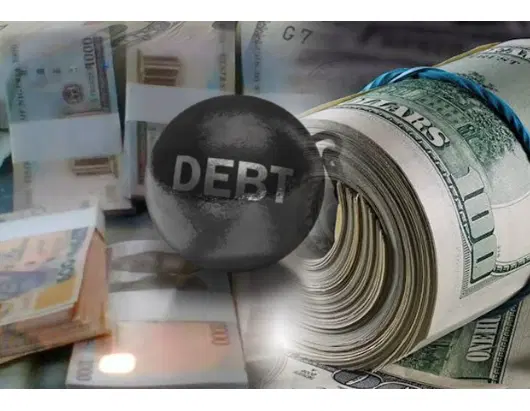
The federal government increased its borrowing from domestic investors by 90.5 per cent, year-on-year (YoY), to N24.7 trillion in the eight months to August 2026, against N12.98 trillion in the corresponding period of 2025 (8M’25).

Financial Vanguard findings from the government’s various public finance data also showed that credit to government grew more than four times faster than credit to the private sector during the same period. The data are generated from the Debt Management Office, DMO, and the Central Bank of Nigeria, CBN’s current reports.

These developments come against the backdrop of a massive rise in government revenue, as reported by some key agencies, including the Nigerian Revenue Service; Nigerian Customs Service; and the Nigerian National Petroleum Company Limited, among others. In addition to the massive revenue inflow, public concerns also point to savings from petrol subsidy removal, as well as massive naira cash translations from the floating of the exchange rate.

Many public commentators point to extra-budgetary spending and other unaccounted fiscal exposures as compounding the government’s cash-flow crises that may have compelled extensive borrowing across domestic and foreign windows. Meanwhile, the latest CBN data on money and credit showed that credit to the government rose by 43 per cent YoY to N33.92 trillion in July 2026 from N23.69 trillion in July 2025. But credit to the private sector grew by only 9.6 per cent YoY to N83.43 trillion in July 2026 from N76.13 trillion in July 2025. Thus, credit to the government grew 4.5 times faster than credit to the private sector. Financial Vanguard findings showed that the surge in FG’s borrowing was driven largely by increased issuance of FGN Bonds; FGN Savings Bonds; and Nigerian Treasury, NTBs.

Further breakdown showed that borrowing through FGN bonds rose by 145 per cent YoY to N7.78 trillion in 8M’26, from N3.18 trillion in 8M’25. Similarly, borrowing through NTBs increased by 78.6 per cent YoY to N16.92 trillion in 8M’26, from N9.47 trillion in 8M’25, while FGN Savings Bonds borrowing rose by 22 per cent YoY to N40.56 billion in 8M’26 from N33.18 billion in 8M’25.

Experts’ insight

Experts who spoke to Financial Vanguard attributed the sharp increase in borrowing to the government’s larger financing requirements, amid a significant fiscal deficit, higher expenditure and rising debt-service obligations. But the experts also raised concerns that the federal government’s increased appetite for domestic borrowing could squeeze businesses and households out of available credit. They also noted that the increased borrowing could lead to an increase in debt-service spending and thus reduce the government’s ability to fund infrastructure, education and health.

2026 fiscal headlines

Under the 2026 Budget, the federal government plans to spend N68.32 trillion, against revenue of N36.87 trillion, indicating a fiscal deficit of N31.45 trillion, with N29.20 trillion to be funded through domestic and external borrowing, while the remaining deficit is expected to be covered through multilateral and bilateral project-tied loans and privatisation proceeds. The N24.7 trillion borrowed in 8M’26 represents 84.7 per cent of the N29.2 trillion domestic borrowing target, leaving about N4.5 trillion for the remaining four months. At an average monthly borrowing of about N3.08 trillion between January and August, maintaining the current pace would result in the government exceeding its annual target.

READ ALSO:  BREAKING: Supreme Court Dismisses Obi’s Appeal, Affirms Tinubu’s Election

Why FG is borrowing more

Chief Executive Officer, MDU Capital Ltd, Ayodeji Ebo, said the increase in borrowing reflected “larger financing requirements arising from high debt-service costs, recurrent expenditure, infrastructure and security needs, and a fiscal deficit that remains significant despite improved revenue.” He said the government might also be relying more on the domestic market to limit its foreign-exchange exposure. However, Ebo cautioned that part of the NTB issuance represented refinancing or rollover of maturing obligations and should not be interpreted entirely as fresh borrowing. Chief Economist, United Capital Plc, Ayodele Akinwunmi, said infrastructure spending and the need to bridge fiscal deficits were among the factors driving the increase in borrowing. He said the impact of the borrowing should also be assessed from the perspective of the infrastructure being financed by the government. “Across the country, we have witnessed significant growth in infrastructure development, ranging from physical projects, such as roads and railways, to soft infrastructure, including education, healthcare and security.

“These advancements have contributed positively to the ease of doing business, creating a more enabling environment for economic activity,” Akinwunmi said. He said Nigeria’s huge infrastructure financing gap meant that the government could not rely solely on annual budgetary allocations to address the deficit, noting that Nigeria’s infrastructure deficit was estimated at about $2.3 trillion by 2043, with an annual financing gap of roughly $100 billion. “Building a robust infrastructure base is essential not only for economic competitiveness but also for job creation and inclusive growth,” he said.

Govt credit grows

4.5 times faster Speaking on the impact of the increased FG’s domestic borrowing on the economy, Ebo said: “For investors, the increased supply of government securities provides attractive risk-free investment opportunities and higher yields. “However, it can crowd out the private sector because banks and institutional investors may prefer government securities to lending to businesses. “This raises borrowing costs for companies and households, potentially slowing private investment, consumption and job creation. Higher debt-service obligations may also reduce the government’s capacity to fund infrastructure and essential public services.” Similarly, Co-Founder, Comecio Partners, Nnamdi Nwizu, said the sharp rise in domestic borrowing had produced mixed effects across the economy. He stated: “Investors, particularly pension funds, banks and money market funds, have benefited from high yields on government bonds and treasury bills, which also helps explain steady FPIs flow into local markets. “However, this comes at a cost to businesses because banks can earn safe, attractive returns by lending to the government; they have less incentive to lend to the private sector, which keeps borrowing costs high for businesses. “For households, higher yields mean better returns on savings products like money market funds and FGN Savings Bonds, but the flip side is rising debt-service costs for the government. “The total money spent on interest payments was over N3 trillion in Q1 alone, which is money not available for infrastructure, healthcare or education, which ultimately affects ordinary Nigerians.”

READ ALSO:  Enough Is Enough! Lagos Assembly Demands Crackdown On Vandals

Revenue rises but spending grows faster

The experts also raised concerns over the fiscal implication of the inSimilarly, the Gross Registered Tonnage (GRT) of ocean-going vessels increased from 40.87 million tonnes to 49.95 million tonnes, representing a growth of 22.2 per cent. Service boat operations also increased during the Maritime Reforms: Nigeria’s ports record 12.3% rise in cargo throughput By Emeka Anaeto quarter. The number of service boats completed rose by 22.3 per cent, from 3,554 to 4,347, while the associated Gross Registered Tonnage increased by 62.4 per cent, from 1.06 million tonnes to 1.73 million tonnes. Container traffic increased by 11.3 per cent, rising from 541,229 TEUs in Q2 2025 to 602,392 TEUs in Q2 2026. The report stated that inward laden containers increased by 6.3 per cent, accounting for approximately 51.5 per cent of total container traffic. Outward laden containers declined marginally by 3.9 per cent, while empty container traffic increased by 13.9 per cent compared with the corresponding period of 2025. Transshipment container traffic stood at 29,038 TEUs, compared with no recorded movement during …As vessel traffic rises 14.4% creased borrowing, despite higher government revenue and the federal government’s N5.4 trillion share of savings from fuel subsidy removal. Nwizu said even with additional revenue from subsidy savings and higher oil prices, government spending had grown faster, causing the deficit to widen. “Instead of using the extra revenue to borrow less, FG has expanded the overall budget and continued to lean heavily on domestic debt to fund it,” he said. He added that some of the fiscal gains from the 2023–2024 reforms were being offset by higher spending in 2026. Head, Equity Research, Quest Merchant Bank, Tunde Abidoye, also said the sharp increase in domestic borrowing, despite improved revenue and fiscal gains from subsidy removal, suggested that expenditure growth had continued to outpace revenue generation. He noted that government spending amounted to N30.6 trillion between June 2023 and December 2025, compared with realised revenue of N20.4 trillion, resulting in a financing gap of N10.2 trillion.

Abidoye, however, said stronger revenue mobilisation, supported by elevated crude oil prices and ongoing tax reforms, had improved the government’s fiscal position.

Debt service threatens capital projects

Chief Executive Officer, Centre for the Promotion of Private Enterprise, CPPE, Muda Yusuf, said the size of the 2026 Budget was one of the biggest factors behind the increase in borrowing. “When you compare the size of this year’s budget with that of last year, there has been a significant increase. The budget this year is over N60 trillion,” Yusuf said. He added that exchange-rate movements had significantly increased the cost of capital projects, while the naira value of external debt and the cost of servicing domestic debt had also risen. Yusuf warned that increased borrowing would raise debt-service costs and reduce the government’s ability to fund other areas of the economy. “As the government borrows more, its debt-service cost also increases.

READ ALSO:  LASTMA Official Set On Fire By Commercial Bus Driver And His Conductor In Lagos (Photos)

When debt servicing increases, it reduces the government’s ability to spend on other things. “Debt servicing takes priority; the government has to service its debt before it can undertake other expenditures,’’ he said. Yusuf warned that the rising debt burden was contributing to funding challenges for capital projects and some aspects of budget implementation. On his part, Nwizu noted that government interest payments on domestic debts exceeded N3 trillion in the first quarter alone, saying such funds could otherwise have been deployed to infrastructure, healthcare and education.

FG may borrow up to N34trn

Meanwhile, the experts projected that the federal government’s domestic borrowing would rise further before the end of 2026. Ebo said that under a target-aligned scenario, fullyear borrowing should close around N29 trillion. However, he said refinancing requirements and possible revenue shortfalls could push gross domestic issuance to between N30 trillion and N33 trillion. Nwizu projected that domestic borrowing could finish around N30 trillion, but warned that it could rise to between N32 trillion and N34 trillion if government spending continued to exceed revenue expectations.

“The base case would be for borrowing to finish around N30 trillion, but the risk remains tilted towards a higher figure if government spending continues to exceed revenue expectations,” he said. The borrowing target has already been revised upward from the original N17.9 trillion to about N29.2 trillion.

Revenue reforms, PPPs as alternatives

Speaking on alternative measures to funding increased government spending, Yusuf said: “If the government is able to generate more revenue, the need to borrow will be reduced. So, revenue reform is very important. “Public-private partnerships are also important. If there are projects the private sector can undertake, the government does not need to burden itself with financing them. Public-private partnerships are, therefore, another way of addressing the issue. “The third option is to ensure that government assets are properly commercialised and generate adequate returns. Improving returns from government assets is also very important. We need to improve revenue generation and ensure that government assets are yielding better returns.

Continue Reading

Trending