
NEWS
The story behind Premier League club badges explained



A football club badge is more than an identity mark.
For many Premier League clubs, the symbols, colours and images on their crests tell stories about their origins, local history, nicknames, famous victories and connections with their cities.
Why does Arsenal have a cannon? Who is the player on Bournemouth’s badge? What does the elephant on Coventry City’s crest represent? And why does Liverpool have a Liver Bird?
Here is the story behind the badges of the 20 Premier League clubs in the 2026/27 season, based on information released by the Premier League on Sunday.
1. Arsenal — Why is there a cannon on Arsenal’s badge?
Arsenal’s current badge was introduced in 2002 and features an eastward-facing cannon.
The cannon reflects the club’s origins at the Royal Arsenal in Woolwich, where a group of munitions workers founded the club in 1886. It is also the reason Arsenal became known as the Gunners.
The crest uses two shades of red, reflecting the club’s traditional colours and those worn during its early years.
Before the badge was simplified in 2002, it also featured Arsenal’s Latin motto, Victoria Concordia Crescit, meaning “Victory through harmony”, as well as the coat of arms of the Borough of Islington.
2. Aston Villa — What does the lion on Aston Villa’s badge mean?
Aston Villa’s current badge, unveiled in 2024, features a lion based on the Scottish coat of arms.
The symbol is linked to former Villa chairman William McGregor, who was Scottish.
A white star above the yellow lion represents Villa’s 1982 European Cup victory over Bayern Munich. The club’s founding year, 1874, also appears on the badge.
The crest uses Villa’s traditional claret and sky blue colours and returned to a shield design after the club used a circular badge during the 2023/24 season.
3. Bournemouth — Who is the player on Bournemouth’s badge?
The silhouette on AFC Bournemouth’s badge is former striker Dickie Dowsett.
Dowsett played for the club during the 1950s and 1960s before later becoming Bournemouth’s commercial manager. He was involved in redesigning the club’s badge in 1972, when his image was used.
His profile has remained part of the crest, apart from between 1981 and 1983, when a bunch of cherries replaced it.
The red and black stripes represent Bournemouth’s home colours, which were originally inspired by Italian club AC Milan.
4. Brentford — Why is there a bee on Brentford’s badge?
Brentford’s badge features a buff-tailed bumblebee, reflecting the club’s nickname, the Bees.
The nickname dates to the 1890s. A group of students from Borough Road College attended a Brentford match and reportedly chanted “Buck up Bs”. Journalists apparently heard the chant as “Buck up Bees”, helping to establish the nickname.
The club’s modern circular badge also carries its name and founding year, 1889.
It replaced an earlier four-part shield that featured three seaxes from the coat of arms of Middlesex.
5. Brighton — Why does Brighton have a seagull on its badge?
Brighton & Hove Albion’s circular badge features a white seagull against the club’s traditional blue and white colours.
The club were once known as the Dolphins, but supporters adopted the Seagulls nickname in the mid-1970s.
The change reportedly came after Brighton supporters responded to Crystal Palace fans chanting “Eagles”.
A seagull has appeared on Brighton’s badge since 1977, except during the club’s centenary season in 2001/02.
6. Chelsea — What does the lion on Chelsea’s badge represent?
Chelsea’s badge centres on a blue lion looking backwards while holding a staff.
The lion was adopted after Ted Drake became Chelsea manager in 1953 and was based on an element of the coat of arms of the former Metropolitan Borough of Chelsea.
The staff represents the Abbot of Westminster, who were historic landholders in the area.
The badge also features two red Tudor roses, representing England, and two footballs.
7. Coventry City — Why does Coventry’s badge have an elephant?
Coventry City’s badge contains an elephant carrying a castle, alongside a phoenix and an eagle.
The symbols are drawn from Coventry’s coat of arms.
The castle represents Coventry Castle, while the elephant is a symbol of strength. A red cross on the elephant is the St George’s Cross, reflecting the historic belief that St George was born in the area.
The phoenix rising from flames represents Coventry’s rebirth following the devastation of the Second World War.
The eagle represents Leofric, Earl of Mercia, who founded monasteries in Coventry.
The football at the centre of the badge uses Coventry’s traditional sky blue and white colours.
8. Crystal Palace — Why does Crystal Palace have an eagle?
Crystal Palace’s badge features an eagle perched on top of the iron-and-glass roof of the historic Crystal Palace exhibition building.
The building was constructed for the Great Exhibition in 1851.
The eagle has featured on Palace’s badge since 1973, when manager Malcolm Allison changed the club’s nickname from the Glaziers to the Eagles. The change was inspired by Portuguese club Benfica.
The badge also uses Palace’s traditional red and blue colours.
In 2022, the date shown on the badge was changed from 1905 to 1861 to recognise the formation of the original football team by cricket players.
9. Everton — What does the tower on Everton’s badge mean?
The central feature of Everton’s badge is Prince Rupert’s Tower, an historic lock-up on Everton Brow.
The tower has been part of Everton’s visual identity for decades.
Two laurel wreaths flank the tower and represent victory, drawing on the traditional use of laurel wreaths to honour champions.
The badge also carries Everton’s founding year, 1878, and the Latin motto Nil Satis Nisi Optimum, meaning “Nothing but the best is good enough”.
The tower, wreaths and motto all featured on the design created by club secretary Theo Kelly in 1938.
10. Fulham — What do the letters on Fulham’s badge mean?
Fulham’s minimalist crest was introduced in 2001, the same year the club began its first Premier League campaign.
The badge features a black-and-white shield, reflecting Fulham’s traditional colours.
Running vertically through the middle are the initials “FFC” for Fulham Football Club, presented in a red monogram.
The previous badge drew heavily on the coat of arms of the London Borough of Hammersmith and Fulham.
11. Hull City — Why does Hull City have a tiger?
Hull City’s badge features a tiger’s head, reflecting the club’s nickname, the Tigers.
The nickname is linked to Hull’s traditional amber and black striped home colours.
The tiger sits inside an amber shield above the club’s founding year, 1904.
The words “Hull City” were added to the top of the current badge, which was introduced in 2019.
12. Ipswich Town — What is the horse on Ipswich’s badge?
The animal on Ipswich Town’s crest is a Suffolk Punch, a famous local breed of heavy workhorse.
The badge also contains turrets representing Ipswich’s Wolsey Gate, while the wavy lines at the bottom reflect the town’s waterways and maritime history.
The current crest has been in use since 1995 and is based on a design created by John Gammage, who won a supporters’ club competition in 1972.
13. Leeds United — What does the rose on Leeds’ badge mean?
Leeds United’s badge features the White Rose of York, a historic symbol of Yorkshire and a badge associated with the royal House of York.
The shield also carries the letters “LUFC”, representing Leeds United Football Club, across blue and yellow stripes.
The club’s blue and yellow colours were originally inspired by the coat of arms of the city of Leeds.
14. Liverpool — Why does Liverpool have a Liver Bird?
Liverpool’s simplified kit badge features the Liver Bird, a mythical creature traditionally depicted as a cormorant.
The bird has been associated with the city of Liverpool for centuries and sits above the initials “L.F.C.”
The branch of laver seaweed in its beak has both a local and linguistic connection, reflecting Liverpool’s coastal environment while also providing a play on the city’s name.
Liverpool’s full heraldic crest contains additional references to the club’s history, including the Shankly Gates and the Hillsborough Memorial, which commemorates the 97 supporters who died in the 1989 stadium disaster.
15. Manchester City — What do the ship and three stripes on Man City’s badge mean?
Manchester City’s circular badge features a golden three-masted ship inside a shield.
The ship represents the Manchester Ship Canal and the city’s trading history.
Three diagonal stripes represent the three rivers associated with Manchester — the Irk, the Irwell and the Medlock.
The lower part of the shield contains the red rose of Lancashire, reflecting the club’s regional identity.
The outer circle carries the club’s name and founding year, 1894.
The current badge was introduced in 2016 and replaced the eagle design that had been used since 1997.
16. Manchester United — Why does Man United have a red devil?
Manchester United’s badge features a red devil holding a pitchfork.
The symbol became associated with the club after manager Sir Matt Busby adopted the “Red Devils” nickname in the 1960s. The nickname was linked to Salford, the local rugby league club that had previously used it.
The badge also contains a three-masted ship, drawn from Manchester’s coat of arms and reflecting the city’s history as a trading centre.
Two footballs and red banners complete the crest.
The club simplified the badge in 1998, removing the words “Football Club”.
17. Newcastle United — What do the symbols on Newcastle’s badge mean?
Newcastle United’s badge draws heavily from the coat of arms of the city.
The shield contains the club’s famous black and white stripes, while a castle keep represents the Norman fortress from which Newcastle takes its name.
A lion carrying St George’s Cross sits above the castle, while two mythical seahorses flank the shield.
The seahorses represent Newcastle’s historic links with the River Tyne and its maritime heritage.
The club’s name appears on a scroll below the crest.
The current badge was introduced in 1988. Newcastle are also in the process of updating the badge, with supporters voting on three proposed designs, according to the Premier League.
18. Nottingham Forest — Why does Nottingham Forest have a tree?
Nottingham Forest’s badge features a tree representing Sherwood Forest, the woodland strongly associated with Nottingham and the club’s name.
The wavy lines underneath the tree represent the River Trent, which runs through Nottingham and alongside the City Ground.
The badge was designed in 1974 after a public competition. Graphic design lecturer David Lewis won the competition.
Two stars were later added to celebrate Forest’s European Cup triumphs in 1979 and 1980 under manager Brian Clough.
19. Sunderland — What do the symbols on Sunderland’s badge mean?
Sunderland’s badge contains several references to the club’s local surroundings and history.
The quartered shield features the Wearmouth Bridge and Penshaw Monument, two prominent local landmarks.
The top and bottom sections use Sunderland’s traditional red and white stripes.
Two black lions support the shield, reflecting both the city’s coat of arms and Sunderland’s Black Cats nickname.
A colliery wheel sits above the shield as a tribute to County Durham’s coal-mining heritage and the colliery that once occupied the site of the club’s stadium.
The badge also carries the Latin motto Consectatio Excellentiae, meaning “in pursuit of excellence”.
20. Tottenham Hotspur — Why does Tottenham have a cockerel?
Tottenham Hotspur’s badge features a cockerel standing on an old-fashioned football.
The cockerel has been associated with the club for more than a century and is linked to Sir Henry Percy, the medieval knight better known as Harry Hotspur.
Percy was reputed to have attached spurs to his fighting cockerels, a connection that helped inspire Tottenham’s use of the symbol.
The club simplified its badge in 2006, removing the additional elements and leaving the cockerel and football as the main design.
It was tweaked again in 2013 and simplified further in 2024, when the curved “Tottenham Hotspur” wording beneath the cockerel was removed.
From cannons to cockerels
The badges of Premier League clubs contain references to far more than football.
They reflect local landmarks, historical figures, nicknames, colours, industries, cities and major moments in club history.
From Arsenal’s cannon and Coventry City’s elephant to Liverpool’s Liver Bird and Tottenham’s cockerel, each crest carries a story that connects the club with its past.


Christian movie, Agbara Nla, was on Friday premiered in Abuja ahead of its release in cinemas across the country on October 1, 2026.
The premiere attracted members of the Christian community and other guests, with members of the production team and cast speaking on the message and expected impact of the film.
Speaking at the event, the co-director of the movie, Damilola Mike-Bamiloye, said the production was designed to communicate a message of faith, hope and deliverance.
He said the team planned to take the movie beyond cinemas to reach a wider audience.
“The cinema is the first start. Then from there, we plan by God’s grace to go to churches, communities, and schools,” he said.
Mike-Bamiloye added that the team was targeting at least one million souls through the movie.
“The aim is to win as many souls as we can through this film. I believe it could even be more than one million,” he said.
Also speaking, Pastor Philip Olubakin, who featured in the movie, said Agbara Nla would help rekindle people’s desire for God and encourage them to reconnect with their faith.
He said, “I think it’s going to spark up a desire for God in the hearts of people. I think it’s also going to help people reconnect to the call of God.”
Olubakin added that the movie would also project what he described as the supremacy of the power of Jesus.
“I also think this movie is going to project that the power of Jesus indeed is supreme and superior to every other power in the world,” he added.
Solomon Odeniyi is a journalist at Punch Newspapers with over six years of professional experience. He has covered key national beats including the judiciary, military, and police, and currently reports on anti-corruption and related issues. Solomon’s work reflects a strong commitment to development-oriented reporting, public interest journalism, and accountability.
All rights reserved. This material, and other digital content on this website, may not be reproduced, published, broadcast, rewritten or redistributed in whole or in part without prior express written permission from PUNCH.
Contact: [email protected]

Ikorodu City host Enugu Rangers at the Mobolaji Johnson Arena on Sunday, September 27, with kick-off at 3pm, as the home side looks to turn its familiar surroundings into points against a visiting team carrying the stronger recent form.
Rangers arrive on the back of a run of one draw and three wins from their last four matches, a sequence that suggests a side growing in confidence.
The champions returned to Onikan last time out and beat Ranchers Bees 1-0 in midweek, having also won the title with a 2-1 victory over Ikorodu City on the final day of last season, both goals scored by Chidiebere Nwobodo. Rangers head into Sunday’s match unbeaten in four.
Ikorodu City, by contrast, have won, drawn, drawn and lost their last four matches, and sit 12th in the table on five points. The hosts remain unbeaten at home this season but must first answer a 2-1 defeat away at Bendel Insurance.
With both clubs still shaping their season, Sunday’s meeting offers an opportunity to build an early platform, though Rangers’ task will be to protect their positive record away from home, where the pressure of maintaining discipline can matter as much as attacking ambition.
All rights reserved. This material, and other digital content on this website, may not be reproduced, published, broadcast, rewritten or redistributed in whole or in part without prior express written permission from PUNCH.
Contact: [email protected]
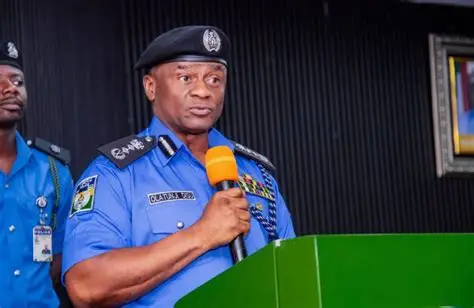
The St. Gregory’s College Old Boys Association has honoured the Inspector-General of Police, Olatunji Disu, with a Lifetime Achievement Award for his contributions to policing and public service.
Disu received the award alongside the Governor of the Central Bank of Nigeria, Olayemi Cardoso, at a reception in Lagos on Saturday to celebrate distinguished old boys of the college.
The Force Public Relations Officer, CSP Ani Iniedu, who disclosed this in a post on Saturday via his X handle, @cspiniedu, the award recognised Disu’s more than three decades of service to the Nigeria Police Force.
Disu graduated from St. Gregory’s College in 1985 and joined the police as a Cadet Assistant Superintendent of Police in 1992.
He has served in several operational and leadership positions, including Commander of the Lagos State Rapid Response Squad, Head of the Intelligence Response Team and Commissioner of Police.
He was appointed the 23rd indigenous Inspector-General of Police in February 2026.
The association also recognised his contributions to intelligence-led policing, criminal investigation, international peacekeeping, personnel welfare and community policing.
Reacting to the honour, Disu thanked the old boys’ association, saying the recognition from his alma mater was particularly significant.
He said the values and education acquired at St. Gregory’s College had helped shape his career and commitment to public service.
Disu reaffirmed his commitment to serving Nigeria with integrity and strengthening the police as a professional and accountable institution.
This version is closer to PUNCH’s compact print treatment: fewer adjectives, shorter paragraphs, attribution early, and no repetition of the same achievement in multiple forms.

The Chairman of Ilorin South Local Government Area of Kwara State, Nuhu Podo, has lauded the reforms of the President Bola Tinubu administration, saying they have increased financial resources available to local governments for grassroots development.
Podo stated this in Ilorin while presenting his administration’s two-year scorecard, where he highlighted more than 130 projects and interventions executed across the council’s 11 wards.
The chairman said the removal of fuel subsidy, foreign exchange reforms and increased financial autonomy for local governments had improved the capacity of the council to execute development projects.
He said the council, with the support of the state government, had implemented projects in security, education, electricity, water supply, roads and administrative infrastructure.
On security, Podo said his administration had employed an additional 150 security personnel and distributed 50 motorcycles for community surveillance.
He added that the council upgraded the Civil Defence Outpost in Alagbado to a full division and donated a Sienna bus to strengthen patrol operations.
According to him, the measures were aimed at improving security and the council’s response to security concerns across the local government.
In the education sector, Podo said the council had renovated classrooms and principals’ offices in some schools, distributed writing materials to reduce the financial burden on parents, and constructed a multipurpose hall at Sheikh AbdulSalam Junior Secondary School.
Podo added that the council, through the Kwara State Universal Basic Education Board, facilitated the renovation of junior secondary schools in Isale Maliki, Ajibesin and other communities.
He disclosed that the council sponsored 30 students at the College of Health Sciences, Osogbo.
“We also constructed a multipurpose hall at Sheikh AbdulSalam Junior Secondary School and named it the Mutawalli of Ilorin Hall, in recognition of the importance of supporting educational development,” he said.
The chairman said the council had also made interventions in the power sector, noting that he received the 2025 Nigerian Local Government Chairmen Merit Award for the distribution of 17 transformers serving communities across the local government.
On water supply, Podo said the administration had drilled new boreholes and repaired existing ones across the 11 wards to improve residents’ access to potable water.
Podo commended Tinubu for the reforms, which he said had strengthened the financial capacity of local governments to execute projects and provide services at the grassroots.
The chairman was accompanied at the briefing by the Vice Chairman, Joel Mary Abiodun; Council Secretary, Mohammed Hameed; and Speaker of the Legislative Arm, Jimoh Taibat Tope.

A colloquium convened by businessman and politician, Adeola Layeni-Dawodu, has called for a more intellectually grounded approach to political participation and discussions around governance in Nigeria.
The colloquium, which held at the Radisson Blu Hotel in Ikeja, Lagos, had the theme, “Renewed Hope, Real Progress: Highlighting the Achievements of the Tinubu Administration and Building a Stronger Tomorrow Together.”
Speaking on the motivation behind the event, Layeni-Dawodu said the initiative was driven by a desire to create a platform where issues of governance could be discussed beyond rallies, slogans and political personalities.
He said, “The inspiration was really a desire to create a more intellectually grounded conversation about governance.
“Politics is often discussed through rallies, slogans and personalities, but governance itself deserves a more serious interrogation. President Tinubu’s administration has undertaken significant reforms across the economy, infrastructure, agriculture, education, housing, energy and social investment, and I felt there was value in creating a platform where those issues could be examined beyond the usual political rhetoric.
“For me, the colloquium was therefore not simply about praising an administration. It was about asking: What has been done? Why were these decisions taken? What has been achieved? What challenges remain? And what should the next phase of the Renewed Hope agenda look like?
“I believe political engagement should contribute to the intellectual development of society. That was the spirit behind the colloquium.”
Explaining the choice of speakers, the convener said competence, relevance and experience were the major considerations.
He noted that the organisers deliberately brought together academics, policy practitioners, political actors, professionals and others with knowledge of the sectors discussed at the event.
On the objectives and outcome of the programme, Layeni-Dawodu said the event was designed to encourage informed public discourse and document conversations around the first three years of the administration.
He added that the event was also intended to demonstrate that political support could coexist with constructive questioning and accountability.
“The immediate objective was to encourage informed public discourse and properly document the conversation around the first three years of the administration.
“But beyond that, I wanted people to leave the room understanding that political participation does not have to be superficial. You can support a government and still ask difficult questions. You can acknowledge progress and still identify areas where more needs to be done,” he said.
Layeni-Dawodu maintained that he was encouraged by the quality of participation and discussions at the event, but noted that the colloquium should not be seen as an indication that all challenges had been resolved.
“The quality of participation and the depth of the conversations demonstrated that there is an appetite for a more substantive form of political engagement. But I would not say the work is finished. In fact, a successful colloquium should create more questions and more responsibility, not give us the impression that everything has been solved,” he said.
Addressing the perception of political engagement as being largely centered on rallies and grassroots mobilisation, he called for a broader understanding of participation in a democracy.
He added that political structures could be built alongside intellectual capacity, noting that political supporters should also be able to scrutinise and evaluate policies.
“You can mobilise people and still educate them. You can build political structures and still build intellectual capacity. You can support a political party and still insist that its policies should be properly explained and their outcomes evaluated.
“That is the kind of political culture I would like to see develop in Nigeria,” he said.
Speaking on his political aspirations, Layeni-Dawodu said his immediate focus was on building capacity and contributing to public discourse, governance and community development.
He said, “In the short term, my aspiration is to continue building my capacity and contributing meaningfully to public discourse, governance and community development. I want to remain engaged with issues that directly affect people, particularly housing, youth development, urban renewal, economic opportunity and the preservation of our cultural identity.”
He added that he believed political ambition should be accompanied by adequate preparation.
“Political ambition should never be separated from preparation. You should prepare yourself for responsibility before responsibility comes to you.
“In the long term, I would like to serve at a level where I can translate ideas into tangible outcomes and contribute to better governance, particularly for Lagos and Nigeria.
“But I don’t want to define my political journey simply by the office I eventually occupy. For me, the more important question is what value I am able to create wherever I find myself.”
Other speakers at the colloquium included a former member of the House of Representatives and Special Adviser to the Lagos State Governor on Parastatal Monitoring, Ibrahim Obanikoro, who spoke on internal affairs; Senior Lecturer in the Department of Employment Relations and Human Resource Management at the University of Lagos, Dr Tunde Elegbede, who spoke on education; and Adebisi Akinyemi, a director at Zane Systems and strategic aircraft procurement partner, who addressed issues concerning the Federal Capital Territory.
Also speaking were the Chief Executive Officer of Candiva Signature Empire, Aminat Okikiola, who discussed agriculture; lawyer and public advocate, Belinda Ezofor, popularly known as Belinda Uju, who spoke on petroleum; communication professional and consultant, Biodun Bakare, who addressed works; and Uju Odumodu, a senior executive at Alpha Pharmacy and Stores Ltd and General Manager at Lasena Water, who spoke on health.

The founder of Word Assembly Ministries, Ilorin, Rev Isaac Omolehin, has raised the alarm over a threat by bandits to attack his church camp at Idofian village in Ifelodun Local Government Area of Kwara State.
The cleric said the threat forced him and his family to go into hiding for safety.
Omolehin disclosed this in a statement made available to journalists on Saturday by his spokesperson, Grace Edema.
According to him, the police arrived at the camp at midnight between May 30 and 31 and ordered an immediate evacuation following a threat of a bandit attack.
The cleric, known for his criticism of denominational divisions in the Nigerian Church, lamented that the threat forced him, his family and more than 100 residents of the facility to flee the camp.
He noted that the camp had remained deserted since the evacuation, rendering the residents homeless.
“The police came to my camp in the middle of the night and asked everybody to run because kidnappers were coming to attack me. The whole camp was deserted, and it has remained deserted,” he said.
He disclosed that although he was away when the evacuation took place, the kidnappers eventually came to the camp but met an empty facility.
“They came, the bandits, but they didn’t meet anybody,” he added.
He said the security threat had forced him to move from one location to another with his wife and children.
“I have a house I can’t enter. I have a car I can’t ride. I have to hide myself from the public. If I sleep here today, I’ll sleep somewhere else tomorrow. I’m homeless with my wife and children,” Omolehin said.
The facility, he said, catered for orphaned children and housed a primary school, secondary school, hospital, old people’s home and a rehabilitation centre for mentally challenged women rescued from the streets, alongside their children.
“Bandits chased us out of that place. The school cannot open, the hospital is not functioning, and the patients and nurses all ran for their lives,” he added.
Omolehin said more than 100 residents of the camp are now scattered across different locations because authorities have yet to declare the area safe for their return.
“We wrote to the police because they were the ones who asked us to leave. We asked if it was safe for us to return because schools had resumed and we have over a hundred children that need to go to school. There has been no response,” the cleric stated.
He added that reports were also submitted to the Department of State Services and the Kwara State Ministry of Social Welfare, which supervises orphanages and rehabilitation centres, but he said no official response had been received.
“Three days after the attack on my camp here in Kwara, my village in Kogi State was also attacked, and my people were killed. When they missed me here in Kwara, they went to my village and attacked my people.
“The kidnappers did not destroy our buildings; the structures in the camp are still intact. However, a few days after we evacuated, thieves began breaking into the camp and carting away our belongings.
“Those were different criminals. The kidnappers did not come to steal refrigerators, fans or mattresses. They came for human beings. The people who looted our property are not the same as the kidnappers.”
Reflecting on his continued public advocacy despite criticism, Omolehin said attacks against him have ranged from social media abuse to restrictions on his ministry.
“The attacks are still going on, but they don’t affect me. Jesus already told us that our preaching may be resisted.”
He revealed that he was recently barred from preaching in Baptist churches, saying, “Baptists banned me from preaching in Baptist churches just about a month ago.”
Omolehin appealed to the Federal and Kwara State governments to strengthen security around the camp to enable displaced residents to return, noting that some of the orphaned children in his care were referred to the facility by government authorities.
“I want to appeal to the government to improve security so that I can return to the camp with my family and all the people I look after. Some of the children in the orphanage were brought to us by the government. Even if they say they don’t care about the rest of us, what about the children they entrusted to us?” he said.
Efforts to get the reaction of the state police command were unsuccessful, as the Police Public Relations Officer, Adetoun Ejire-Adeyemi, did not respond to calls or messages as of the time of filing this report.

Miners death probe: Commend President Tinubu for empowering Interior Minister

As Nigeria’s Electricity Reset Gathers Momentum – THISDAYLIVE
Agbara Nla premieres in Abuja
Ikorodu City face stern test against champions Enugu Rangers

Alumni honour IG Disu with lifetime award
LG boss lauds Tinubu over reforms
Layeni-Dawodu colloquium seeks intellectual public engagemen

INEC and Compromised Academics – THISDAYLIVE
Bandits forced me into hiding – Rev Omolehin

Human Life Continues to Be Worthless in Nigeria – THISDAYLIVE

2028 Olympics Qualifier: Augustine Eguavoen Invites 28 Players For Super Falcons’ Clash With Comoros

Man City CEO Ferran Soriano says fight against Premier League could take years

Plateau Group Denies Militia Links, Backs DSS Security Operations – THISDAYLIVE

Anambra to prosecute those denying women inheritance rights

2027: I dragged Peter Obi, convinced Kwankwaso to join ADC – Babachir Lawal

Kenyan Court Halts Dangote Refinery Work as Firm Insists Groundbreaking Will Proceed
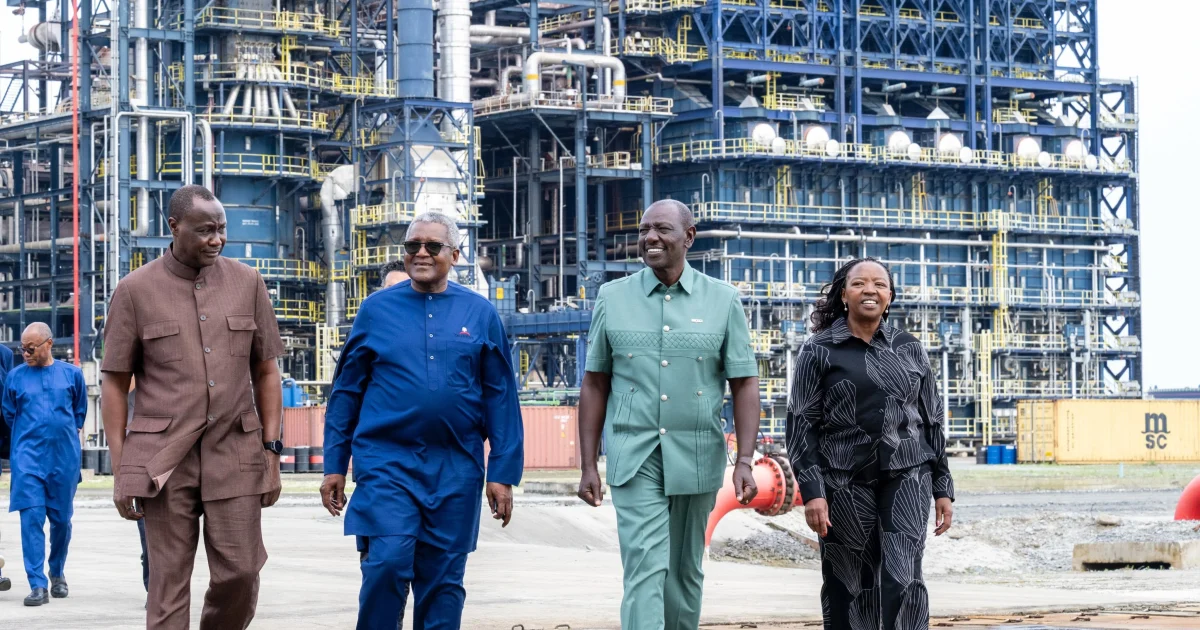
Kenyan court halts work on Dangote refinery in Lamu

NCDMB under Felix Ogbe: The Board’s contribution to Tinubu’s economic agenda

Dangote needs 2.1m bpd Crude as CORAN, IPPG demand reliable supply

US govt says ‘foreign actor’ involved in alleged terror plot targeting British base used by US forces
-
 NEWS2 years ago
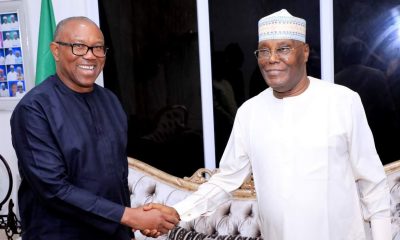
A MUST READ!! What Peter Obi Discussed With Atiku, Saraki, Lamido During Visits – Aide Reveals
-

 MUSIC5 years ago
MUSIC: Mohbad – Back Side [Free Download]
-

 MUSIC5 years ago
MUSIC: Papiwizzy – Oluwalonsola Ft Zlatan and Papisnoop [Download Mp3]
-

 MUSIC3 years ago
MUSIC: DEBHIE FEAT. EMMYBLAQ – TURN UP (DOWNLOAD HERE)