
NEWS
X-raying FRSC national dialogue on vehicle overloading


The recent national dialogue convened by the Federal Road Safety Corps in Abuja on the dangers of vehicle overloading represents an important shift from treating overloading and mix loading merely as traffic offences to addressing it as a national road safety, infrastructure, economic and public-health concern.
The dialogue, reportedly held alongside the launch of the National Movement for Safe Loading and Safe Roads, brought renewed attention to the need for collective action by vehicle owners, drivers, fleet operators, cargo owners, loading agents, regulators and government.
The central issue emerging from the dialogue is that overloading has consequences that extend well beyond the vehicle involved.
Excessive loads can compromise a vehicle’s braking efficiency, steering, stability and manoeuvrability, while increasing mechanical stress and the likelihood of a crash. The National Road Traffic Regulations, 2012 specifically prohibit operating a vehicle with a load exceeding the manufacturer’s specifications or its gross vehicle weight. Regulation 188 also empowers authorised officers to require excess loads to be removed before the vehicle proceeds.
The corps’ current offence schedule also identifies overloading as a traffic infringement carrying penalty points and a prescribed fine.
At the heart of the dialogue should be one fundamental question: How many lives are unnecessarily exposed to risk because of unsafe loading practices?
According to FRSC, figures reported in October 2025 indicated that 3,433 people were killed and 22,162 injured in 6,858 reported road crashes between January and September 2025. In the same vein, the Corps identified driver fatigue, overloading of persons and conveying persons in haulage vehicles as major crash-related concerns, among other factors. This places overloading within the broader challenge of changing unsafe road user behaviour.
The economic argument for overloading needs reconsideration.
One of the strongest issues for national discussion is the perception among some operators that carrying additional passengers or cargo reduces transportation costs and increases profit.
The dialogue provided an opportunity to challenge this delusive calculation.
The apparent economic benefit of carrying an excessive load can be out-weighed by: increased fuel consumption; accelerated vehicle deterioration; tyre and brake failures; damage to road infrastructure; delays caused by breakdowns and crashes; loss of cargo; medical and emergency response costs; loss of productive human capacity; and compensation and insurance-related costs.
Consequently, safe loading should be presented not as an obstacle to transportation and commerce, but as an investment in sustainable mobility and economic productivity.
Overloading affects not only vehicles and people. Excessive axle and gross vehicle loads can contribute to accelerated deterioration of road infrastructure.
This makes the issue particularly significant for Nigeria, where government invests substantial resources in the construction, rehabilitation and maintenance of highways. A safer loading regime therefore has a dual benefit: protecting road users and protecting public infrastructure.
A particularly important dimension of the national dialogue is the recognition that the driver should not be the only person held responsible for unsafe loading. The entire logistics chain has a role: Cargo owner shipper loading agent transporter/fleet operator driver regulator.
Cargo owners should accurately declare the weight of consignments. Loading agents should observe prescribed limits. Fleet operators should maintain vehicles properly. Drivers should refuse dangerous or improperly secured loads, while regulatory agencies should monitor and enforce effectively. This approach moves the conversation from individual blame to shared responsibility.
FRSC’s mandate combines enforcement with public enlightenment, stakeholder cooperation, data management, vehicle administration, emergency response and patrol operations. Consequently, the response to overloading requires a combination of sustained public education; effective weighing and load assessment; enforcement of prescribed weight limits; appropriate sanctions; stronger fleet management systems; driver education and professional training; engagement with transport unions and operators; improved cargo-loading practices; better road and vehicle data; and continuous stakeholder dialogue. The message should be clear: enforcement provides deterrence, but education and stakeholder ownership produce sustainable behavioural change.
The Abuja Declaration should translate dialogue into measurable action. A major test of the dialogue will be what happens after participants have left Abuja.
The reported call for stakeholders to adopt an Abuja Declaration 2026 provides an opportunity to move from discussion to measurable commitments. For the Federal Road Safety Corps, the convener of the national conversation, there are stronger indications that the dialogue was deliberately designed and organized to trigger-off its usual Ember Months safety awareness campaigns in September anchored around the dangers of Overloading and subsequently, dovetail to other road vices such as speed limit violation, use of phone while driving, route violation and other traffic-related violations.
Building on the outcomes of the dialogue, the Corps seeks to sustain the momentum by adopting Overloading as major thrust for its numerous public campaigns and advocacy throughout the Ember season in addition to advocating for stronger framework and commitment by major stakeholders towards bringing an end to overloading and mix loading in Nigeria.
Such a framework would be most useful if it contains clearly defined responsibilities, timelines, indicators and mechanisms for monitoring implementation. For example: Commitment Responsible stakeholder Timeline Performance indicator Monitoring mechanism.
This would make the national movement more than an awareness campaign; it could become a practical framework for reducing unsafe loading nationwide.
As critical stakeholders in public behavioural change, the media should help change the public narrative around overloading. Rather than reporting overloading only when it results in a fatal crash, the media can take this proactive narrative: What is overloading? Why is it dangerous? Who is responsible? What does the law say? What should motorists do? Where can violations be reported?
Human interest stories, investigative reports, radio discussions, documentaries, infographics and social-media campaigns can make the consequences of overloading understandable to both commercial operators and ordinary motorists.
The broader significance of the Abuja dialogue is that the FRSC alone cannot create a safer motoring environment.
It requires a road safety ecosystem in which government agencies, transport operators, manufacturers, road users, cargo owners, the media, civil society and other stakeholders recognise that every unsafe decision on the road can impose consequences on someone else.
As the nation’s lead agency on road safety management and traffic administration, FRSC defines its vision as eradicating road traffic crashes and creating a safe motoring environment in Nigeria.
The national dialogue therefore provides an opportunity to deepen the country’s road safety culture by making safe loading a shared national responsibility rather than merely an enforcement issue.
The Abuja dialogue has brought an important road safety issue back into national consciousness: a vehicle should never carry more than it was designed, licensed and safely configured to carry.
The real measure of the initiative, however, will not be the number of speeches delivered or participants assembled. It will be seen in safer loading practices, stronger compliance, fewer overloaded vehicles, fewer crashes, better-protected roads and, ultimately, lives saved.
The message from Abuja should therefore resonate across Nigeria:
Load safely. Drive responsibly. Protect the road. Protect lives.
Ohaeri, a Fellow of the Nigerian Institute of Public Relations, is the Corps Public Education Officer at the FRSC National Headquarters, Abuja


Christian movie, Agbara Nla, was on Friday premiered in Abuja ahead of its release in cinemas across the country on October 1, 2026.
The premiere attracted members of the Christian community and other guests, with members of the production team and cast speaking on the message and expected impact of the film.
Speaking at the event, the co-director of the movie, Damilola Mike-Bamiloye, said the production was designed to communicate a message of faith, hope and deliverance.
He said the team planned to take the movie beyond cinemas to reach a wider audience.
“The cinema is the first start. Then from there, we plan by God’s grace to go to churches, communities, and schools,” he said.
Mike-Bamiloye added that the team was targeting at least one million souls through the movie.
“The aim is to win as many souls as we can through this film. I believe it could even be more than one million,” he said.
Also speaking, Pastor Philip Olubakin, who featured in the movie, said Agbara Nla would help rekindle people’s desire for God and encourage them to reconnect with their faith.
He said, “I think it’s going to spark up a desire for God in the hearts of people. I think it’s also going to help people reconnect to the call of God.”
Olubakin added that the movie would also project what he described as the supremacy of the power of Jesus.
“I also think this movie is going to project that the power of Jesus indeed is supreme and superior to every other power in the world,” he added.
Solomon Odeniyi is a journalist at Punch Newspapers with over six years of professional experience. He has covered key national beats including the judiciary, military, and police, and currently reports on anti-corruption and related issues. Solomon’s work reflects a strong commitment to development-oriented reporting, public interest journalism, and accountability.
All rights reserved. This material, and other digital content on this website, may not be reproduced, published, broadcast, rewritten or redistributed in whole or in part without prior express written permission from PUNCH.
Contact: [email protected]

Ikorodu City host Enugu Rangers at the Mobolaji Johnson Arena on Sunday, September 27, with kick-off at 3pm, as the home side looks to turn its familiar surroundings into points against a visiting team carrying the stronger recent form.
Rangers arrive on the back of a run of one draw and three wins from their last four matches, a sequence that suggests a side growing in confidence.
The champions returned to Onikan last time out and beat Ranchers Bees 1-0 in midweek, having also won the title with a 2-1 victory over Ikorodu City on the final day of last season, both goals scored by Chidiebere Nwobodo. Rangers head into Sunday’s match unbeaten in four.
Ikorodu City, by contrast, have won, drawn, drawn and lost their last four matches, and sit 12th in the table on five points. The hosts remain unbeaten at home this season but must first answer a 2-1 defeat away at Bendel Insurance.
With both clubs still shaping their season, Sunday’s meeting offers an opportunity to build an early platform, though Rangers’ task will be to protect their positive record away from home, where the pressure of maintaining discipline can matter as much as attacking ambition.
All rights reserved. This material, and other digital content on this website, may not be reproduced, published, broadcast, rewritten or redistributed in whole or in part without prior express written permission from PUNCH.
Contact: [email protected]
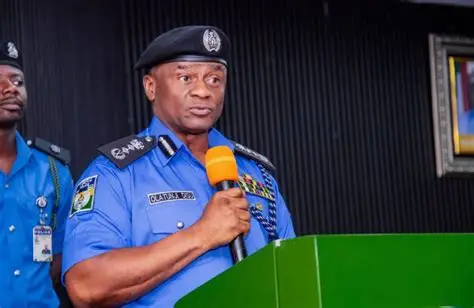
The St. Gregory’s College Old Boys Association has honoured the Inspector-General of Police, Olatunji Disu, with a Lifetime Achievement Award for his contributions to policing and public service.
Disu received the award alongside the Governor of the Central Bank of Nigeria, Olayemi Cardoso, at a reception in Lagos on Saturday to celebrate distinguished old boys of the college.
The Force Public Relations Officer, CSP Ani Iniedu, who disclosed this in a post on Saturday via his X handle, @cspiniedu, the award recognised Disu’s more than three decades of service to the Nigeria Police Force.
Disu graduated from St. Gregory’s College in 1985 and joined the police as a Cadet Assistant Superintendent of Police in 1992.
He has served in several operational and leadership positions, including Commander of the Lagos State Rapid Response Squad, Head of the Intelligence Response Team and Commissioner of Police.
He was appointed the 23rd indigenous Inspector-General of Police in February 2026.
The association also recognised his contributions to intelligence-led policing, criminal investigation, international peacekeeping, personnel welfare and community policing.
Reacting to the honour, Disu thanked the old boys’ association, saying the recognition from his alma mater was particularly significant.
He said the values and education acquired at St. Gregory’s College had helped shape his career and commitment to public service.
Disu reaffirmed his commitment to serving Nigeria with integrity and strengthening the police as a professional and accountable institution.
This version is closer to PUNCH’s compact print treatment: fewer adjectives, shorter paragraphs, attribution early, and no repetition of the same achievement in multiple forms.

The Chairman of Ilorin South Local Government Area of Kwara State, Nuhu Podo, has lauded the reforms of the President Bola Tinubu administration, saying they have increased financial resources available to local governments for grassroots development.
Podo stated this in Ilorin while presenting his administration’s two-year scorecard, where he highlighted more than 130 projects and interventions executed across the council’s 11 wards.
The chairman said the removal of fuel subsidy, foreign exchange reforms and increased financial autonomy for local governments had improved the capacity of the council to execute development projects.
He said the council, with the support of the state government, had implemented projects in security, education, electricity, water supply, roads and administrative infrastructure.
On security, Podo said his administration had employed an additional 150 security personnel and distributed 50 motorcycles for community surveillance.
He added that the council upgraded the Civil Defence Outpost in Alagbado to a full division and donated a Sienna bus to strengthen patrol operations.
According to him, the measures were aimed at improving security and the council’s response to security concerns across the local government.
In the education sector, Podo said the council had renovated classrooms and principals’ offices in some schools, distributed writing materials to reduce the financial burden on parents, and constructed a multipurpose hall at Sheikh AbdulSalam Junior Secondary School.
Podo added that the council, through the Kwara State Universal Basic Education Board, facilitated the renovation of junior secondary schools in Isale Maliki, Ajibesin and other communities.
He disclosed that the council sponsored 30 students at the College of Health Sciences, Osogbo.
“We also constructed a multipurpose hall at Sheikh AbdulSalam Junior Secondary School and named it the Mutawalli of Ilorin Hall, in recognition of the importance of supporting educational development,” he said.
The chairman said the council had also made interventions in the power sector, noting that he received the 2025 Nigerian Local Government Chairmen Merit Award for the distribution of 17 transformers serving communities across the local government.
On water supply, Podo said the administration had drilled new boreholes and repaired existing ones across the 11 wards to improve residents’ access to potable water.
Podo commended Tinubu for the reforms, which he said had strengthened the financial capacity of local governments to execute projects and provide services at the grassroots.
The chairman was accompanied at the briefing by the Vice Chairman, Joel Mary Abiodun; Council Secretary, Mohammed Hameed; and Speaker of the Legislative Arm, Jimoh Taibat Tope.

A colloquium convened by businessman and politician, Adeola Layeni-Dawodu, has called for a more intellectually grounded approach to political participation and discussions around governance in Nigeria.
The colloquium, which held at the Radisson Blu Hotel in Ikeja, Lagos, had the theme, “Renewed Hope, Real Progress: Highlighting the Achievements of the Tinubu Administration and Building a Stronger Tomorrow Together.”
Speaking on the motivation behind the event, Layeni-Dawodu said the initiative was driven by a desire to create a platform where issues of governance could be discussed beyond rallies, slogans and political personalities.
He said, “The inspiration was really a desire to create a more intellectually grounded conversation about governance.
“Politics is often discussed through rallies, slogans and personalities, but governance itself deserves a more serious interrogation. President Tinubu’s administration has undertaken significant reforms across the economy, infrastructure, agriculture, education, housing, energy and social investment, and I felt there was value in creating a platform where those issues could be examined beyond the usual political rhetoric.
“For me, the colloquium was therefore not simply about praising an administration. It was about asking: What has been done? Why were these decisions taken? What has been achieved? What challenges remain? And what should the next phase of the Renewed Hope agenda look like?
“I believe political engagement should contribute to the intellectual development of society. That was the spirit behind the colloquium.”
Explaining the choice of speakers, the convener said competence, relevance and experience were the major considerations.
He noted that the organisers deliberately brought together academics, policy practitioners, political actors, professionals and others with knowledge of the sectors discussed at the event.
On the objectives and outcome of the programme, Layeni-Dawodu said the event was designed to encourage informed public discourse and document conversations around the first three years of the administration.
He added that the event was also intended to demonstrate that political support could coexist with constructive questioning and accountability.
“The immediate objective was to encourage informed public discourse and properly document the conversation around the first three years of the administration.
“But beyond that, I wanted people to leave the room understanding that political participation does not have to be superficial. You can support a government and still ask difficult questions. You can acknowledge progress and still identify areas where more needs to be done,” he said.
Layeni-Dawodu maintained that he was encouraged by the quality of participation and discussions at the event, but noted that the colloquium should not be seen as an indication that all challenges had been resolved.
“The quality of participation and the depth of the conversations demonstrated that there is an appetite for a more substantive form of political engagement. But I would not say the work is finished. In fact, a successful colloquium should create more questions and more responsibility, not give us the impression that everything has been solved,” he said.
Addressing the perception of political engagement as being largely centered on rallies and grassroots mobilisation, he called for a broader understanding of participation in a democracy.
He added that political structures could be built alongside intellectual capacity, noting that political supporters should also be able to scrutinise and evaluate policies.
“You can mobilise people and still educate them. You can build political structures and still build intellectual capacity. You can support a political party and still insist that its policies should be properly explained and their outcomes evaluated.
“That is the kind of political culture I would like to see develop in Nigeria,” he said.
Speaking on his political aspirations, Layeni-Dawodu said his immediate focus was on building capacity and contributing to public discourse, governance and community development.
He said, “In the short term, my aspiration is to continue building my capacity and contributing meaningfully to public discourse, governance and community development. I want to remain engaged with issues that directly affect people, particularly housing, youth development, urban renewal, economic opportunity and the preservation of our cultural identity.”
He added that he believed political ambition should be accompanied by adequate preparation.
“Political ambition should never be separated from preparation. You should prepare yourself for responsibility before responsibility comes to you.
“In the long term, I would like to serve at a level where I can translate ideas into tangible outcomes and contribute to better governance, particularly for Lagos and Nigeria.
“But I don’t want to define my political journey simply by the office I eventually occupy. For me, the more important question is what value I am able to create wherever I find myself.”
Other speakers at the colloquium included a former member of the House of Representatives and Special Adviser to the Lagos State Governor on Parastatal Monitoring, Ibrahim Obanikoro, who spoke on internal affairs; Senior Lecturer in the Department of Employment Relations and Human Resource Management at the University of Lagos, Dr Tunde Elegbede, who spoke on education; and Adebisi Akinyemi, a director at Zane Systems and strategic aircraft procurement partner, who addressed issues concerning the Federal Capital Territory.
Also speaking were the Chief Executive Officer of Candiva Signature Empire, Aminat Okikiola, who discussed agriculture; lawyer and public advocate, Belinda Ezofor, popularly known as Belinda Uju, who spoke on petroleum; communication professional and consultant, Biodun Bakare, who addressed works; and Uju Odumodu, a senior executive at Alpha Pharmacy and Stores Ltd and General Manager at Lasena Water, who spoke on health.

The founder of Word Assembly Ministries, Ilorin, Rev Isaac Omolehin, has raised the alarm over a threat by bandits to attack his church camp at Idofian village in Ifelodun Local Government Area of Kwara State.
The cleric said the threat forced him and his family to go into hiding for safety.
Omolehin disclosed this in a statement made available to journalists on Saturday by his spokesperson, Grace Edema.
According to him, the police arrived at the camp at midnight between May 30 and 31 and ordered an immediate evacuation following a threat of a bandit attack.
The cleric, known for his criticism of denominational divisions in the Nigerian Church, lamented that the threat forced him, his family and more than 100 residents of the facility to flee the camp.
He noted that the camp had remained deserted since the evacuation, rendering the residents homeless.
“The police came to my camp in the middle of the night and asked everybody to run because kidnappers were coming to attack me. The whole camp was deserted, and it has remained deserted,” he said.
He disclosed that although he was away when the evacuation took place, the kidnappers eventually came to the camp but met an empty facility.
“They came, the bandits, but they didn’t meet anybody,” he added.
He said the security threat had forced him to move from one location to another with his wife and children.
“I have a house I can’t enter. I have a car I can’t ride. I have to hide myself from the public. If I sleep here today, I’ll sleep somewhere else tomorrow. I’m homeless with my wife and children,” Omolehin said.
The facility, he said, catered for orphaned children and housed a primary school, secondary school, hospital, old people’s home and a rehabilitation centre for mentally challenged women rescued from the streets, alongside their children.
“Bandits chased us out of that place. The school cannot open, the hospital is not functioning, and the patients and nurses all ran for their lives,” he added.
Omolehin said more than 100 residents of the camp are now scattered across different locations because authorities have yet to declare the area safe for their return.
“We wrote to the police because they were the ones who asked us to leave. We asked if it was safe for us to return because schools had resumed and we have over a hundred children that need to go to school. There has been no response,” the cleric stated.
He added that reports were also submitted to the Department of State Services and the Kwara State Ministry of Social Welfare, which supervises orphanages and rehabilitation centres, but he said no official response had been received.
“Three days after the attack on my camp here in Kwara, my village in Kogi State was also attacked, and my people were killed. When they missed me here in Kwara, they went to my village and attacked my people.
“The kidnappers did not destroy our buildings; the structures in the camp are still intact. However, a few days after we evacuated, thieves began breaking into the camp and carting away our belongings.
“Those were different criminals. The kidnappers did not come to steal refrigerators, fans or mattresses. They came for human beings. The people who looted our property are not the same as the kidnappers.”
Reflecting on his continued public advocacy despite criticism, Omolehin said attacks against him have ranged from social media abuse to restrictions on his ministry.
“The attacks are still going on, but they don’t affect me. Jesus already told us that our preaching may be resisted.”
He revealed that he was recently barred from preaching in Baptist churches, saying, “Baptists banned me from preaching in Baptist churches just about a month ago.”
Omolehin appealed to the Federal and Kwara State governments to strengthen security around the camp to enable displaced residents to return, noting that some of the orphaned children in his care were referred to the facility by government authorities.
“I want to appeal to the government to improve security so that I can return to the camp with my family and all the people I look after. Some of the children in the orphanage were brought to us by the government. Even if they say they don’t care about the rest of us, what about the children they entrusted to us?” he said.
Efforts to get the reaction of the state police command were unsuccessful, as the Police Public Relations Officer, Adetoun Ejire-Adeyemi, did not respond to calls or messages as of the time of filing this report.

Miners death probe: Commend President Tinubu for empowering Interior Minister

As Nigeria’s Electricity Reset Gathers Momentum – THISDAYLIVE
Agbara Nla premieres in Abuja
Ikorodu City face stern test against champions Enugu Rangers

Alumni honour IG Disu with lifetime award
LG boss lauds Tinubu over reforms
Layeni-Dawodu colloquium seeks intellectual public engagemen

INEC and Compromised Academics – THISDAYLIVE
Bandits forced me into hiding – Rev Omolehin

Human Life Continues to Be Worthless in Nigeria – THISDAYLIVE

2028 Olympics Qualifier: Augustine Eguavoen Invites 28 Players For Super Falcons’ Clash With Comoros

Anambra to prosecute those denying women inheritance rights

Man City CEO Ferran Soriano says fight against Premier League could take years

Plateau Group Denies Militia Links, Backs DSS Security Operations – THISDAYLIVE

US govt says ‘foreign actor’ involved in alleged terror plot targeting British base used by US forces

54-year-old teacher arrested for allegedly def!ling 10-year-old girl in Adamawa

2027: I dragged Peter Obi, convinced Kwankwaso to join ADC – Babachir Lawal

Kenyan Court Halts Dangote Refinery Work as Firm Insists Groundbreaking Will Proceed

NCDMB under Felix Ogbe: The Board’s contribution to Tinubu’s economic agenda

Dangote needs 2.1m bpd Crude as CORAN, IPPG demand reliable supply
-
 NEWS2 years ago
A MUST READ!! What Peter Obi Discussed With Atiku, Saraki, Lamido During Visits – Aide Reveals
-

 MUSIC5 years ago
MUSIC: Mohbad – Back Side [Free Download]
-

 MUSIC5 years ago
MUSIC: Papiwizzy – Oluwalonsola Ft Zlatan and Papisnoop [Download Mp3]
-

 MUSIC3 years ago
MUSIC: DEBHIE FEAT. EMMYBLAQ – TURN UP (DOWNLOAD HERE)