NEWS
NBA Raises the Alarm over Plateau Killings, Seeks State Police, Security Reforms – THISDAYLIVE
Published
4 hours agoon
- Insecurity has hampered Christian population in Niger, says CAN
•Defence minister: security is fundamental foundation of national unity, shared prosperity
•COAS operationalises 28 armoured brigade in Kebbi, assures residents of enhanced security
Linus Aleke in Abuja, Laleye Dipo in Minna and Yemi Kosoko in Jos
The four branches of the Nigerian Bar Association (NBA) in Plateau State have condemned the worsening wave of attacks across the state and called for urgent constitutional, security, and judicial reforms to halt the persistent loss of life and property.
Addressing a joint press conference yesterday in Jos, the NBA branches in Jos, Bukuru, Pankshin, and Shendam described the recent attacks in Mangu, Barkin Ladi, Riyom, and Bokkos local government areas as a grave indictment on the state’s capacity to fulfil its constitutional responsibility of protecting citizens.
The lawyers’ position came as a committee set up by Christian Association of Nigeria (CAN) found that the population of Christians in Niger State had been drastically hampered by insecurity.
Submitting its report at a news conference in Minna on Sunday, head of Christian Statistics Committee, Evangelist Marcus Salka, said the essence of the data was to correct “inaccurate projections of the Christian population, particularly those circulating on social media”.
Still on security, Minister of Defence, General Christopher Musa, said security was not merely an operational task but the fundamental foundation upon which national unity and shared prosperity were built. Musa said this at an inter-denominational church service in Abuja to mark Nigeria’s 66th Independence Anniversary.
That was as Chief of Army Staff (COAS), Lieutenant General Waidi Shaibu, formally operationalised 28 Armoured Brigade and Garrison in Birnin Kebbi, alongside 281 Tank Battalion in Yauri and 381 Artillery Regiment in Kaoje, as part of strategic efforts to bolster security and protect vulnerable communities in the state.
The development was revealed in a statement by Acting Deputy Director of Army Public Relations, 8 Division, Nigerian Army, Lieutenant Colonel Olaniyi Osoba.
NBA in Plateau State lamented the continuing bloodshed despite security measures, stating that terrorists have in some instances attacked communities during curfew hours, killing residents and vigilantes.
It warned that the unchecked violence, displacement of communities, and occupation of ancestral lands by attackers posed a serious threat to public confidence, law, and order.
While commending President Bola Tinubu for his recent visit to Plateau and his support for the creation of state police, NBA urged the federal government to go further by sponsoring constitutional amendments that would place security on the Concurrent Legislative List, thereby granting state governors greater operational control over security architecture within their states.
The association also called for improved welfare and equipment for security personnel, enhanced border surveillance, and establishment of a military formation in the Pai River Game Reserve area, which it alleged had become a haven for bandits and terrorists operating around the borders of Plateau, Bauchi and Taraba states.
NBA equally acknowledged efforts by Plateau State Government, including the strengthening of Operation Rainbow, training of neighbourhood watch personnel, procurement of security vehicles, and support for state policing initiatives.
It urged the state government to further empower Operation Rainbow, enforce the state’s anti-land grabbing law, and provide additional support for police formations and forward operating bases.
The lawyers called on local government authorities, traditional rulers, and communities to deepen intelligence gathering and lawful collaboration with security agencies, while cautioning citizens against spreading unverified information capable of escalating tensions.
Expressing concern over recurring reports of delayed security responses to attacks, NBA urged security agencies to regain public trust through professionalism, patriotism, and accountability.
It also demanded investigations into cases where security personnel allegedly arrived at attack scenes after the assailants had fled.
On the judiciary, the association advocated expedited trials for terrorism-related offences, stiffer sanctions for lawyers who deliberately frustrated criminal proceedings, and greater transparency in the prosecution of terrorism suspects and their sponsors.
NBA pledged to deploy the expertise of its members in criminal justice, human rights, and public-interest litigation to support efforts aimed at securing justice for victims, preserving evidence of atrocities, and ensuring accountability for perpetrators.
It maintained that lasting peace in Plateau State could only be achieved through the rule of law, accountability, and effective protection of the constitutional right to life.
NBA warned that the continued devaluation of human life threatened national unity and public confidence in government institutions.
CAN: Insecurity Hampering Christian Population in Niger
Christian Statistics Committee, set up by CAN and headed by Evangelist Marcus Salka, lamented that insecurity had made the Christian population in Niger State very vulnerable.
Most parts of Niger State with huge Christian populations had lost several members as a result of attacks by bandits and terrorists, or because of relocation to other parts of the country believed to be safe for them to live.
The committee put the population of Christians across Niger State at 3,417,636 or 45.7 per cent of the 7,478,417 population of the state.
The 2006 census population of 3,950,249 for Niger State has a distribution of 2,032,725 males and 1,917,524 females, without distribution according to religious affiliations.
However, submitting the committee’s report at a news conference in Minna on Sunday, Salka said the data was meant to correct “inaccurate projections” regarding the population of Christian in the state.
“After gathering all data, Christians are 45.7 per cent, compared with approximately 46.1 per cent and 8.2 per cent for the other two religious categories in the state,” Salka declared.
He said the data was gotten from the “2025 projected population of 7,478,417 for Niger State by the Niger State Bureau of Statistics, thereby putting the Christian population at approximately 3,417,636”.
Salka warned, “The size of the Christian population should not be judged by the level of participation in active politics.”
He stated, “That some Christians do not participate in active politics does not mean we do not have the number. Christians make up a significant population in Niger State.”
He said, “Following the incessant insecurity in Christian-dominated local government areas, especially Shiroro, Munya, Paikoro, Rafi, Wushishi, Magama and others, majority of our people were killed, others relocated.
Salka also said, “The displacement was part of a deliberate attempt to reduce the Christian population in affected communities.”
Salka vowed that the committee would continue to challenge inaccurate representations of the Christian population in Niger State.
Musa: Security is Fundamental Foundation of National Unity and Shared Prosperity
Defence minister, General Christopher Musa, said security was at the core of national unity and shared prosperity.
His comments came as Secretary to the Government of the Federation (SGF), Senator George Akume, said democracy was sustained by peace and unity.
The minister said the Armed Forces of Nigeria remained resolutely committed to safeguarding the country’s sovereignty and restoring lasting peace across all regions.
Musa spoke as he joined Christian faithful, top government officials, and members of the diplomatic corps for an inter-denominational church service at the National Christian Centre, Abuja, to mark Nigeria’s 66th Independence Anniversary.
According to a statement by Special Assistant on Media to the Honourable Minister of Defence, Leah Katung-Babatunde, the service, themed, “Anchored on Hope: The Path to Divine Stability and Shared Prosperity,” formed a major part of the official activities lined up for the national independence celebration.
Musa delivered the first Scripture reading, focusing his message on faith, national peace, and collective security.
Highlighting the imperative of national cohesion and the sacrifices of the nation’s security forces, Musa stated, “As we mark 66 years of our nationhood, our hope for a peaceful, secure and prosperous Nigeria remains unshakeable.
“I urge all Nigerians to remain steadfast, support our men and women in uniform, and unite in faith as we build a nation anchored on divine stability.”
Delivering the vote of thanks, Akume reiterated the importance of democratic stability as the country prepared for future civic milestones.
He stated, “As we look towards the 2027 elections, let us remember that democracy is sustained by peace and unity.”
Akume encouraged citizens to maintain unwavering support for the democratic process.
In his remarks, Senate President Godswill Akpabio, offered prayers for the country, emphasising the need for harmony and concerted national effort towards achieving sustainable peace.
COAS Operationalises 28 Armoured Brigade in Kebbi, Assures Residents of Better Security
Chief of Army Staff (COAS), Lieutenant General Waidi Shaibu, formally operationalised 28 Armoured Brigade and Garrison in Birnin Kebbi, alongside 281 Tank Battalion in Yauri and 381 Artillery Regiment in Kaoje, in an effort to bolster security and protect vulnerable communities in Kebbi State.
According to a statement by Acting Deputy Director of Army Public Relations, 8 Division, Nigerian Army, Lieutenant Colonel Olaniyi Osoba, the COAS said the establishment of the Brigade aligned with Nigerian Army’s ongoing drive to optimise its force structure, expand its operational footprint, strengthen command and control, and improve response times to security challenges across the North-west zone.
Represented by General Officer Commanding (GOC), 8 Division, Nigerian Army, and Commander, Sector 2, Joint Task Force North-West, Operation Fansan Yamma, Major General Bemgba Paul Koughna, Shaibu charged Acting Commander of 28 Brigade, Colonel Abdullahi Umar, to view the deployment as a duty to provide essential fire support capabilities, enhance operational effectiveness across the Division’s area of responsibility, and strengthen ongoing security efforts in Kebbi State, particularly in addressing threats posed by criminal elements and other security challenges.
Shaibu emphasised that achieving lasting peace required unwavering discipline, tactical focus, and seamless synergy among all security stakeholders.
He urged the troops to maintain high standards of professionalism, adhere strictly to the rules of engagement, and protect law-abiding citizens, while executing their constitutional mandate.
The army chief also commiserated with the residents of Jandutse community, who recently lost a member to a bandit attack, and assured them of increased military presence to guarantee their safety.
The residents appreciated the COAS for his continuous efforts towards ensuring their safety and that of the entire Kebbi State.
Prof. Albert: Violent Extremists Killed 6,039 People, Displaced 2.83 Million in Five Years
Professor of African History, Peace and Conflict Studies, Isaac Olawale Albert, revealed that violent extremists killed no fewer than 6,039 people and displaced 2.83 million others over a five-year period.
Albert disclosed that 2,157 deaths were recorded in 2025 alone as a result of armed banditry and mass abductions, cattle rustling, and reprisals by rural vigilante groups in Zamfara, Katsina, Sokoto and Kaduna states in North-west Nigeria.
He said Zamfara and Katsina recorded the highest number of casualties.
Albert, a leading scholar of peace, conflict and security studies in Africa, made the revelation in Abuja while delivering a lecture, titled, “Understanding Conflict, Its Nature and Character,” at the Premium Times Academy’s training of selected journalists on conflict-sensitive reporting.
The pioneer Dean of Faculty of Multidisciplinary Studies at the University of Ibadan, said the death toll within the period under review excluded fatalities recorded in the North-east theatre of operations.
He stated, “In the North-east, Boko Haram and ISWAP insurgency and terrorism, mass displacement, and a wider Lake Chad and Sahel crisis have left 2.33 million people still displaced, according to the IOM DTM, October 2025.
“In the North-central, farmer-herder and land conflicts, as well as communal and identity-based violence in Benue, Plateau, Nasarawa and Niger states, have continued to claim lives. In Benue alone, 811 people were killed in 2025, while more than 500,000 were displaced.”
Giving statistics on killings in the South-west, South-south, and South-east, Albert said, “In the South-west, cultism and gang violence, ritual killings, forest-belt kidnapping, and herder-farmer tensions remain major security concerns. These accounted for part of the 1,686 cult and gang-related deaths recorded nationwide between 2020 and 2025.
“In the South-south, Niger Delta militancy, oil theft and pipeline vandalism, environmental grievances, and maritime piracy remain key challenges. There were 609 violent deaths in 2025, down 15 per cent from 713 in 2024.
“In the South-east, separatist agitation and the state’s response, attacks by unidentified gunmen, and enforced sit-at-home orders have contributed to the violence. There were 776 deaths in 332 sit-at-home-related attacks between 2021 and 2025.”
Albert added, “Journalists report not only events, but also meanings, causes, actors and consequences.
“Conflict-sensitive reporting begins with a clear understanding of what conflict is and how it behaves.”
You may like
NEWS
As Nigeria’s Electricity Reset Gathers Momentum – THISDAYLIVE
Published
18 minutes agoon
November 2, 2026
Nigeria’s emerging power blueprint promises a decisive shift from grid dependency to reliable, decentralised electricity, writes Festus Akanbi
The national grid has traditionally measured Nigeria’s electricity crisis: the volume of power generated, the frequency of system collapses, and the quantity delivered to consumers. Although these indicators remain important, the federal government’s emerging strategy suggests a broader approach built around grid reinforcement, decentralised markets, renewable energy, universal metering, industrial power corridors, local manufacturing and private investment.
If implemented consistently, this blueprint could gradually transform electricity from a national liability into an instrument of industrial growth. Its strength lies in recognising that Nigeria cannot solve its power crisis merely by building more generating plants while neglecting transmission, distribution, metering, and payment discipline.
Presenting his first 100 days in office recently, the Minister of Power, Mr Joseph Tegbe, acknowledged that Nigerians would judge the government by improvements in their daily electricity experience.
“I promised a disciplined approach to solving the sector’s problems. I promised to pursue grid stability through structured, strategic reforms. I promised visible, incremental improvements. And I promised honest communication with Nigerians,” he said.
That candour is necessary because the sector remains deeply troubled. According to Tegbe, the government’s initial diagnosis revealed inadequate gas supply, ageing generating plants, deferred maintenance, weak transmission infrastructure, vandalism, estimated billing and poor revenue collection.
“The sector diagnosis revealed payment of only 27 per cent of generation companies’ bills, undermining their ability to maintain plants and pay gas suppliers,” he disclosed.
Distribution companies were also recording aggregate technical, commercial and collection losses of between 30 and 40 per cent, while arrears owed by ministries, departments and agencies exceeded N100 billion.
Tegbe summarised the sector’s vicious cycle: “Unpaid bills weaken gas supply and maintenance; unreliable supply depresses collections; poor collections deepen debt. A new power station cannot, by itself, resolve that cycle.”
The government’s immediate response has been to repair existing infrastructure and recover stranded capacity. The 375-megawatt Alaoji open-cycle power plant has returned to the grid after three years of inactivity. New transformers commissioned at Apapa, Ijora, Alausa and Lekki unlocked 672MW of transmission capacity, while another transformer at Katampe, Abuja, added 240MW.
“Operational records show generation and transmission above 5,000MW over the past couple of weeks, compared to the 3,700MW-to-4,700MW range before June,” Tegbe said. A generation peak of 5,330MW was also recorded in August and September.
For an economy of Nigeria’s size, however, 5,330MW remains profoundly inadequate. Tegbe appeared conscious of this limitation. “Our next task is to sustain these gains and translate them into more dependable supply at customer level,” he said. “We are aware that a national peak alone cannot describe the experience of every community.”
The proposed Transmission Super Grid is central to the longer-term strategy. Technical audits have begun along the Lagos and Abuja corridors, with further stabilisation planned for the Lagos, Enugu-Port Harcourt and Abuja-Kaduna-Kano axes.
According to the minister, the audits will “identify weak points and guide investment to interventions with verified system impact.” A stronger transmission backbone could improve power evacuation, reduce instability and provide the reserve capacity required to withstand disruptions.
However, the Super Grid must not become another grand project trapped in funding difficulties, procurement disputes and administrative inertia. Its financing arrangements, implementation responsibilities and delivery milestones must be defined and regularly published.
Perhaps the most consequential component is the plan to connect electricity directly to productive economic clusters.
“We will improve the use of existing assets and link supply more directly to productive economic clusters,” Tegbe said. Bilateral arrangements between generation and distribution companies, he explained, are intended “to improve capacity utilisation and payment certainty.”
Dedicated supply to industrial corridors could allow manufacturers, agro-processing companies and small businesses to reduce their dependence on expensive generators. Reliable electricity would lower production costs, strengthen competitiveness and support employment.
Decentralisation offers another promising route. The Electricity Act 2023 empowers states to establish and regulate intrastate electricity markets. Rather than perceive these markets as threats, Tegbe said the government had embraced decentralisation “as an opportunity to unleash innovation, competition and investment across the federation.”
This could enable states to develop solutions around their resources. Gas-producing states could promote embedded generation, agricultural states could develop small hydro and biomass projects, while solar installations and mini-grids could serve remote communities.
Nevertheless, decentralisation will succeed only where states possess the institutional capacity to regulate operators, protect consumers and resist political interference. Without clear responsibilities and technical standards, Nigeria could merely replace one troubled national market with several weak state markets.
Renewable energy is equally prominent in the blueprint. According to Tegbe, 62 solar and mini-grid installations across 30 states have provided about 43.6MW of capacity and 41,735 connections, reaching more than 208,000 people.
“These are practical additions to access for communities and public institutions,” he said.
The portfolio includes a three-megawatt solar hybrid system serving more than 50,000 students and workers at Yakubu Gowon University, Abuja; a 20MW off-grid initiative in Kogi; a 3.5MW solar project in Kebbi; and a 5.5MW mini-grid in Epe. Thirty-nine planned mini-grids in Adamawa are expected to serve 40,000 households, 6,000 small businesses and more than 100 public institutions.
The government is also seeking to connect foreign investment with domestic production. Proposed projects include a $500 million power-equipment industrial park, a Nigerian cable-assembly plant and training centre, a $116 million Zungeru evacuation project and a three-year delivery programme for the East-West Super Grid.
“These proposals link infrastructure delivery to local production and technical capability,” Tegbe said.
Metering remains indispensable. Approximately 350,000 meters were installed during the minister’s first 100 days, while cumulative installations exceeded one million by August 2026. The resolution of litigation also unlocked the procurement of about 1.4 million smart meters, as 5,000 Nigerians undergo installer training.
According to Tegbe, metering will “replace disputed estimates with measured consumption and improve revenue accountability.”
The emerging strategy rests on a sound premise: Nigeria cannot generate its way out of the electricity crisis without simultaneously fixing transmission, distribution, regulation and commercial discipline.
Tegbe admitted that “national progress can coexist with an unreliable feeder in a particular community.” That should remain the government’s reality check. Success will not be measured by agreements signed or megawatts announced, but by factories abandoning generators, households receiving accurate bills and communities enjoying dependable electricity.

Christian movie, Agbara Nla, was on Friday premiered in Abuja ahead of its release in cinemas across the country on October 1, 2026.
The premiere attracted members of the Christian community and other guests, with members of the production team and cast speaking on the message and expected impact of the film.
Speaking at the event, the co-director of the movie, Damilola Mike-Bamiloye, said the production was designed to communicate a message of faith, hope and deliverance.
He said the team planned to take the movie beyond cinemas to reach a wider audience.
“The cinema is the first start. Then from there, we plan by God’s grace to go to churches, communities, and schools,” he said.
Mike-Bamiloye added that the team was targeting at least one million souls through the movie.
“The aim is to win as many souls as we can through this film. I believe it could even be more than one million,” he said.
Also speaking, Pastor Philip Olubakin, who featured in the movie, said Agbara Nla would help rekindle people’s desire for God and encourage them to reconnect with their faith.
He said, “I think it’s going to spark up a desire for God in the hearts of people. I think it’s also going to help people reconnect to the call of God.”
Olubakin added that the movie would also project what he described as the supremacy of the power of Jesus.
“I also think this movie is going to project that the power of Jesus indeed is supreme and superior to every other power in the world,” he added.
Solomon Odeniyi is a journalist at Punch Newspapers with over six years of professional experience. He has covered key national beats including the judiciary, military, and police, and currently reports on anti-corruption and related issues. Solomon’s work reflects a strong commitment to development-oriented reporting, public interest journalism, and accountability.
All rights reserved. This material, and other digital content on this website, may not be reproduced, published, broadcast, rewritten or redistributed in whole or in part without prior express written permission from PUNCH.
Contact: [email protected]
NEWS
Ikorodu City face stern test against champions Enugu Rangers
Published
18 minutes agoon
November 2, 2026

Ikorodu City host Enugu Rangers at the Mobolaji Johnson Arena on Sunday, September 27, with kick-off at 3pm, as the home side looks to turn its familiar surroundings into points against a visiting team carrying the stronger recent form.
Rangers arrive on the back of a run of one draw and three wins from their last four matches, a sequence that suggests a side growing in confidence.
The champions returned to Onikan last time out and beat Ranchers Bees 1-0 in midweek, having also won the title with a 2-1 victory over Ikorodu City on the final day of last season, both goals scored by Chidiebere Nwobodo. Rangers head into Sunday’s match unbeaten in four.
Ikorodu City, by contrast, have won, drawn, drawn and lost their last four matches, and sit 12th in the table on five points. The hosts remain unbeaten at home this season but must first answer a 2-1 defeat away at Bendel Insurance.
With both clubs still shaping their season, Sunday’s meeting offers an opportunity to build an early platform, though Rangers’ task will be to protect their positive record away from home, where the pressure of maintaining discipline can matter as much as attacking ambition.
All rights reserved. This material, and other digital content on this website, may not be reproduced, published, broadcast, rewritten or redistributed in whole or in part without prior express written permission from PUNCH.
Contact: [email protected]
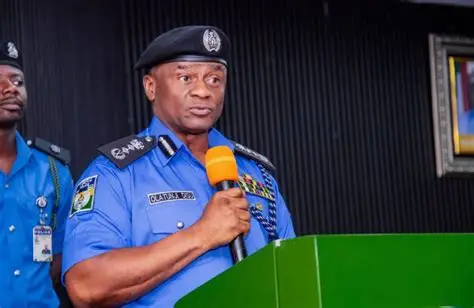
The St. Gregory’s College Old Boys Association has honoured the Inspector-General of Police, Olatunji Disu, with a Lifetime Achievement Award for his contributions to policing and public service.
Disu received the award alongside the Governor of the Central Bank of Nigeria, Olayemi Cardoso, at a reception in Lagos on Saturday to celebrate distinguished old boys of the college.
The Force Public Relations Officer, CSP Ani Iniedu, who disclosed this in a post on Saturday via his X handle, @cspiniedu, the award recognised Disu’s more than three decades of service to the Nigeria Police Force.
Disu graduated from St. Gregory’s College in 1985 and joined the police as a Cadet Assistant Superintendent of Police in 1992.
He has served in several operational and leadership positions, including Commander of the Lagos State Rapid Response Squad, Head of the Intelligence Response Team and Commissioner of Police.
He was appointed the 23rd indigenous Inspector-General of Police in February 2026.
The association also recognised his contributions to intelligence-led policing, criminal investigation, international peacekeeping, personnel welfare and community policing.
Reacting to the honour, Disu thanked the old boys’ association, saying the recognition from his alma mater was particularly significant.
He said the values and education acquired at St. Gregory’s College had helped shape his career and commitment to public service.
Disu reaffirmed his commitment to serving Nigeria with integrity and strengthening the police as a professional and accountable institution.
This version is closer to PUNCH’s compact print treatment: fewer adjectives, shorter paragraphs, attribution early, and no repetition of the same achievement in multiple forms.

The Chairman of Ilorin South Local Government Area of Kwara State, Nuhu Podo, has lauded the reforms of the President Bola Tinubu administration, saying they have increased financial resources available to local governments for grassroots development.
Podo stated this in Ilorin while presenting his administration’s two-year scorecard, where he highlighted more than 130 projects and interventions executed across the council’s 11 wards.
The chairman said the removal of fuel subsidy, foreign exchange reforms and increased financial autonomy for local governments had improved the capacity of the council to execute development projects.
He said the council, with the support of the state government, had implemented projects in security, education, electricity, water supply, roads and administrative infrastructure.
On security, Podo said his administration had employed an additional 150 security personnel and distributed 50 motorcycles for community surveillance.
He added that the council upgraded the Civil Defence Outpost in Alagbado to a full division and donated a Sienna bus to strengthen patrol operations.
According to him, the measures were aimed at improving security and the council’s response to security concerns across the local government.
In the education sector, Podo said the council had renovated classrooms and principals’ offices in some schools, distributed writing materials to reduce the financial burden on parents, and constructed a multipurpose hall at Sheikh AbdulSalam Junior Secondary School.
Podo added that the council, through the Kwara State Universal Basic Education Board, facilitated the renovation of junior secondary schools in Isale Maliki, Ajibesin and other communities.
He disclosed that the council sponsored 30 students at the College of Health Sciences, Osogbo.
“We also constructed a multipurpose hall at Sheikh AbdulSalam Junior Secondary School and named it the Mutawalli of Ilorin Hall, in recognition of the importance of supporting educational development,” he said.
The chairman said the council had also made interventions in the power sector, noting that he received the 2025 Nigerian Local Government Chairmen Merit Award for the distribution of 17 transformers serving communities across the local government.
On water supply, Podo said the administration had drilled new boreholes and repaired existing ones across the 11 wards to improve residents’ access to potable water.
Podo commended Tinubu for the reforms, which he said had strengthened the financial capacity of local governments to execute projects and provide services at the grassroots.
The chairman was accompanied at the briefing by the Vice Chairman, Joel Mary Abiodun; Council Secretary, Mohammed Hameed; and Speaker of the Legislative Arm, Jimoh Taibat Tope.
NEWS
Layeni-Dawodu colloquium seeks intellectual public engagemen
Published
18 minutes agoon
November 2, 2026

A colloquium convened by businessman and politician, Adeola Layeni-Dawodu, has called for a more intellectually grounded approach to political participation and discussions around governance in Nigeria.
The colloquium, which held at the Radisson Blu Hotel in Ikeja, Lagos, had the theme, “Renewed Hope, Real Progress: Highlighting the Achievements of the Tinubu Administration and Building a Stronger Tomorrow Together.”
Speaking on the motivation behind the event, Layeni-Dawodu said the initiative was driven by a desire to create a platform where issues of governance could be discussed beyond rallies, slogans and political personalities.
He said, “The inspiration was really a desire to create a more intellectually grounded conversation about governance.
“Politics is often discussed through rallies, slogans and personalities, but governance itself deserves a more serious interrogation. President Tinubu’s administration has undertaken significant reforms across the economy, infrastructure, agriculture, education, housing, energy and social investment, and I felt there was value in creating a platform where those issues could be examined beyond the usual political rhetoric.
“For me, the colloquium was therefore not simply about praising an administration. It was about asking: What has been done? Why were these decisions taken? What has been achieved? What challenges remain? And what should the next phase of the Renewed Hope agenda look like?
“I believe political engagement should contribute to the intellectual development of society. That was the spirit behind the colloquium.”
Explaining the choice of speakers, the convener said competence, relevance and experience were the major considerations.
He noted that the organisers deliberately brought together academics, policy practitioners, political actors, professionals and others with knowledge of the sectors discussed at the event.
On the objectives and outcome of the programme, Layeni-Dawodu said the event was designed to encourage informed public discourse and document conversations around the first three years of the administration.
He added that the event was also intended to demonstrate that political support could coexist with constructive questioning and accountability.
“The immediate objective was to encourage informed public discourse and properly document the conversation around the first three years of the administration.
“But beyond that, I wanted people to leave the room understanding that political participation does not have to be superficial. You can support a government and still ask difficult questions. You can acknowledge progress and still identify areas where more needs to be done,” he said.
Layeni-Dawodu maintained that he was encouraged by the quality of participation and discussions at the event, but noted that the colloquium should not be seen as an indication that all challenges had been resolved.
“The quality of participation and the depth of the conversations demonstrated that there is an appetite for a more substantive form of political engagement. But I would not say the work is finished. In fact, a successful colloquium should create more questions and more responsibility, not give us the impression that everything has been solved,” he said.
Addressing the perception of political engagement as being largely centered on rallies and grassroots mobilisation, he called for a broader understanding of participation in a democracy.
He added that political structures could be built alongside intellectual capacity, noting that political supporters should also be able to scrutinise and evaluate policies.
“You can mobilise people and still educate them. You can build political structures and still build intellectual capacity. You can support a political party and still insist that its policies should be properly explained and their outcomes evaluated.
“That is the kind of political culture I would like to see develop in Nigeria,” he said.
Speaking on his political aspirations, Layeni-Dawodu said his immediate focus was on building capacity and contributing to public discourse, governance and community development.
He said, “In the short term, my aspiration is to continue building my capacity and contributing meaningfully to public discourse, governance and community development. I want to remain engaged with issues that directly affect people, particularly housing, youth development, urban renewal, economic opportunity and the preservation of our cultural identity.”
He added that he believed political ambition should be accompanied by adequate preparation.
“Political ambition should never be separated from preparation. You should prepare yourself for responsibility before responsibility comes to you.
“In the long term, I would like to serve at a level where I can translate ideas into tangible outcomes and contribute to better governance, particularly for Lagos and Nigeria.
“But I don’t want to define my political journey simply by the office I eventually occupy. For me, the more important question is what value I am able to create wherever I find myself.”
Other speakers at the colloquium included a former member of the House of Representatives and Special Adviser to the Lagos State Governor on Parastatal Monitoring, Ibrahim Obanikoro, who spoke on internal affairs; Senior Lecturer in the Department of Employment Relations and Human Resource Management at the University of Lagos, Dr Tunde Elegbede, who spoke on education; and Adebisi Akinyemi, a director at Zane Systems and strategic aircraft procurement partner, who addressed issues concerning the Federal Capital Territory.
Also speaking were the Chief Executive Officer of Candiva Signature Empire, Aminat Okikiola, who discussed agriculture; lawyer and public advocate, Belinda Ezofor, popularly known as Belinda Uju, who spoke on petroleum; communication professional and consultant, Biodun Bakare, who addressed works; and Uju Odumodu, a senior executive at Alpha Pharmacy and Stores Ltd and General Manager at Lasena Water, who spoke on health.
With the recent reports that more than 600 senior academics from public universities across the 19 northern states and the Federal Capital Territory endorsed President Bola Tinubu for a second term, Davidson Iriekpen calls on the Independent National Electoral Commission to thoroughly scruntise the collation and returning officers it will recruit to oversee the 2027 elections if it wants the 2027 presidential poll to be free, fair and credible
Genuine concerns were raised recently on the credibility of the 2027 presidential election following the reports that over 600 senior academics from public universities across the 19 northern states and the Federal Capital Territory (FCT) endorsed President Bola Tinubu for a second-term bid ahead of the poll.
The Independent National Electoral Commission (INEC) hires university lecturers to conduct elections, and political analysts believe the endorsement could taint the neutrality of these lecturers in the conduct of the 2027 elections and undermine the credibility of the polls.
The organisers and participating academics announced their endorsement in Kaduna at a meeting convened by the Special Adviser to the President on Political Matters, Ibrahim Masari, and attended by various northern governors and federal ministers.
These academics reportedly claimed that their backing of the president’s reelection was conditional and based on data analysis of infrastructure development, educational funding reforms like Nigerian Education Loan Fund (NELFUND), and other administration policies.
However, many fear that the non-neutrality of such critical stakeholders in the nation’s electoral system could influence the outcome of the presidential election in favour of the All Progressives Congress (APC).
Sensing the danger this could pose to other political parties and the credibility of the 2023 presidential election, the Peter Obi Media Office (POMR) was the first to raise concerns over the endorsement.
In a statement signed by its spokesman, Idris Zekeri, the office described the alleged endorsement as an early attempt to build what it called a network of partisan actors ahead of the election.
It said the development was particularly concerning because university academics had frequently been engaged as electoral officials, including returning and collation officers.
The office alleged that electoral malpractice could begin long before election day through the identification, cultivation and placement of individuals capable of influencing the process.
It urged Nigerians to remain vigilant and called on the INEC to publish the names of all prospective collation and returning officers well ahead of the 2027 elections. Such disclosure, it stated, would allow civil society organisations, political parties and the public to assess the political neutrality of prospective electoral officials.
“Their public backing for the incumbent consequently raises a serious and unavoidable question: Is the framework for manipulating the 2027 election already being established?” it queried.
“Electoral rigging does not suddenly occur on election day; it begins months or even years earlier through the identification, cultivation, and placement of individuals capable of influencing the process when votes are finally cast,” the statement added.
It further called on university governing councils and academic bodies nationwide to adopt strict conflict-of-interest rules to prevent staff from using their professional positions to facilitate partisan political mobilisation.
Recall that one of the strategies introduced during the military regimes was the appointment of academics from Nigerian universities as chairman of INEC. When the country returned to democratic governance in 1999, the practice was sustained.
Professor Attahiru Jega, who was appointed INEC chairman by former President Goodluck Jonathan, expanded the practice to include the deployment of university academics as election officials in the 2015 general election.
He saw it as part of the efforts to ensure the credibility and integrity of the electoral process.
Under the arrangement, vice-chancellors functioned as Returning Officers at the federal and state levels, while lecturers and other academics played roles at the local government level.
Jega believed that the academics were an embodiment of integrity, who would be less susceptible to inducements by unscrupulous politicians who might try to corrupt electoral officials to subvert the will of the electorate.
The INEC boss was also of the view that lecturers knew that their honour as members of the intelligentsia was at stake, and they would not easily soil their reputation and career by aiding electoral malpractices.
Justifying his decision, Jega said, “We know that anybody who has risen in the system to become a vice chancellor will not for anything damage his or her reputation by pandering to the wishes of politicians.”
However, experience gathered from several elections has shown otherwise. It is now obvious that academics, like other professionals, are susceptible to corruption.
Professors and other lecturers have been aiding electoral malpractices since the return to democracy in 1999.
Ironically, while reacting to the 2019 general election, Jega, attending an event at Bayero University, Kano, where he was once Vice Chancellor and is currently a lecturer, expressed disappointment with university lecturers for “allegedly conniving with politicians to undermine the integrity and outcome of this year’s general elections.”
He expressed disappointment against the background of the conviction of two professors and complaints against many others, showing that not all academics are men of honour and character.
In 2019, two courts in Akwa Ibom State sentenced professors Peter Ogban and Ignatius Uduk to terms of imprisonment for electoral fraud committed during the 2019 general election.
Ogban, a Professor of Soil Science at the University of Calabar, and Uduk, a Professor of Human Kinetics at the University of Uyo, received three years’ imprisonment for their offences.
University lecturers have been accused of conniving with politicians and their political parties to alter and write results in their favour.
Even those with mathematics, engineering, business administration and accountancy backgrounds are known to have embarrassed themselves during the collation of election results by their inability to reconcile the figures due to the falsification of the figures.
This has made those who had faulted Jega’s action then and questioned the yardstick used in choosing university dons as collation/returning officers by the commission to believe that they have now been vindicated.
Lately, INEC has been facing criticism for not improving the system. Concerns have also been raised about the appointment of partisan individuals, card-carrying members of political parties and known allies of politicians into leadership roles in the commission.
As the commission prepares for the next general election in 2027, it behoves INEC to hinge the appointment of election officials on character and integrity.
The time to start headhunting credible individuals to conduct the elections as officials is now. It should cast its net wide to include other professionals in its search for men and women of honour and integrity.
For the sake of transparency, the electoral commission must also strive to publish the complete list of all prospective Collation and Returning Officers well in advance of future elections in order to allow civil society, political parties, and the public to evaluate and scrutinise their political neutrality.
The machinery for rigging must not be allowed to take root before the election even begins.
INEC should not only be open and transparent but must be seen to be open and transparent in all the processes leading to the conduct of the 2027 general election to sustain Nigeria’s election.

The founder of Word Assembly Ministries, Ilorin, Rev Isaac Omolehin, has raised the alarm over a threat by bandits to attack his church camp at Idofian village in Ifelodun Local Government Area of Kwara State.
The cleric said the threat forced him and his family to go into hiding for safety.
Omolehin disclosed this in a statement made available to journalists on Saturday by his spokesperson, Grace Edema.
According to him, the police arrived at the camp at midnight between May 30 and 31 and ordered an immediate evacuation following a threat of a bandit attack.
The cleric, known for his criticism of denominational divisions in the Nigerian Church, lamented that the threat forced him, his family and more than 100 residents of the facility to flee the camp.
He noted that the camp had remained deserted since the evacuation, rendering the residents homeless.
“The police came to my camp in the middle of the night and asked everybody to run because kidnappers were coming to attack me. The whole camp was deserted, and it has remained deserted,” he said.
He disclosed that although he was away when the evacuation took place, the kidnappers eventually came to the camp but met an empty facility.
“They came, the bandits, but they didn’t meet anybody,” he added.
He said the security threat had forced him to move from one location to another with his wife and children.
“I have a house I can’t enter. I have a car I can’t ride. I have to hide myself from the public. If I sleep here today, I’ll sleep somewhere else tomorrow. I’m homeless with my wife and children,” Omolehin said.
The facility, he said, catered for orphaned children and housed a primary school, secondary school, hospital, old people’s home and a rehabilitation centre for mentally challenged women rescued from the streets, alongside their children.
“Bandits chased us out of that place. The school cannot open, the hospital is not functioning, and the patients and nurses all ran for their lives,” he added.
Omolehin said more than 100 residents of the camp are now scattered across different locations because authorities have yet to declare the area safe for their return.
“We wrote to the police because they were the ones who asked us to leave. We asked if it was safe for us to return because schools had resumed and we have over a hundred children that need to go to school. There has been no response,” the cleric stated.
He added that reports were also submitted to the Department of State Services and the Kwara State Ministry of Social Welfare, which supervises orphanages and rehabilitation centres, but he said no official response had been received.
“Three days after the attack on my camp here in Kwara, my village in Kogi State was also attacked, and my people were killed. When they missed me here in Kwara, they went to my village and attacked my people.
“The kidnappers did not destroy our buildings; the structures in the camp are still intact. However, a few days after we evacuated, thieves began breaking into the camp and carting away our belongings.
“Those were different criminals. The kidnappers did not come to steal refrigerators, fans or mattresses. They came for human beings. The people who looted our property are not the same as the kidnappers.”
Reflecting on his continued public advocacy despite criticism, Omolehin said attacks against him have ranged from social media abuse to restrictions on his ministry.
“The attacks are still going on, but they don’t affect me. Jesus already told us that our preaching may be resisted.”
He revealed that he was recently barred from preaching in Baptist churches, saying, “Baptists banned me from preaching in Baptist churches just about a month ago.”
Omolehin appealed to the Federal and Kwara State governments to strengthen security around the camp to enable displaced residents to return, noting that some of the orphaned children in his care were referred to the facility by government authorities.
“I want to appeal to the government to improve security so that I can return to the camp with my family and all the people I look after. Some of the children in the orphanage were brought to us by the government. Even if they say they don’t care about the rest of us, what about the children they entrusted to us?” he said.
Efforts to get the reaction of the state police command were unsuccessful, as the Police Public Relations Officer, Adetoun Ejire-Adeyemi, did not respond to calls or messages as of the time of filing this report.
NEWS
Human Life Continues to Be Worthless in Nigeria – THISDAYLIVE
Published
19 minutes agoon
November 2, 2026
What is really the worth of the life of a Nigerian? Killings and deaths have become part of normal life in the country.
If it is not from terrorists and bandits’ attacks, it is from trigger-happy security operatives, or from avoidable reckless driving, or preventable diseases.
One thing is common from these deaths: They are caused by lack of accountability and collapse of governance.
Two weeks ago, at least 48 people died and five others were totally blinded after consuming locally prepared alcoholic and herbal concoctions linked to high concentrations of methanol in Ondo State.
The National Agency for Food and Drug Administration and Control (NAFDAC), said preliminary findings showed that 11 of the 15 samples tested positive for Cannabis indica, while gas chromatography confirmed the presence of high concentrations of methanol.
Nigerians had hardly recovered from the sad news when another heartbreaking news broke indicating that 37 suspected illegal miners died in the custody of the Nigeria Security and Civil Defence Corps (NSCDC) in Minna, Niger State, following arrests made on September 15 and 16, 2026.
The NSCDC initially lied that a sudden disease outbreak caused the deaths but preliminary accounts from survivors showed that spraying of unknown substance in the cell, severe overcrowding and poor ventilation caused the deaths.
In Nigeria, lives are beginning to become valueless. Apart from the fact that a lot of people are no longer attaching any value to the lives of others, a lot of Nigerians are also not attaching much value to their own lives.
All of these are often caused by the carelessness of those in authority and sheer greed and quest to make brisk money at the expense of other people’s lives. Some deaths are caused by sheer negligence.
The lack of consequences has made the loss of lives to fester. This is why the Attorney General of the Federation, states’ Attorneys-General and Commissioners for Justice must immediately step in to ensure the speedy prosecution of persons found culpable in the deaths.
Miners death probe: Commend President Tinubu for empowering Interior Minister
As Nigeria’s Electricity Reset Gathers Momentum – THISDAYLIVE
Agbara Nla premieres in Abuja
Ikorodu City face stern test against champions Enugu Rangers
Alumni honour IG Disu with lifetime award
LG boss lauds Tinubu over reforms
Layeni-Dawodu colloquium seeks intellectual public engagemen
INEC and Compromised Academics – THISDAYLIVE
Bandits forced me into hiding – Rev Omolehin
Human Life Continues to Be Worthless in Nigeria – THISDAYLIVE
2028 Olympics Qualifier: Augustine Eguavoen Invites 28 Players For Super Falcons’ Clash With Comoros
Man City CEO Ferran Soriano says fight against Premier League could take years
Anambra to prosecute those denying women inheritance rights
2027: I dragged Peter Obi, convinced Kwankwaso to join ADC – Babachir Lawal
Kenyan Court Halts Dangote Refinery Work as Firm Insists Groundbreaking Will Proceed
Plateau Group Denies Militia Links, Backs DSS Security Operations – THISDAYLIVE
Dangote needs 2.1m bpd Crude as CORAN, IPPG demand reliable supply
US govt says ‘foreign actor’ involved in alleged terror plot targeting British base used by US forces
54-year-old teacher arrested for allegedly def!ling 10-year-old girl in Adamawa
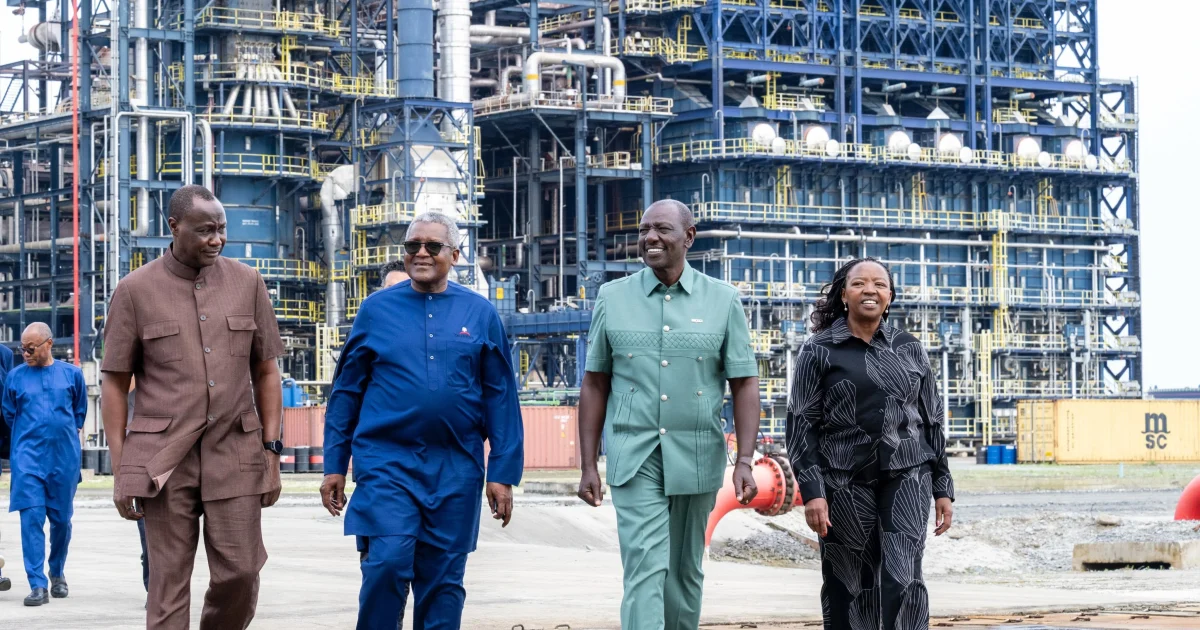
Kenyan court halts work on Dangote refinery in Lamu
Trending
-
NEWS2 years agoA MUST READ!! What Peter Obi Discussed With Atiku, Saraki, Lamido During Visits – Aide Reveals
-

MUSIC5 years agoMUSIC: Mohbad – Back Side [Free Download]
-

MUSIC5 years agoMUSIC: Papiwizzy – Oluwalonsola Ft Zlatan and Papisnoop [Download Mp3]
-
MUSIC3 years agoMUSIC: DEBHIE FEAT. EMMYBLAQ – TURN UP (DOWNLOAD HERE)