
Gbasgbos
FG Monitoring Middle East War, Ready to Adjust Policies To Protect Nigerians — Edun


The Federal Government says it is closely monitoring developments in the escalating conflict in the Middle East and may adjust domestic policies where necessary to protect Nigerians and cushion the nation’s economy, Finance Minister and Coordinating Minister of the Economy Wale Edun has said.
The Minister of Finance and Coordinating Minister of the
Economy, Wale Edun, disclosed this in a statement issued in Abuja on Tuesday.
The statement, signed by the Assistant Director of
Information and Public Relations at the Ministry of Finance, Mrs. Uloma Amadi,
did not specify the policy measures under consideration but said the government
was reviewing options to mitigate potential economic shocks.
According to the statement, the Federal Government remains
committed to safeguarding Nigeria’s economic stability amid rising geopolitical
tensions in the Middle East.
“The Federal Government of Nigeria is closely monitoring
escalating geopolitical tensions in the Middle East involving the United
States, Israel and Iran, and remains committed to safeguarding Nigeria’s
economic stability,” the statement said.
It added that the Economic Management Team (EMT) is
coordinating closely across fiscal, monetary and energy policy institutions to
review policy options aimed at shielding households and businesses from
external shocks.
Edun emphasised that careful policy calibration would guide
the government’s response to ensure that recent progress in macroeconomic
stability, revenue mobilisation and economic growth is not undermined by
external developments.
He also assured that the government would continue to
monitor the situation and adjust policies where necessary to minimise
disruptions, sustain investor confidence and protect the welfare of Nigerians.
The EMT, chaired by Edun, was said to have met to assess the
potential impact of the conflict on Nigeria’s economy.
The minister also presided over a coordination meeting on
the Naira-for-Crude policy to review developments in the energy market and
their domestic implications.
According to the assessment presented at the meeting, the
global situation remains fluid, with uncertainty driven by concerns over
possible disruptions to critical energy supply routes, particularly the Strait
of Hormuz, a major corridor for global oil shipments.
The government identified three key channels through which
the crisis could affect Nigeria’s economy.
The first is volatility in crude oil and gas prices, which
could drive increases in domestic prices of fuel, diesel, cooking gas and
fertiliser.
The second relates to capital flows and financial markets,
where heightened geopolitical risks could lead investors to move funds to safer
assets, potentially affecting capital inflows into emerging markets such as
Nigeria.
The third channel involves global logistics and supply
chains, as disruptions to shipping and energy routes could raise international
freight and logistics costs, placing additional pressure on domestic prices.
The minister noted that prolonged instability could lead to
further increases in the cost of goods and services, intensifying inflationary
pressures and the cost of living.
The EMT said it would continue to track developments across
key macroeconomic indicators, including global crude oil prices, exchange rate
movements, capital flows, financial market conditions, and implications for
Nigeria’s fiscal outlook and external reserves.
The government reiterated its commitment to maintaining
economic stability while taking necessary steps to protect Nigerians from the
impact of external shocks.








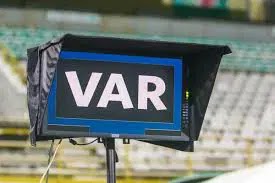
More than three-quarters of Premier League fans would like to see VAR scrapped and even more believe it has a detrimental impact on the matchday experience, according to a survey by the Football Supporters’ Association (FSA).
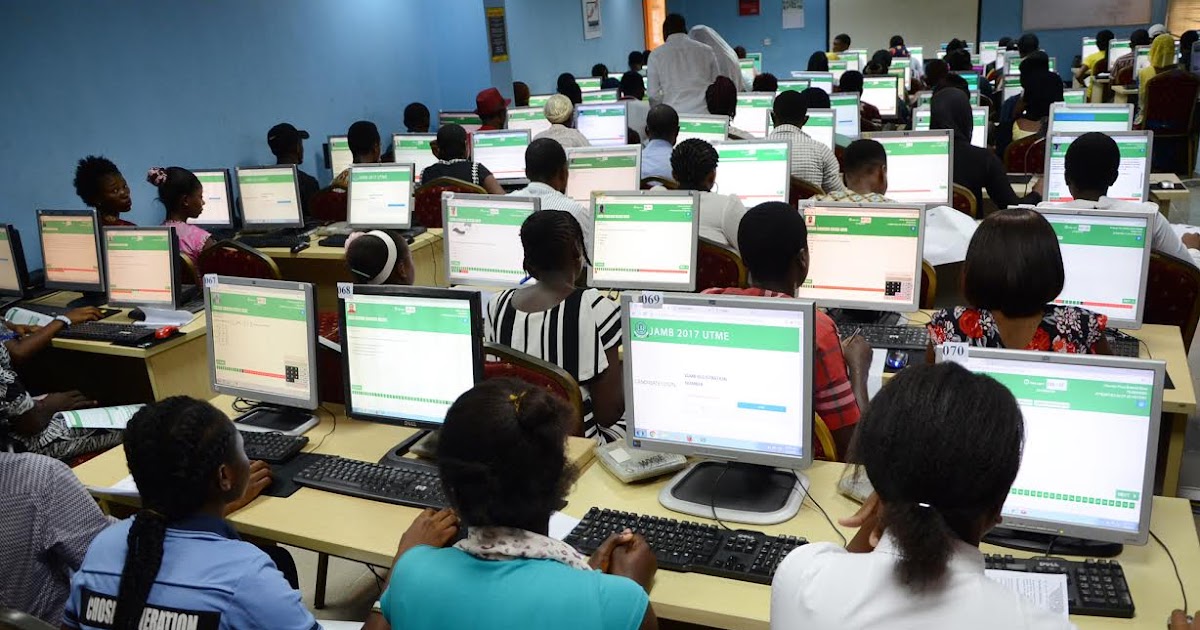
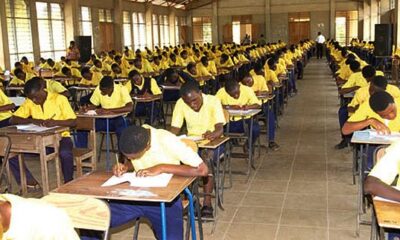
Many candidates scheduled to sit for the 2026 mock unified tertiary matriculation examination (UTME) were left stranded on Saturday after a technical failure disrupted the exercise nationwide.
The exam, organised by the Joint Admissions and Matriculation Board (JAMB), failed to commence several hours after candidates arrived at designated computer-based test (CBT) centres.
Many candidates reportedly arrived by 6am at various locations, but the examination did not begin until 1:30pm, which triggered frustration among parents and students.
The development happened days after JAMB warned that candidates who fail to show up after indicating interest would be sanctioned, noting that this would deprive other candidates of the chance to participate in the exercise.
The incident has sparked widespread concern, outbursts, and backlash among Nigerians, particularly on social media.
Folosele Leye, an X user, said the CBT centre used during the mock exam of his daughter had poor network connectivity.
“Living Stone CBT Centre, Akobo, Ibadan, where my daughter was posted for her UTME mock exam. The network and computer systems were very
poor, making it difficult for students to take their exams in both batches,” Leye wrote.
Chiboi, another social media user, said the situation isfrustrating, said the technical failures and poor coordination heighten stress levels for candidates.
See tweets below.
This is frustrating but, sadly, not surprising. UTME is supposed to test readiness, not patience.
Technical glitches and poor coordination don’t just waste time, they increase stress for students who are already under pressure. It also raises the bigger question: if a mock exam… https://t.co/gT7htRqjry— kie 🇺🇸🇳🇬 (@mr_chiboi) March 29, 2026
Technical glitches have officially become part of national life. UTME included.
— Dozie (@DozieOfficial1) March 29, 2026
JAMB keeps repeating the same server glitches year after year like it’s a tradition. If they can’t even handle a simple mock exam without stranding thousands of kids for hours, how are we trusting them with the real UTME that determines futures? Maybe it’s time to scrap this CBT…
— Affiliate_stanley (@Stanleyade01) March 29, 2026
@JAMBHQ , please endeavour to address the issues raised by candidates before the main UTME exams . I mean, we all paid for this .
😭😭— Gelatinium (@Dannycruz0011) March 29, 2026
am expressing dissatisfaction with Living Stone CBT Centre, Akobo, Ibadan, where my daughter was posted for her UTME mock exam. The network and computer systems were very poor, making it difficult for students to take their exams in both batches.
— Folowosele Leye (@FolowoseleLeye) March 28, 2026
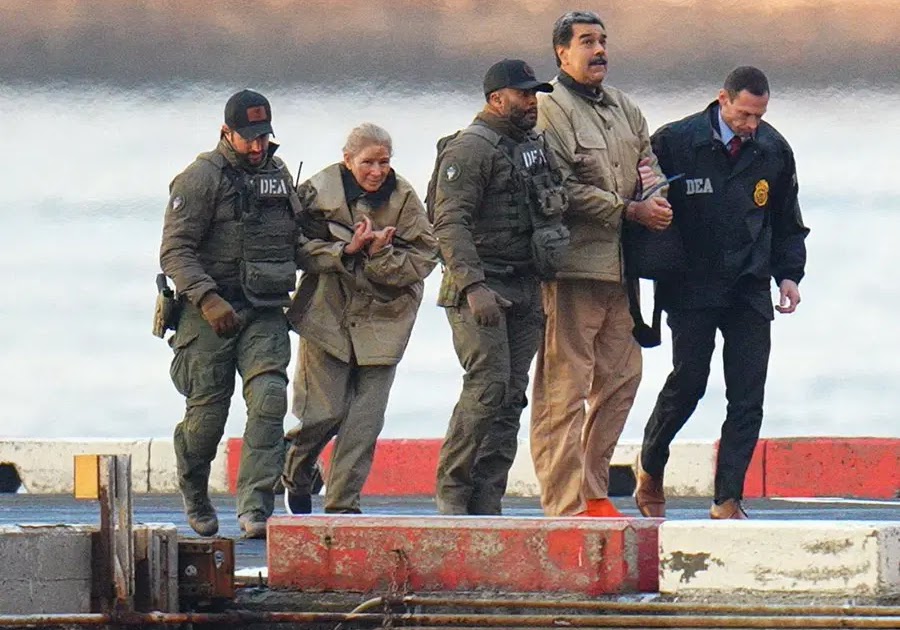
Ousted Venezuelan president Nicolas Maduro will appear Thursday in a New York court for the second time since his capture by US forces in an extraordinary nighttime raid.
Maduro, 63, and wife Cilia Flores have been held in a Brooklyn jail for almost three months after American commandos snatched the pair from their compound in Caracas in early January.
The stunning operation deposed the strongman who had led Venezuela since 2013 and has since forced the oil-rich country to largely bend to the will of US President Donald Trump.
Maduro has declared himself a “prisoner of war” and pleaded not guilty to the four counts of “narco-terrorism” conspiracy, cocaine importation conspiracy, possession of machine guns and destructive devices, and conspiracy to possess machine guns and destructive devices.
Thursday’s hearing at 11:00 am (1500 GMT) will likely see Maduro push for the dismissal of his case as lawyers tussle over who will pay the former leader’s legal fees.
Venezuela’s government is seeking to cover the costs, but because of Washington’s sanctions, his lawyer Barry Pollack must obtain a US license that has not been issued.
Pollack argued in a court submission that the license requirement violated Maduro’s constitutional right to legal representation and demanded the case be thrown out on procedural grounds.
– Deadly raid –
Detained in Brooklyn’s Metropolitan Detention Center, a federal prison known for unsanitary conditions, Maduro is reportedly alone in a cell with no access to the internet or newspapers.
A source close to the Venezuelan government said the incarcerated Maduro reads the Bible and is referred to as “president” by some of his fellow detainees.
He is only allowed to communicate by phone with his family and lawyers for a maximum of 15 minutes per call, the source added.
“The lawyers told us he is strong. He said we must not be sad,” said his son, Nicolas Maduro Guerra, adding his father told him: “We are fine, we are fighters.”
Maduro and his wife were forcibly taken by US commandos in the early hours of January 3 in airstrikes on the Venezuelan capital backed by warplanes and a heavy naval deployment.
At least 83 people died and more than 112 people were injured in the assault, according to Venezuelan officials. No US service members were killed.
– US pressure –
At his first US court appearance in January, Maduro struck a defiant tone as he identified himself the president of Venezuela despite being captured.
The South American country is now led by Delcy Rodriguez, who had been Maduro’s vice president since 2018.
Under US pressure, she is grappling with leading a country saddled with the world’s largest proven oil reserves but an economy in shambles.
Rodriguez has since enacted a historic amnesty law to free political prisoners jailed under Maduro and reformed oil and mining regulations in line with US demands for access to her country’s vast natural wealth.
This month, the State Department said it was restoring diplomatic ties with Venezuela in a sign of thawing relations.
Security is expected to be heightened around the New York courthouse for Thursday’s hearing.
Presiding over the case is Alvin Hellerstein, a 92-year-old judge credited with overseeing several high-profile trials during his decades on the bench.
AFP
The Central Bank of Nigeria (CBN) says it has scrapped the
cash pooling requirement for international oil companies (IOCs), granting them
full access to their export proceeds.
Cash pooling is a financial arrangement where a company (or
regulator) centralises cash from multiple accounts into one place to manage it
more efficiently.
In a circular issued on Wednesday, the financial regulator
said the new policy supersedes earlier guidelines introduced in 2024, which
required banks to pool 50 percent of repatriated export proceeds on behalf of
IOCs, while the balance was retained for 90 days before repatriation.
However, under the revised framework, oil firms are now
permitted to access and repatriate 100 percent of their export proceeds.
The directive, signed by Musa Nakorji, director of the trade
and exchange department, takes immediate effect.
“IOCs are hereby granted unfettered access to their
repatriated export proceeds. The IOCs may repatriate 100 percent of their
export proceeds through the ADBs,” the circular reads.
The apex bank said the decision is aimed at further
liberalising the foreign exchange (FX) market in line with current realities.
The CBN asked authorised dealer banks (ADBs) to ensure
proper documentation of such transactions and submit monthly reports to its
trade and exchange department.
The bank said the directive overrides all previous circulars
relating to cash pooling.
The policy is part of broader efforts by the CBN to deepen
the Nigerian FX market and enhance efficiency in FX transactions.
On February 14, 2024, CBN placed limits on the transfer of
proceeds from crude exports by IOCs to offshore parent company accounts.
The apex bank said the transfer of export proceeds by the
IOCs has an impact on liquidity in the domestic FX market.
Two months later, the regulator said IOCs can sell their 50
percent balance of repatriated export proceeds in the Nigeria Foreign Exchange
Market.
The Nigeria Army has described as an abuse of court process, a suit filed by a professor, John Ntui Ntuiabane, over a disputed property in the Apo District of the Federal Capital Territory, FCT.
In a suit marked FHC/ABJ/C’S/2635/2025, the professor is seeking an interpretation of the right of citizens to own properties in Nigeria, among other prayers.
The suit also seeks to preserve the right of a retired deceased Major who was originally allocated the disputed property in Apo, which is now occupied by a retired Naval chief.
The disputed property is where Lt. Ahmed Yerima, a young Naval officer guarding the plot, had an altercation with the minister of the Federal Capital Territory, FCT, Nysesom Wike. The minister had led a team of Federal Capital Territory Administration officials to storm the disputed plot when the highly publicised altercation occurred.
In its preliminary objection, dated March 24, 2026, filed by human rights lawyer, Victor Giwa, the Army prayed the court to dismiss the suit on the ground that the suit is incompetent.
The Army also challenged the jurisdiction if the court to hear the suit.
“The suit is grossly incompetent, having been filed via Originating Process, highly speculative and hypothetical and academic in nature,” Giwa stated in the preliminary objection.
Giwa also argued that the claimant is struggling to seek a judicial decision on an academic question, and urged the Federal High Court to strike out the suit and assign it as a classroom handbook.
Listed as defendants in the suit by the plaintiff are Minister of Defence, Minister of State for for Defence, Chief of Defence Staff and the Chief of Naval Staff.
Others are Vice Admiral Zubairu Gambo, Lt Ahmed Yerima and the Attoney-General of the Federation.
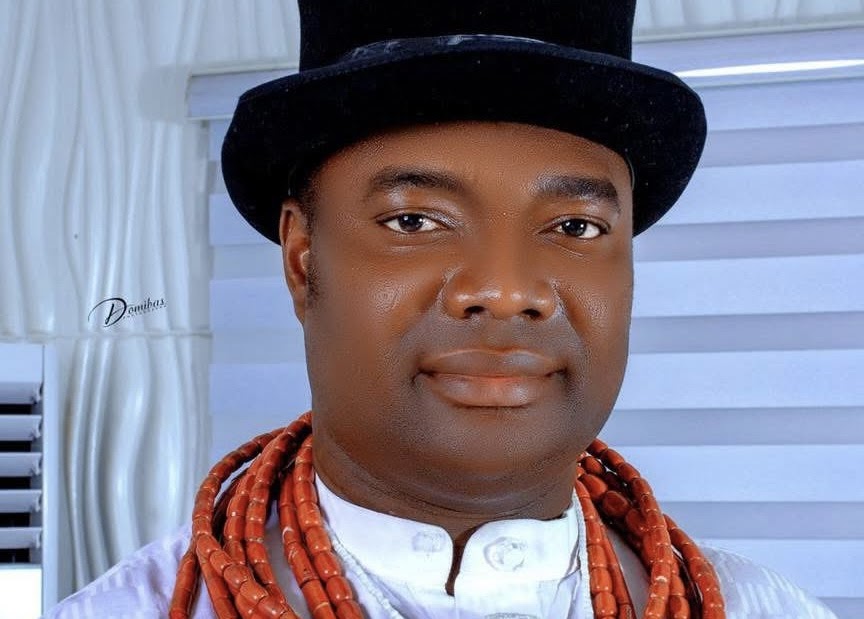

An Executive Assistant to Delta State Governor, Sheriff Oborevwori, Olorogun Samson, has resigned his appointment ahead of the 2027 general elections.
In a resignation letter dated March 2, 2026 and uploaded on his handle on Wednesday, the aide said his decision followed consultations and the need to fully pursue his ambition to represent Ughelli South Constituency in the Delta State House of Assembly.
“With utmost respect and a heavy but hopeful heart, I write to formally tender my resignation as Executive Assistant to the Governor of Delta State.
“This decision comes after deep reflection, prayers, and consultation with my family and political leaders.
“Following the revised timetable released by the Independent National Electoral Commission, the political process has accelerated, and the demands of my aspiration to represent the good people of Ughelli South Constituency in the Delta State House of Assembly now require my full presence and dedication,” he stated.
Samson described his time in the administration as a privilege, appreciating the governor for the opportunity to serve and for the leadership lessons gained.
“Serving in your administration has been one of the greatest honours of my public life. The trust you reposed in me, the access, guidance, and leadership lessons I have received under you are privileges I will forever cherish. I do not take them lightly,” he added.
He noted that stepping aside was necessary to avoid any conflict between his official duties and political ambition, while pledging continued loyalty to the governor.
“It is in the spirit of loyalty, transparency, and respect for your office that I choose to step aside at this time, so that my political pursuit will in no way conflict with my duties or bring any discomfort to your administration.
“I remain your son and loyal supporter, deeply grateful for your confidence and kindness. I humbly seek your understanding and fatherly blessings as I take this next step in service to our people,” the letter read.
The development comes days after Oborevwori directed all political appointees intending to contest elective positions in the 2027 general elections to resign on or before March 31, 2026.
The directive, disclosed in a statement signed by the Secretary to the State Government, Kingsley Eze Emu, said the move was in line with Section 88(1) of the Electoral Act, 2026, and the timetable issued by the Independent National Electoral Commission for party primaries.
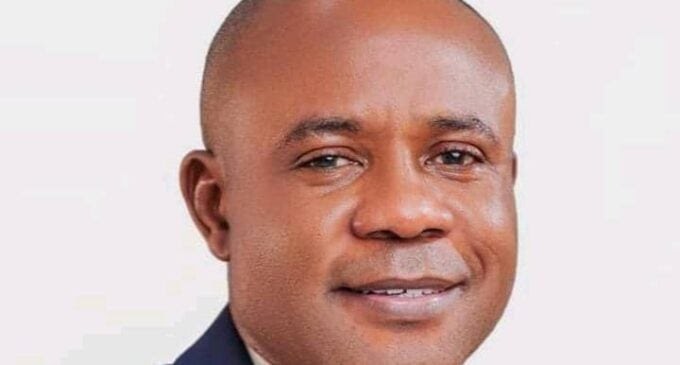
Supporters of Peter Mbah, governor of Enugu, on Wednesday
blocked a parallel All Progressives Congress (APC) south-east zonal congress
holding in the state, allegedly backed by Hope Uzodimma, governor of Imo.
The supporters, majorly youths, stormed the venue of the
congress and declared support for Mbah while calling for the halt of any
parallel gathering of the party in the south-east.
A video circulating on social media showed the youths
singing the popular “On your mandate” song associated with President Bola
Tinubu while expressing support for Mbah.
They also cordoned off the venue after forcing their way
into the premises by destroying a sliding door.
Uzodimma had earlier pulled out of the main congress
arrangement and reportedly organised a separate gathering elsewhere in Enugu
while other south-east governors held their own congress at a different
location.
A source told TheCable that Uzodimma had previously
controlled the APC structure in the zone when Enugu did not have a governor
from the party.
“Uzodimma brought the APC deputy national chairman, south,
and zonal woman leader because at the time, Enugu didn’t have an APC governor,”
the source said.
“Anything zoned to Enugu then, he controls from Imo. Now
Enugu has an APC governor, but he still wants to control everything.”
Another source said Uzodimma should focus on his own state
rather than attempting to influence party positions across the south-east.
“I support Peter Mbah. Hope should concentrate on Imo state.
We now have an APC governor in Enugu,” the source said.
“There is an NWC position zoned to Imo; nobody is dragging
that with him. But he wants to dictate who gets the positions in Abia, Enugu,
and Anambra.
“I know he is preparing for his future aspirations to have
his loyalists in place, but things don’t work like that.”
Later, another video circulated on social media showing the
governors, including Uzodimma, entering the congress venue after what appeared
to be a resolution of the dispute.
The zonal congress is being held simultaneously across the
geopolitical zones ahead of the APC national convention scheduled for March 27
and March 28.

The National Executive Committee, NEC, of the African
Democratic Congress, ADC, has approved a comprehensive timetable for the
party’s congresses nationwide, beginning with polling unit and ward congresses
scheduled for April 7.
ADC National Publicity Secretary, Mr. Bolaji Abdullahi,
disclosed this while briefing journalists after the party’s NEC meeting held on
Wednesday in Abuja.
Abdullahi described the meeting as successful, noting that
it was short, simple, and productive, with full attendance by all required NEC
members.
According to him, the NEC also endorsed key reports
presented to the party’s National Working Committee (NWC), including those of
the Policy and Manifesto Committee and the Constitutional Review Committee.
He explained that the reports would be presented at the
party’s National Convention slated for April 14 in Abuja.
Abdullahi said the documents would define the party’s policy
direction and constitutional framework for its future political and governance
agenda.
He further announced that local government congresses would
take place on April 9, followed by state congresses on April 11, ahead of the
National Convention.
The party spokesman noted that guidelines for the congresses
had already been released, while nomination forms had been distributed across
the country to ensure inclusiveness and wider participation.
He assured members seeking various party positions that the
process would be open, transparent, and accessible to all qualified members.
“The NEC meeting was attended by representatives of the
Independent National Electoral Commission (INEC), which provided oversight and
credibility to the proceedings,” Abdullahi said.
Clarifying the nature of the upcoming convention, Abdullahi
stressed that it would not be an elective convention.
According to him, the gathering is primarily aimed at
ratifying decisions earlier taken by the NEC and the NWC since the last
convention cycle.
He added that elections of party officers would instead take
place during the congresses at the polling unit, ward, local government, and
state levels.
Abdullahi also confirmed that a convention committee had
been constituted, adding that details would be provided later by the party’s
National Organising Secretary.
Earlier in his opening remarks, ADC National Chairman, Sen.
David Mark, welcomed members to the party’s second NEC meeting and emphasised
the importance of unity and collective leadership.
Mark described the meeting as a moment of honour and
responsibility, commending party members for their loyalty and sacrifices
toward strengthening the ADC.
He urged members to rise above personal interests, stressing
discipline, internal cohesion, and adherence to democratic principles as key
pillars for the party’s progress.
The former Senate President also called for deeper
grassroots engagement, saying the party must connect with Nigerians across
regions, religions, and generations to broaden its national appeal.
“Our task is clear: to reposition the ADC as a formidable
platform for national renewal and inclusive governance,” he said.
Mark further commended state chairmen for choosing dialogue
despite challenges, noting that collective effort remained essential to
addressing Nigeria’s current difficulties.
NAN
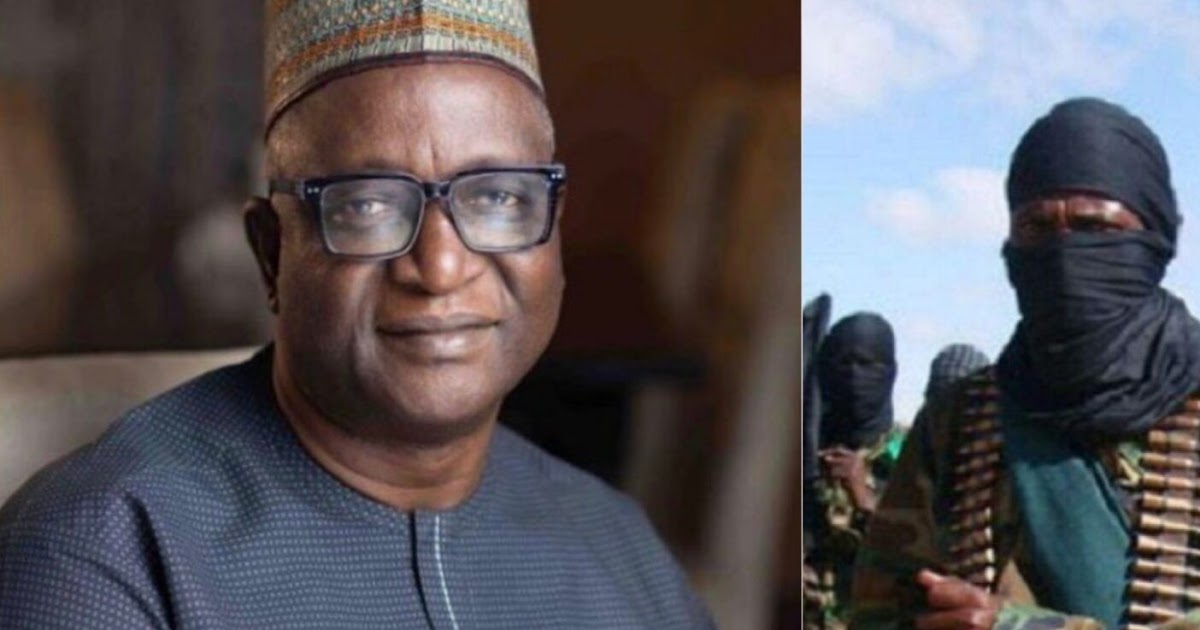

Gunmen have abducted Sunday Agang, a 68-year-old pastor of the Evangelical Church Winning All (ECWA) and chairman of its board of trustees, from his residence in Jos North Local Government Area of Plateau State.
The incident occurred around 5:00 am on Tuesday when about six armed men invaded his home in the Farin-Gada area.
The ECWA has confirmed the abduction and urged the public to remain calm and prayerful.
The church’s Public Relations Officer, Dickson Auta, stated that the authorities are working with security agencies to trace the kidnappers and ensure the pastor’s safe release.
This is not an isolated incident, as ECWA has reported recent attacks on its congregations in Kwara and Plateau states.
The church is calling for fervent prayer and calm, trusting that God will intervene.

Obey Court or Lose It All, INEC Warns ADC

Igwe Amawbia Announces ₦187,000 Prize for Yam Farmers

NAWOJ Honours Anambra Women Achievers, Call For Greater Inclusion

Police Launch Free Veterinary Outreach Amid Rabies Alert in Enugu

CP Giwa Leads Charge for Walking Culture

UNICEF: Enugu Among First States to Invest in Micronutrients

Christopher Musa Lands In Maiduguri Vows To Boost Security

Gov. Mbah Approves Promotion, Conversion of 2,114 Civil Servants

LIRS Extends Tax Filing Deadline

NCC Directs Telecons To Compensate Subscribers
-
 NEWS2 years ago
A MUST READ!! What Peter Obi Discussed With Atiku, Saraki, Lamido During Visits – Aide Reveals
-

 MUSIC4 years ago
MUSIC: Mohbad – Back Side [Free Download]
-
 MUSIC4 years ago
MUSIC: Papiwizzy – Oluwalonsola Ft Zlatan and Papisnoop [Download Mp3]
-

 MUSIC2 years ago
MUSIC: DEBHIE FEAT. EMMYBLAQ – TURN UP (DOWNLOAD HERE)