
NEWS
Governor Bans VIO from Roadside Operations














By Ejike Agbata
It was a gathering of influential women and key stakeholders as the Anambra State Chapter of the National Association of Women Journalists (NAWOJ) marked this year’s International Women’s Day in grand style at the Dora Akunyili Women Development Centre, Awka.
Speaking at the event, the State Chairperson of NAWOJ, Tochukwu Ifejilika, highlighted the critical roles women play in society, especially as mothers and nation builders. She explained that the theme of the celebration, “Justice and Action for All Women and Girls – Give to Gain – Projecting Anambra Female Achievers 2.0,” was carefully chosen to recognise and celebrate outstanding women in the state who have excelled in their various fields.
Delivering the keynote address, Professor of Mass Communication, Stella Okunna, stressed that women’s rights are fundamental human rights and must be respected in all spheres of society.
Prof. Okunna, who is also the first female professor of Mass Communication in sub-Saharan Africa, noted that gender equality remains a challenge globally. She pointed out that cultural and religious practices have further deepened inequality between men and women, particularly in the South-East.
She also expressed concern over the low participation of women in politics and governance, urging women to be more courageous in seeking elective positions.
“If women do not step forward to contest positions like the Senate, who then will speak for them?” she asked.
The former Commissioner added that while more women are needed in politics, where they are not courageous enough to contest, they should be considered for appointments to ensure inclusiveness.
Prof. Okunna also advised women, especially married ones, to quit confronting men as they are not equals, while encouraging women to support one another, particularly as elections approach.
The event featured presentation of awards to distinguished individuals and organisations who have made notable contributions in their respective fields.
Among the awardees were ace broadcaster, Dr. Ify Aronu; former Commissioner for Education and Vice Chancellor of Chukwuemeka Odumegwu Ojukwu University, Prof. Kate Omenugha; Rector of Federal Polytechnic, Oko, Dr. Chioma Awuzie; and renowned actress, Mrs. Ngozi Ezeonu.
Others honoured included the Commissioner of Police, Anambra State, Dr. Ikioye Orutugu; Executive Chairman of Anambra State Universal Basic Education Board, Dr. Vera Nwadinobi; educationist and woman leader, Barr. Oge Ekweozor; humanitarian, Mrs. Ngozi Eze; and Chief Press Secretary to the Anambra State Governor, Mr. Christian Aburime.
Also recognised were Mrs. Esther Onyekesi of the All Progressives Grand Alliance, Kates Associated Industry Limited, and Lovebite Food and Beverages, among others.
The event also featured goodwill messages from various women groups, adding colour and solidarity to the celebration.
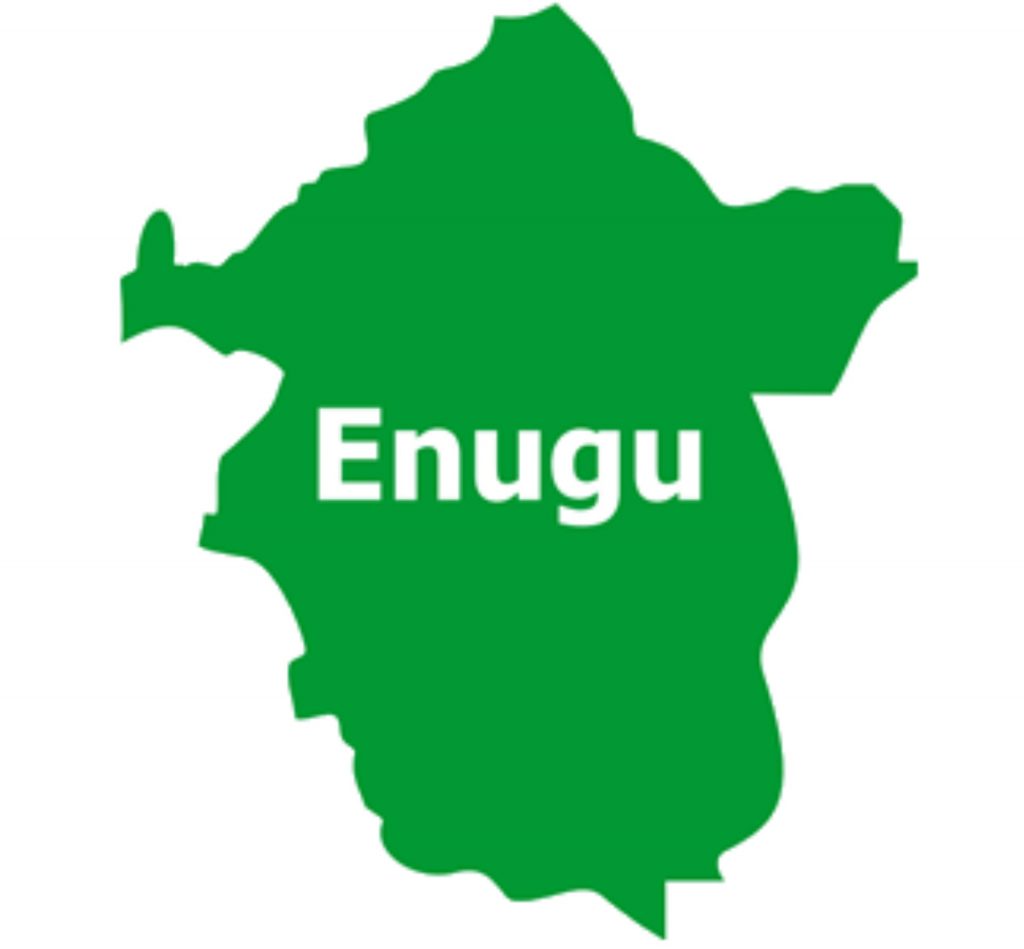
The Enugu State Police Command has commenced a three-day free veterinary outreach, offering anti-rabies and other essential vaccinations for animals, as part of activities marking the 2026 National Police Day.
In a statement issued on Tuesday in Enugu, the Command’s spokesperson, SP Daniel Ndukwe, said the outreach, which runs from March 31 to April 2, is being conducted by the Nigeria Police Force Veterinary Services.
According to him, the exercise is taking place at the Police Veterinary Clinic, located at No. 3 Police Mobile Force (MOPOL 3) Squadron Base along Agbani Road, Enugu, between 9:00 a.m. and 3:00 p.m. daily.
He explained that services provided include anti-rabies vaccination, DHLPP vaccination covering distemper, hepatitis, leptospirosis, parvovirus and parainfluenza as well as free treatment for animals and farm consultation services.
The Commissioner of Police in the state, Mr Mamman Giwa, urged pet owners and livestock farmers to take advantage of the initiative to safeguard the health of their animals. He noted that the outreach underscores the command’s commitment to strengthening community relations and promoting public safety through preventive health measures.
Giwa also commended the Inspector-General of Police, Mr Olatunji Disu, for introducing innovations in the commemoration of National Police Day, describing them as impactful in deepening police-community engagement.
Meanwhile, the Enugu State Government has confirmed an outbreak of rabies in dogs within Igbo-Etiti Local Government Area, raising fresh public health concerns.
The State Commissioner for Agriculture and Agro-Industrialisation, Dr Patrick Ubru, disclosed this in a separate statement on Tuesday, urging residents to adopt immediate preventive measures to curb the spread of the disease.
He advised dog owners to vaccinate their pets promptly, restrict animal movement, avoid contact with stray animals and report suspected cases to relevant authorities.
The concurrent police outreach and government advisory highlight an urgent need for coordinated action to contain the outbreak and protect both animal and human health in the state.
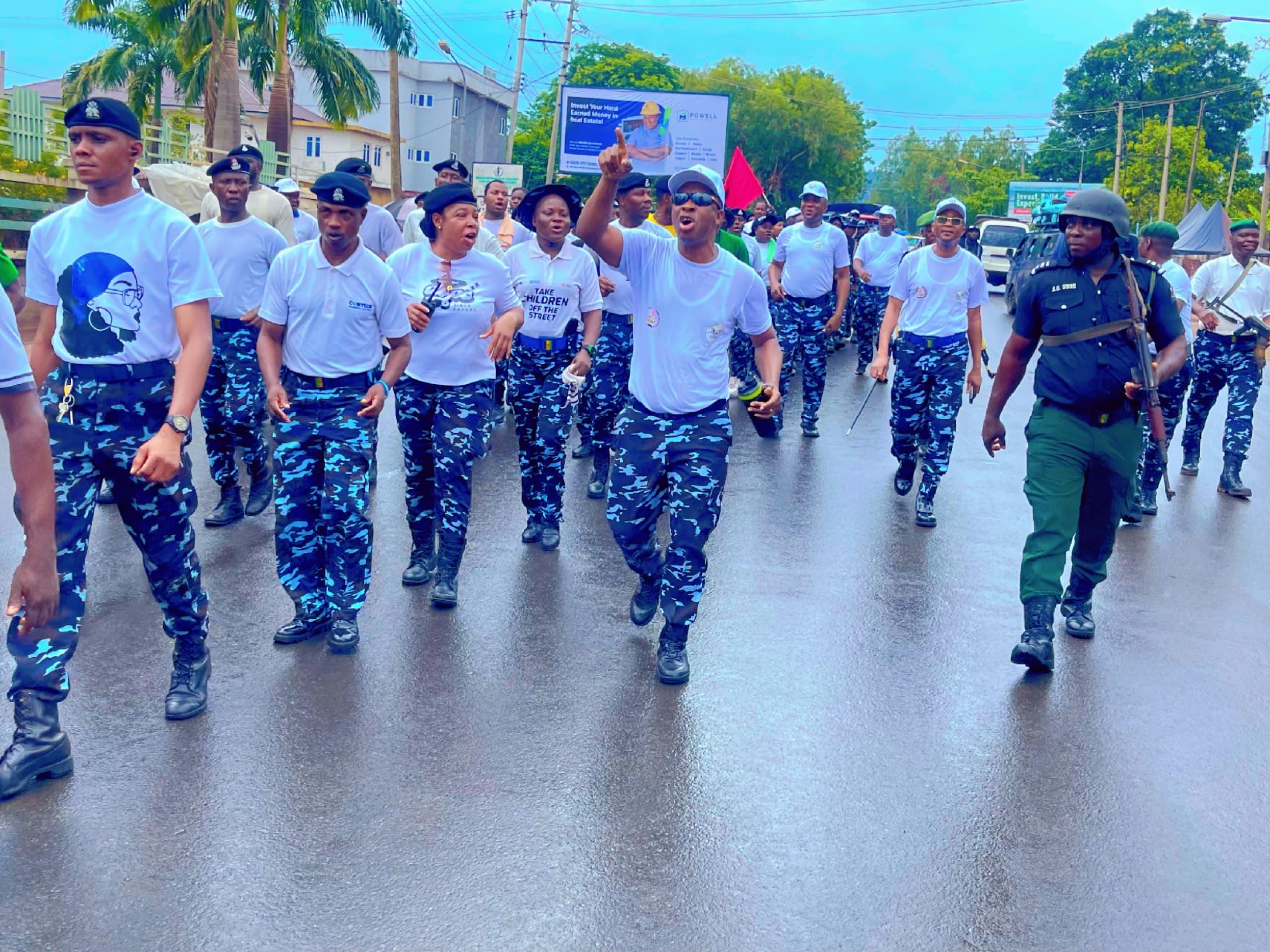
The Commissioner of Police in Enugu State, Mr Mamman Giwa, on Tuesday led officers and residents in a two-hour walkathon across major roads in Enugu metropolis, urging them to embrace a culture of walking for improved health and alertness.
The exercise forms part of activities marking the National Police Day 2026, with the police boss emphasising that regular walking whether structured or routine remains essential for physical fitness, mental wellbeing, and overall productivity.
Mr Giwa said the Command would institutionalise walkathons and similar initiatives as part of its social and wellness programmes, aimed at boosting the fitness and operational readiness of personnel.
He commended the Inspector-General of Police, IGP Olatunji Disu, for the well-coordinated lineup of events for the 2026 celebration.
The Enugu State chapter of the National Association of Nigerian Students (NANS) joined the exercise, which also took place simultaneously in Nsukka and Udenu Area Commands, drawing active participation from members of the public.
Activities marking National Police Day 2026 will continue on April 1 with sensitisation campaigns on election security, electoral offences, safe driving practices, and compliance with traffic regulations across the Command’s formations.

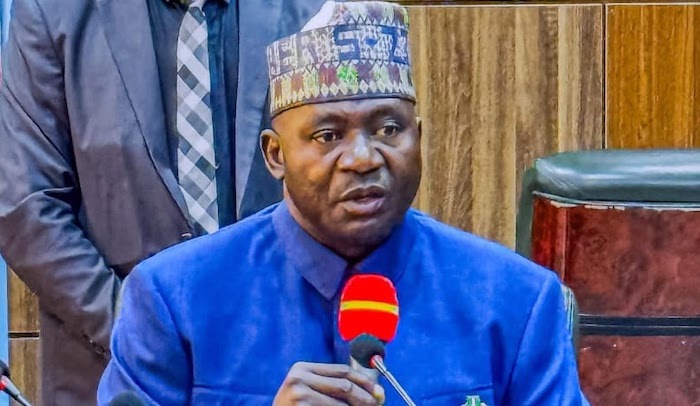
Nigeria’s Minister of Defence, General Christopher Gwabin Musa (Retired), has arrived in Maiduguri, the Borno State capital, to personally evaluate the ongoing security situation in the North-East region.
The minister was received upon arrival by the Theatre Commander of Joint Task Force North East (Operation Hadin Kai), Major General Abdulsalam Abubakar, and other top military officers. This marks his first official visit to the state since assuming office as Defence Minister.
Gen. Musa’s trip comes amid renewed insurgent activities in parts of Borno State. His schedule includes engaging directly with frontline troops, commissioning completed military projects, reviewing current operations, and holding strategic briefings with field commanders at the theatre headquarters.
The visit follows President Bola Tinubu’s earlier directive for service chiefs to relocate temporarily to Maiduguri to intensify counter-insurgency efforts after a series of coordinated attacks. It builds on recent trips by the Chief of Defence Staff and Chief of Army Staff to the region.
Military sources describe the minister’s on-ground assessment as a clear demonstration of the Federal Government’s resolve to boost operational effectiveness, enhance troop morale, and restore lasting peace and stability to the North-East. Further details on outcomes from the visit are expected in the coming days.

Civil servants in Enugu State have expressed widespread excitement following the approval of promotion and conversion for 2,114 public workers by Governor Peter Mbah.
The affected workers participated in the November/December 2025 promotion and conversion exercises conducted across the state civil service.
The approval, which takes immediate effect, also covers the financial implications of the new ranks, ensuring that beneficiaries begin to enjoy their upgraded status without delay.
Chairman of the Enugu State Civil Service Commission, Mr. Robison Odo, who disclosed the development on Tuesday in Enugu, described the gesture as timely and morale-boosting, likening it to an Easter gift for workers.
According to him, the exercise cut across officers on Grade Levels 01 to 17 who successfully passed the promotion interviews.
“The Executive Governor recently approved the release of the promotion and conversion of 2,114 officers who participated in the 2025 exercise. The approval also takes immediate effect with the financial benefits attached,” Odo said.
He assured that the commission would expedite implementation of the governor’s directive.
Odo commended the administration for its sustained commitment to workers’ welfare, noting that prompt payment of salaries, pensions and gratuities had become a hallmark of the government.
He further highlighted the state’s N80,000 minimum wage as exceeding the national benchmark, describing it as a clear demonstration of the governor’s worker-friendly policies.
“Workers are genuinely excited. This is a strong motivation for improved productivity and commitment to service. We deeply appreciate the governor for prioritising our welfare despite ongoing infrastructural development across the state,” he added.
The commission chairman pledged continued discipline, innovation and productivity within the civil service to align with the administration’s development agenda.
Also speaking, the Head of Service, Dr. Godwin Anigbo, said the governor’s policies had created an enabling environment for workers to embrace reforms and deliver optimally.
He noted that the administration’s focus on innovation had transformed the public service, equipping workers with modern skills required for efficient service delivery.
“We are working closely with the Civil Service Commission to ensure that workers are adequately prepared to align with the government’s reform-driven agenda. The administration has introduced forward-looking initiatives that are repositioning the service for greater efficiency,” Anigbo said.
He added that the government’s investment in capacity building, including the training of civil servants in digital competencies, was facilitating the transition from analogue to technology-driven operations.
Anigbo also lauded the approval for the establishment of a public service training institute, describing it as a critical step towards strengthening institutional capacity and improving service delivery.
Despite the state’s heavy investment in infrastructure and other capital-intensive projects, he said the administration had maintained a strong commitment to workers’ welfare.


The Lagos State Internal Revenue Service (LIRS) has extended
the deadline for filing individual annual income tax returns to April 14.
On February 25, LIRS asked individual taxpayers in Lagos to
file their annual tax returns for the 2026 year of assessment on or before
March 31.
However, in a statement signed by Monsurat Amasa-Oyelude,
head of corporate communications, on Monday, Ayodele Subair, executive chairman
of LIRS, said the extension, from the March 31 deadline, gives taxpayers more
time to complete their filings.
Subair said individuals must prioritise timely submission of
their returns, noting that tax compliance should be treated as a routine
obligation.
He added that the extension is intended to enable taxpayers
submit accurate returns without errors.
The chairman also said that electronic filing through the
LIRS eTax platform remains the only approved method for submitting annual
retums, as manual filings have been completely phased out.
“Individuals are therefore required to file their returns
exclusively through the LIRS eTax portal: https://etax.lirs.net,” he added.
The chairman described the platform as “secure,
user-friendly, and accessible 24/7”.
“Individuals to ensure that their TaxID (Tax Identification
Number) is correctly captured in their submissions,” the LIRS chairman added.
Subair advised individuals requiring assistance to visit any
of its offices or reach out through its official communication channels.

The Nigerian Communications Commission (NCC) has directed mobile network operators (MNOs) to compensate subscribers for poor quality of service (QoS) in areas where performance falls below regulatory standards.
In a statement issued on Sunday, Nnenna Ukoha, head of
public affairs at the NCC, said the directive is aimed at ensuring that
consumers do not bear the full burden of service disruptions caused by
operators’ failure to meet prescribed benchmarks.
“The commission’s position is that subscribers should not be
made to bear the full burden of service disruptions where operators fail to
meet prescribed standards of service delivery,” she said.
The spokesperson said affected subscribers will receive
compensation in the form of airtime credits, calculated based on their average
spending patterns and their presence in locations where service failures occur.
“Erring operators will compensate affected users directly
for breaches of quality of service key performance indicators within specified
time frames,” Ukoha said.
According to the regulator, the move reflects a shift
towards a more consumer-focused regulatory approach.
“While regulatory fines have traditionally served as a
deterrent against poor service delivery, the commission is adopting a more
consumer-focused approach that strengthens accountability within the industry,”
Ukoha added.
The spokesperson said tower companies would be required to
reinvest fines and other financial penalties into infrastructure upgrades to
improve network quality.
The NCC said it will continue to reinforce the obligation of
operators to invest consistently in network resilience, capacity expansion, and
infrastructure upgrades.

Following a deadly attack in Jos, Plateau state
capital, a wave of grief and anger has swept across social media, with
celebrities voicing their sorrow and demanding accountability.
The violence occurred around 8 p.m. on Sunday at a
popular bar in the Angwan Rukuba community within Jos North LGA.
The assault resulted in the deaths of at least 22 residents,
while several others sustained injuries and were transported to nearby medical
facilities for treatment.
In the immediate aftermath, the Plateau state government
imposed a 48-hour curfew across Jos North.
Among the prominent voices responding to the tragedy was
Jos-born rapper Ice Prince, who reflected on the community’s enduring pain.
“Since 2001, Jos, Jos, Jos. My people have suffered too much
tbh… Thoughts and prayers,” he wrote.
Actor and activist Mr. Macaroni directed his
frustration at the federal government, criticising what he called a lack of
accountability from the presidency.
In a series of posts on X, he expressed disbelief over the
absence of a presidential address.
“Zero accountability, zero responsibility!!! I cannot for
the life of me understand how 40 Nigerians have been confirmed dead in Jos and
the President does not deem it necessary to address the people!! We are talking
about 40 human beings!!! Hello???” he wrote.
In another post on X, he escalated his criticism at
President Bola Tinubu, calling the administration’s response “incompetent”.
“President @officialABAT is running the Most Useless
Government in the history of Useless Governments!!! How many more Nigerians
have to die due to this abysmal level of incompetence? Nigerians wake up
everyday to lament one tragedy of the other. Unbearably heart-wrenching!!!”
he wrote.
Singer Peter Okoye also expressed grief over the incident.
“My heart is heavy… My prayers are with my people in Jos,”
he wrote.
In contrast, gospel singer Nathaniel Bassey offered prayers
for hope and divine protection.
“Jos! You shall not be broken. The forces of evil in our
nation shall never prevail. We shall see their end. It is well with you, Jos.
Let there be light!” he wrote.
Jerry Eze, lead pastor of Streams of Joy International, also
reacted, praying against violence.
“JOS — JESUS OUR SAVIOUR! The mercy of El-Roi has prevailed!
May the wickedness of the wicked perish with them!!!” he wrote.
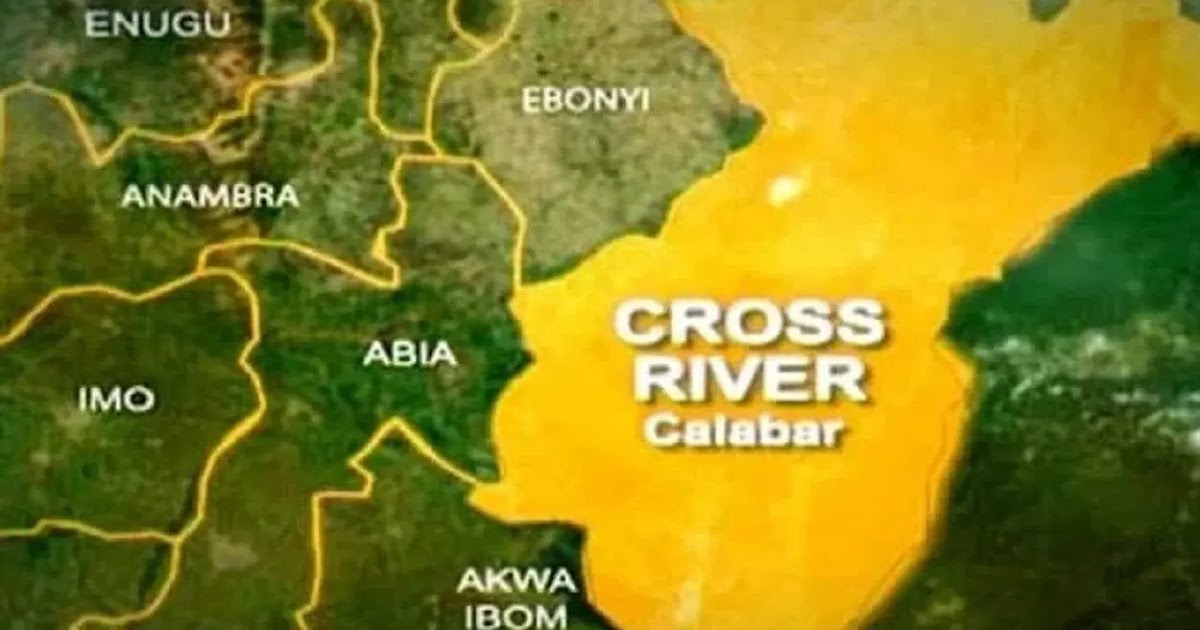
A middle-aged man has been accused of killing his girlfriend over alleged infidelity in a community in Cross River State, sparking outrage among residents calling for justice
According to local sources, the incident occurred in the early hours of Saturday, at about 0600hrs, where the accused Malime Ejor, aged 35 years, allegedly attacked his girlfriend, Moshie Igu, aged 26 years, at a farm in Nwang Village, Ekajuk community of Ogoja local government area of Cross River State.
One of the residents who pleaded anonymity said, “We heard the commotion and noise and we rushed to the scene, but we were unable to prevent the situation because he was already using a machete on her.”
He reported that a heated argument broke out between the man and his lover over accusations of extramarital affairs, which escalated into violence, during which the suspect allegedly attacked her, leading to her death.
“We could not do anything. We were able to hold him. Our youths caught him and later handed him over to security operatives,” he added.
Confirming the incident, Spokesperson for the Nigeria Police Force in the state, ASP Sunday Eitokpah, on Sunday, said an investigation has commenced and assured that justice would be served.
He said, “The suspect is currently in custody, and a full investigation is ongoing to determine the circumstances surrounding the incident,” the police spokesperson stated.
“Upon receipt of the report, police operatives promptly visited the scene. The suspect was apprehended and rescued from an attempted mob action by angry youths. He is currently in police custody for his safety and ongoing investigation.”
“The victim’s remains are yet to be deposited at the General Hospital Mortuary, Ogoja, as necessary arrangements are being concluded. Meanwhile, the case is being prepared for transfer to the State Criminal Investigation Department (SCID) for discreet and thorough investigation”, Eitokpah explained.

NAWOJ Honours Anambra Women Achievers, Calls for Greater Inclusion

Police Launch Free Veterinary Outreach Amid Rabies Alert in Enugu

CP Giwa Leads Charge for Walking Culture

UNICEF: Enugu Among First States to Invest in Micronutrients

Christopher Musa Lands In Maiduguri Vows To Boost Security

Gov. Mbah Approves Promotion, Conversion of 2,114 Civil Servants
LIRS Extends Tax Filing Deadline

NCC Directs Telecons To Compensate Subscribers

Jos Killings Spark Outrage Among Nigerian Celebs Including Ice Prince And Mr Macaroni

OMG!! Girlfriend Life Cut Short Over Alleged Infidelity In Cross River

Three dead, journalists injured in Enugu–Onitsha expressway crash

FRSC Confirms One Dead, Eight Injured in Enugu–Onitsha Expressway Crash

Wike’s PDP Faction Gets INEC’s Green Light

CP Giwa Urges Sustained Cleanliness as Enugu Marks National Police Day

Foundation Unveils Health Insurance Plan for Vulnerable Nigerians

MainPower restores power supply in Nsukka

FCID Annex Pledges Fairness in Investigations Across S’East, S’South
OMG!! Girlfriend Life Cut Short Over Alleged Infidelity In Cross River

WAEC Releases 2026 WASSCE Timetable (FULL LIST)
Gov. Mbah Approves Promotion, Conversion of 2,114 Civil Servants
-
 NEWS2 years ago
A MUST READ!! What Peter Obi Discussed With Atiku, Saraki, Lamido During Visits – Aide Reveals
-

 MUSIC4 years ago
MUSIC: Mohbad – Back Side [Free Download]
-

 MUSIC4 years ago
MUSIC: Papiwizzy – Oluwalonsola Ft Zlatan and Papisnoop [Download Mp3]
-

 MUSIC2 years ago
MUSIC: DEBHIE FEAT. EMMYBLAQ – TURN UP (DOWNLOAD HERE)