
NEWS
Child labour: From Benin Republic to Lagos construction site


JUSTICE OKAMGBA follows 10-year-old Ojo Ibukun and explores how poverty, migration, and informal apprenticeship can take children from neigbouring Republic of Benin to Lagos construction sites, where work replaces school and protection becomes harder to enforce
In Nigeria, one of Africa’s biggest economies, childhood can begin with a workday. While many children his age are getting ready for school, 10-year-old Ibukun Oluwa is already at an unfinished building in Ilasamaja, a low-income neighbourhood in Lagos, pushing a shovel through a mixture of sand and cement. The shovel is almost as tall as he is.
Ibukun crossed into Lagos to learn tiling but found himself carrying cement, mixing mortar and sleeping on cardboard at an unfinished building—raising difficult questions about poverty, migration, informal apprenticeship and child labour.
On a sunny morning in May 2026, he leans forward, gripping the shovel with both hands as he struggles to break through the heavy mixture on the concrete floor. Around him are bare walls, and unfinished rooms, a common sight across Lagos.
Ibukun is an apprentice working under a tiler, Kilamuwaye Alexandre, who brought him from Ifangni in southeastern Benin to Lagos. The two are from the same town, and Alexandre says most of their jobs are in Lagos.
When the work takes them across the border, they move between Nigeria and Benin through established routes. As citizens of ECOWAS member states, Beninese nationals can enter Nigeria without a visa for visits of up to 90 days through official entry points under the regional free-movement protocol. However, the rules governing longer stays and residence are more complicated.
For Ibukun, however, the journey to Lagos has led not to a classroom but to a construction site.
“Young man, why are you not in school? What are you doing here?” our correspondent, who lives close to the site, asked him. “I don’t go to school,” he replied in pidgin English.
When the working day ends, he finds time to play with other kids who have returned from school. As night falls, Ibukun goes back to the site. The unfinished building is both his workplace and his temporary home.
Inside an empty room on the ground floor, a piece of cardboard lies on the cement floor. There is no mattress, mosquito net, or electricity. “I sleep here,” the kid told this reporter, pointing to a corner of the room.
He lies on the cardboard at night and wakes up to another day of work. The routine starts the next morning again. His story shows how poverty, migration, and informal apprenticeships can push children into work in a city where construction sites are a common sight.
From Benin Republic to Lagos
Alexandre said Ibukun had expressed a desire to become a tiler instead of continuing with school, and that his parents agreed to let him accompany him to Lagos.
“The lad prefers to become a tiler to going to school,” he told The PUNCH.
Alexandre described the arrangement as an apprenticeship that was influenced by the family’s circumstances rather than a deliberate decision to keep the boy out of school.
“So instead of allowing the boy to stay home and become a nuisance, the parents agreed to work with me to learn the tiling profession,” he said.
He acknowledged that Ibukun was too young to be working on a construction site. That admission captures one of the difficult questions surrounding informal apprenticeship in Nigeria and across West Africa, when does learning a trade become child labour?
Apprenticeship has a long history in Nigeria, including the Igbo apprenticeship system, commonly known as Igba-Boi. The model, which developed in south-eastern Nigeria, has been widely studied as a form of informal education in which young people learn trades and business skills by working closely with experienced masters. Through observation and practical work, apprentices gradually acquire the skills and knowledge needed to earn a living and, in many cases, eventually establish their own businesses.
The system has been credited with helping build businesses and create employment, particularly in commercial centres such as Onitsha. It has also attracted international interest as an indigenous model of entrepreneurship and skills development.
But apprenticeship becomes more complicated when the learner is a child. There is a clear difference between acquiring a trade and being removed from school to perform physically demanding work. When a child is exposed to hazardous conditions, works for long periods, or lives at the workplace, what is described as apprenticeship can begin to resemble child labour.
The International Labour Organization defines child labour in terms of work that is harmful to children’s well-being and development, interferes with education, or involves children who are too young to perform it. Not every task performed by a child automatically amounts to child labour, making the circumstances in which the work occurs important.
Ibukun’s circumstances raise precisely that question. He is not simply observing an experienced tiler. He carries materials, mixes cement and works on an active construction site. The building where he is learning a trade is also where he sleeps.
Another tiler working at one of the sites, Koku Tosin, is from Togo and has spent more than a decade working in Lagos confirmed the development.
He said Ibukun was not an isolated case. “The boy is too small but hard-working,” Tosin told our reporter.
“I have seen many cases like this. Small boys from Benin Republic come to Lagos to do these jobs. Their way of thinking is different. Economic necessity shapes it.”
Tosin’s account points to a wider pattern of economic migration between Lagos and neighbouring countries. Lagos attracts workers with its large market, busy construction industry and concentration of businesses.
For people from communities close to Nigeria’s borders, travelling to Lagos for work can be part of an established pattern rather than a one-off journey. But when children are part of that movement, the same routes that provide adults with economic opportunities can also expose them to informal work and exploitation.

ECOWAS has recognised free movement as a central part of regional integration since adopting its Protocol on Free Movement of Persons, Residence and Establishment in 1979. The protocol was designed to allow citizens of member states to move across the region without visas for short visits, although implementation and longer-term residence rules have evolved.
That regional mobility is important for trade and livelihoods. It can also create gaps in child protection when children move with adults into informal work arrangements that are difficult for authorities to monitor.
The same regional system that allows adults to cross borders in search of opportunity can also make it easier for a child to move from one country into a workplace where his age, education, and welfare may not receive adequate scrutiny.
The construction economy
A few houses away from the first building where the tilers had worked, another residential project was nearing completion.
The Founder of Afatech Mechanic, Jamiu Ibrahim, said he first noticed Ibukun at the site. “This one is too small for this type of job,” the engineer told The PUNCH. “He should be in school.”
When the first project ended, the tilers moved to another building nearby, and Ibukun went with his boss. The new site was another unfinished residential building, where workers moved from room to room preparing floors and laying tiles.
This is common in Lagos, a state of more than 20 million people under Governor Babajide Sanwo-Olu. As the city grows, construction projects are spread across established neighbourhoods and new communities. Masons, electricians, carpenters, painters and tilers often move from one project to another.
At the Ilasamaja site, the line is difficult to ignore. Ibukun works on an active construction site, carries materials, and works alongside adults. The risk goes beyond possible injuries. A child who spends the day working and the night sleeping at a construction site is also missing out on school, recreation, and the stability of a proper home.
The borders
The movement is not limited to the Seme border along the Lagos-Badagry road, which Ibukun and his boss used to travel to Lagos.
Olabisi Akande, a vulcaniser from the Republic of Benin who has lived in Lagos for more than 15 years, told The PUNCH that travelling between Nigeria and Benin was relatively easy.
Akande said he usually travelled through Idiroko in Ipokia Local Government Area of Ogun State, along Nigeria’s western border with Benin.
“I usually pass through Idiroko in Ipokia Local Government Area in Ogun State. It’s the same when I return. I travel once every two weeks from Lagos to my village, where I have a building project going on. I don’t like using the Badagry-Seme border axis,” said Akande, a married father of two.
For workers such as Akande, travelling between the two countries has become part of everyday life. He can work in Lagos while keeping his family and other interests in Benin.
For children, however, the situation can be different. Once they enter an informal workplace, there may be little paperwork or monitoring to show where they came from, who brought them, or what work they are doing.
This is where the movement of people can intersect with child labour. Migration does not cause child labour, but children who travel with adults or are brought into informal jobs can be harder to identify and protect.
A national problem
Ibukun’s story is part of a much larger national picture. Nigeria’s 2022 National Child Labour Survey, conducted by the National Bureau of Statistics in collaboration with the ILO and the Federal Ministry of Labour and Employment, estimated that 24.7 million children aged between five and 17 were engaged in child labour.
The survey found that 14.39 million were involved in hazardous work. Construction was among the hazardous industries identified in the survey, while hazardous work also includes activities involving long hours, dangerous tools, unhealthy environments, and other conditions that can threaten children’s health and development.
The problem is also closely connected to household economic conditions. The ILO has identified poverty and limited livelihood opportunities as major factors behind child labour in Nigeria. Its work in the country has increasingly focused not only on removing children from harmful work but also on addressing the economic pressures that push households towards relying on children’s labour.
Experts say simply taking a child away from a workplace does not necessarily remove the economic pressure that brought the child there.
If a family cannot afford school-related costs, lacks stable income or sees apprenticeship as the more practical route into employment, the child may eventually return to work.
In Ibukun’s case, Alexandre’s explanation points to that tension. The boy wanted to learn a trade, he said, while his parents agreed to the arrangement. But a child’s preference for a trade does not erase the responsibility to ensure that the work does not deprive him of education or expose him to harmful conditions.
The Nigerian law
Nigeria has several legal protections intended to prevent children from being exploited at work. The Child Rights Act, enacted in 2003, prohibits practices including the use of children for exploitative labour and activities that deprive them of the opportunity to attend school. It also prohibits the use of children in hazardous work and provides broader protections against trafficking, forced labour and other forms of exploitation.
The Labour Act also places restrictions on the employment of children and young persons. Its provisions distinguish between different forms and conditions of work rather than establishing one simple age at which every form of employment becomes lawful.
Under Section 59, children under 15 are restricted from industrial work except in specified educational or training circumstances, while children under 16 face additional restrictions, including work underground, machine work and certain other activities. The law also prohibits employment that is injurious to health or dangerous.
The ILO’s current country profile notes that Nigeria’s legal framework does not clearly establish one general minimum age for admission to work, while the Labour Act contains specific thresholds for different categories of work and apprenticeship. It lists 12 as the statutory minimum age for admission to apprenticeship under Article 49 of the Labour Act, while also noting proposed changes in the revised Labour Standards Bill.
Calling Ibukun an apprentice does not by itself settle whether his work is lawful. The nature of the work, his age, the conditions under which he performs it, the hours involved, and whether the arrangement interferes with his education all matter.
In his case, the construction site is not merely a training environment. It is where he spends his working day. It is also where he sleeps.
Government’s efforts
Nigeria has not ignored the problem, as it has developed national policies and action plans aimed at eliminating child labour, with support from the ILO and other development partners.
The National Steering Committee on the Elimination of Child Labour provides a platform for government institutions, workers’ and employers’ organisations, civil society and development partners to coordinate the national response.
In 2021, Nigeria validated a National Policy on the Elimination of Child Labour and a National Action Plan covering 2021–2025.
As that framework approached the end of its implementation period, the Federal Ministry of Labour and Employment, working with the ILO and the National Steering Committee, began reviewing the policy and developing a new five-year action plan.
The review process included a strategic development workshop held in Abuja from April 27 to 30, 2026, bringing together government, workers’ and employers’ organisations and other stakeholders.
The process culminated on June 2 and 3, when the National Steering Committee formally validated Nigeria’s third National Child Labour Policy and the National Action Plan for 2026–2030.
The new framework is intended to strengthen institutions, reduce hazardous child labour and create conditions that allow children to remain in school and move into decent work when they reach adulthood. The validation was jointly convened by the Federal Ministry of Labour and Employment and the ILO, with support from the ECOWAS Commission.
Speaking during the validation meeting, ILO Country Director for Nigeria, Ghana, Liberia and Sierra Leone and Liaison Office for ECOWAS, Dr Vanessa Phala, said the policy needed to translate into improvements in children’s lives.
“Child labour is a violation of fundamental human rights and compromises children’s future,” Phala said.
She stressed that implementation would require sustained financing, effective monitoring and collaboration among government institutions, workers’ and employers’ organisations, civil society, communities and the private sector.
Nigeria can adopt policies and laws, but enforcement becomes harder when children work in dispersed informal businesses, construction sites, private homes, farms and markets where inspectors may not routinely reach.
The informal nature of the economy also means that the people responsible for a child’s welfare may not always be the same people responsible for the workplace.
A child may arrive with a parent, relative or master. Once at the workplace, the child can become part of an informal chain of labour in which responsibility is difficult to trace.
Beyond Nigeria
Nigeria’s struggle is part of a wider problem concentrated in some of the world’s poorest and most vulnerable communities.
The ILO and UNICEF’s 2024 global estimates, released in 2025, found that nearly 138 million children were engaged in child labour worldwide, including about 54 million in hazardous work.
The figures showed progress from 2020, with more than 22 million fewer children in child labour, but the world still missed its target of eliminating child labour by 2025.
Sub-Saharan Africa, where Nigeria belongs, carries the largest burden, as about 87 million children in the region are in child labour, accounting for nearly two-thirds of the global total.
Although the prevalence rate fell to about 22 per cent, the number of children affected remained broadly stagnant amid population growth, conflict, poverty and stretched social protection systems.
The region’s economic realities make the challenge particularly persistent.
Agriculture remains the largest sector for child labour globally, accounting for 61 per cent of cases, followed by services at 27 per cent and industry at 13 per cent. Services include domestic work and selling goods in markets, while industry includes mining and manufacturing.
In Nigeria, the sectors differ from community to community. Children work on farms and in markets, while others are found in workshops, domestic employment, construction and other informal activities.
ILO Director-General Gilbert Houngbo said the latest global figures showed that progress was possible but warned that much more needed to be done.
“The findings of our report offer hope and show that progress is possible. Children belong in school, not in work,” Houngbo said.
He linked the fight against child labour to the economic conditions facing parents, arguing that families need access to decent work so they can keep their children in school rather than rely on their labour.
That connection is particularly relevant to Nigeria because removing a child from work without strengthening the household’s ability to survive can leave the underlying problem untouched.
Solutions
The global recommendations are familiar but difficult to implement at scale. The ILO and UNICEF have called for stronger social protection, universal access to quality education, stronger child protection systems and decent work for adults.
UNICEF Executive Director Catherine Russell said legal safeguards, social protection, investment in education and better employment opportunities for adults were essential to sustaining progress.
“The world has made significant progress in reducing the number of children forced into labour. Yet far too many children continue to toil in mines, factories or fields, often doing hazardous work to survive,” Russell said.
For Lagos, the response also requires attention to the informal economy through which many migrant workers find employment.
That means labour inspections cannot focus only on large companies and formal workplaces. Construction sites, workshops, domestic workplaces and other small businesses can be just as important to the fight against child labour.
Cross-border workers are not inherently a child protection problem. Regional mobility is an established part of West Africa’s economic system and remains important to trade, employment and family livelihoods.
The challenge is to ensure that the movement of people does not make children invisible, experts say. That requires cooperation between labour authorities, border officials, child protection agencies and communities in countries of origin and destination.
It also requires clearer information for families about what constitutes lawful apprenticeship, what work children can perform and where the protections of the law begin and end.



Christian movie, Agbara Nla, was on Friday premiered in Abuja ahead of its release in cinemas across the country on October 1, 2026.
The premiere attracted members of the Christian community and other guests, with members of the production team and cast speaking on the message and expected impact of the film.
Speaking at the event, the co-director of the movie, Damilola Mike-Bamiloye, said the production was designed to communicate a message of faith, hope and deliverance.
He said the team planned to take the movie beyond cinemas to reach a wider audience.
“The cinema is the first start. Then from there, we plan by God’s grace to go to churches, communities, and schools,” he said.
Mike-Bamiloye added that the team was targeting at least one million souls through the movie.
“The aim is to win as many souls as we can through this film. I believe it could even be more than one million,” he said.
Also speaking, Pastor Philip Olubakin, who featured in the movie, said Agbara Nla would help rekindle people’s desire for God and encourage them to reconnect with their faith.
He said, “I think it’s going to spark up a desire for God in the hearts of people. I think it’s also going to help people reconnect to the call of God.”
Olubakin added that the movie would also project what he described as the supremacy of the power of Jesus.
“I also think this movie is going to project that the power of Jesus indeed is supreme and superior to every other power in the world,” he added.
Solomon Odeniyi is a journalist at Punch Newspapers with over six years of professional experience. He has covered key national beats including the judiciary, military, and police, and currently reports on anti-corruption and related issues. Solomon’s work reflects a strong commitment to development-oriented reporting, public interest journalism, and accountability.
All rights reserved. This material, and other digital content on this website, may not be reproduced, published, broadcast, rewritten or redistributed in whole or in part without prior express written permission from PUNCH.
Contact: [email protected]

Ikorodu City host Enugu Rangers at the Mobolaji Johnson Arena on Sunday, September 27, with kick-off at 3pm, as the home side looks to turn its familiar surroundings into points against a visiting team carrying the stronger recent form.
Rangers arrive on the back of a run of one draw and three wins from their last four matches, a sequence that suggests a side growing in confidence.
The champions returned to Onikan last time out and beat Ranchers Bees 1-0 in midweek, having also won the title with a 2-1 victory over Ikorodu City on the final day of last season, both goals scored by Chidiebere Nwobodo. Rangers head into Sunday’s match unbeaten in four.
Ikorodu City, by contrast, have won, drawn, drawn and lost their last four matches, and sit 12th in the table on five points. The hosts remain unbeaten at home this season but must first answer a 2-1 defeat away at Bendel Insurance.
With both clubs still shaping their season, Sunday’s meeting offers an opportunity to build an early platform, though Rangers’ task will be to protect their positive record away from home, where the pressure of maintaining discipline can matter as much as attacking ambition.
All rights reserved. This material, and other digital content on this website, may not be reproduced, published, broadcast, rewritten or redistributed in whole or in part without prior express written permission from PUNCH.
Contact: [email protected]
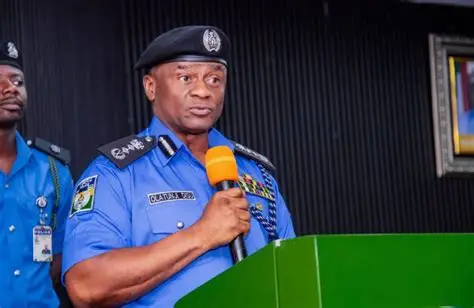
The St. Gregory’s College Old Boys Association has honoured the Inspector-General of Police, Olatunji Disu, with a Lifetime Achievement Award for his contributions to policing and public service.
Disu received the award alongside the Governor of the Central Bank of Nigeria, Olayemi Cardoso, at a reception in Lagos on Saturday to celebrate distinguished old boys of the college.
The Force Public Relations Officer, CSP Ani Iniedu, who disclosed this in a post on Saturday via his X handle, @cspiniedu, the award recognised Disu’s more than three decades of service to the Nigeria Police Force.
Disu graduated from St. Gregory’s College in 1985 and joined the police as a Cadet Assistant Superintendent of Police in 1992.
He has served in several operational and leadership positions, including Commander of the Lagos State Rapid Response Squad, Head of the Intelligence Response Team and Commissioner of Police.
He was appointed the 23rd indigenous Inspector-General of Police in February 2026.
The association also recognised his contributions to intelligence-led policing, criminal investigation, international peacekeeping, personnel welfare and community policing.
Reacting to the honour, Disu thanked the old boys’ association, saying the recognition from his alma mater was particularly significant.
He said the values and education acquired at St. Gregory’s College had helped shape his career and commitment to public service.
Disu reaffirmed his commitment to serving Nigeria with integrity and strengthening the police as a professional and accountable institution.
This version is closer to PUNCH’s compact print treatment: fewer adjectives, shorter paragraphs, attribution early, and no repetition of the same achievement in multiple forms.

The Chairman of Ilorin South Local Government Area of Kwara State, Nuhu Podo, has lauded the reforms of the President Bola Tinubu administration, saying they have increased financial resources available to local governments for grassroots development.
Podo stated this in Ilorin while presenting his administration’s two-year scorecard, where he highlighted more than 130 projects and interventions executed across the council’s 11 wards.
The chairman said the removal of fuel subsidy, foreign exchange reforms and increased financial autonomy for local governments had improved the capacity of the council to execute development projects.
He said the council, with the support of the state government, had implemented projects in security, education, electricity, water supply, roads and administrative infrastructure.
On security, Podo said his administration had employed an additional 150 security personnel and distributed 50 motorcycles for community surveillance.
He added that the council upgraded the Civil Defence Outpost in Alagbado to a full division and donated a Sienna bus to strengthen patrol operations.
According to him, the measures were aimed at improving security and the council’s response to security concerns across the local government.
In the education sector, Podo said the council had renovated classrooms and principals’ offices in some schools, distributed writing materials to reduce the financial burden on parents, and constructed a multipurpose hall at Sheikh AbdulSalam Junior Secondary School.
Podo added that the council, through the Kwara State Universal Basic Education Board, facilitated the renovation of junior secondary schools in Isale Maliki, Ajibesin and other communities.
He disclosed that the council sponsored 30 students at the College of Health Sciences, Osogbo.
“We also constructed a multipurpose hall at Sheikh AbdulSalam Junior Secondary School and named it the Mutawalli of Ilorin Hall, in recognition of the importance of supporting educational development,” he said.
The chairman said the council had also made interventions in the power sector, noting that he received the 2025 Nigerian Local Government Chairmen Merit Award for the distribution of 17 transformers serving communities across the local government.
On water supply, Podo said the administration had drilled new boreholes and repaired existing ones across the 11 wards to improve residents’ access to potable water.
Podo commended Tinubu for the reforms, which he said had strengthened the financial capacity of local governments to execute projects and provide services at the grassroots.
The chairman was accompanied at the briefing by the Vice Chairman, Joel Mary Abiodun; Council Secretary, Mohammed Hameed; and Speaker of the Legislative Arm, Jimoh Taibat Tope.

A colloquium convened by businessman and politician, Adeola Layeni-Dawodu, has called for a more intellectually grounded approach to political participation and discussions around governance in Nigeria.
The colloquium, which held at the Radisson Blu Hotel in Ikeja, Lagos, had the theme, “Renewed Hope, Real Progress: Highlighting the Achievements of the Tinubu Administration and Building a Stronger Tomorrow Together.”
Speaking on the motivation behind the event, Layeni-Dawodu said the initiative was driven by a desire to create a platform where issues of governance could be discussed beyond rallies, slogans and political personalities.
He said, “The inspiration was really a desire to create a more intellectually grounded conversation about governance.
“Politics is often discussed through rallies, slogans and personalities, but governance itself deserves a more serious interrogation. President Tinubu’s administration has undertaken significant reforms across the economy, infrastructure, agriculture, education, housing, energy and social investment, and I felt there was value in creating a platform where those issues could be examined beyond the usual political rhetoric.
“For me, the colloquium was therefore not simply about praising an administration. It was about asking: What has been done? Why were these decisions taken? What has been achieved? What challenges remain? And what should the next phase of the Renewed Hope agenda look like?
“I believe political engagement should contribute to the intellectual development of society. That was the spirit behind the colloquium.”
Explaining the choice of speakers, the convener said competence, relevance and experience were the major considerations.
He noted that the organisers deliberately brought together academics, policy practitioners, political actors, professionals and others with knowledge of the sectors discussed at the event.
On the objectives and outcome of the programme, Layeni-Dawodu said the event was designed to encourage informed public discourse and document conversations around the first three years of the administration.
He added that the event was also intended to demonstrate that political support could coexist with constructive questioning and accountability.
“The immediate objective was to encourage informed public discourse and properly document the conversation around the first three years of the administration.
“But beyond that, I wanted people to leave the room understanding that political participation does not have to be superficial. You can support a government and still ask difficult questions. You can acknowledge progress and still identify areas where more needs to be done,” he said.
Layeni-Dawodu maintained that he was encouraged by the quality of participation and discussions at the event, but noted that the colloquium should not be seen as an indication that all challenges had been resolved.
“The quality of participation and the depth of the conversations demonstrated that there is an appetite for a more substantive form of political engagement. But I would not say the work is finished. In fact, a successful colloquium should create more questions and more responsibility, not give us the impression that everything has been solved,” he said.
Addressing the perception of political engagement as being largely centered on rallies and grassroots mobilisation, he called for a broader understanding of participation in a democracy.
He added that political structures could be built alongside intellectual capacity, noting that political supporters should also be able to scrutinise and evaluate policies.
“You can mobilise people and still educate them. You can build political structures and still build intellectual capacity. You can support a political party and still insist that its policies should be properly explained and their outcomes evaluated.
“That is the kind of political culture I would like to see develop in Nigeria,” he said.
Speaking on his political aspirations, Layeni-Dawodu said his immediate focus was on building capacity and contributing to public discourse, governance and community development.
He said, “In the short term, my aspiration is to continue building my capacity and contributing meaningfully to public discourse, governance and community development. I want to remain engaged with issues that directly affect people, particularly housing, youth development, urban renewal, economic opportunity and the preservation of our cultural identity.”
He added that he believed political ambition should be accompanied by adequate preparation.
“Political ambition should never be separated from preparation. You should prepare yourself for responsibility before responsibility comes to you.
“In the long term, I would like to serve at a level where I can translate ideas into tangible outcomes and contribute to better governance, particularly for Lagos and Nigeria.
“But I don’t want to define my political journey simply by the office I eventually occupy. For me, the more important question is what value I am able to create wherever I find myself.”
Other speakers at the colloquium included a former member of the House of Representatives and Special Adviser to the Lagos State Governor on Parastatal Monitoring, Ibrahim Obanikoro, who spoke on internal affairs; Senior Lecturer in the Department of Employment Relations and Human Resource Management at the University of Lagos, Dr Tunde Elegbede, who spoke on education; and Adebisi Akinyemi, a director at Zane Systems and strategic aircraft procurement partner, who addressed issues concerning the Federal Capital Territory.
Also speaking were the Chief Executive Officer of Candiva Signature Empire, Aminat Okikiola, who discussed agriculture; lawyer and public advocate, Belinda Ezofor, popularly known as Belinda Uju, who spoke on petroleum; communication professional and consultant, Biodun Bakare, who addressed works; and Uju Odumodu, a senior executive at Alpha Pharmacy and Stores Ltd and General Manager at Lasena Water, who spoke on health.

The founder of Word Assembly Ministries, Ilorin, Rev Isaac Omolehin, has raised the alarm over a threat by bandits to attack his church camp at Idofian village in Ifelodun Local Government Area of Kwara State.
The cleric said the threat forced him and his family to go into hiding for safety.
Omolehin disclosed this in a statement made available to journalists on Saturday by his spokesperson, Grace Edema.
According to him, the police arrived at the camp at midnight between May 30 and 31 and ordered an immediate evacuation following a threat of a bandit attack.
The cleric, known for his criticism of denominational divisions in the Nigerian Church, lamented that the threat forced him, his family and more than 100 residents of the facility to flee the camp.
He noted that the camp had remained deserted since the evacuation, rendering the residents homeless.
“The police came to my camp in the middle of the night and asked everybody to run because kidnappers were coming to attack me. The whole camp was deserted, and it has remained deserted,” he said.
He disclosed that although he was away when the evacuation took place, the kidnappers eventually came to the camp but met an empty facility.
“They came, the bandits, but they didn’t meet anybody,” he added.
He said the security threat had forced him to move from one location to another with his wife and children.
“I have a house I can’t enter. I have a car I can’t ride. I have to hide myself from the public. If I sleep here today, I’ll sleep somewhere else tomorrow. I’m homeless with my wife and children,” Omolehin said.
The facility, he said, catered for orphaned children and housed a primary school, secondary school, hospital, old people’s home and a rehabilitation centre for mentally challenged women rescued from the streets, alongside their children.
“Bandits chased us out of that place. The school cannot open, the hospital is not functioning, and the patients and nurses all ran for their lives,” he added.
Omolehin said more than 100 residents of the camp are now scattered across different locations because authorities have yet to declare the area safe for their return.
“We wrote to the police because they were the ones who asked us to leave. We asked if it was safe for us to return because schools had resumed and we have over a hundred children that need to go to school. There has been no response,” the cleric stated.
He added that reports were also submitted to the Department of State Services and the Kwara State Ministry of Social Welfare, which supervises orphanages and rehabilitation centres, but he said no official response had been received.
“Three days after the attack on my camp here in Kwara, my village in Kogi State was also attacked, and my people were killed. When they missed me here in Kwara, they went to my village and attacked my people.
“The kidnappers did not destroy our buildings; the structures in the camp are still intact. However, a few days after we evacuated, thieves began breaking into the camp and carting away our belongings.
“Those were different criminals. The kidnappers did not come to steal refrigerators, fans or mattresses. They came for human beings. The people who looted our property are not the same as the kidnappers.”
Reflecting on his continued public advocacy despite criticism, Omolehin said attacks against him have ranged from social media abuse to restrictions on his ministry.
“The attacks are still going on, but they don’t affect me. Jesus already told us that our preaching may be resisted.”
He revealed that he was recently barred from preaching in Baptist churches, saying, “Baptists banned me from preaching in Baptist churches just about a month ago.”
Omolehin appealed to the Federal and Kwara State governments to strengthen security around the camp to enable displaced residents to return, noting that some of the orphaned children in his care were referred to the facility by government authorities.
“I want to appeal to the government to improve security so that I can return to the camp with my family and all the people I look after. Some of the children in the orphanage were brought to us by the government. Even if they say they don’t care about the rest of us, what about the children they entrusted to us?” he said.
Efforts to get the reaction of the state police command were unsuccessful, as the Police Public Relations Officer, Adetoun Ejire-Adeyemi, did not respond to calls or messages as of the time of filing this report.

Miners death probe: Commend President Tinubu for empowering Interior Minister

As Nigeria’s Electricity Reset Gathers Momentum – THISDAYLIVE
Agbara Nla premieres in Abuja
Ikorodu City face stern test against champions Enugu Rangers

Alumni honour IG Disu with lifetime award
LG boss lauds Tinubu over reforms
Layeni-Dawodu colloquium seeks intellectual public engagemen

INEC and Compromised Academics – THISDAYLIVE
Bandits forced me into hiding – Rev Omolehin

Human Life Continues to Be Worthless in Nigeria – THISDAYLIVE

2028 Olympics Qualifier: Augustine Eguavoen Invites 28 Players For Super Falcons’ Clash With Comoros

Man City CEO Ferran Soriano says fight against Premier League could take years

Plateau Group Denies Militia Links, Backs DSS Security Operations – THISDAYLIVE

Anambra to prosecute those denying women inheritance rights

2027: I dragged Peter Obi, convinced Kwankwaso to join ADC – Babachir Lawal

Kenyan Court Halts Dangote Refinery Work as Firm Insists Groundbreaking Will Proceed

NCDMB under Felix Ogbe: The Board’s contribution to Tinubu’s economic agenda

Dangote needs 2.1m bpd Crude as CORAN, IPPG demand reliable supply

US govt says ‘foreign actor’ involved in alleged terror plot targeting British base used by US forces

54-year-old teacher arrested for allegedly def!ling 10-year-old girl in Adamawa
-
 NEWS2 years ago
A MUST READ!! What Peter Obi Discussed With Atiku, Saraki, Lamido During Visits – Aide Reveals
-

 MUSIC5 years ago
MUSIC: Mohbad – Back Side [Free Download]
-

 MUSIC5 years ago
MUSIC: Papiwizzy – Oluwalonsola Ft Zlatan and Papisnoop [Download Mp3]
-

 MUSIC3 years ago
MUSIC: DEBHIE FEAT. EMMYBLAQ – TURN UP (DOWNLOAD HERE)