Connect with us

NEWS

Enugu Govt Shuts Down Illegal, Low-Quality School

Published

on

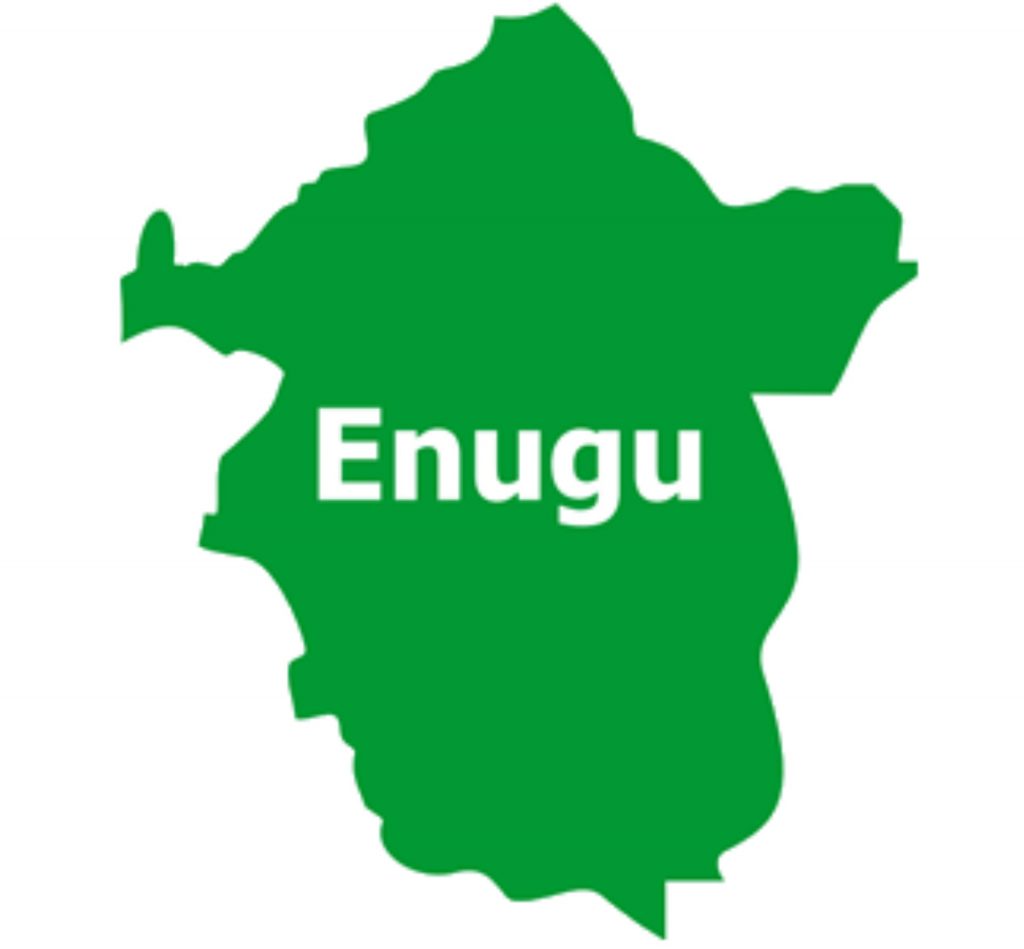
enugu-1024x949

Following deliberate efforts aimed at strengthening and improving the quality of education in the state, the Enugu State Government has commenced the enforcement of educational policies which has led to the closure of some illegally run and low quality schools, stressing that the move will rid the state of poor-quality education and skill deficiency.

This was even as parents as well as stakeholders in the public and private academic system commended the state governor, Dr. Peter Mbah, over what they described as “critical reforms” in education that will reposition the state’s standard of learning and equip the young ones with the requisite skills to compete globally.

The Commissioner for Education, Prof. Ndubueze Mbah, disclosed, Friday in Enugu, during the enforcement exercise, that the state government would not compromise its determination to raise the bar of education in the state, which include competent and qualified teachers, adherence to the education curriculum, conducive learning environment and other safety measures for students.

He described as worrisome and unacceptable the proliferation of illegal schools across the state where unscrupulous proprietors rip off parents of resources without providing commensurate quality education for their children, adding that some schools parade unqualified teachers while cramping children in dilapidated structures which put their lives in danger.

The exercise followed an earlier directive by the ministry requiring all operators of educational institutions across the basic and secondary school levels to comply with the state regulations, which mandate registration and approval by the ministry before commencing operation.

READ ALSO:  Nigerian Govt Sues Senator Natasha Over Defamation

“You will recall that we held extensive stakeholders’ engagements with practitioners, both public and private in the education sector. We sensitized our people about the state government’s educational policies and how education must align with the most advanced global practices if our children can have a chance to acquire 21st Century skills and modern workforce knowledge, to be able to compete with their global peers.

“Pursuant to the law which allows us to maintain minimum standards of education for both private and public schools, and also empowers our ministry to streamline and enhance effective administration, monitoring and supervision of private schools, we gave the grace of four months for all schools yet to register or obtain provisional licenses to do so. The four-month window period for schools to align with these directives has elapsed prompting our ministry to begin the enforcement on non-compliant schools. We are doing this to checkmate abuses and restore the dignity of education in our state,” the commissioner said.

According to him, the team has discovered several schools that had been operating under life-threatening conditions, subjecting children to unsafe and unhealthy learning environments, insisting that some of the structures housing the school children could collapse at any time.

He lamented that some of the schools visited were operating under open-roof, fallen rafters and severely cracked walls housing hundreds of pupils under abysmal learning environment, saying they were in complete disregard of the rules guiding the establishment and management of educational institutions.

Some of the illegal schools that were shut down included Evangel School where students were crammed inside a little church with barricades, and concealed in toilets when the management saw the ministry’s enforcement team; Ivory Education Centre, located along Owerri Road, Asata, which was conducting classes in makeshift garages and amid a structure under construction; Eastview Nursery and Primary School at Railway Quarters, Njemanze, which is a dilapidated barn; St. Michael Nursery and Primary School, Asata; St. Bartholomew Nursery, Primary, and Secondary School, Asata; and Olive Grove Nursery and Primary Academy, Njemanze.

READ ALSO:  Enugu Electricity Regulatory Commission Issues New Tariff, Crashes Band A from N209 to N160 Per Kwh

Speaking on the closures, Prof. Mbah reiterated government’s bullish stance against substandard education, warning that operators of illegal and substandard institutions risked imprisonment under the state laws. “The safety and quality of education our children receive must be prioritized. We will not allow any school to operate below the required minimum standards. This is about the future of our state, and we owe it to our children to give them the best foundation,” he added.

The commissioner, who also reassured law-abiding schools that their compliance with the law and policy of the state will continue to be reciprocated with the right support by the government, urged the public to report any unregistered or substandard schools within their communities to help maintain the integrity of education across the state.

Meanwhile, some of the parents who spoke to newsmen lauded the government’s effort to sanitize the education sector, saying they were regaining confidence in the state’s educational system.

Arch Ezea Ugwu, who runs an architectural firm at Ogui Road, said they would not hesitate to support future steps taken by the government to reposition the state education and make it the best in the country.

Speaking, Mrs Onyinye Onuigbo, whose two children were formerly in one of the schools that were closed for non-compliance, said she withdrew them in May this year after discovering that the school was only charging excessively without quality education.

She accused some of the schools planning to stage protest as a “form of corruption fighting back” because their dubious means of livelihood had been cracked.

READ ALSO:  JUST IN: Rivers Governor, Fubara, Appoints Ex-Speaker, Ehie, As Chief Of Staff

“We will continue to support any policy like this. I heard that some dishonest proprietors who have been engaging in these criminal enterprises are calling on parents to stage protests. They should be explaining themselves in prison in a sane society. Our people must resist and shame them,” Mrs Onuigbo said.

Click to comment

Leave a Reply

Your email address will not be published. Required fields are marked *

NEWS

Miyetti Allah President in Trouble as EFCC Files $2.63m Money Laundering Charges

Published

on


A federal high court in Abuja has remanded Bello Bodejo, president of Miyetti Allah Kautal Hore, in the custody of the Economic and Financial Crimes Commission (EFCC) over an alleged $2.63 million money laundering case.

Inyang Ekwo, presiding judge, on Thursday, ordered that Bodejo remain in the anti-graft agency’s custody pending the determination of his bail application.

The judge adjourned the matter to July 20 for ruling on the bail request.

Bodejo was arraigned on charges bordering on alleged money
laundering and pleaded not guilty to all counts.

Following the arraignment, Wahab Shittu, counsel to the EFCC, asked the court to fix a date for trial and remand the defendant.

Ahmed Raji, counsel to Bodejo, informed the court that a bail application had already been filed and urged the court to hear it.

Moving the application, Raji said the motion, filed on June 30, was supported by several grounds.

The senior advocate argued that the offences alleged against his client are bailable under the Administration of Criminal Justice Act (ACJA) and urged the court to grant bail.

Shittu opposed the application, relying on a 28-paragraph counter-affidavit filed by the EFCC.

“We adopt all our processes in opposition to the application my lord,” he said.

The prosecutor argued that Bodejo had previously been “a guest at the Department of State Services (DSS) for other offences” and could commit further offences if released on bail.

Shittu also dismissed the defendant’s claim of ill health, arguing that the injury he referred to was not recent and that he did not appear to be in poor health.

READ ALSO:  ‘No Tribe Superior To Another’ – Macaroni Over Invasion Of Enugu Community By Herdsmen

He further submitted that Bodejo could interfere with witnesses if granted bail, but urged the court to impose stringent conditions should it decide otherwise.

According to the charge, the EFCC alleged that Bodejo, on January 21, 2022, accepted $200,000 in cash from Sa’idu Abubakar, a former accountant-general of Bauchi State, in a transaction that exceeded the threshold permitted by law.

The commission also alleged that he received another $100,000 in cash from Abubakar on October 26, 2022, and a further $980,000 in separate cash transactions.

The EFCC said the alleged offences contravene Section 19(1)(d) of the Money Laundering (Prevention and Prohibition) Act, 2022, and are punishable under Section 19(2)(b) of the same Act.

Aprokorepublic

Continue Reading

NEWS

Reps Move to Punish South Africa Over Xenophobic Attacks

Published

on


The House of Representatives has urged the Federal Government to impose strong diplomatic measures against South Africa following renewed xenophobic attacks, extrajudicial killings, and alleged systematic persecution of Nigerians and other African nationals.

The resolution was adopted after a motion of urgent public importance sponsored by Yusuf Gagdi, who represents Kanke/Kanam/Pankshin Federal Constituency of Plateau State.

The motion received unanimous support during plenary presided over by Deputy Speaker Benjamin Kalu.Gagdi condemned the repeated violence against Nigerians, noting that recent reports confirm fresh attacks on citizens from Nigeria, Ghana, Zimbabwe, Zambia, Mozambique, and Malawi.


He highlighted the killing of two Nigerians, one allegedly in police custody and another murdered outside his business premises.


Recalling Nigeria’s pivotal role in the anti-apartheid struggle, Gagdi described the current treatment of Nigerians in South Africa as “profoundly disturbing” and a betrayal of African solidarity.


He warned that continued attacks undermine pan-African unity and regional integration.Other lawmakers, including Billy Osawaru, Moshood Akiolu, Ghali Tijjani, and Adebayo Adepoju, echoed calls for decisive action.


They urged intensified diplomatic engagement, legal redress, and support for affected Nigerians, while also advocating for the summoning of South Africa’s High Commissioner in Abuja.


The House resolved to:Summon South African envoy to explain Pretoria’s position on protecting Nigerians.


Push for international investigation into the killings of Nigerians and other Africans.Engage AU and UN to ensure accountability and protection of migrants.


Review bilateral ties with South Africa, including possible suspension of cooperation.Strengthen consular services and provide reintegration support for Nigerians returning home.

READ ALSO:  Mbah’s Two Years of Security Assurance and Rising Investments in Enugu State


An ad hoc committee will also be constituted to engage South Africa’s Parliament, government, and regional institutions, with a report expected within 21 days.


Xenophobic violence in South Africa has remained a recurring diplomatic flashpoint, with major outbreaks in 2008, 2015, and 2019 claiming lives and destroying businesses owned by foreign nationals, including Nigerians.


Aprokorepublic

Continue Reading

NEWS

“I Told Them To Kill My Brothers” – Governor Speakes on N300m Ransom Refusal

Published

on

Governor Dauda Lawal of Zamfara State has revealed that he refused to pay a N300 million ransom demanded by kidnappers who abducted his brothers in 2019, saying he chose not to negotiate with the criminals rather than encourage the growing menace of kidnapping for ransom.


The governor said his decision was based on his conviction that paying ransom only emboldens criminal groups to continue abducting innocent people.

Lawal made the disclosure on Thursday while speaking at the ARISE News and THISDAY Townhall Conference in Abuja, where he also renewed his call for the establishment of state police as part of broader efforts to tackle insecurity across the country.


Recounting the ordeal, the governor said the kidnappers demanded N300 million for the release of his brothers, but he refused to negotiate or make any payment.


“My own brothers were kidnapped in 2019, and these criminals were demanding at the time about 300 million. And I said, look, I’m not going to pay a dime. If you like, go and kill them.”


According to him, despite his refusal to pay, the kidnappers eventually released his brothers after they spent about three months in captivity.


Lawal maintained that his experience reinforced his belief that ransom payments only strengthen criminal networks and fuel more abductions.


“By the time we continue to pay ransom to these people, we are encouraging them to be kidnapping people more and more.”


He argued that if kidnappers realise they cannot obtain money from victims’ families or governments, they would be discouraged from engaging in the crime.

READ ALSO:  Foundation Warns Poverty, Household Pollution Driving COPD Surge In Nigeria


The governor stressed that his position has remained unchanged over the years, insisting that he would never negotiate with or reward criminals.


“I will not negotiate, and I will not pay ransom to any criminal, no matter what happens.”


Lawal made the remarks while advocating for the creation of state police, arguing that governors should have operational control over security architecture in their states if they are expected to guarantee the safety of residents.


He lamented that although governors are widely regarded as chief security officers of their states, they lack constitutional authority to direct the operations of the various security agencies.


“In as much as I was called or I’m being called the chief security officer of the states, however, I don’t have the command and control structure to determine what happens or give instructions to some of these security officers.”


According to him, the current arrangement places governors in a difficult position, as they are held responsible for insecurity despite having no direct control over the police and other security agencies operating within their states.


Lawal described security as the foundation upon which every other aspect of development depends, saying meaningful progress cannot be achieved where lives and property are not adequately protected.


“Why is it difficult for people to understand that my primary responsibility is the protection of lives and property, and I don’t have that control? How do you hold me accountable?”


The governor said establishing state police would make elected leaders more accountable to the people, as citizens would be able to directly assess the performance of their governors in maintaining law and order.

READ ALSO:  Mbah’s Two Years of Security Assurance and Rising Investments in Enugu State


He also argued that state governments would be better positioned to recruit, fund, equip and train security personnel based on the peculiar security challenges in their respective states.


Lawal further noted that the Nigeria Police Force is constrained by inadequate funding, poor welfare and insufficient training, challenges he said have continued to affect the effectiveness and morale of officers.


Highlighting Zamfara State’s investment in security, the governor disclosed that his administration currently finances more than 30 per cent of security operations carried out within the state.


He said that over the past three years, the state government had procured more than 500 operational vehicles for security agencies to strengthen their capacity to combat banditry and other violent crimes.


Lawal also revealed that the government recently acquired and handed over 35 Armoured Personnel Carriers (APCs) and Mine-Resistant Ambush Protected (MRAP) vehicles to support ongoing security operations.


The governor added that his administration has embraced technology in the fight against insecurity through the acquisition of both surveillance and combat drones.


“We bought drones, both surveillance drones and attack drones, to be able to aid the security forces in terms of fighting these criminals in their respective areas.”


He maintained that the solution to Nigeria’s worsening insecurity lies in strengthening security institutions through improved funding, better welfare, enhanced training and modern technology rather than negotiating or paying ransom to armed groups.


Lawal’s comments come amid renewed national conversations on the creation of state police and wider security sector reforms, with supporters arguing that decentralising policing would improve accountability, enhance intelligence gathering and enable quicker responses to local security threats across the country.

READ ALSO:  JUST IN: Tinubu’s Spokesman Ngelale

(DailyTrust)

Aprokorepublic

Continue Reading

NEWS

PBAT Door-To-Door Movement Gets Big Boost as Akpabio, Abbas, Others Inaugurate Exco

Published

on


The President Bola Ahmed Tinubu (PBAT) Door-to-Door Movement
on Thursday inaugurated its national executives in Abuja, with prominent
political leaders, traditional rulers, and stakeholders urging Nigerians to
support the administration’s reform agenda.

The movement, founded by Government Oweizide Ekpemupolo, popularly known as Tompolo, said the inauguration forms part of efforts to deepen grassroots mobilisation and promote civic participation across the country.

Among dignitaries at the event were Senate President Godswill Akpabio; Speaker of the House of Representatives Tajudeen Abbas; Governors Dauda Lawal of Zamfara, Agbu Kefas of Taraba, Caleb Mutfwang of Plateau, and Umar Bago of Niger; the Ooni of Ife, Oba Adeyeye Enitan Ogunwusi; former Katsina governor Aminu Bello Masari; former Niger Delta militant leader Asari Dokubo; and APC national chairman Nentawe Yilwatda.

A documentary titled ‘The Journey So Far for the Door-to-Door Movement’ was screened during the ceremony, highlighting the activities and growth of the organisation.

Addressing participants, Akpabio said difficult but necessary reforms were essential for national progress.

“Nations do not become great because they avoid difficult decisions; they become great because they confront decisions with wisdom, patience and patriotism. Lasting progress is rarely achieved without temporary sacrifice,” the senate president said.

Abbas defended the Tinubu administration’s economic reforms,
describing them as bold decisions taken with the country’s long-term interest
in mind.

“History will remember President Tinubu for his courage. He met a nation at a crossroads. He chose conviction over convenience: fuel subsidy removed, exchange rate unified, a new tax system built from the ground up. They were decisions taken for posterity. The road has demanded sacrifice, and we do not take that sacrifice lightly,” the speaker said.

READ ALSO:  Amazing Stuff!! Two Igbo Youths Win Councillorship Elections in Plateau State

The Ooni of Ife said the administration’s policies were repositioning the Nigerian economy, citing developments in the capital market and foreign reserves.

Delivering the keynote lecture, Professor Bashir Makarfi of Bayero University, Kano, said reforms introduced by the Tinubu administration were beginning to yield results.

“The fact is too visible to be denied that Nigeria is undergoing a transformation under Bola Tinubu,” he said.

Speaking on the economy, Aminu Bello Masari, former governor of Katsina state, said inflationary pressures were gradually easing while investor confidence was improving.

The managing director of Tantita Security Services Nigeria Limited, Kestin Ebimorbowei Pondi, described Tinubu as a symbol of purposeful leadership and urged Nigerians to remain united behind the administration.

“With unity, resilience and determination, Nigeria will get
to the promised land,” Pondi said.

President Bola Tinubu followed the inauguration live from the State House in Abuja, alongside Nuhu Ribadu, the national security adviser.

Aprokorepublic

Continue Reading

NEWS

Big Change! US Applicants Can No Longer Use Agents for Nigeria Visa

Published

on

Travellers in the United States who require Nigerian visas will now submit their applications directly to the Nigerian embassy and consulates after the Nigeria Immigration Service (NIS) disengaged its third-party visa application service provider.

Previously, Online Integrated Solution (OIS SERVICES) functioned as the operator of Nigeria’s visa application and submission centres in the US.

However, a statement issued Thursday by Akinsola Akinlabi, NIS public relations officer, said the operator has been disengaged effective immediately. Akinlabi did not state why.

“Travellers seeking Nigerian visas are now required to submit their applications directly at the embassy of Nigeria in Washington, DC, or at the consulates of Nigeria in New York and Atlanta until further notice,” Akinlabi said.

He conveyed the NIS’ assurance that the embassy and consulates have put adequate measures in place to ensure seamless submission, processing, and issuance of visas.

The immigration official noted that applicants are further advised to monitor the official communication channels of the NIS and the Nigerian mission in the US for updates on visa application procedures.

He added that the NIS remains committed to providing efficient service delivery.

Aprokorepublic

READ ALSO:  Food Security: Govt Launches Agric Project In Enugu South LGA
Continue Reading

NEWS

Oshiomhole Drops Truth Bomb: Governors Powerless Without State Police

Published

on

The lawmaker representing Edo North Senatorial District, Adams Oshiomhole, has thrown his weight behind the creation of state police in Nigeria.

Oshiomole expressed his support on Thursday at Arise Television’s Town Hall on State Police.

According to him, governors cannot be held accountable as chief security officers without having operational control over policing.

He described Nigeria’s current policing structure as contradictory, stressing that governors fund security operations but lack the authority to recruit, deploy or discipline officers.

The former Edo State governor also dismissed fears that state police would be abused, insisting that misuse of power already exists under the current centralised system and should be addressed through democratic
accountability and public oversight.

“Various state governors can’t be the Chief Security Officers of their respective states without operational control over policing.

“Decentralised policing would improve security, clarify responsibility and align Nigeria’s federal system with its constitutional structure.

“Lawmakers should move from debate to its implementation,” he said.

Recall that both chambers of the National Assembly passed a bill for the creation of state police in Nigeria.

Aprokorepublic

READ ALSO:  Okonjo-Iweala Seeks Second Term As WTO DG
Continue Reading

NEWS

Wike: FCT Civil Servants Are Angry Because I Stopped Money Diversion

Published

on


The Minister of the Federal Capital Territory (FCT), Nyesom Wike, has said he is not popular among civil servants because he has blocked avenues for the diversion of public funds.

Wike made the revelation during his monthly media chat on the state of the nation in Abuja on Thursday.


According to him, some funds previously diverted by civil servants are now being channelled into productive projects, particularly road construction.


“We waste our resources on frivolities,” the minister stated. He cited the example of requests for funds to attend international conferences, such as one on land administration in America, which he refused to approve.


“How do you encourage me to sign N20 million to travel to America for a conference of one week for land administration? I won’t do that,” Wike said.

He explained that before his arrival, about 65 percent of the FCT budget went to recurrent expenditure.


He reversed this priority, directing 70 percent to capital expenditure and 30 percent to recurrent.“Some people say conferences for corruption… These are ways government funds are being diverted. I say put this money in this road here and the people will get the impact,” he added.

Wike concluded that this stance explains why he may not be liked by some civil servants. “If you ask anybody today, one Minister they won’t like is me. Why? Those money for conferences, I put the money together for roads.”

The minister has consistently emphasised fiscal discipline and infrastructure development in the FCT since assuming office.

READ ALSO:  Mbah’s Two Years of Security Assurance and Rising Investments in Enugu State


Aprokorepublic

Continue Reading

NEWS

Protect Obi, Release El-Rufai – Atiku Tells FG

Published

on

Atiku Abubakar, presidential candidate of the African Democratic Congress (ADC), has asked the federal government to guarantee the safety of Peter Obi, presidential candidate of the Nigeria Democratic Congress (NDC).

He has also asked for the release of Nasir el-Rufai, former governor of Kaduna, warning that democracy is threatened when opposition figures are intimidated.

In an interview with Chude Jideonwo, Obi had accused the federal government of deliberately frustrating his means of livelihood and targeting opposition figures.

On Tuesday, el-Rufai’s wives held a press conference in Abuja to appeal to President Bola Tinubu over the former governor’s ordeal in the custody of the Independent Corrupt Practices and Other Related Offences Commission (ICPC).

In a statement issued on Thursday by Phrank Shaibu, his senior special assistant on public communication, Atiku said the safety of opposition leaders is a constitutional responsibility of the Nigerian state.

“Nothing must happen to Peter Obi. An injury to one is an injury to all. When one opposition leader is intimidated, every opposition voice is diminished,” he said.

“When one citizen begins to fear because of his political beliefs, democracy itself becomes the casualty.”

‘PRESIDENCY SHOULD RESPOND WITH STATESMANSHIP NOT INSULTS’

Atiku criticised the presidency for responding to Obi’s recent comments with what he described as personal attacks instead of the restraint expected of a democratic government.

“The Presidency must understand that democratic leadership demands composure, not contempt,” he said.

“When a citizen, particularly an opposition figure, voices concerns about the state of the nation or his personal safety, the first duty of government is to reassure through statesmanship, facts and responsible conduct—not through insults.

READ ALSO:  Christmas: Gov Mbah Preaches Love, Peace, Unity

“Democracies are strengthened by reasoned engagement, not by invective. A government that answers every criticism with abuse projects insecurity, not confidence.”

The former vice-president said criticism should not be treated as sabotage or political competition as warfare.

“The opposition is not the enemy of Nigeria,” he said.

“Poverty is the enemy. Hunger is the enemy. Insecurity is the enemy. Corruption is the enemy. Kidnapping is the enemy. The daily bloodletting across our communities is the enemy.

“A government that devotes more energy to attacking its critics than confronting these existential challenges has confused political survival with the purpose of governance.”

Atiku said many Nigerians continued to endure severe economic hardship and worsening insecurity while victims of abduction remain in captivity.

“There are schoolchildren and teachers still waiting to be reunited with their families. There are countless innocent Nigerians languishing in the camps of kidnappers,” he said.

“These are the emergencies that deserve the full machinery of government—not endless political sparring with opposition figures.”

He urged the federal government to devote the same urgency it applies to political communication to rescuing kidnapped Nigerians and restoring public confidence in national security.

‘RELEASE El-RUFAI, UPHOLD DUE PROCESS’

Atiku also renewed his call for the immediate release of el-Rufai.

“The continued detention of Mallam Nasir El-Rufai has generated widespread public concern,” he said.

“Every Nigerian, irrespective of political affiliation, is entitled to due process, equal protection under the law and the presumption of innocence until proven guilty by a competent court. Justice must never create the appearance of selective application.”

READ ALSO:  Enugu First Lady Celebrates Christmas With Children

He urged the government to address public concerns surrounding its administration through transparency and accountability rather
than political distractions.

“Public confidence is not restored through insults or propaganda. It is restored through openness, accountability and the courage to
answer legitimate questions,” he said.

“Governments earn trust by confronting controversy with facts, strengthening institutions and demonstrating that no one is above scrutiny.”

Atiku warned that history would judge governments by how they protect citizens and uphold democratic values.

“Our elders say: ‘When the drums of injustice beat for your neighbour, do not dance, for tomorrow they may beat for you,’” he added.

“Every Nigerian, regardless of political affiliation, has a stake in defending the democratic space. Release Mallam Nasir El-Rufai.

“Bring home every abducted schoolchild, every teacher and every innocent Nigerian still languishing in the hands of kidnappers.

“Stop chasing political opponents and start confronting the crises that are bleeding our nation. History will not remember how fiercely a government fought its critics.

“It will remember whether it protected its citizens, upheld justice, rescued the vulnerable and preserved the democracy entrusted to its
care.”

Aprokorepublic

Continue Reading

NEWS

US Publishes Photos, Names of 124 Nigerians Set for Deportation

Published

on

The United States Department of Homeland Security (DHS) has published an updated list identifying 124 Nigerians targeted for deportation, describing them as part of the “worst-of-the-worst” criminal offenders.

According to a statement released on the DHS website on Wednesday, the individuals were arrested by U.S. Immigration and Customs Enforcement (ICE) and placed on the agency’s priority removal list due to criminal convictions. While names and photographs have been made public, specific details of the offenses and the exact deportation timeline were not disclosed.

The move aligns with the Trump administration’s intensified immigration enforcement efforts, which began after President Donald Trump returned to office on January 20, 2025. Executive orders issued on his first day declared illegal immigration a national emergency and prioritized the removal of individuals posing threats to public safety.


A DHS statement said: “The U.S. Department of Homeland Security is highlighting the worst of worst criminal aliens arrested by the U.S. Immigration and Customs Enforcement (ICE). Under DHS leadership, the hardworking men and women of DHS and ICE are fulfilling President Trump’s promise and carrying out mass deportations – starting with the worst of the worst – including the illegal aliens you see here.”


Partial List of NamesThe published names include (as reported):Sunday Adediora, Sunday Kunkushi, Mkpouto Etukudoh, Marcus Unigwe, Olaniyi Ojikutu, Boluwaji Akingunsoye, Ejike Asiegbunam, Emmanuel Mayegun Adeola, Bamidele Bolatiwa, Ifeanyi Nwaozomudoh, Aderemi Akefe, Solomon Wilfred, Chibundu Anuebunwa, Joshua Ineh, Usman Momoh, Oluwole Odunowo, Bolarinwa Salau, Oriyomi Aloba.


Oludayo Adeagbo, Olaniyi Akintuyi, Talatu Dada, Olatunde Oladinni, Jelili Qudus, Abayomi Daramola, Toluwani Adebakin, Olamide Jolayemi, Isaiah Okere, Benji Macaulay, Joseph Ogbara, Olusegun Martins, Kingsley Ariegwe, Olugbenga Abass, Oyewole Balogun, Adeyinka Ademokunla, Christian Ogunghide, Christopher Ojuma, Olamide Adedipe, Patrick Onogwu, Olajide Olateru-Olagbegi, Omotayo Akinto.

READ ALSO:  Foundation Warns Poverty, Household Pollution Driving COPD Surge In Nigeria


Kenneth Unanka, Jeremiah Ehis, Oluwafemi Orimolade, Ayibatonye Bienzigha, Uche Diuno, Akinwale Adaramaja, Boluwatife Afolabi, Chinonso Ochie, Olayinka A. Jones, Theophilus Anwana, Aishatu Umaru, Henry Idiagbonya, Okechukwu Okoronkwo, Daro Kosin, Sakiru Ambali, Kamaludeen Giwa, Cyril Odogwu, Ifeanyi Echigeme, Kingsley Ibhadore, Suraj Tairu, Peter Equere, Dasola Abdulraheem, Adewale Aladekoba, Akeem Adeleke.


Bernard Ogie Oretekor, Abiemwense Obanor, Olufemi Olufisayo Olutiola, Chukwuemeka Okorie, Abimbola Esan, Elizabeth Miller, Chima Orji, Adetunji Olofinlade, Abdul Akinsanya, Elizabeth Adeshewo, Dennis Ofuoma, Quazeem Adeyinka, Ifeanyi Okoro, Oluwaseun Kassim, Olumide Bankole Morakinyo, Abraham Ola Osoko, Oluchi Jennifer, Chibuzo Nwaonu.


The full list with accompanying photos is available on the DHS “Worst of the Worst” page.


This latest action is part of broader deportation operations that have prioritized individuals with criminal records. Nigeria has faced heightened scrutiny, including partial visa restrictions imposed in June over concerns related to identity management, information sharing, and overstay rates.


Deportation flights have expanded to various African countries as enforcement continues. Official data shows high volumes of removals from Latin American nations, with growing operations in Africa, Asia, and the Caribbean.


Aprokorepublic

Continue Reading

Trending