Connect with us

EDUCATION

Enugu To Spend 30 Percent of 2024 Budget On Education—Gov Mbah

Published

on

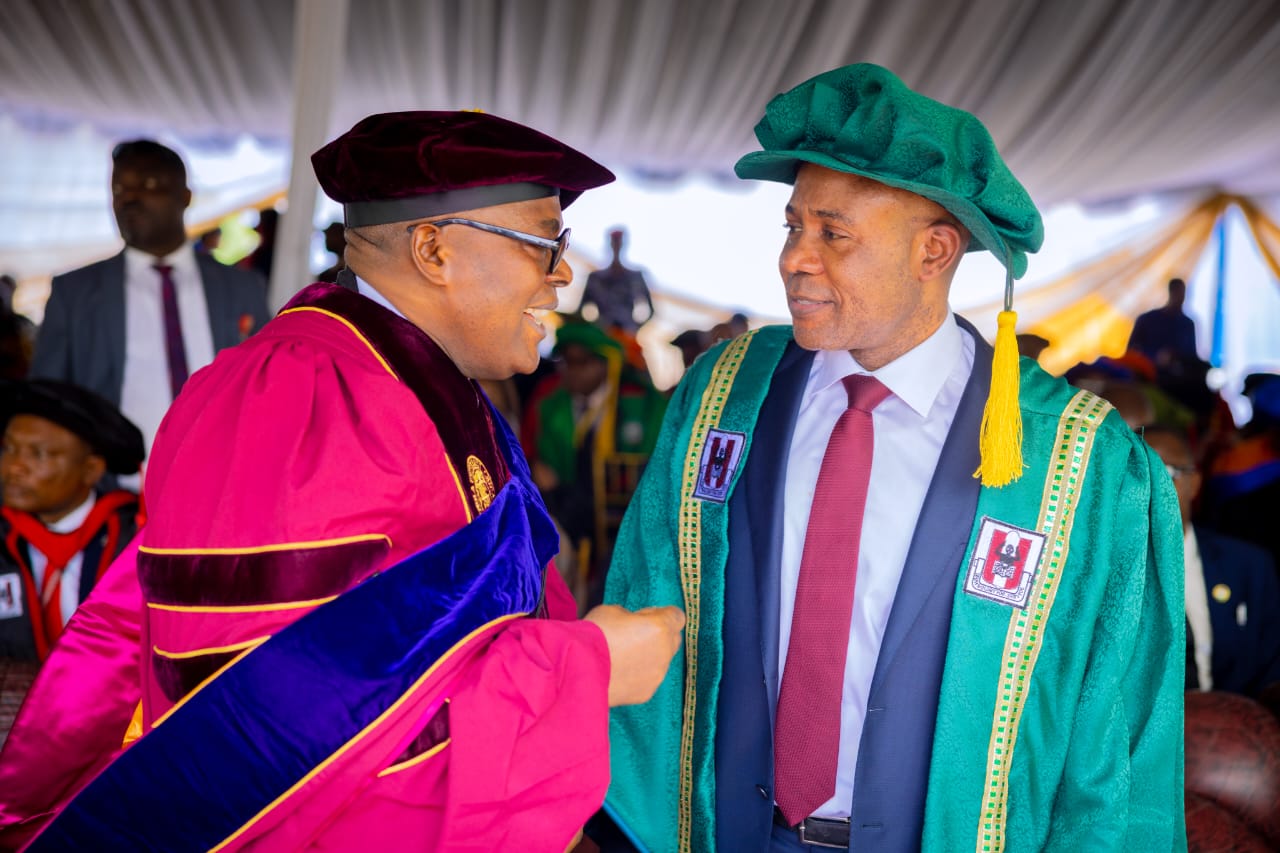
L: Vice Chancellor, ESUT, Prof. Alloysius-Michaels Okolie & Governor Peter Mbah

Governor of Enugu State, Dr. Peter Mbah, says his administration is to spend 30 per cent of the 2024 state budget on the education section sector, stressing that education remains the state’s greatest weapon against poverty.

Mbah stressed his administration’s determination to ensure that the poorest child in the remotest parts of Enugu State receives world class education using tools of the 21st century.

The governor made the declarations in his keynote address at the 19th convocation of the Enugu State University of Science and Technology, ESUT, Agbani, on Saturday, where 9,017 graduants received various first and higher degrees.

Mbah, who is also the Visitor to the university, said the most radical changes in the education under his administration would take place in the area of basic education.

“In my view, education is probably our greatest weapon in our war against poverty in the medium to long run.

“It is for this reason that education is at the core of the strategy, which we envisage will see us boost our GDP from the current levels of about $4.4 billion to at least $30 billion by the end of 2031.

“This is why we have designed and are implementing a most revolutionary strategy to revamp the current educational system. This revamp will be extensive and exhaustive, ranging from the basic schools through secondary to tertiary institutions like ESUT.

“There will be changes not only in the curricula, but also in the models for delivering knowledge in our educational institutions. The most radical change will take place in our basic schools where our children spend the first nine years schooling.

READ ALSO:  Police Vow To Rid Enugu of Unrepentant Violent Criminals, Rescue 28 Kidnap Victims

“Therefore, in 2024, we will be spending close to 30 per cent of our state budget on education, well above the recommended international benchmark”, the governor said.

The governor said his administration had completed the construction of one smart school, awarded contract for the construction of another nine, while 250 more would be constructed in less than 14 months to cover the entire 260 wards, adding that teachers for the pilot model school were already undergoing training by global experts.

“These smart schools will each be equipped with internet access, solar power, a centre for robotics and artificial intelligence, a modern ICT centre, two well-equipped laboratories for primary school and junior secondary school, a studio for creative production, 25 inclusive classrooms, with interactive digital whiteboards, android tablets for pupils’ use, among others”, he explained.

He commended the ESUT management for some steps already being taken to align with government’s vision for tertiary education in the state.

Speaking, the Vice Chancellor, Prof. Alloysius-Michaels Okolie, commended Mbah for the laudable vision for education in the state and great support to ESUT since the governor’s assumption of office.

He said the ESUT management was repositioning the institution in line with the governor’s educational vision and policies.

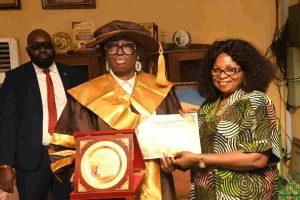
The convocation also saw the conferment of honorary doctorate degrees on some distinguished Nigerians, including the
Managing Director of Shell Petroleum Development Company of Nigeria Limited, Osagie Okunbor, Group Managing Director of Afrivest West Africa Ltd, Ike Chioke, the foremost estate developer, Surv Ugochukwu Chime, and recognitions and cash awards to outstanding student led by the best graduating student, Miss Barbara Ijeoma Ikeonyia.

READ ALSO:  Enugu Begins Transition To Smart Green Schools

Click to comment

Leave a Reply

Your email address will not be published. Required fields are marked *

EDUCATION

YABATECH’s Move to University Status on Course, Rector Confirms

Published

on

The Rector of Yaba College of Technology, Dr Ibraheem Abdul, has assured students and stakeholders that the institution’s transition into a full-fledged university remains on course.

Abdul spoke on Thursday during the matriculation of 17,130 students admitted for the 2025/2026 academic session.

He said the Federal Government’s approval for the conversion of the 79-year-old institution into a university of technology and vocational education had reached an advanced stage, with legislative processes ongoing at the National Assembly.

President Bola Tinubu had approved the conversion of YABATECH into a university in February 2025.

According to the rector, the announcement was a reaffirmation of the President’s approval and commitment to the process.

“The announcement is not new. I am just reiterating it to the new students that the President has approved our conversion to a university. The minister himself made the announcement last year and I want to assure everyone that it is on course,” he said.

Abdul, however, clarified that the institution would continue operating as a polytechnic pending the completion of regulatory and accreditation processes by the National Universities Commission.

“These are not our last set of students as a college because there are still processes to follow. The NUC has to approve our courses before degree programmes can commence. We will continue our admissions as a polytechnic while the transition progresses,” he said.

The rector also unveiled infrastructure expansion plans aimed at preparing the institution for its proposed university status.

According to him, the President approved a N5bn take-off intervention fund for the construction of a 13-storey building within the institution and another N2bn for faculty development projects.

READ ALSO:  Gov Mbah Signs N971bn 2025 Budget, Vows Diligent Implementation

He added that the institution was expanding its Epe campus while also developing additional hostels and academic facilities in Yaba.

Abdul disclosed that the Federal Government recently approved a Presidential Initiative hostel project expected to provide 1,500 bed spaces for students.

The rector also announced plans to establish new faculties, including the Faculty of Health Technology and the Faculty of Computing and Information Technology.

He further disclosed that the institution admitted 17,130 students from 24,655 applications received for the 2025/2026 academic session.

Abdul urged the matriculating students to embrace discipline, academic excellence and entrepreneurship while avoiding cultism, examination malpractice, drug abuse and other social vices.

“Cultism, examination malpractice, drug abuse, bullying and all forms of indiscipline have no place in Yabatech. Any student found involved in cult-related activities will face expulsion and possible prosecution,” he said.

Aprokorepublic

Continue Reading

EDUCATION

JAMB: UTME Waived for Education, Agriculture

Published

on

The Joint Admissions and Matriculation Board (JAMB) has announced that candidates applying for Education programmes and non-engineering Agriculture courses will no longer be required to sit for the Unified Tertiary Matriculation Examination (UTME).

JAMB made the announcement on Monday via its official X handle during its ongoing 2026 policy meeting on admissions.“Candidates seeking admissions into Education Programmes and Agriculture non-Engineering Courses are now exempted from UTME,” the board stated.

The decision aligns with the Federal Government’s recent policy scrapping the UTME requirement for admission into Colleges of Education.

Candidates seeking the Nigeria Certificate in Education (NCE) will also no longer need to take the UTME.

This development is expected to ease the admission process for students interested in these critical fields.

Aprokorepublic

READ ALSO:  Enugu Commissioner Reacts To Allegation of VISA Fraud Involving State Cultural Troupe
Continue Reading

EDUCATION

NECO To Start Computer-Based Exams This year, Minister Alausa Says

Published

on

The Federal Government on Thursday unveiled a major reform in Nigeria’s examination system with the introduction of computer-based examinations, CBE, by the National Examinations Council, NECO, as the nation celebrated the examination body’s 25 years of existence amid glowing tributes to its rise from a troubled national initiative to an internationally recognised assessment institution.

The minister of education, Dr Tunji Alausa, who announced the reform at NECO’s Silver Jubilee celebration in Abuja, declared that the transition to technology-driven examinations would significantly curb examination malpractice and reposition Nigeria’s assessment system for global competitiveness.

Speaking at the event held at the Bola Ahmed Tinubu Conference Centre, Garki, Abuja, Alausa described NECO as a “standard-bearer for credible external examinations”, saying the council had become a critical pillar in safeguarding integrity, fairness and accountability in Nigeria’s education sector.

“We are at the threshold of a very important reform, which NECO is spearheading, and that is the Computer-Based Examination, which is to commence this year,” the minister said.

According to him, the new system would provide real-time monitoring of candidates, track suspicious activities and drastically reduce examination fraud that has continued to undermine confidence in public examinations.

The minister said NECO’s 25-year journey reflected Nigeria’s determination to build a credible national examination system capable of guaranteeing equal opportunities for learners across the country.

He noted that the council had over the years strengthened examination security, improved reliability in scoring, widened access to examinations in underserved areas and embraced technological innovations that restored public confidence in national certification.

READ ALSO:  Enugu South Chairman-elect, Ani Receives Certificate of Return

Alausa said the Ministry of Education would continue to provide policy direction and oversight to ensure NECO examinations aligned with national curricula, learning outcomes and broader development goals.

He stressed that the future of educational assessment must go beyond rote learning to embrace 21st-century competencies such as critical thinking, problem-solving and digital literacy.

“As we celebrate this Silver Jubilee, may NECO and the Ministry of Education continue to work in unison, fostering trust, driving reform, and ensuring that certification remains a passport to brighter futures for all students,” he said.

In his address, NECO Registrar and Chief Executive, Prof. Dantani Ibrahim Wushishi, revealed that the council had grown beyond Nigeria’s borders and was currently conducting examinations in eight countries, a development he described as evidence of growing international confidence in NECO certificates.

He said the examination body, which began amid widespread scepticism, infrastructure deficits and credibility concerns, had transformed into a globally respected institution through transparent processes, prompt release of results and adherence to international best practices.

“Today, NECO stands as a benchmark for credible examinations in the region and among international peers,” Wushishi declared.


He added that NECO’s credentials were now widely accepted internationally, enhancing educational and professional mobility for Nigerian students.

The registrar disclosed that the council had embarked on massive reforms and infrastructure expansion, including the construction of offices in 10 states, development of digital verification systems, deployment of e-certificates and establishment of data analytics and e-library platforms.

He said the council recently procured dozens of operational vehicles to strengthen nationwide examination logistics and had created additional zonal directorates to improve service delivery and staff development.

READ ALSO:  Students Stranded As NASU, SSANU Begin Strike From Friday

Wushishi also announced plans to intensify anti-cheating measures, strengthen examination security protocols and expand digital services as part of NECO’s future development agenda.

He paid glowing tributes to former Heads of State and Presidents, including Generals Ibrahim Babangida, Abdulsalami Abubakar and Olusegun Obasanjo, for their roles in the evolution and institutionalisation of NECO.

The registrar equally acknowledged the contributions of past registrars, education ministers, governing boards and the Niger State government for sustaining the council through its formative and transformative years.


According to him, the unveiling of a commemorative historical publication titled “Twenty-Five Years of NECO: Evolution, Challenges and Contributions to Nigeria’s Educational Assessment System” formed part of activities marking the anniversary.


The event attracted top government officials, lawmakers, education stakeholders and international assessment experts, including the President of the International Association for Educational Assessment, Dr Mafu S. Rakometsi of South Africa, and the President of the Association for Educational Assessment in Africa, Dr Eshetu Kebede of Ethiopia.


Stakeholders at the event hailed NECO’s journey as a major national success story, expressing optimism that the shift to computer-based examinations would herald a new era of transparency, efficiency and global relevance in Nigeria’s educational assessment system.

Aprokorepublic

Continue Reading

EDUCATION

Students Stranded As NASU, SSANU Begin Strike From Friday

Published

on

The Non-Academic Staff Union of Educational and Associated Institutions (NASU) and the Senior Staff Association of Nigerian Universities (SSANU) have commenced an indefinite strike starting Friday, May 1, 2026.

The joint decision follows the expiration of the April 30, 2026 deadline given to the Federal Government to conclude the ongoing renegotiation of the 2009 FGN/University Non-Teaching Staff Agreement.

The unions rejected the Federal Government’s proposed 30 percent salary increase, insisting on proper parity with academic staff and full implementation of previously reached agreements.

In separate and joint communications, leaders of both unions warned that failure to satisfactorily conclude the renegotiation and sign the agreements would leave them with no choice but to shut down public universities and inter-university centres across the country.

Despite last-minute meetings held by the Federal Government with the unions earlier this week, the talks failed to produce a resolution acceptable to NASU and SSANU.

The strike is expected to paralyse administrative, technical, and non-teaching activities in all federal and state universities, as the unions have directed their members to withdraw services completely until their demands are met.

This development adds to the recurring industrial actions in Nigeria’s university system and is likely to disrupt academic calendars if not quickly resolved.

Aprokorepublic

READ ALSO:  Enugu Govt, Jelfah Group, Sign N40bn Deal To Revitalise Moribund Sunrise Mills
Continue Reading

EDUCATION

3,355 Graduands as COOU Hosts ‘Diplomatic’ Convocation

Published

on

By

By Ejike Agbata 

All is set for the 16th convocation ceremony of the Chukwuemeka Odumegwu Ojukwu University (COOU), Anambra State, with a total of 3,355 students expected to receive first degrees.

Vice Chancellor of the university, Prof. Kate Omenugha, disclosed this during a press conference held at the Vice Chancellor’s conference room, outlining activities lined up for the ceremony scheduled to commence on April 22.

She revealed that the convocation will feature a Founder’s Day Lecture titled “Sustainable and Climate Resilient Future: Beyond Rhetorics,” to be delivered by the European Union Ambassador to Nigeria, Gautier Mignot, at the ETF Auditorium.

According to her, the convocation lecture, themed “Building Innovative Minds and Bridges for Shared Prosperity,” will be delivered by the Polish Ambassador to Nigeria.

Other activities include an interdenominational service and interactive sessions with students aimed at engaging them and assessing their welfare.

Prof. Omenugha described this year’s convocation as a “diplomatic edition,” noting that the university is strengthening partnerships with institutions within and outside Nigeria to boost its global relevance and visibility.

She commended Governor Chukwuma Soludo for his support to the institution, particularly in infrastructure development and the renovation of the university’s substation.

The Vice Chancellor expressed optimism about the future of the institution, stating her goal to position COOU among the top 10 universities in Nigeria by 2027.

READ ALSO:  Enugu Begins Transition To Smart Green Schools
Continue Reading

EDUCATION

NUC Moves To Include NOUN Graduates In NYSC

Published

on

The National Universities Commission (NUC) says it will review the exclusion of National Open University of Nigeria (NOUN) graduates from the National Youth Service Corps (NYSC) scheme.

Abdullahi Ribadu, executive secretary of NUC, said the move follows concerns raised by the Oba of Benin, Ewuare II, chancellor of NOUN, over the “unequal” treatment of the open university’s graduates.

According to NAN, the traditional ruler called for policy changes to allow eligible graduates to serve, saying that current restrictions put them at a disadvantage.

Ribadu said the NUC will engage NYSC leadership to re-evaluate the mobilisation framework.

“I have heard the concerns of the Chancellor in his speech about the lack of mobilisation of NOUN graduates for the National Youth Service
Corps,” he said.

“I want to assure you, at NUC, we will engage with NYSC to see what policy changes can be made in order for NOUN graduates to be accommodated, because the dynamics have changed.”

The NUC boss said the initial policy reflected NOUN’s past student profile of working professionals above the service age limit, adding that the commission has now observed a shift to younger students.

“Unlike in the past, where graduates of NOUN are 30 years and above; in recent times, you have graduates of younger age, less than 30, who are likely to participate in the NYSC based on age,” he said.

Aprokorepublic

READ ALSO:  JAMB: UTME Waived for Education, Agriculture
Continue Reading

EDUCATION

JAMB: Qualified Candidates Denied Admission Should Speak Up

Published

on

The Joint Admissions and Matriculation Board (JAMB) has advised candidates and parents to report cases where qualified students with good UTME scores are denied admission despite meeting all requirements.

JAMB Registrar, Prof. Ishaq Oloyede, made the call while stressing the transparency of the Central Admissions Processing System (CAPS).


“If you find anybody, if you are sure of yourself, you have a score, and this is the UTME score of my child, and you know that you ought to be admitted and you are not admitted, protest to us because CAPS has made everything easy,” Prof. Oloyede said.

The appeal aims to promote fairness and tackle irregularities in the 2026 admission process.

Affected candidates and parents are encouraged to promptly report such cases to JAMB with relevant details for necessary investigation.

This directive reinforces JAMB’s commitment to a merit-based admission system across Nigerian tertiary institutions.

Aprokorepublic

READ ALSO:  Faculty Relocation: DSUST Vice-Chancellor Calls For Calm
Continue Reading

EDUCATION

Taraba State Budgets N1bn For WAEC And NECO Registration

Published

on

Governor Agbu Kefas of Taraba State has approved over N1 billion to cover registration fees for the Senior Secondary Certificate Examination (SSCE) for students across the state.

The initiative, announced on Tuesday in Jalingo, covers examinations conducted by the West African Examinations Council (WAEC) and the National Examinations Council (NECO), according to government sources.

The intervention is aimed at removing financial barriers that have prevented many eligible students from sitting the crucial examinations.

Officials said the policy is designed to ease the burden on parents and guardians while expanding access to education for thousands of students across the state.

The state government noted that the move forms part of a broader strategy to strengthen the education sector and improve academic performance among young people.

Observers have described the development as a significant investment in human capital, with expectations that it will boost examination participation rates and support long-term educational advancement in the state.

Education stakeholders also said the initiative highlights the administration’s sustained commitment to making education a central pillar for development and youth empowerment in Taraba.

Aprokorepublic

READ ALSO:  Enugu Begins Transition To Smart Green Schools
Continue Reading

EDUCATION

OAU Students Shun Lectures Amid Transport Crisis

Published

on

Academic activities at Obafemi Awolowo University are set to be disrupted following a planned lecture boycott by students protesting changes to the institution’s transport system.

The action, scheduled to last for 72 hours from Tuesday, April 14 to Thursday, April 16, 2026, emerged after a series of meetings between student leaders and stakeholders over mobility challenges on campus.

The Students’ Union Government confirmed the decision after deliberations at a congress held on April 9, citing unresolved concerns linked to recent transportation reforms.

In a statement jointly signed by union president Adelani David and secretary-general Habeeb Oke, the leadership directed students to withdraw from all lectures during the protest period.

“The union shall embark on a total 72-hour lecture boycott starting from Tuesday, 14th April 2026, to Thursday, 16th April 2026. All academic activities are to be boycotted throughout this period,” the statement read.

The protest centres on the university’s transport restructuring, introduced after the donation of buses and tricycles intended to improve movement within the campus.

The initiative, supported by First Lady Oluremi Tinubu, led to a policy restricting intra-campus transport operations to the newly provided vehicles.

However, students reported that the transition has created operational gaps, resulting in delays, overcrowding, and limited coverage across key routes.

The student union representatives stated that the current arrangement has reduced commuting efficiency, particularly during peak academic hours when demand is highest.

“The transportation system as presently operated has led to long queues, insufficient vehicles, and extended waiting times,” the union noted.

Students residing outside the campus were said to be among the most affected, as alternative transport options have become fewer and more costly.

READ ALSO:  Police Vow To Rid Enugu of Unrepentant Violent Criminals, Rescue 28 Kidnap Victims

The union also raised concerns about the exclusion of former commercial transport operators, which it said had previously complemented campus mobility.

Despite engagements with university management, students said proposed improvements had yet to materialise, with authorities describing the situation as a temporary adjustment phase.

The students also revealed that the institution’s management had reportedly assured that additional buses would be introduced over time to ease the pressure on the existing system.

Among the demands presented by the union are the immediate deployment of more vehicles, reinstatement of previous transport options pending improvements, and broader consultation with students on future policies.

The union added that it would reassess the situation at the end of the boycott and warned that further actions, including a mass protest, could follow if concerns remain unaddressed.

Aprokorepublic

Continue Reading

Trending