
Gbasgbos
FG Launches 1% Presumptive Tax Regime for Informal Sector, Moves to End Cash-Based Tax Collection

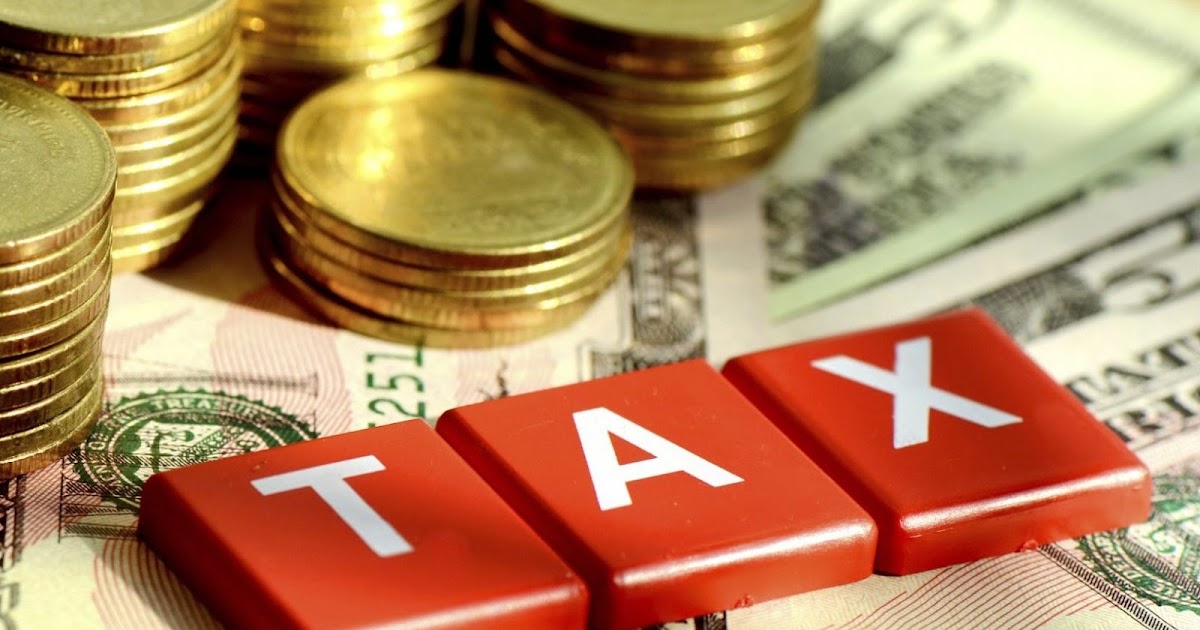

In a move to reform tax administration, the Federal Government has ended cash tax collection and barred the use of roadblocks for revenue enforcement in the informal economy.
The directive is contained in the newly signed presumptive
tax regulations and guidelines on the implementation of the tax laws, unveiled
on Tuesday in Abuja.
Speaking at the signing ceremony, Olusegun Adesokan,
executive secretary of the Joint Revenue Board (JRB), said the framework is
designed to eliminate informal, coercive and fragmented tax practices,
particularly at the subnational level.
“It bans all forms of cash collection by tax authorities. It
also bans the mounting of roadblocks for the collection of taxes,” he said.
Adesokan said the regulations are aimed at entrenching
transparency and equity in tax administration, especially within the commerce
and informal sectors.
Under the framework, nano and small businesses with an
annual turnover of N12 million and below are exempted from tax under the
presumptive regime.
“The framework also introduces a tax rate of one per cent of
turnover on all other categories of informal businesses, while encouraging the
use of technology-driven payment platforms,” Adesokun said.
According to the executive secretary, the guidelines provide
a uniform structure for subnational governments to tax the commerce sector and
integrate operators into the formal system through a tax identification
platform.
‘SYSTEM MARKS TRANSITION FROM LEGISLATIVE APPROVAL TO
IMPLEMENTATION’
On his part, Wale Edun, minister of finance and coordinating
minister of the economy, said the signing marks the transition from legislative
approval to implementation of tax reforms enacted in 2025 and early 2026.
“With the signing of these regulations, we are transitioning
from regulation to structured implementation of the tax reforms,” Edun said.
He said the reforms are anchored on transparency, fairness
and economic inclusion, noting that the goal is to expand the tax base rather
than increase tax rates.
“We will expand the tax base, not raising taxes, but
expanding so that each bears his rightful contribution to the common cause,”
the minister said.
Edun added that the regulations were developed in
collaboration with the JRB to ensure alignment across federal, state and local
governments, and that implementation would be closely monitored, with an
ombudsman mechanism introduced to safeguard fairness.
Joseph Tegbe, chairman of the national tax policy
implementation committee, described the signing as a shift from policy
intention to practical execution.
He said the reforms are aimed at correcting distortions in
the tax system and replacing arbitrariness with transparency.
The chairman noted that although the informal sector
accounts for more than 80 percent of Nigeria’s workforce, its contribution to
structured public revenue has remained low due to systemic weaknesses.
Tegbe added that the committee would work with tax
authorities to ensure a disciplined and transparent rollout of the new
framework.

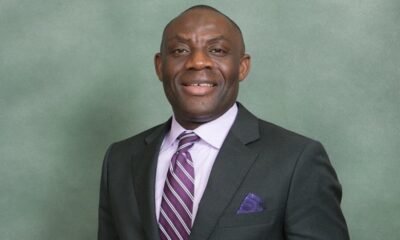

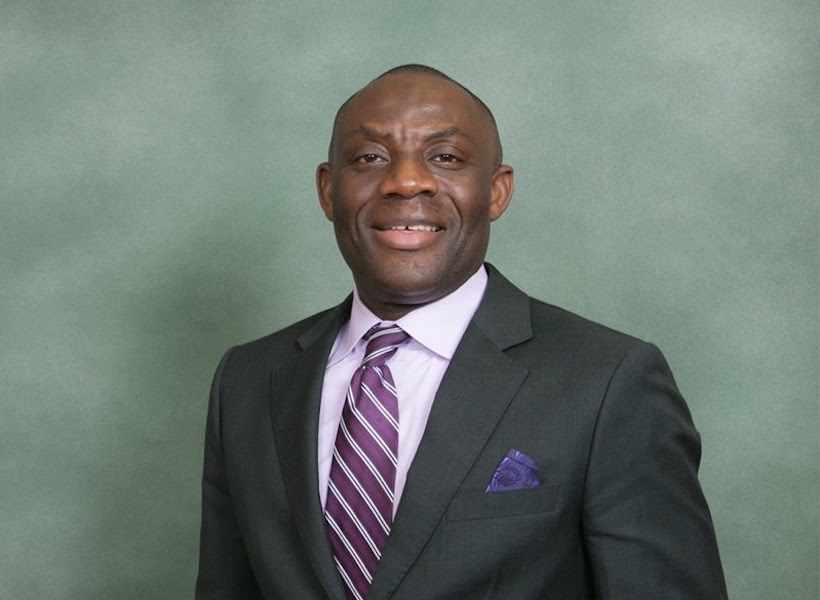

The federal government has selected 65 student innovators
from a total of 30,639 applicants across 404 tertiary institutions nationwide
to advance to the final stage of the student venture capital grant (SVCG).
The scheme, introduced in November 2025 in collaboration
with the Bank of Industry (BoI), aims to provide up to N50 million in
non-dilutive funding to student-led ventures that have reached the
commercialisation stage.
In a statement issued on Monday, Folasade Boriowo, director
of press and public relations at the federal ministry of education, said the
initiative was designed to support young entrepreneurs in scaling their ideas,
creating jobs, and boosting the economy.
Boriowo added that the programme is a key initiative of
President Bola Tinubu’s administration, noting that the shortlisted candidates
are developing solutions in sectors critical to national development.
According to her, Tunji Alausa, minister of education,
described the initiative as a deliberate investment in the next generation of
innovators and job creators.
She added that the minister expressed optimism about the
creativity and ambition demonstrated by the finalists, noting that reaching the
final stage marks a significant milestone.
“The minister also stressed that the selection process was
rigorous and transparent, adding that the programme is helping to build a
pipeline of entrepreneurs who will contribute to Nigeria’s economic growth,”
Boriowo said.
She said applications were first subjected to AI-driven
screening to determine eligibility and alignment with the programme’s
objectives, followed by human review.
“Entries that passed this stage were then evaluated by a
panel comprising representatives from government, academia, industry, and the
investment community, using criteria such as scalability, feasibility, founder
capability, and impact potential,” she added.
“The 65 finalists are expected to participate in an
intensive venture development bootcamp between March 26 and 29.
“Activities will include pitch presentations, workshops,
live assessments, and investor feedback aimed at strengthening their ventures.
The final grant recipients will be selected based on
application scores, bootcamp performance, and recommendations from the
evaluation panel.
“The programme will conclude on March 29, 2026, with an
awards ceremony where beneficiaries of the N50 million funding will be
officially announced.”
Student venture capital grant
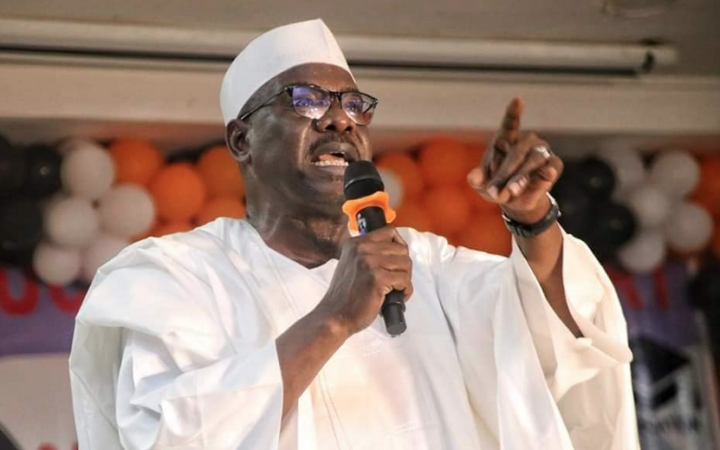

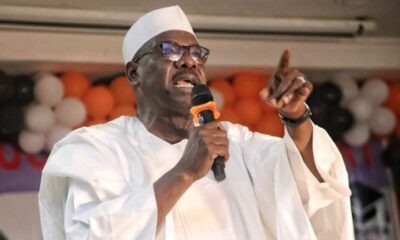
Senator Ali Ndume, representing Borno South, has raised a strong alarm that Nigeria could lose parts of Borno State and the entire North-East region to terrorist groups if urgent action is not taken.
The former Senate Leader urged the federal government to immediately double its efforts in fully equipping the Nigerian Army with sophisticated arms and ammunition to effectively combat insurgency and banditry.
Ndume made the call in a statement issued on Tuesday, citing recent attacks by Boko Haram and ISWAP, including coordinated assaults in Ngoshe community in Gwoza Local Government Area, where soldiers were killed and troops were reportedly overwhelmed due to lack of adequate ammunition.
“The military was initially overwhelmed by the superior firepower of the terrorist groups,” he said, adding that soldiers sometimes had to retreat from positions like Ngoshe and Pulka because they lacked sufficient firepower.
Ndume stressed that without decisive action to properly arm and support the troops, the territorial integrity of Borno and the North-East remains at serious risk.
He called on the federal government to intensify support for the military, including providing modern weapons and resources needed to reclaim and secure the affected areas.
The warning comes amid renewed insurgent activities in parts of Borno, with terrorists continuing hit-and-run tactics and targeting both military formations and civilian communities.

The National Youth Service Corps (NYSC) has dismissed as false a viral report alleging that the scheme operates a ‘ransom clause’ and exposes corps members to banditry, as fears over security and postings intensify across the country.
The rebuttal comes amid growing unease among families of corps members, with recent incidents and online narratives amplifying safety concerns.
The NYSC says it is stepping in to set the record straight and reassure Nigerians that corps members are not left exposed.
The position was contained in a statement issued on Wednesday by Caroline Embu, Director of Information and Public Relations, on behalf of the NYSC management.
“The Management and Staff of the National Youth Service Corps (NYSC) have noted with serious concern the circulation of a misleading and alarmist write-up titled ‘Urgent: The NYSC Death Trap Our Graduates Are Being Sold to Bandits,’” the statement said.
“For the avoidance of doubt, the National Youth Service Corps categorically states that there is no provision whatsoever for any ‘ransom clause’ in the NYSC Act, Bye-laws, or any official publication of the Scheme. This claim is entirely fictitious and should be disregarded in its entirety.”
At the centre of the controversy is the case of Musa Usman Abba, which the NYSC says has been wrongly linked to the scheme.
“Furthermore, the Scheme deeply empathises with Mr. Musa Usman Abba and his family over the unfortunate incident, and we share in their concern during this difficult time… While this situation is distressing, it is important to clarify that he is not a serving Corps Member, having completed his national service in 2023,” the NYSC clarified.
Amid the heightened concerns, the Scheme said it continues to work closely with security agencies to protect corps members nationwide.
“On the issue of security, recognised as a broader national challenge, the NYSC works in close collaboration with relevant security agencies to safeguard Corps Members before, during, and after orientation exercises.
“Corps Members posted to areas assessed as high-risk are provided with adequate security arrangements, including military escorts. This proactive approach has been consistently implemented since 2024 in the North West and much earlier in some parts of the North East,” the statement added.
The Scheme also pointed to adjustments made in response to evolving threats.
“Additionally, in line with its duty of care, the Scheme has taken decisive steps to relocate orientation camps in states such as Kebbi, Kaduna, Kwara, Borno, Gombe, and Plateau to safer locations, ensuring the protection of both Corps Members and camp officials,” it said.
Reaffirming its duty of care, the NYSC highlighted welfare provisions for corps members.
“The NYSC remains a responsible and responsive institution that places the highest premium on the welfare, safety, and well-being of Corps Members and staff.”
“In demonstration of this commitment, the Scheme has maintained a long-standing Memorandum of Understanding with Capital Express Assurance Limited since 2004, providing life insurance coverage for all Corps Members… Notably, this insurance coverage extends up to three weeks after the completion of service, in addition to their enrolment under the National Health Insurance Scheme,” it explained.
The NYSC faulted the publication for failing to seek its response before going public.
It warned that repeated misinformation could deepen fear and weaken trust in public institutions.
“The Scheme has been targeted on several occasions by purveyors of fake news and misinformation, making it imperative for the media and the general public to remain vigilant,” the statement warned.
Reaffirming its mandate, the NYSC said it remains committed to national unity and the safety of corps members.

Former Kogi West senator, Dino Melaye, has expressed concern about Nigeria’s electricity sector, stressing that the country’s power problems are due to poor governance and not just technical issues.
In a statement he posted on X, Melaye said that even though Nigeria has been producing electricity for more than a century, the country still has low power output and often faces power outages.
“Nigeria has been generating electricity since 1896. That’s 130 years. Today, in March 2026, the national grid just dropped to 3,940 megawatts. For 220 million people,” he said.
He looked at how Nigeria did compared to other African countries and pointed out big differences, noting that South Africa produces more than 48,000 megawatts of electricity to power 60 million people.
“Egypt has around 11,000 MW installed capacity for 110 million. Nigeria? About 13,000MW installed. On a good day, we can only move about 4,000 to 5,000MW through the grid. The rest just sits there. Wasted,” he added.
Melaye also mentioned that there have been many instances of the power grid failing and difficulties with the infrastructure in the sector.
“The grid collapsed 12 times in 2024 alone. In the same year, 128 transmission towers were damaged by vandals,” he said.
He said the government used N8.8 billion just to fix them, while further citing data from the Nigerian Electricity Regulatory Commission (NERC), highlighting ongoing instability.
“From 2010 up until 2022, NERC noted at least 222 instances where parts of the power grid either partially or completely stopped working. He said that’s about one every three weeks for 12 years in a row. He said that bringing key power plants back online after a collapse is very expensive. Every time the power grid fails, it costs Nigeria around $25 million to restart just three power plants: Azura, Delta, and Shiroro. That’s N42.5 billion. Per collapse. For just three plants,” he said.
Melaye also pointed to mounting debts in the power sector. “As of February 2026, the power sector owes generation companies a total of N6.8 trillion. Growing by N200 billion every single month. By the end of March, it will reach N7 trillion.
“In 2023, 767 manufacturing companies shut down. 335 more became distressed. 18,000 jobs gone. In the first half of 2025, manufacturers spent N676.6 billion on backup power, but they still couldn’t cover all their needs. Another 18,935 jobs lost,” he said.
“The World Bank estimates economic losses caused by power outages. The World Bank says that power cuts in Nigeria cost the country about $29 billion each year. That’s about 10% of GDP. Every year,” he added.


Justice Emeka Nwite of the Federal High Court in Abuja has ordered the final forfeiture of $13 million traced to businesswoman Aisha Achimugu and her company, Oceangate Engineering Oil & Gas Ltd, to the Federal Government of Nigeria.
In a ruling delivered on Wednesday, March 25, 2026, the judge held that the Economic and Financial Crimes Commission (EFCC) proved the funds were proceeds of unlawful activities.
He dismissed the company’s application to reclaim the money, describing its explanation as unsubstantiated.
The court rejected claims that the $13 million came from legitimate business earnings or personal gifts to Aisha Achimugu.
Justice Nwite noted that neither Achimugu nor any alleged donors appeared in court to testify.
“The burden to establish genuine ownership of the money was not discharged,” the judge ruled.
Backgroung
The case stemmed from EFCC investigations revealing that Oceangate allegedly used suspected illicit funds to acquire two oil blocks, deep offshore PPL 302 and shallow water PPL 3007 by paying signature bonuses.
While the company remitted about $20 million in total (including $7 million via Providus Bank), the EFCC traced $13 million as laundered through unlicensed bureau de change operators and intermediaries.
Part of the funds reportedly originated from diverted Lagos State Government contractor payments with no genuine business link to Oceangate.
In August 2025, Justice Nwite granted an interim forfeiture order and directed the EFCC to publish a notice inviting interested parties to show cause why the funds should not be permanently forfeited.
Oceangate, through director Iliya Wakil, argued the money was legitimate company earnings and gifts, but the court found these claims unsupported by evidence.
Significance
The final forfeiture is another win for the EFCC in recovering suspected proceeds of economic crimes in the oil and gas sector. The $13 million will now be permanently handed over to the Federal Government.
Aisha Achimugu, Group Chief Executive Officer of Oceangate and a prominent Lagos socialite, has not issued any public statement on the judgment as of press time.
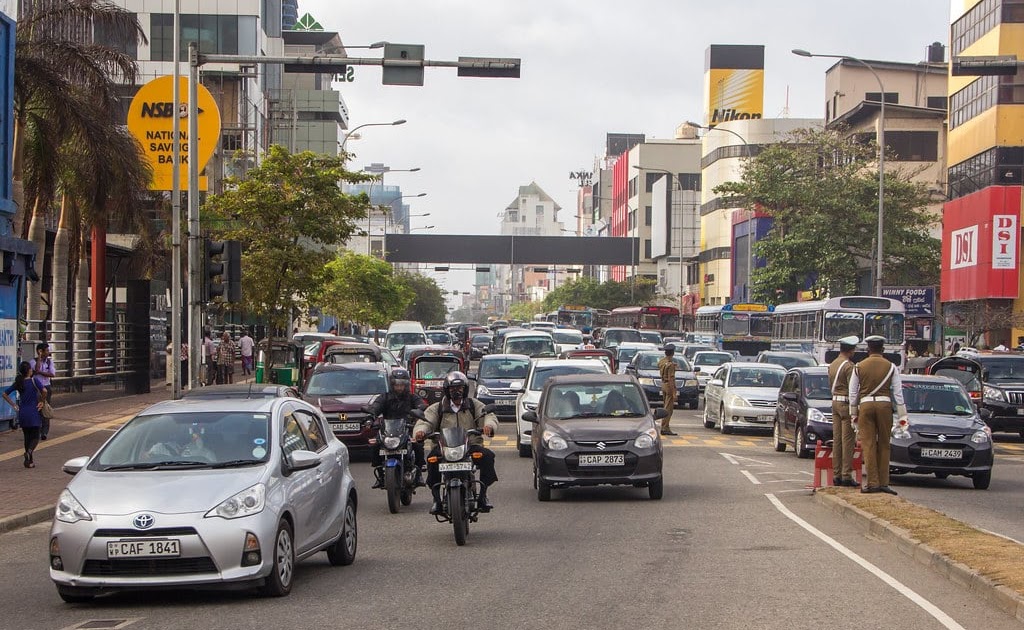

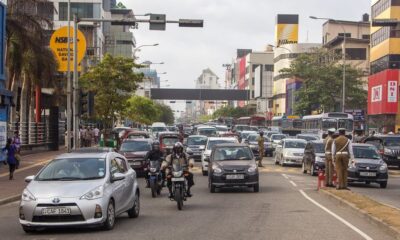
Sri Lanka’s Office of the Commissioner-General of Essential Services has directed local government authorities to switch off street lights
during unnecessary hours as the South Asian country grapples with energy
shortage triggered by the Middle Eastern conflict.
Guidelines were issued Tuesday on how to conserve energy,
including maximising natural lighting, reducing the use of air conditioning by
relying more on electric fans, and limiting elevator use by encouraging people
to take the stairs.
The commissioner-general’s office advised officials to avoid
using individual vehicles to commute to work and instead use public transport
or group transport whenever possible.
Authorities were also asked to switch off neon signs, and
billboard lighting, and to turn off street lights after 9pm except in high risk
areas.
The commissioner-general’s office issued a set of guidelines
to government institutions on the prudent use of fuel and energy amid possible
disruptions to fuel imports caused by escalating tensions in the Middle East.
The guidelines, issued to ministry secretaries, provincial
and district secretaries, and heads of government and statutory institutions,
called for measures to reduce fuel and electricity consumption across the
public sector.
The document also urged heads of institutions to allow staff
to work remotely where technological facilities are available instead of
requiring physical attendance.
This directive is asides the four-day work week introduced
last week to reduce pressure on the transport network.
In addition, government institutions were instructed to
prepare daily transport plans to reduce the number of vehicles used for field
duties.
The office urged all public officials to act responsibly,
set an example for the public, and extend maximum support to national energy
conservation and security efforts.
The Strait of Hormuz, a sea passage controlled by Iran where
about 20 percent of the world’s crude oil is shipped through, has been
increasingly risky for ships to sail owing to attacks from the ongoing conflict
between Iran and Israel-United States.
Sri Lanka has raised fuel prices by a third since the war
began last month.
Sri Lanka


Instagram has introduced a new feature that lets users reorder photos and videos in carousel posts after publication, giving creators greater control over how their content is displayed.
The update was confirmed by Instagram’s Creators account on
Monday.
Users can now edit a carousel post by tapping the three-dot
menu, selecting Edit, long-pressing the photo or video they want to move,
dragging it to the desired position, and tapping Done to save the changes.
Photos and videos can be rearranged multiple times without
affecting likes, comments, shares, or other engagement metrics.
However, the feature is limited to newly uploaded carousel
posts. Older posts cannot be reordered, though users can still delete slides.
Adding new media to an existing carousel remains impossible,
requiring the creation of a new post.
The update is being rolled out gradually, and Instagram
users who do not see the option immediately are advised to update the app and
check back in the coming days.
According to Instagram, carousel posts typically generate
around 12% more engagement than single-image posts.
The ability to reorder media after publishing is expected to
help creators optimise their posts and maintain engagement without having to
start from scratch.
“This feature gives users the flexibility to ensure their
posts reflect their creative vision at any time.
“You can now keep the conversation going and your engagement
intact, without deleting and re-uploading content,” the Creators account said.
This change comes as Instagram continues to expand tools
aimed at helping content creators manage and optimise their presence on the
platform.
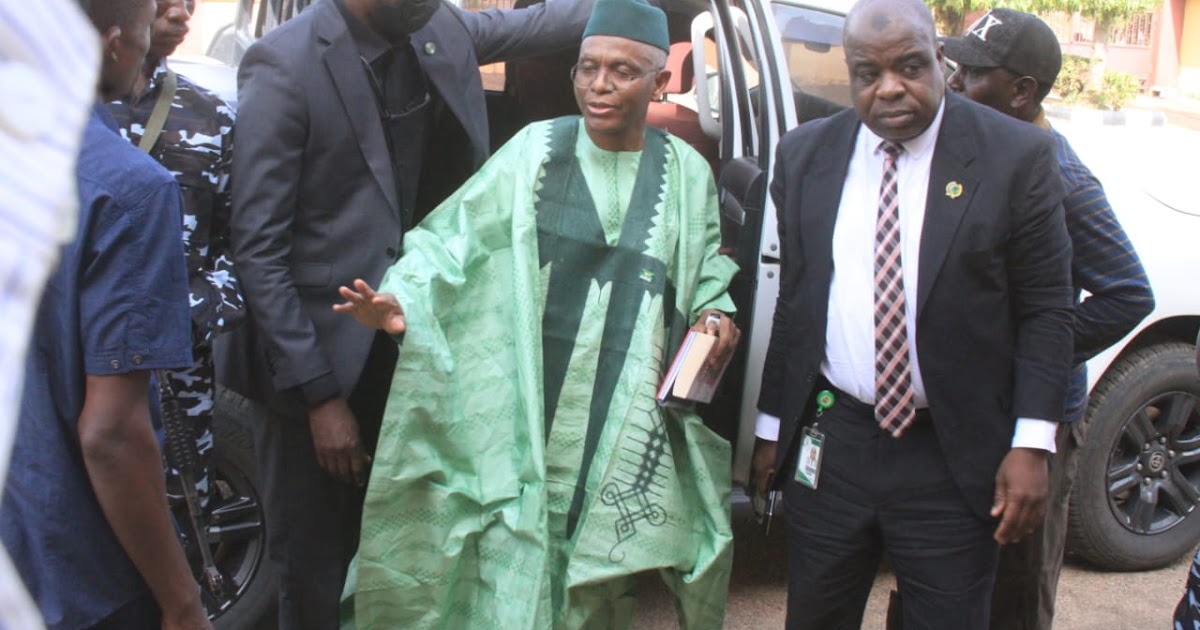

The Independent Corrupt Practices and Other Related
Offences Commission (ICPC) on Tuesday arraigned former Kaduna State
Governor Nasir El-Rufai for alleged severance pay corruption and
years-long fraudulent dollar-denominated cash deposits in his bank account.
The commission arraigned him before the Federal High Court
in Kaduna on 10 charges, accusing him of violating Nigeria’s anti-money
laundering law.
He and his co-defendant, Joel Adoga, pleaded not guilty to
the charges.
Following the defendants’ pleas of not guilty, the trial
judge, Ridwan Aikawa, ordered their remand in the custody of ICPC, where Mr
El-Rufai had been held for over one month.
The charges involve alleged inflated severance payments of N579.7 million and years-long fraudulent deposits totalling $817,900 that Mr El-Rufai allegedly
received.
They both pleaded not guilty to the charges read to them
during the arraignment, which took place amid tight security on
Tuesday.
Here are all the 10 charges below.
Court: Federal High Court of Nigeria, Kaduna Judicial
Division
Charge number:t FHC/KD/73C/2026
Filed on 18 March 2026
Prosecution: Federal Republic of Nigeria (ICPC)
Defendants: Nasir Ahmed El-Rufai (M) and Joel Adoga (M)
COUNT 1
That you MALLAM NASIR AHMAD EL-RUFAI (M) sometime in
September 2020 or thereabout at Kaduna, within the jurisdiction of this
Honourable Court, while being a public officer as the elected Executive
Governor of Kaduna State, directly took possession of the sum of
N289,826,998.12 (Two Hundred and Eighty-Nine Million, Eight Hundred and
Twenty-Six Thousand, Nine Hundred and Ninety-Eight Naira, Twelve Kobo) as
severance allowance over and above your legitimately entitled sum of
N20,013,245.00 (Twenty Million, Thirteen Thousand, Two Hundred and Forty-Five
Naira) which represents 300% of your annual basic salary which you reasonably
ought to have known that such fund formed part of the proceeds of an unlawful
act, to wit: corruption and you thereby committed an offence contrary to
Section 18(2}(d) and punishable under Section 18(3) of the Money Laundering
(Prevention and Prohibition} Act, 2022.
COUNT 2
That you MALLAM NASIR AHMAD EL-RUFAI (M), sometime in
January 2023 or thereabout at Kaduna, within the jurisdiction of this
Honourable Court, while being a public officer as the elected Executive
Governor of Kaduna State, directly took possession of the sum of
N289,826,998.12 (Two Hundred and Eighty-Nine Million, Eight Hundred and
Twenty-Six Thousand, Nine Hundred and Ninety-Eight Naira, Twelve Kobo) as
severance allowance over and above your legitimately entitled sum of
N20,013,245.00 (Twenty Million, Thirteen Thousand, Two Hundred and Forty-Five
Naira) which represents 300% of your annual basic salary which you reasonably
ought to have known that such fund formed part of the proceeds of an unlawful
act, to wit: corruption and you thereby committed an offence contrary to
Section 18(2}(d) and punishable under Section 18(3) of the Money Laundering
(Prevention and Prohibition) Act.
COUNT 3
That you MALLAM NASIR AHMAD EL-RUFAI (M) sometime between
September 2017 and March 2023 or thereabout at Kaduna and Abuja respectively,
within the jurisdiction of this Honourable Court, while being a public officer
as the elected Executive Governor of Kaduna State, directly took control of the
total sum of $320,800 (Three Hundred and Twenty Thousand, Eight Hundred
Dollars) deposited into your Guaranty Trust Bank domiciliary account number:
0023824985 in different tranches by one Joel Adoga, when you reasonably ought
to have known that such funds formed part of the proceeds of an unlawful act,
to wit: corruption and fraud and you thereby committed an offence contrary to
Section 18(2}(d) and punishable under Section 18{3) of the Money Laundering
(Prevention and Prohibition) Act, 2022.
COUNT 4
That you MALLAM NASIR AHMAD EL-RUFAI (M) sometime in May
2022 or thereabout at Kaduna, within the jurisdiction of this Honourable Court,
while being a public officer as the elected Executive Governor of Kaduna State,
directly took possession of the sum of $155,800 (One Hundred and Fifty-Five
Thousand, Eight Hundred Dollars) deposited into your Guaranty Trust Bank
domiciliary account number: 0023824985 by one Peter Akagu Jones (now at large),
when you reasonably ought to have known that such fund formed part of the
proceeds of an unlawful act, to wit: corruption and fraud and you thereby
committed an offence contrary to Section 18(2}(d) and punishable under Section
18(3) of the Money Laundering (Prevention and Prohibition) Act, 2022.
COUNT 5
That you MALLAM NASIR AHMAD EL-RUFAI (M) sometime in May
2022 or thereabout at Kaduna, within the jurisdiction of this Honourable Court,
while being a public officer as the elected Executive Governor of Kaduna State,
directly took possession of the sum of $305,300 (Three Hundred and Five
Thousand, Three Hundred Dollars) deposited into your Guaranty Trust Bank
(domiciliary) account number: 0023824985 by one Ajayi Ayodele (now at large),
when you reasonably ought to have known that such fund formed part of the
proceeds of an unlawful act, to wit: corruption and fraud and you thereby
committed an offence contrary to Section 18(2)(d) and punishable under Section
18(3)of the Money Laundering (Prevention and Prohibition) Act, 2022.
COUNT 6
That you MALLAM NASIR AHMAD EL-RUFAI (M) sometime in April,
2016 or thereabout at Asokoro, Abuja, within the jurisdiction of this
Honourable Court, while being a public officer as the elected Executive
Governor of Kaduna State, directly took possession of the sum of $5,000.00
(Seven Thousand Dollars), deposited into your Guaranty Trust Bank domiciliary
account number: 0023824985 by one Umar Farouq (now at large) when you
reasonably ought to have known that such funds formed part of the proceeds of
an unlawful act, to wit: corruption and fraud and you thereby committed an
offence contrary to Section 18(2}{d) and punishable under Section 18(3) of the
Money Laundering (Prevention and Prohibition) Act, 2022.
COUNT 7
That you MALLAM NASIR AHMAD EL-RUFAI (M) sometime in June
2016 or thereabout at Asokoro, Abuja, within the jurisdiction of this
Honourable Court, while being a public officer as the elected Executive
Governor of Kaduna State, directly took possession of the sum of $5,000.00
(Five Thousand Dollars), deposited into your Guaranty Trust Bank domiciliary
account number: 0023824985 by one Umar Saleh (now at large) when you reasonably
ought to have known that such funds formed part of the proceeds of an unlawful
act, to wit: corruption and fraud and you thereby committed and offence
contrary to Section 18(2)(a) and punishable under Section 18(3) of the Money
Laundering (Prevention and Prohibition) Act, 2022.
COUNT 8
That you MALLAM NASIR AHMAD EL-RUFAI (M) sometime in
December 2016 or thereabout at Kaduna, within the jurisdiction of this
Honourable Court, while being a public officer as the elected Executive
Governor of Kaduna State. directly took possession of the sum of $4,000.00
(Four Thousand Dollars), deposited into your Guaranty Trust Bank domiciliary
account number: 0023824985 by one Umar Farouk Saleh (now at large) when you
reasonably ought to have known that such funds formed part of the proceeds of
an unlawful act, to wit: corruption and fraud and you thereby committed an
offence contrary to Section 18(2)(d) and punishable under Section 18(3) of the
Money Laundering (Prevention and Prohibition) Act, 2022.
COUNT 9
That you MALLAM NASIR AHMAD EL-RUFAI (M) sometime in October
2017 or thereabout at Kaduna, within the jurisdiction of this Honourable Court,
while being a public officer as the elected Executive Governor of Kaduna State,
directly took possession of the sum of $10,000.00 (Ten Thousand Dollars),
deposited into your Guaranty Trust Bank (domiciliary) account number:
0023824985 by one Umar Farouq (now at large) when you reasonably ought to have
known that such funds formed part of the proceeds of an unlawful act, to wit:
corruption and fraud and you thereby committed an offence contrary to Section
18(2)(d) and punishable under Section 18(3) of the Money Laundering (Prevention
and Prohibition) Act. 2022.
COUNT 10
That you MALLAM NASIR AHMAD EL-RUFAI (M), JOEL ADOGA (M)
sometime in July 2019 or thereabout at Wuse, Abuja within the – jurisdiction of
this Honourable Court, did conspire to disguise the origin of $10,000.00 (Ten
Thousand Dollars) which sum was deposited into the Guaranty Trust Bank
domiciliary account number: 0023824985 belonging to Mallam Nasir Ahmad
El-Rufai, when you reasonably ought to have known that such fund formed part of
the proceeds of an unlawful act, to wit: corruption and fraud and you thereby
committed an offence contrary to Sections 21 and 18(2){a}) and punishable under
Section 18(3) of the Money Laundering (Prevention and Prohibition) Act, 2022.
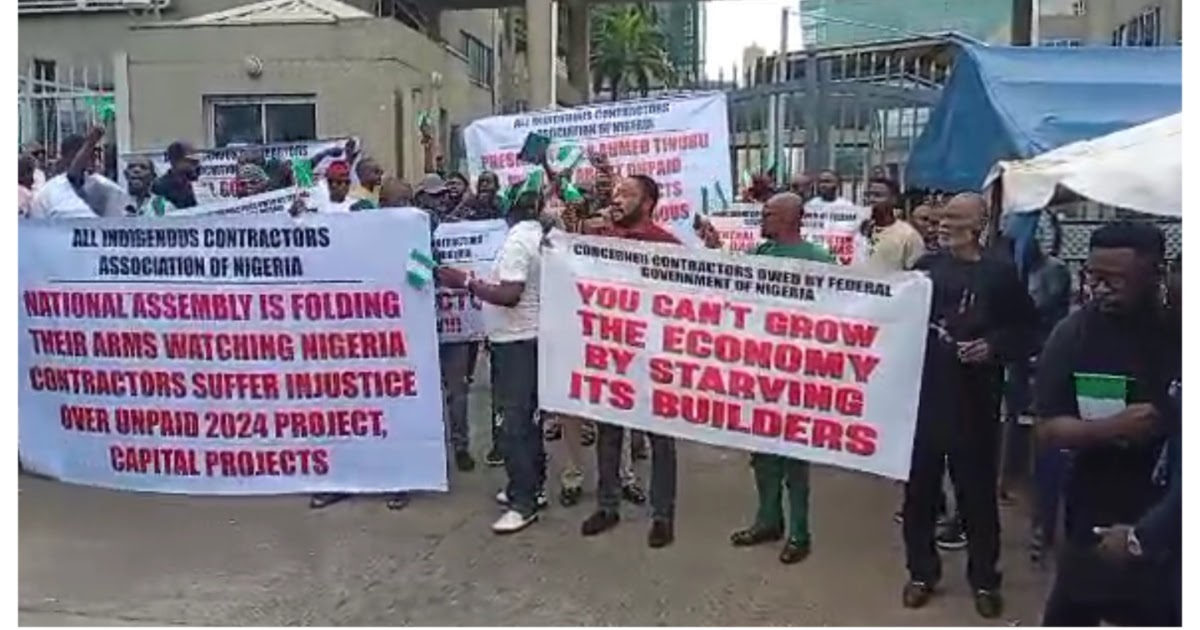

The All Indigenous Contractors Association of Nigeria (AICAN) has threatened to stage a protest at the All Progressives Congress (APC) national convention in Abuja if the federal government fails to release N150 billion owed to its members within 48 hours.
Jackson Nwosu, national president of AICAN, issued the warning on Tuesday in Abuja during a resumed protest by the association’s members over delayed payments for government contracts executed in 2024 and 2025.
“For AICAN members, the government has only paid N21 billion between this period in question; what is remaining to be paid is over N1 trillion, but what we are discussing as the immediate payment is N150 billion,” Nwosu said.“
Our immediate demand is for the payment to be made between now and the next two days.”Seun Babatunde, national secretary of AICAN, added that many members are facing severe hardship, with some even losing their lives due to the unpaid debts.“
“A lot of our members are dying as a result of the debt the federal government owes them,” Babatunde said, citing the case of a member who died of prostate cancer because he could not afford surgery after being owed over N100 million.
The contractors noted that while the 2026 appropriation bill allocated N1.7 trillion for verified contractors’ liabilities in 2024 and N100 billion for other local contractors’ debts, actual disbursements have been slow due to verification processes.
President Bola Tinubu had earlier directed government officials to prioritise payments to indigenous contractors, and the Ministry of Finance has been engaging with AICAN on the matter.
AICAN members have staged multiple protests in Abuja in recent months over the backlog, which they say is crippling their businesses, preventing loan repayments, and threatening project sustainability.
The group warned that failure to meet the 48-hour deadline could see them disrupt activities at the APC national convention scheduled for March 27 and 28 at Eagle Square in Abuja.

FG Shortlists 65 Student Innovators For N50m Venture Capital Grant

Ndume Warns: Nigeria Risks Losing Borno, North-East To Terrorists

NYSC Denies Exposing Corps Members To Banditry, Ransom Clause
Dino Melaye slams FG Over Power Outages

Court Orders Final Forfeiture Of $13m Linked To Aisha Achimugu

Sri Lanka Adopts Energy-Saving Measures Amid Fuel Import Disruptions

Instagram Introduces Carousel Edit Feature After Posting

El-Rufai Faces Severance Pay Corruption, Cash Deposit Fraud Allegations

Indigenous Contractors Threaten Protest At APC National Convention Over Unpaid Debts

S’East APC Set for Zonal Congress in Enugu

Ododo, Ekwunife, Anyim, Dogara Lead APC Environmental Sanitation Walk Ahead of National Convention (SEE VIDEO)

Gov Soludo Appoints HoS, Attorney-General, Others

Soludo Picks Nnake as Anambra’s First Female SSG

Results or Nothing: Gov. Mbah Charges Directors

Man Held Over Rape, Attempted Murder of Pregnant Woman in Enugu
S’East APC Set for Zonal Congress in Enugu

In London, Mbah Ignites Investors’ Interest in Enugu

IGP Directs Restructuring of Police Tactical Units, Clarifies Misreported “Disbandment”

20-year-old kills mother for “refusing to bath him” in Ebonyi

”Nigeria Risks Losing Borno To Terrorists” – Ali Ndume Warns
-
 NEWS2 years ago
A MUST READ!! What Peter Obi Discussed With Atiku, Saraki, Lamido During Visits – Aide Reveals
-

 MUSIC4 years ago
MUSIC: Mohbad – Back Side [Free Download]
-

 MUSIC4 years ago
MUSIC: Papiwizzy – Oluwalonsola Ft Zlatan and Papisnoop [Download Mp3]
-

 MUSIC2 years ago
MUSIC: DEBHIE FEAT. EMMYBLAQ – TURN UP (DOWNLOAD HERE)