Connect with us

NEWS

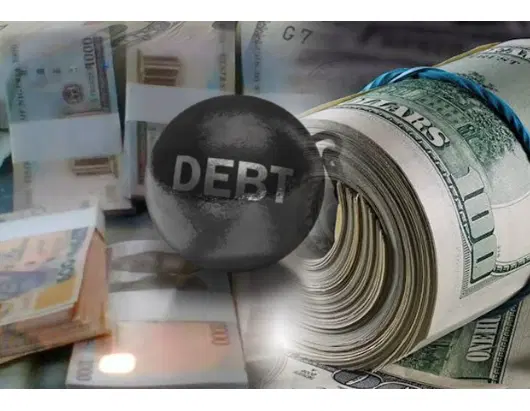
FG’s Domestic Debt Jumps 90% To N24.7trn. Here’s Why It Hurts You

Published

on


The federal government increased its borrowing from domestic investors by 90.5 per cent, year-on-year (YoY), to N24.7 trillion in the eight months to August 2026, against N12.98 trillion in the corresponding period of 2025 (8M’25).

Financial Vanguard findings from the government’s various public finance data also showed that credit to government grew more than four times faster than credit to the private sector during the same period. The data are generated from the Debt Management Office, DMO, and the Central Bank of Nigeria, CBN’s current reports.

These developments come against the backdrop of a massive rise in government revenue, as reported by some key agencies, including the Nigerian Revenue Service; Nigerian Customs Service; and the Nigerian National Petroleum Company Limited, among others. In addition to the massive revenue inflow, public concerns also point to savings from petrol subsidy removal, as well as massive naira cash translations from the floating of the exchange rate.

Many public commentators point to extra-budgetary spending and other unaccounted fiscal exposures as compounding the government’s cash-flow crises that may have compelled extensive borrowing across domestic and foreign windows. Meanwhile, the latest CBN data on money and credit showed that credit to the government rose by 43 per cent YoY to N33.92 trillion in July 2026 from N23.69 trillion in July 2025. But credit to the private sector grew by only 9.6 per cent YoY to N83.43 trillion in July 2026 from N76.13 trillion in July 2025. Thus, credit to the government grew 4.5 times faster than credit to the private sector. Financial Vanguard findings showed that the surge in FG’s borrowing was driven largely by increased issuance of FGN Bonds; FGN Savings Bonds; and Nigerian Treasury, NTBs.

Further breakdown showed that borrowing through FGN bonds rose by 145 per cent YoY to N7.78 trillion in 8M’26, from N3.18 trillion in 8M’25. Similarly, borrowing through NTBs increased by 78.6 per cent YoY to N16.92 trillion in 8M’26, from N9.47 trillion in 8M’25, while FGN Savings Bonds borrowing rose by 22 per cent YoY to N40.56 billion in 8M’26 from N33.18 billion in 8M’25.

Experts’ insight

Experts who spoke to Financial Vanguard attributed the sharp increase in borrowing to the government’s larger financing requirements, amid a significant fiscal deficit, higher expenditure and rising debt-service obligations. But the experts also raised concerns that the federal government’s increased appetite for domestic borrowing could squeeze businesses and households out of available credit. They also noted that the increased borrowing could lead to an increase in debt-service spending and thus reduce the government’s ability to fund infrastructure, education and health.

2026 fiscal headlines

Under the 2026 Budget, the federal government plans to spend N68.32 trillion, against revenue of N36.87 trillion, indicating a fiscal deficit of N31.45 trillion, with N29.20 trillion to be funded through domestic and external borrowing, while the remaining deficit is expected to be covered through multilateral and bilateral project-tied loans and privatisation proceeds. The N24.7 trillion borrowed in 8M’26 represents 84.7 per cent of the N29.2 trillion domestic borrowing target, leaving about N4.5 trillion for the remaining four months. At an average monthly borrowing of about N3.08 trillion between January and August, maintaining the current pace would result in the government exceeding its annual target.

READ ALSO:  No Admission Without English, Maths At O’Level — FG

Why FG is borrowing more

Chief Executive Officer, MDU Capital Ltd, Ayodeji Ebo, said the increase in borrowing reflected “larger financing requirements arising from high debt-service costs, recurrent expenditure, infrastructure and security needs, and a fiscal deficit that remains significant despite improved revenue.” He said the government might also be relying more on the domestic market to limit its foreign-exchange exposure. However, Ebo cautioned that part of the NTB issuance represented refinancing or rollover of maturing obligations and should not be interpreted entirely as fresh borrowing. Chief Economist, United Capital Plc, Ayodele Akinwunmi, said infrastructure spending and the need to bridge fiscal deficits were among the factors driving the increase in borrowing. He said the impact of the borrowing should also be assessed from the perspective of the infrastructure being financed by the government. “Across the country, we have witnessed significant growth in infrastructure development, ranging from physical projects, such as roads and railways, to soft infrastructure, including education, healthcare and security.

“These advancements have contributed positively to the ease of doing business, creating a more enabling environment for economic activity,” Akinwunmi said. He said Nigeria’s huge infrastructure financing gap meant that the government could not rely solely on annual budgetary allocations to address the deficit, noting that Nigeria’s infrastructure deficit was estimated at about $2.3 trillion by 2043, with an annual financing gap of roughly $100 billion. “Building a robust infrastructure base is essential not only for economic competitiveness but also for job creation and inclusive growth,” he said.

Govt credit grows

4.5 times faster Speaking on the impact of the increased FG’s domestic borrowing on the economy, Ebo said: “For investors, the increased supply of government securities provides attractive risk-free investment opportunities and higher yields. “However, it can crowd out the private sector because banks and institutional investors may prefer government securities to lending to businesses. “This raises borrowing costs for companies and households, potentially slowing private investment, consumption and job creation. Higher debt-service obligations may also reduce the government’s capacity to fund infrastructure and essential public services.” Similarly, Co-Founder, Comecio Partners, Nnamdi Nwizu, said the sharp rise in domestic borrowing had produced mixed effects across the economy. He stated: “Investors, particularly pension funds, banks and money market funds, have benefited from high yields on government bonds and treasury bills, which also helps explain steady FPIs flow into local markets. “However, this comes at a cost to businesses because banks can earn safe, attractive returns by lending to the government; they have less incentive to lend to the private sector, which keeps borrowing costs high for businesses. “For households, higher yields mean better returns on savings products like money market funds and FGN Savings Bonds, but the flip side is rising debt-service costs for the government. “The total money spent on interest payments was over N3 trillion in Q1 alone, which is money not available for infrastructure, healthcare or education, which ultimately affects ordinary Nigerians.”

READ ALSO:  Labour Rejects N54,000 Proposed By FG As Minimum Wage

Revenue rises but spending grows faster

The experts also raised concerns over the fiscal implication of the inSimilarly, the Gross Registered Tonnage (GRT) of ocean-going vessels increased from 40.87 million tonnes to 49.95 million tonnes, representing a growth of 22.2 per cent. Service boat operations also increased during the Maritime Reforms: Nigeria’s ports record 12.3% rise in cargo throughput By Emeka Anaeto quarter. The number of service boats completed rose by 22.3 per cent, from 3,554 to 4,347, while the associated Gross Registered Tonnage increased by 62.4 per cent, from 1.06 million tonnes to 1.73 million tonnes. Container traffic increased by 11.3 per cent, rising from 541,229 TEUs in Q2 2025 to 602,392 TEUs in Q2 2026. The report stated that inward laden containers increased by 6.3 per cent, accounting for approximately 51.5 per cent of total container traffic. Outward laden containers declined marginally by 3.9 per cent, while empty container traffic increased by 13.9 per cent compared with the corresponding period of 2025. Transshipment container traffic stood at 29,038 TEUs, compared with no recorded movement during …As vessel traffic rises 14.4% creased borrowing, despite higher government revenue and the federal government’s N5.4 trillion share of savings from fuel subsidy removal. Nwizu said even with additional revenue from subsidy savings and higher oil prices, government spending had grown faster, causing the deficit to widen. “Instead of using the extra revenue to borrow less, FG has expanded the overall budget and continued to lean heavily on domestic debt to fund it,” he said. He added that some of the fiscal gains from the 2023–2024 reforms were being offset by higher spending in 2026. Head, Equity Research, Quest Merchant Bank, Tunde Abidoye, also said the sharp increase in domestic borrowing, despite improved revenue and fiscal gains from subsidy removal, suggested that expenditure growth had continued to outpace revenue generation. He noted that government spending amounted to N30.6 trillion between June 2023 and December 2025, compared with realised revenue of N20.4 trillion, resulting in a financing gap of N10.2 trillion.

Abidoye, however, said stronger revenue mobilisation, supported by elevated crude oil prices and ongoing tax reforms, had improved the government’s fiscal position.

Debt service threatens capital projects

Chief Executive Officer, Centre for the Promotion of Private Enterprise, CPPE, Muda Yusuf, said the size of the 2026 Budget was one of the biggest factors behind the increase in borrowing. “When you compare the size of this year’s budget with that of last year, there has been a significant increase. The budget this year is over N60 trillion,” Yusuf said. He added that exchange-rate movements had significantly increased the cost of capital projects, while the naira value of external debt and the cost of servicing domestic debt had also risen. Yusuf warned that increased borrowing would raise debt-service costs and reduce the government’s ability to fund other areas of the economy. “As the government borrows more, its debt-service cost also increases.

READ ALSO:  Anambra suspends waste management firm’s licence over alleged assault

When debt servicing increases, it reduces the government’s ability to spend on other things. “Debt servicing takes priority; the government has to service its debt before it can undertake other expenditures,’’ he said. Yusuf warned that the rising debt burden was contributing to funding challenges for capital projects and some aspects of budget implementation. On his part, Nwizu noted that government interest payments on domestic debts exceeded N3 trillion in the first quarter alone, saying such funds could otherwise have been deployed to infrastructure, healthcare and education.

FG may borrow up to N34trn

Meanwhile, the experts projected that the federal government’s domestic borrowing would rise further before the end of 2026. Ebo said that under a target-aligned scenario, fullyear borrowing should close around N29 trillion. However, he said refinancing requirements and possible revenue shortfalls could push gross domestic issuance to between N30 trillion and N33 trillion. Nwizu projected that domestic borrowing could finish around N30 trillion, but warned that it could rise to between N32 trillion and N34 trillion if government spending continued to exceed revenue expectations.

“The base case would be for borrowing to finish around N30 trillion, but the risk remains tilted towards a higher figure if government spending continues to exceed revenue expectations,” he said. The borrowing target has already been revised upward from the original N17.9 trillion to about N29.2 trillion.

Revenue reforms, PPPs as alternatives

Speaking on alternative measures to funding increased government spending, Yusuf said: “If the government is able to generate more revenue, the need to borrow will be reduced. So, revenue reform is very important. “Public-private partnerships are also important. If there are projects the private sector can undertake, the government does not need to burden itself with financing them. Public-private partnerships are, therefore, another way of addressing the issue. “The third option is to ensure that government assets are properly commercialised and generate adequate returns. Improving returns from government assets is also very important. We need to improve revenue generation and ensure that government assets are yielding better returns.

Ojogwu Godwin Chukwudi hailed from Delta State. A young talented personality, Alumnus of Delta State university,Abraka Studied Library and information science. He is an intellectual cyber communicator expert and a prolific blogger professional.

Click to comment

Leave a Reply

Your email address will not be published. Required fields are marked *

NEWS

NNPC Shocks Nigerians As Profit Skyrockets To N7.2tn, Remits N22.3tn

Published

on

The Nigerian National Petroleum Company Limited recorded a 33 per cent increase in profit after tax, to N7.2tn in 2025, despite a decline in revenue amid falling crude oil prices and reduced product volumes.

The Group Chief Executive Officer of NNPC Limited, Bayo Ojulari, disclosed this on Tuesday in Abuja during a media interaction to present the company’s 2025 audited financial results, achievements, and strategic vision.

Ojulari said the company’s profit after tax rose from N5.4tn in 2024 to N7.2tn in 2025, representing an increase of N1.8tn. Revenue stood at N34.5tn, while earnings per share reached N35.9. Taxes, royalties and other remittances to the government increased by 39 per cent to N22.3tn.

He said, “We have released the NNPC Limited 2025 audited financial results. I want to explain what they mean. What drove them and where we go from here. The central result is clear. Profit after tax rose 33 per cent, from N5.4tn in 2024 to N7.2tn in 2025. Revenue was N34.5tn. While taxes, royalties and other remittances to government rose 39 per cent to N22.3tn.”

Explaining the results, Ojulari said the company’s improved profitability came despite revenue pressures from lower international crude oil prices and reduced product volumes following changes in the domestic petroleum market.

“Revenue declined as crude oil prices fell for those, as you recall, in 2025. But we also had some decline that resulted from a wide product volume reduction. Following the market regulation, as you know, with the removal of subsidy,” he said.

READ ALSO:  Enugu Gov't, WHO Reaffirm Commitment To Polio Eradication 

He added that operational improvements and financial discipline helped the national oil company increase its profit despite the challenging conditions.

“Yet, profit grew because we improved the way we operate. And we maintained discipline across our businesses,” Ojulari stated.

The results showed that the company’s profit growth outpaced the increase in government remittances, which rose by 39 per cent, while its operational performance also improved.

On production, Ojulari said crude oil and condensate output peaked at 1.77 million barrels per day, the highest level in five years. Nigerian gas supply also reached a three-year high of 7.2 billion standard cubic feet per day.

“These gains reflect sustained attention to our assets, infrastructure and our focus on delivering visible results,” he said.

According to the GCEO, the improved financial and operational performance would strengthen NNPC’s capacity to invest in its businesses, contribute to government revenue and support Nigeria’s energy security.

He, however, warned that the company must sustain the gains and improve its performance in subsequent years.

“The numbers matter because of what they enable. Stronger performance gives NNPC Limited more capacity to invest, more capacity to contribute to public revenue and strengthen Nigeria’s energy security. It also gives us higher standards to meet,” Ojulari said.

He added, “As we deliver exceptional results, the following year we strive to even beat those records.”

Ojulari said the improved results also raised expectations for the company, making it necessary to strengthen its capacity to sustain growth.

“So having a good performance is not just easy. It means that the bar has been set one level higher. So we now need to focus on building the capacity to deliver,” he said.

READ ALSO:  CBN Makes U-Turn, Lifts Ban On Cryptocurrency Transactions

The profit growth came despite revenue pressures from lower international crude oil prices and reduced product volumes following changes in the domestic petroleum market.

The figures indicate that NNPC improved its bottom-line performance even as its revenue came under pressure, although the company did not provide a breakdown of the contribution of individual business segments to the profit increase in the figures presented.

Continue Reading

NEWS

Tragedy In Captivity: Kidnapped Farmer Delivers Baby As Bandits Demand N94m Ransom

Published

on

One of the abducted 47 farmers in Tugan-Rimi, Mariga Local Government Area of Niger State, has been delivered of a child in captivity.

The chairman of Mariga LGA, Aliyu Bagga Muhammadu, confirmed the incident on Tuesday.

The 47 farmers were abducted, while harvesting groundnuts on their farms on Saturday, September 26, 2026.

According to Muhammadu, the bandits are demanding N94 million ransom from families of the abducted farmers.

He said that the bandits are demanding N2 million for each of the abductees.

“My local government is faced with a serious security challenge. The information at my disposal indicates that women were harvesting groundnuts on their farm, when bandits invaded the area and assembled them and took them away. They also saw some men working on their farms and took them away. But women formed the majority of those kidnapped. One of the women had given birth in Captivity,” he said.

He added that security operatives have been mobilized and are following the trail of the abductors to ensure the safe release of the victims.

He noted that the joint security operatives had earlier engaged the abductors around Kasuwan Garba and Beri axis during which one of the vigilantes sustained injuries.

It was further revealed that the armed men were reportedly seen moving through areas between Mangoro and Wamba after allegedly emerging from the Dogon Dawa axis.

The Spokesperson for the Niger State Police Command, SP Wasiu Abiodun, confirmed the incident, saying that over 20 people were kidnapped.

READ ALSO:  Anambra suspends waste management firm’s licence over alleged assault

“On 28th Sept 2026, a report indicated that on 27th Sept 2026 at about 3pm, suspected bandits abducted over twenty persons at Mukura village, Kasuwan-Garba District of Mariga LGA. Joint security rescue efforts are ongoing,” he said.

Continue Reading

NEWS

Tinubu Makes Big Move For Nigerian Researchers – Seeks Senate Approval For National Research Fund
Published

on


President Bola Tinubu on Tuesday transmitted the National Research and Development Fund (Establishment) Bill, 2026, to the Senate for consideration and passage into law.

The proposed legislation seeks to consolidate fragmented research and development funding across Ministries, Departments and Agencies into a central fund through which research institutions and academic bodies can access financing.

The letter transmitting the Bill was read by the President of the Senate, Senator Godswill Akpabio, during plenary.

Akpabio said the Senate would expedite consideration of the proposal to facilitate its passage.

In the letter, Tinubu said the proposed fund would improve research financing, promote collaboration among research agencies, academia and the private sector, and ensure that funding was directed towards strategic national priorities.

The President said the Bill was designed to “consolidate research financing, ensure more efficient utilization of resources” and bring fragmented research and development funds across MDAs under one central mechanism.

The letter partly read, “The Bill is prepared in a bid to consolidate research financing, ensure more efficient utilization of resources, and to consolidate the fragmented Research and Development Funds across Ministries, Departments and Agencies (MDAs) into the National Research and Development Fund to serve as a central mechanism through which research agencies and academic institutions can access funding.

“The establishment of the National Research and Development Fund will serve as a competitive central funding mechanism. It seeks to foster strategic collaboration among research agencies, academia and the private sector.

“Going further, the Bill establishes the National Research and Development Fund as an Agency under the supervision of the Federal Ministry of Innovation, Science and Technology, with direct funding from the Nigerian Content Development Fund.”

READ ALSO:  Labour Rejects N54,000 Proposed By FG As Minimum Wage

Continuing, Tinubu said the proliferation of research institutions, each operating with separate mandates and budgetary allocations, had made it necessary to improve the management of available resources for the development of science, technology and innovation.

The President said the Bill had been reviewed by relevant stakeholders, including the Ministries of Education, Innovation, Science and Technology, and Justice.

“It is pertinent to note that with the current proliferation of research institutions and agencies operating within the research and development commercialization landscape, each agency operates with a separate mandate and budgetary allocations.

“In consequence of the above, the National Research and Development Fund (Establishment) Bill, 2026 is hereby forwarded to the Senate for legislative action by the National Assembly.

“While it is my hope that the Senate will consider the Bill and its passage into law expeditiously, please accept, Distinguished Senate President, Distinguished Senators, the assurances of my highest consideration,” he stated.

Tinubu said the review was aimed at ensuring that the proposed legislation aligned with national education and scientific innovation priorities.

The President also urged the Senate to consider and pass the Bill expeditiously.

Continue Reading

NEWS

74-Year-Old Ex-Kogi Senator Stuns Many As He Weds 18-Year-Old Lover

Published

on

Former Kogi Senator, 74, finds love again, weds 18-year-old lady

Former Kogi State Senator, Dangana Ocheja, 74, has found love again in the arms of an 18-year-old lady, Winifred.

According to businessman Isaac Fayose, who congratulated the couple via social media, the bride is Senator Ocheja’s granddaughter’s best friend.

The couple had their white wedding on September 19 in Abuja while their traditional wedding held on September 13.

Sen. Emmanuel Dangana Ocheja, a lawyer-turned politician represented Kogi East senatorial district in the 7th National Assembly (2011-2015)!and a member of the All Progressives Congress.

Congrats to them!

Former Kogi Senator, 74, finds love again, weds 18-year-old lady

READ ALSO:  No Admission Without English, Maths At O’Level — FG
Continue Reading

NEWS

Tinubu Drops NDDC 2026 Budget Bombshell to Reps

Published

on


President Bola Tinubu has forwarded the 2026 statutory budget proposal of the Niger Delta Development Commission (NDDC) to the House of Representatives for consideration and passage.

The proposal was contained in a letter dated August 20, 2026, addressed to the Speaker of the House of Representatives, Rep. Tajudeen Abbas, and received by the National Assembly on September 24, 2026.

In the letter, Tinubu said the budget proposal was prepared by the Minister of Niger Delta Development in line with Section 121 of the 1999 Constitution, which provides for the submission of budget estimates for consideration by the National Assembly.

The President said the proposal was based on the NDDC’s revenue and expenditure projections and aligned with the fiscal and developmental policies of the Federal Government as well as the Renewed Hope Agenda.

He added that the proposal also took into consideration the 2024–2026 Economic Recovery Growth Plan and key assumptions underpinning the 2026 Appropriation Act.

According to Tinubu, the NDDC’s 2026 spending priorities would focus on sectors considered critical to improving living conditions and reducing poverty in the Niger Delta.

He listed youth empowerment, energy and power supply, education, industrial and enterprise development, healthcare, security and increased agricultural productivity as areas of priority.

“The House of Representatives is invited to note that the NDDC is prioritising improvement in Youth Empowerment, Energy and Power Supply, Education, Industrial and Enterprise Development, Health, Security and increased productivity in Agriculture in order to lift a significant number of our citizens out of poverty,” the President said.

READ ALSO:  Labour Rejects N54,000 Proposed By FG As Minimum Wage

Tinubu expressed confidence that the House would give the proposal timely consideration and passage.
The submission comes as the National Assembly begins consideration of statutory budget proposals from government agencies ahead of the 2026 fiscal year.

The NDDC is responsible for coordinating development interventions across the nine Niger Delta states, with its programmes covering infrastructure, human capital development, health, education, agriculture and other sectors.


Continue Reading

NEWS

SHOCKING: Edo Governor Reveals He Started Casting Out Demons At Age 17

Published

on

The Edo State Governor, Monday Okpebholo, has said he started casting out demons at the age of 17 or 18, while linking his early religious experience to his stance against insecurity and cultism in the state.

Okpebholo made the remark during a Sunday service at The VOTAGE Church, also known as The Voice of This Age, at the WINLOS Centre in Benin City. The video of his remarks resurfaced and began trending on social media on Tuesday.

Edo State Governor, Monday Okpebholo
Edo State Governor, Monday Okpebholo, Reverend Ohis and his wife Pastor Anwinli Ojeikere. Photo credit: Instagram | The VOTAGE

“When I see young ones standing in the presence of God, I remember at the age of 17/18, I’ve also started casting out demons,” Okpebholo said.

He added, “So fighting insecurity, most especially cultism, is not a new thing to me. It’s something that has been happening.”

The VOTAGE Church confirmed the governor’s attendance at the service in a post on Instagram on Sunday, saying it was honoured to host him.

Edo State Governor, Monday Okpebholo
Monday Okpebholo during a prayer session. Photo credit: Instagram | The VOTAGE

The church said the service was a time of prayer for the “peace, progress and prosperity of Edo State,” and thanked the governor for worshipping with the congregation.

Edo State Governor, Monday Okpebholo
Monday Okpebholo. Photo credit: Instagram | The VOTAGE

Okpebholo also confirmed his attendance in a post on X, saying he worshipped at Living Faith Church on Sapele Road before later attending The VOTAGE Church in Benin City.

He said the congregation prayed for the continued peace and protection of Edo State, wisdom and strength for those entrusted with leadership, and God’s blessings on the people and families in the state.

READ ALSO:  President Tinubu Welcomes Indian Prime Minister Modi To Nigeria

Watch video here:

Continue Reading

NEWS

Police Arrest Man Producing Fake Dry Gin In Akwa Ibom

Published

on


The Akwa Ibom State Police Command has arrested a 40-year-old man for alleged production and distribution of adulterated alcoholic beverages and recovered five cartons of suspected fake dry gin in Ikot Ekpene.

The suspect, identified as Ubong Ntiense, a native of Ibiaku Village in Ibiono Ibom Local Government Area and resident along Abak Road, was arrested on September 26, 2026, at about 1:45 pm by operatives of the command during a stop-and-search operation along Aba Road.

In a statement by the Police Public Relations Officer, DSP Timfon John, made available to journalists on Monday, the police said the suspect was intercepted while allegedly conveying the products to Essien Udim Local Government Area for delivery.

The statement read, “The Akwa Ibom State Police Command has intensified its ongoing crackdown on the production, distribution and circulation of counterfeit and adulterated alcoholic beverages across the State, with the arrest of a 40-year-old man and the recovery of five cartons of suspected fake/adulterated dry gin in Ikot Ekpene.

“The suspect, identified as Ubong Ntiense, aged 40 years, a native of Ibiaku Village, Ibiono Ibom Local Government Area, and resident along Abak Road, was arrested on 26 September 2026 at about 1345 hours by operatives of the Command.”

The police said a thorough search led to the recovery of five cartons of suspected adulterated dry gin bearing the fake label, “Pointers Special Dry Gin”, with each carton containing 24 bottles, bringing the total to 120 bottles.

According to the police, the suspect and the recovered exhibits were taken to the station for preliminary investigation, where he allegedly confessed to being involved in the production of the fake alcoholic drinks.

READ ALSO:  Labour Rejects N54,000 Proposed By FG As Minimum Wage

The police spokesman said following his confession, operatives secured and executed a search warrant at his residence and premises, where substances and materials allegedly used in the production of the adulterated drinks were recovered as exhibits.

“Based on information obtained during the investigation, Police operatives secured and executed a search warrant at the suspect’s residence and premises, where substances and other materials allegedly used in the production of the adulterated drinks were recovered as exhibits”, part of the statement said.

The Commissioner of Police in the state, CP Baba Azare, directed that the investigation be conducted thoroughly and professionally, with a view to identifying other persons connected to the production and circulation of the counterfeit products.

The commissioner described the production and distribution of adulterated alcoholic beverages as a serious public safety concern, noting that unsuspecting members of the public may consume such products without knowledge of their contents or origin.

He warned individuals, distributors, retailers and organised networks involved in the manufacture, transportation or sale of counterfeit drinks to desist immediately, stressing that the command would continue to deploy intelligence-led operations and surveillance to disrupt such activities.

The CP urged members of the public to exercise caution when purchasing alcoholic beverages and promptly report suspicious production or distribution activities to the police or relevant regulatory agencies.

Continue Reading

NEWS

Innocent Man K!lled In Ogun After Being Mistaken For Cultist

Published

on

Man k!lled after being mistaken for cultist in Ogun

A man identified simply as Seyi has been killed by suspected cultists who allegedly mistook him for a member of a rival group at Ijako Market in Owode-Ijako, Ogun State.

The incident reportedly occurred on Wednesday, September 23, when suspected cult members stormed the area in search of another man identified as Dammy. A police source, who spoke on condition of anonymity because he was not authorised to comment publicly, told Punch the attackers arrived at a location behind the market and opened fire on Seyi.

“We got a report that the incident happened just behind the market. Some boys came to the market looking for a certain target. They got to the spot where the boys were, and they shot the victim,” the source said. The source also said the incident was believed to be connected to the drug trade, adding that police had begun investigating the killing and were working to identify and arrest those responsible.

An anti-cultism advocacy platform, Naija Confra, separately alleged that the attackers had been searching for Dammy when Seyi was killed. The group claimed Seyi was also attacked with an axe after being shot. “It was reported that as soon as the NBM attackers arrived, they echoed ‘Aye Axemen’ and mentioned Dammy’s name before someone was killed,” the platform said. “People initially thought it was Dammy who had been killed until they saw the body and realised it was Seyi.”


READ ALSO:  Just In: Senator Uche Ekwunife Arrives Adazi-Ani for Grand Royal Coronation of Eze Chinechendo I (See Details)
Continue Reading

NEWS

Nationwide Health Crisis Looms As Resident Doctors Issue 2-Week Strike Notice to FG

Published

on

Resident doctors give FG 2-week strike notice to meet their demands

The National Association of Resident Doctors has given the Federal Government two weeks to resolve outstanding welfare and professional issues affecting its members, warning that failure to act could lead to industrial action. The ultimatum was contained in resolutions reached at NARD’s 46th Annual General Meeting in Calabar and presented by the association’s National President, Dr Emmanuel Ogar.

The resident doctors expressed concern over what they described as the slow implementation of agreements previously reached with the Federal Government, saying the prolonged delays had become unacceptable. NARD demanded urgent action on remuneration, career progression, professional allowances, excessive workload, manpower shortages and the general welfare of resident doctors. The association called for the immediate implementation of agreements reached with the government, particularly those relating to improved conditions of service and professional development.

It also urged the government to conclude the review of existing remuneration and professional salary structures for doctors, arguing that the current framework no longer adequately reflects prevailing economic conditions. NARD demanded appropriate compensation for doctors handling additional responsibilities because of manpower shortages in hospitals.

The association called for standardised templates for calculating compensation for excess workload, as well as reliable data to support payments to doctors performing duties beyond their normal responsibilities. It also raised concerns about attacks on healthcare workers and called for the full implementation of policies and anti-assault measures designed to protect doctors and other medical personnel in health facilities.

NARD said the continued migration of doctors and other healthcare professionals from Nigeria had worsened existing manpower shortages and increased pressure on those remaining in the country. The association urged the Federal Ministry of Health and Social Welfare to urgently address factors contributing to the migration of medical professionals.

READ ALSO:  President Tinubu Welcomes Indian Prime Minister Modi To Nigeria

State governments were also urged to prioritise the welfare of doctors and other healthcare workers employed by their institutions and ensure the implementation of relevant welfare policies. NARD called for improved infrastructure, adequate medical equipment and better working conditions in healthcare institutions, saying these measures were necessary to improve patient safety and healthcare delivery.

The association also urged the National Assembly to strengthen budgetary provisions for healthcare, stressing that adequate funding remained critical to addressing challenges facing the sector. It demanded the prompt payment of salaries and other entitlements owed to house officers and called for their inclusion in relevant welfare arrangements.

On the use of electronic clocking systems in hospitals, NARD said it was not opposed to the technology provided it was properly implemented and used to support accurate data management rather than as a punitive measure against medical personnel. The association said several agreements and commitments made by the Federal Government remained unresolved despite repeated meetings and assurances.

It therefore urged the government to use the two-week window to address the outstanding issues and prevent a breakdown of industrial harmony in the health sector. NARD said resolving the disputes would improve doctors’ welfare, reduce burnout and ultimately enhance the quality of healthcare available to Nigerians.

The association also elected new national officers at the meeting, with Dr Emmanuel Ogar emerging as president alongside other members of the National Executive Council. NARD urged the new leadership to pursue the implementation of its resolutions and maintain engagement with the government towards securing improved conditions of service for resident doctors.

READ ALSO:  Bomb Explosion Kills Two In Abuja

Continue Reading

Trending