Connect with us

NEWS

Is Fuel Price About To Go Up? Dangote Supply Falls, Imports Rise

Published

on


The supply of petrol from the Dangote Petroleum Refinery fell by 21 per cent in July 2026, while imports increased by 9 per cent, fresh data from the Nigerian Midstream and Downstream Petroleum Regulatory Authority (NMDPRA) showed yesterday.

The development came despite an improvement in petrol stock sufficiency during the month, with available reserves rising to 22.4 days from 19.7 days in June, even as the country remained below the regulatory minimum fuel sufficiency threshold of 30 days.

According to the NMDPRA’s July 2026 Midstream and Downstream Statistics, average daily petrol receipts fell from 50.6 million litres in June to 45.5 million litres in July, representing a 10 per cent month-on-month decline.

The contraction was driven principally by domestic supply undertaken by the Dangote Refinery, which dropped from 32.5 million litres per day to 25.8 million litres per day, a 21 per cent reduction. At the same time, imports rose from 18.1 million litres per day to 19.7 million litres per day, representing a 9 per cent increase.

The figures underlined a renewed increase in Nigeria’s reliance on imported petrol, following months in which domestic refining had increasingly displaced import as the debate over whether to end fuel importation altogether or create some form of competition for the Dangote facility rages.

However, the July figures also showed the significance of the Dangote refinery to the domestic market. The refinery recorded average capacity utilisation of 71.09 per cent during the month. It produced 25.9 million litres of petrol per day and supplied 25.8 million litres daily to the domestic market.

READ ALSO:  NNPCL Explain Reason For Scarcity

The refinery also produced 19.1 million litres per day of Automotive Gas Oil (AGO) or diesel and 15.6 million litres per day of Aviation Turbine Kerosene (ATK). Its domestic receipts stood at 15.7 million litres per day for AGO and 1.9 million litres per day for ATK.

But during the same period, exports amounted to 11 million litres per day of AGO and 11.6 million litres per day of ATK or kerosene. Its closing stock at the end of July stood at 446.1 million litres for PMS, 162.3 million litres for AGO and 217.4 million litres for ATK.

The month-on-month shift in petrol supply was particularly notable against the longer-term trend. In July 2025, domestic refineries supplied an average 16.5 million litres of PMS daily, while imports accounted for 36.1 million litres. By July 2026, domestic supply had risen 56 per cent year-on-year to 25.8 million litres per day, while imports had fallen 45 per cent to 19.7 million litres per day.

Thus, although imports increased between June and July 2026, they remained substantially below their level a year earlier. The July 2026 total PMS supply of 45.5 million litres per day was also 13 per cent below the 52.6 million litres recorded in July 2025.

In the same vein, the weaker petrol supply coincided with an even sharper fall in recorded consumption. PMS consumption dropped from 47.4 million litres per day in June to 35.7 million litres per day in July, representing a 25 per cent decline. NMDPRA said consumption data are based on volumes trucked out into the domestic market.

READ ALSO:  Enugu Govt Condemns Renewed Oriokpa Masquerade Excesses In Nsukka

Despite the lower supply, the improvement in stock sufficiency suggestee that the decline in domestic withdrawals helped ease pressure on available petrol inventories. PMS stock sufficiency increased by about 14 per cent from 19.7 days in June to 22.4 days in July.

However, the figure remained below the 30-day minimum threshold, indicating that the improvement in inventories did not yet translate into a fully comfortable national supply position. The data also revealed significant movements in other petroleum products.

AGO supply jumped 46 per cent month-on-month from 16.2 million litres per day in June to 23.6 million litres per day in July. Domestic AGO supply, however, declined 3 per cent from 16.2 million litres to 15.7 million litres per day, meaning the increase in overall supply was driven by the resumption of imports, which reached 7.9 million litres per day in July from zero in June.

AGO consumption fell 8 per cent from 16 million litres to 14.7 million litres per day, while diesel stock sufficiency rose 25 per cent from 37.1 days to 46.5 days.

Also, LPG supply increased 4 per cent from 5.1 kilotonnes per day to 5.3 kilotonnes per day. Domestic LPG supply rose 22 per cent from 3.6 kilotonnes to 4.4 kilotonnes per day, more than offsetting a 40 per cent decline in imports from 1.5 kilotonnes to 0.9 kilotonnes per day.

In contrast, aviation fuel supply weakened during the period under consideration. ATK receipts declined 24 per cent from 2.5 million litres per day to 1.9 million litres per day, while consumption fell 41 per cent from 2.9 million litres to 1.7 million litres per day.

READ ALSO:  Suspected Cultists K!ll Man A Day To His Wedding In Delta

Crude oil receipts by domestic refineries also fell 8 per cent, from 0.632 million barrels per day in June to 0.585 million barrels per day in July. Besides, domestic gas supply declined 8 per cent from 5.116 billion standard cubic feet per day to 4.723 billion cubic feet per day.

Ojogwu Godwin Chukwudi hailed from Delta State. A young talented personality, Alumnus of Delta State university,Abraka Studied Library and information science. He is an intellectual cyber communicator expert and a prolific blogger professional.

NEWS

How Immigration Plans To Use Tech To Lock Down Nigeria’s Borders

Published

on

The Nigeria Immigration Service says the service is accelerating the use of digital identity systems, automated border controls and intelligence-led surveillance as part of efforts to tighten Nigeria’s borders without undermining legitimate movement and cross-border trade.

The Comptroller-General of the NIS, Kemi Nandap, disclosed this on Monday in Lagos at the 2026 conference of the African Borderlands Research Network.

The conference, themed “The Connected Borderlands: Socio-Cultural Integration and the Centrality of Policy, Research, and Security,” brought together researchers, policymakers, security practitioners and development partners to examine the changing security and socio-economic dynamics of Africa’s border regions.

Nandap said Nigeria’s approach to border management was being reshaped by changing migration patterns, regional integration, expanding cross-border commerce and increasingly sophisticated security threats.

She argued that borders could no longer be treated simply as lines separating countries, given the extent to which communities, families, cultures and economies operate across them.

According to her, the challenge for governments was to secure borders while ensuring that legitimate travellers, traders and communities were not unnecessarily restricted.

“Borders should no longer be viewed merely as geographical lines separating sovereign states, but as dynamic spaces where families, communities and cultures interact and where legitimate trade and movement take place,” she said.

Nandap identified human trafficking, migrant smuggling, identity fraud, organised crime, terrorism and cyber-enabled offences among the threats increasingly exploiting cross-border networks.

“Addressing them requires us to work differently and, importantly, to work together,” she said.

She said the NIS was consequently combining the professional expertise of its personnel with digital technology, intelligence gathering and inter-agency cooperation to detect and respond to threats more effectively.

READ ALSO:  Anambra Doctor Freed After Abduction

Nigeria, she noted, had been moving towards technology-driven border administration for nearly two decades, becoming the first African country to introduce the electronic passport in 2007.

The NIS boss said the country had since upgraded its e-Passport system with enhanced biometric and security features, while digitising several stages of passport processing, including applications, payments and identity verification.

She said the centralisation of passport personalisation had also strengthened the integrity of the production process, while Nigeria’s participation in the International Civil Aviation Organisation’s Public Key Directory had enhanced the international verification of its electronic passports.

Nandap added that contactless biometric passport services were being deployed to make passport services more accessible to Nigerians outside the country without compromising security requirements.

At the country’s international airports, she said, automated border control systems, including electronic gates, were also being deployed to speed up passenger processing through biometric verification.

The service is also investing in surveillance equipment, command and control systems, communications infrastructure and integrated data platforms covering Nigeria’s land, air and maritime borders, she said.

Nandap, however, cautioned against treating technology as an end in itself.

“Their fundamental purpose is to enhance the capacity of our officers to make timely and well-informed decisions, identify emerging risks at an earlier stage and improve operational coordination, and facilitate the seamless movement of legitimate travellers while safeguarding national security,” she said.

She maintained that technology would not eliminate the need for competent immigration personnel, stressing the importance of professional judgement, experience and integrity in border operations.

READ ALSO:  IPMAN Dumps Fuel Import For Dangote Petrol

Beyond technology and institutional cooperation, Nandap called for stronger partnerships with communities living along Nigeria’s borders, describing them as an important source of local intelligence and strategic partners in border management.

The Chairman of ABORNE, Prof Paul Nugent, said borderlands had repeatedly become focal points of government security interventions during health emergencies and periods of regional instability.

He cited the Ebola outbreak, COVID-19 pandemic and regional insurgencies as examples of crises that had resulted in border restrictions and, in some cases, prolonged closures.

Nugent said ABORNE was seeking to narrow the gap between academic research and policymaking by bringing researchers into closer engagement with border agencies, policymakers and practitioners working in border communities.

He also urged a shift away from portraying African borderlands primarily as zones of insecurity and disorder, arguing that many had developed into centres of commerce, urban innovation and cultural exchange.

Prof Anthony Asiwaju, a former Director of the Centre for African Regional Integration and Border Studies, also commended the conference for promoting research and policy discussions around the future of African borderlands.

Continue Reading

NEWS

What NAFDAC’s New Sachet Alcohol Crackdown Means For You

Published

on


National Agency for Food and Drug Administration and Control (NAFDAC) has intensified enforcement of the federal government’s ban on alcoholic beverages packaged in sachets and PET/plastic bottles below 200ml, warning manufacturers, distributors, and retailers to comply or face severe sanctions.

NAFDAC said the enforcement was aimed at completely removing prohibited alcoholic products from the Nigerian market and reducing easy access to highly concentrated alcoholic drinks, particularly among children and young people.

The latest action followed an Irrevocable Enforcement Undertaking signed by Distillers and Blenders Association of Nigeria (DIBAN), Association of Food, Beverage and Tobacco Employers (AFBTE), and their member companies.

Under the undertaking, affected manufacturers were required to immediately recall all alcoholic beverages packaged in sachets and PET bottles below 200ml from distributors, warehouses, and other points within the supply chain.

NAFDAC said recalled products will be verified and destroyed under its supervision, with manufacturers bearing the full cost of the destruction.

The agency also said factories involved in producing the prohibited pack sizes will not be allowed to reopen until there was satisfactory evidence that the relevant production lines had been dismantled, permanently disabled, or reconfigured to prevent further production.

The ban, however, did not emerge suddenly.

According to NAFDAC, concerns over the widespread availability of high-alcohol-content drinks in sachets and small bottles dates back to 2018, when regulators raised concerns about their affordability, portability, and accessibility to minors.

Following consultations involving NAFDAC, Federal Ministry of Health, Federal Competition and Consumer Protection Commission (FCCPC), DIBAN, and AFBTE, a five-year moratorium was agreed upon in December 2018.

READ ALSO:  IPMAN Dumps Fuel Import For Dangote Petrol

The moratorium gave manufacturers until January 31, 2024 to reconfigure production lines, transition to larger packaging, and phase out sachet alcohol and small-volume containers.

When the deadline expired, NAFDAC commenced enforcement in February 2024.

However, resistance from industry stakeholders and intervention by the National Assembly led to further consultations and an extension of the deadline to December 31, 2025.

The full ban subsequently took effect on January 1, 2026, covering alcoholic beverages packaged in sachets, PET bottles below 200ml, and glass bottles below 200ml.

NAFDAC said the policy was supported by research highlighting the accessibility of such products to minors.

The agency cited findings indicating that 47.2 per cent of minors and 48.8 per cent of underage persons who procured alcoholic drinks obtained them in sachets, while 41.2 per cent of minors and 47.2 per cent of underage persons procured them in PET bottles.

In January 2026, NAFDAC commenced its first-tier enforcement, focusing on manufacturers. The agency said prohibited products found within manufacturing facilities were evacuated and destroyed.

By July, the agency escalated the exercise to nationwide mop-up operations across markets, motor parks, retail outlets, bars, and distribution centres.

The crackdown resulted in the closure of some factories and the arrest of staff of companies found producing prohibited sachet alcoholic beverages.

NAFDAC said companies that violated its directives will also be required to pay applicable investigative charges and regulatory fees.

It warned that facilities would only be reopened after satisfying a number of conditions, including completing the nationwide recall, paying applicable charges, destroying recalled products under NAFDAC supervision, and passing inspection and certification by the agency.

READ ALSO:  Enugu Govt Condemns Renewed Oriokpa Masquerade Excesses In Nsukka

Companies that fail to comply could face continued closure, placement on NAFDAC’s Regulatory Watchlist, suspension or revocation of product registrations, and criminal prosecution where applicable.

Director-General of NAFDAC, Professor Mojisola Adeyeye, FAS, said the agency remained committed to protecting public health while working with industry stakeholders to ensure compliance.

NAFDAC stressed that its position was not against alcohol consumption itself but against the proliferation of high-alcohol products in small, inexpensive containers that made them easier for children and young people to access.

The agency urged members of the public to report the manufacture, distribution, or sale of alcoholic beverages packaged in sachets and PET bottles below 200ml through NAFDAC’s official communication channels or at the nearest NAFDAC office.

Continue Reading

NEWS

After Record Profits, MTN Drops $375M Bombshell

Published

on


South African mobile operator MTN Group said yesterday its board had approved a 6 billion rand ($375 million) share buyback programme as it reported a 21.3 per cent rise in half-year adjusted profit and strong cash generation.

A Reuters report quoted MTN’s Chief Executive Officer, Ralph Mupita, as telling  journalists that the buyback programme would begin on Monday. At 1005 GMT, MTN shares were up 4.61 per cent at 201 rand, the report stated.

Africa’s biggest telecom operator, with more than 317 million customers across 19 markets, said adjusted Headline Earnings Per Share (HEPS) rose to 793 cents in the six months ended June 30 from 654 cents a year earlier.

Reported HEPS, however, fell 5.8 per cent, hit by a 3.9 billion rand non-cash impairment on its 49 per cent stake in Irancell, reflecting Iran’s hyperinflation and the sharp depreciation of the rial. Foreign exchange losses in South Sudan also weighed on earnings, the Reuters report added.

The impairment comes as MTN seeks to exit Iran, its last remaining operation in a broader withdrawal from the Middle East. The process has been complicated by U.S. sanctions, in place since May 2018, which have also prevented the company from repatriating about 880 million rand in trapped dividends, Mupita said.

“With the sanctions in place, we can’t put any money in and we can’t take any money out. But if the situation did change in a way where there was a removal of sanctions we would continue with executing our Middle East exit strategy,” he added.

READ ALSO:  Petrol Marketers Complained To Tinubu That Our Diesel Price Is Too Cheap - Dangote Industries

According to the report, outside Iran, MTN’s biggest market Nigeria, along with Ghana and Uganda, helped lift service revenue 17.5 per cent to 115.3 billion rand. Growth in South Africa was 1.5 per cent.

MTN said strong subscriber additions and growth in digital and fintech services also supported performance.

Core earnings rose 24.4 per cent to 56 billion rand, while the EBITDA margin widened 3.1 percentage points to 47.1 per cent .

Besides, the telecom firm said the remaining hurdles to its tower deal with IHS Towers are largely regulatory, having received conditional approval from Nigeria’s competition regulator, which requires it to reduce its stake in the Nigerian business by up to 30 per cent over time at market prices.

Continue Reading

NEWS

Edo Crisis Deepens as Assembly Impeaches Speaker Agbebaku

Published

on

The Edo State House of Assembly on Monday formally impeached the suspended Speaker, Blessing Agbebaku.

Agbebaku, who represents Owan West Constituency I, had, on Monday, August 17, 2026, resigned his position as Speaker of the House.

Yekini Idaiye, the lawmaker representing Akoko-Edo I, was then elected as his replacement.

However, eight days after the controversy began, the House converted Agbebaku’s resignation to impeachment.

The new Speaker, Idaiye, backed by some lawmakers, said the impeachment notice was signed by 17 members of the House.

He said the impeachment notice was formally presented by the Majority Leader during last Monday’s plenary, noting that the indefinite suspension had been converted to impeachment because Agbebaku’s resignation notice had not been officially presented and documented days after he was suspended.

The Speaker stressed that Agbebaku was impeached and did not resign from office.

The motion for the formal impeachment was moved by the Majority Leader, Sunny Ojiezele, and seconded by the member representing Etsako Central, Ahmed Waziri.

The Speaker, while directing Agbebaku to return all government property in his possession, further threatened that security agencies would be engaged if he failed to comply with the directive of the House.

“This is to let the public know that the Edo State House of Assembly has formally impeached the suspended Speaker, Blessing Agbebaku.

“And the impeached Speaker is to return all government property in his possession, and security agencies would be engaged if the former Speaker fails to comply with the directive of the House,” Idaiye added.

READ ALSO:  NICE ONE !! Dangote Refinery Begins Supply Of Diesel, Aviation Fuel To Oil Marketers In Nigeria

Continue Reading

NEWS

Oil Drops as US Launches Economic Offensive Against Iran

Published

on


Oil prices fell on Monday as investors braced for details of a US plan to isolate the Iranian economy that President Donald Trump billed as the “most crushing” financial operation ever against Tehran.

Asian stocks were mostly down, with South Korea’s tech-rich Kospi falling more than three percent after Samsung Electronics said it spent $80 billion to buy back its own shares following weeks of turbulent trading.

The chip giant’s shares, along with those of rival SK hynix, peaked in June on optimism for the artificial intelligence boom, but have since fallen amid investor jitters and a broader tech rout.

In an important week for AI, investors are also looking towards an earnings report from Nvidia, the world’s most valuable company and a bellwether for the sector.

The recurring question for the US chipmaker is whether the AI boom will continue to accelerate as the technology takes over more corners of the broader economy.

“The spending machine is still running, but the bill is getting heavier,” said Stephen Innes of SPI Asset Management.

“Nvidia must now show that the most expensive investment boom in modern market history can still pay its bills.”

Chinese tech giant Alibaba is keeping focus on the sector after announcing on Sunday that it plans to issue $10.2 billion in new shares in Hong Kong to fund its global AI ambitions.

The firm, known for its open-source “Qwen” AI models, has been ploughing tens of billions of dollars into the technology, with shareholders eager to see how it will monetise the huge investments.

READ ALSO:  Fresh Test On Dangote Refinery Out Monday – Nigerian Govt

Tokyo and Shanghai closed down 0.7 percent and 0.6 percent respectively, echoing losses across Asia that included Taipei, Wellington, Bangkok, Mumbai and Jakarta. Sydney, Singapore, Manila and Kuala Lumpur posted marginal gains.

Hong Kong was down nearly two percent despite fast-fashion giant Shein announcing its market debut will take place in the Chinese financial hub on September 1.

The long-awaited listing would value the group — known for its vast selection of products at stunningly low prices — at close to $27 billion.

London was flat at the open, while Paris and Frankfurt were down 0.2 percent.

– ‘Get with the programme’ –

Eyes are also on US Treasury boss Scott Bessent, who said he would give more details in a news conference on Monday on a fresh push to pile economic pressure on Iran.

The United States warned allies and China on Thursday to join Trump’s new campaign, which comes as the unpopular war in the Middle East drags toward the six-month mark.

US Vice President JD Vance acknowledged the plan was a “delicate dance” because Iran will “try to apply economic pressure to us”.

Asked whether the United States would pressure China, Bessent told CNBC that “many conversations are best to have in private”, but he also called on Beijing “to get with the programme”.

Both main crude contracts were down around two percent, with the Brent benchmark sitting at $92 a barrel.

Traders will also be watching this week’s annual gathering of central bankers, economists and finance chiefs in Jackson Hole in the United States, hoping for some clarification on US monetary policy.

READ ALSO:  REALLY!! We Sell Petrol To Ships For N960, Trucks For N990 – Dangote Refinery

The meeting comes after the Treasury bought its own bonds last week in an effort to push down borrowing costs after the 30-year yield surged to levels last seen in 2007, just before the global financial crisis.

Yields have risen on inflation fears and as the United States reported that its federal debt had topped $40 trillion.

– Key figures at around 0700 GMT –

Tokyo – Nikkei 225: DOWN 0.7 percent at 65,528.09 (close)

Hong Kong – Hang Seng Index: DOWN 1.7 percent at 25,561.27

Shanghai – Composite: DOWN 0.6 percent at 3,882.01 (close)

London – FTSE 100: FLAT at 10,818.04

Dollar/yen: UP at 159.12 yen from 159.03 yen on Friday

Euro/dollar: DOWN at $1.1671 from $1.1679

Pound/dollar: DOWN at $1.3642 from $1.3647

Euro/pound: DOWN at 85.55 pence from 85.58 pence

West Texas Intermediate: DOWN 2.3 percent at $85.06 per barrel

Brent North Sea Crude: DOWN 1.8 percent at $92.65 per barrel

AFP

Continue Reading

NEWS

Kwara Traders Cry Out As Fire Wipes Out 5 Shops. See What Caused It

Published

on

An inferno on Sunday destroyed five shops and damaged part of a storey building at Ita-Amodu, Niger Junction, Ilorin, Kwara State.

The Kwara State Fire Service, in a statement on Sunday by its Public Relations Officer, Hassan Adekunle, said the incident occurred at about 1:36 pm.

The fire affected a storey building comprising three-bedroom flats and 10 shops, with five of the shops and the building’s parapet damaged.

Scene of the fire accident. Photo: Kwara State Fire Service,
Scene of the fire accident. Photo: Kwara State Fire Service.

Adekunle said materials used for the production of mattresses and sofas, which were among the commodities stored in the affected shops, contributed to the intensity and rapid spread of the fire.

“The incident involved a storey building comprising about three-bedroom flats and 10 shops, with five shops and the parapet affected by the inferno,” the statement read.

“Among the commodities involved were mattresses and sofa materials, which are highly combustible due to the materials used in their production, thereby contributing to the intensity and rapid spread of the fire.”

Scene of the fire accident. Photo: Kwara State Fire Service,
Scene of the fire accident. Photo: Kwara State Fire Service.

Adekunle stressed that the agency’s first fire appliance met the blaze already fully developed and overwhelming the building, prompting the immediate deployment of a second appliance to reinforce the operation.

“Due to the magnitude of the inferno, a second fire appliance was immediately deployed to reinforce the firefighting operation,” he said.

The service added that its personnel worked to prevent the fire from spreading to adjoining properties and eventually brought the blaze under control at about 2:05 pm.

“The firefighters demonstrated remarkable courage, professionalism and determination, working tirelessly to prevent the fire from spreading to adjoining properties. Their concerted efforts successfully brought the fire under control at about 14:05hrs,” Adekunle said.

READ ALSO:  NNPCL Explain Reason For Scarcity
Scene of the fire accident. Photo: Kwara State Fire Service.

Personnel of the Federal Fire Service also joined the operation, with the Kwara State Fire Service saying the collaboration helped to contain the inferno and prevent further damage.

“Personnel of the Federal Fire Service were also present at the scene and joined the Kwara State Fire Service in the firefighting operation. The collaboration between both agencies contributed significantly to mitigating the impact of the inferno and preventing further escalation,” Adekunle said.

The cause of the fire was still under investigation as of the time of filing this report. The Chief Fire Officer of the Kwara State Fire Service, Alabi Muhammed, commended personnel of both agencies for their efforts in containing the blaze.

He particularly praised the Kwara Fire Service personnel for their swift response and reinforcement, saying their efforts prevented the fire from spreading beyond the affected premises.

The fire service urged business owners dealing in combustible materials, including mattresses, upholstery and related products, to prioritise fire safety measures and provide appropriate firefighting equipment at their premises.

Continue Reading

NEWS

Ogogo Is Dead. KWAM1’s Reaction And 3 Other Top Stories You Missed Today

Published

on

Legendary Nigerian Fuji musician, Wasiu Ayinde, popularly known as KWAM 1 or K1 De Ultimate, broke down in tears on stage following the death of veteran Nollywood actor, Taiwo Hassan, better known as Ogogo.

In other news, the 36 state governors are facing growing pressure to account for how they have spent public funds disbursed as revenue by the Federation Account Allocation Committee in the last three years, The PUNCH reports.

These and many more stories lead today’s headlines.

1. KWAM1 breaks down in tears on stage over Ogogo’s death

Legendary Nigerian Fuji musician, Wasiu Ayinde, popularly known as KWAM 1 or K1 De Ultimate, broke down in tears on stage following the death of veteran Nollywood actor, Taiwo Hassan, better known as Ogogo.

Ogogo died on Sunday evening after battling cancer, prompting an outpouring of tributes from Nigerians, including celebrities and politicians.


2. FAAC bonanza: Govs face questions as payouts hit N47tn

The 36 state governors are facing growing pressure to account for how they have spent public funds disbursed as revenue by the Federation Account Allocation Committee in the last three years, The PUNCH reports.

This scrutiny follows the revelation that the Federation Account disbursed about N47tn to the three tiers of government in the three years since the removal of petrol subsidy.


3.‘Don’t cry, my princess,’ Ogogo told daughter weeks before death

One of the daughters of veteran Yoruba actor Taiwo Hassan, popularly known as Ogogo, Kira Taiwo, has shared an emotional message she exchanged with her father before his death.

READ ALSO:  Enugu Moves To Establish Alternative Dispute Resolution Centers

Kira shared the message on her Instagram Story on Monday, following the actor’s death on Sunday at the age of 66.


4. Osun poll: How vote buyers breached EFCC, ICPC, INEC defences

They promised a crackdown. INEC, EFCC and ICPC warned vote buyers they would be arrested. But when Osun voters arrived at polling units on August 15, the cash was already waiting. In some places, votes reportedly went for N15,000, N30,000, N40,000 or more, turning polling centres into open-air marketplaces, BOLA BAMIG

Continue Reading

NEWS

Atiku Is Bringing Subsidy Back. Okonkwo Says This Is Why Petrol Will Finally Be Affordable

Published

on


spokesperson for the 2027 presidential campaign of former Vice-President Atiku Abubakar, has dismissed criticism of Atiku’s plan to restore petrol subsidy if elected, saying the proposal is aimed at reducing fuel prices and has nothing to do with the subsidy regime of the past.

Okonkwo, who spoke on Channels Television’s Sunday Politics, said President Bola Ahmed Tinubu misunderstood the policy proposed by Atiku, the presidential candidate of the African Democratic Congress, ADC.

Atiku had, on Wednesday, said he would restore petrol subsidy if elected president in 2027, a position that immediately generated controversy, particularly over his reported advocacy for subsidy removal during the 2023 presidential campaign.

The former vice-president had also accused the Tinubu administration of failing to account for the funds saved from the removal of petrol subsidy.

Reacting to the proposal, Tinubu described it as evidence of “serious ignorance of governance and economy,” arguing that the subsidy regime had imposed a heavy financial burden on the country.

But Okonkwo said Atiku was not proposing a return to the old system, which he described as a product of excessive dependence on imported petrol and alleged manipulation of subsidy payments.

“The whole idea of the Atiku plan is affordability of fuel to the ordinary Nigerian,” he said.

He added: “It is ignorance of Tinubu to say that Atiku wants to go back to the subsidy of the old.”

According to Okonkwo, Atiku’s proposal, which he called the Atiku Fuel Affordability Plan (AFAP), is predicated on the availability of domestic refining capacity and government intervention to ensure that local refineries obtain crude oil at affordable prices.

READ ALSO:  Man Allegedly Defiles The 2-Year-Old Daughter Of His Own Girlfriend In Delta

He argued that making crude available to domestic refineries at a fair price would lower production costs and ultimately make petrol more affordable to consumers.

“He said, ‘I will supply the needed crude to our local refineries at a price that will be fair enough for them to use to produce the fuel at a reduced and affordable price to Nigerians,’” Okonkwo said.

The campaign spokesman argued that Nigeria would not have required a petrol subsidy in the first place if successive governments had ensured adequate domestic refining capacity and sufficient fuel supply.

He said the old subsidy regime became associated with corruption because the country relied heavily on imported petrol.

“This was the way the subsidy of the old operated. They were importing 100 per cent of the fuel. We didn’t have any refinery,” he said.

Okonkwo alleged that the system created opportunities for manipulation of import volumes and prices, with Nigerians ultimately bearing the cost.

He, however, insisted that such a system was not what Atiku was proposing. “Atiku is not going back to that and cannot even go back to that,” he said.


Continue Reading

NEWS

101-Year-Old Great-Grandma Arrested for Selling Drugs. Here’s What Police Found

Published

on

Operatives of the National Drug Law Enforcement Agency have arrested a 101-year-old great-grandmother for dealing in illicit drugs.

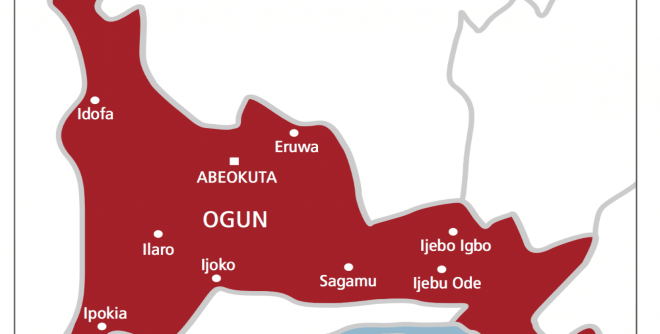
The great-grandmother, identified as Esther Ogunmabo, was arrested in Ilisan, Ogun State, with retail sachets of skunk, a strain of cannabis, weighing 90 grammes, which she claimed she sold to locals.

A statement on Sunday by the agency’s spokesman, Femi Babafemi, said the centenarian told operatives that she started engaging in illicit drug trade after her provisions shop was razed by fire.

The statement partly read, “Operatives of the National Drug Law Enforcement Agency have recorded significant breakthroughs across the country’s land and maritime borders, including the arrest of a 101-year-old great-grandmother for dealing in illicit drugs.

“NDLEA operatives on Saturday, August 15, 2026, arrested a 101-year-old woman, Esther Ogunmabo, in Ilisan, Ogun State, with retail sachets of skunk, a strain of cannabis, weighing 90 grams, which she claims she sells to locals.

“The centenarian told operatives that she resorted to the illicit drug trade after her provisions shop was razed by fire, adding that one of her daughters, who resides in Lagos, arranges the supply of the substance to her every four days, which she in turn sold in bits.”

Babafemi said the Chairman/Chief Executive Officer of the NDLEA, Brig. Gen. Buba Marwa (retd.), directed that the suspect be granted bail and placed on counselling because of her advanced age, while her daughter had been arrested.

PUNCH Online has not been able to speak with the suspect.

In a related development, he said NDLEA operatives in Akwa Ibom State, acting on credible intelligence, intercepted a wooden boat on the high seas on Friday, August 21, conveying illicit drugs to fishing settlements in the Republic of Cameroon.

READ ALSO:  Petrol Marketers Complained To Tinubu That Our Diesel Price Is Too Cheap - Dangote Industries

According to him, three suspects arrested aboard the boat, which was heading to Ine Isu, Ine Mbah and Ine Ikot Itie Udung fishing ports in Cameroon, included Etima Effiong Eekpo, 29, caught with 1.120kg of skunk; Otobong Eyoh Etukudoh, 33, who had 42.060kg of skunk in his possession; and 27-year-old Kingsley Effiong John, who was found with 20 grammes of cocaine cleverly concealed inside a large wrap of edible cassava fufu, alongside 435 grammes of skunk.

“A total of 42.622kg of narcotics was recovered from the trio,” Babafemi added.

In the nation’s maritime space, Babafemi said the agency recorded its first-ever seizure of illicit drugs shipped from Thailand through the maritime corridor, following the interception of two containers of cannabis indica, also known as Loud, at the Apapa and Lekki ports, with a combined street value put at over N4.4bn.

“Both containers were loaded at the Port of Laem Chabang, Thailand, underscoring the emergence of a new trafficking route being exploited by drug syndicates to smuggle synthetic cannabis into the country,” he added.

At the Apapa Port, Babafemi said a container declared to be conveying dry fish, rice, vehicle spare parts, turmeric soap and inverter batteries was found, during a joint examination of the shipment on Friday, August 21, by the NDLEA, Customs and others, to contain 1,090.5kg of Thai Loud packed in 54 cartons comprising 2,181 sachets of 500 grammes each.

“At the Lekki Deep Sea Port, a similar container, which had been placed on the Agency’s watchlist and monitored by its Marine Special Operations Unit, was jointly examined on Wednesday, 19th August. Of the seven pallets found in the container wrapped in black nylon, four were confirmed to be laced with Thai Loud, yielding 96 cartons made up of 400 parcels weighing a total of 400kg. The remaining three pallets contained 798 rims of A4 paper, which had been used as cover for the consignment,” he said.

READ ALSO:  Suspected Cultists K!ll Man A Day To His Wedding In Delta

In the Federal Capital Territory, Babafemi said NDLEA operatives on Saturday, August 22, intercepted three waybill packages containing 24,410 pills of tramadol capsules inside a Hummer bus travelling from Enugu to Zuba.

“A follow-up operation conducted in Niger State led to the arrest of the owner of the consignment, Sunday Eze, 28, in Kontagora, after which he was transferred to Abuja,” he said.

In Ondo, Babafemi said operatives raided a cannabis farm at Ijare forest, Ifedore Local Government Area, on August 19, following the earlier arrest of three suspected cannabis planters at the same location on August 16.

“The team destroyed a total of 10,000kg of skunk cultivated across four hectares of the forest. In a separate operation in the state, operatives same day at Ita-Ogbolu, Akure North LGA, recovered 210kg skunk and a Toyota Camry car with registration number AGL 223 JH belonging to Sylvester Dibiagu Anthony, who is currently at large,” he added.

“A raid at Hadeija Road, Kano, on Monday, August 17, led to the arrest of Chibuzor Madueke, 31, with 98 blocks of skunk weighing 73.3kg recovered from him, while a similar operation by NDLEA operatives at Seme, Badagry area of Lagos, led to the arrest of three family members: Nasiru Tijjani, 52; Moshood Tijjani, 27; and Salami Tijjani, 27, at Ashipa area, near the Seme border, with 48kg of skunk.

“In Abia State, NDLEA officers on Thursday, August 20, raided the residence of Ikechukwu Anthony Iwuno, 36, at Umuobia Olokoro area of Umuahia South LGA, where 14.4kg Loud, 2.3kg Colorado, 386 grammes of tramadol and 134 grammes of rohypnol were recovered,” the statement added.

READ ALSO:  IPMAN Dumps Fuel Import For Dangote Petrol

While commending the officers and men of the Ogun, Apapa, Lekki, Seme, Akwa Ibom, Ondo, Oyo, Kwara, Kano, Abia and FCT Commands for the various successful operations, Marwa enjoined them and their colleagues across the country to continue with the current balanced approach to the agency’s drug-control efforts.

Continue Reading

Trending