Connect with us

NEWS

Pump Price Yet To Reflect Market Conditions — NNPC

Published

on

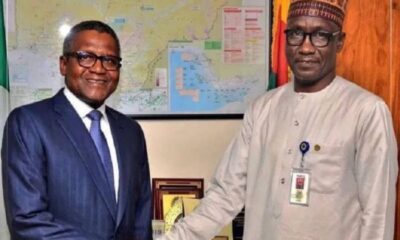
The Executive Vice President of Nigerian National Petroleum Company Limited (Downstream), Adedapo Segun, says the company wants a competitive market to ensure stable fuel prices and supply in Africa’s most populous nation.


According to Segun,  the current fuel pump price does not accurately reflect prevailing market conditions.


“The pump price today is not market reflective. NNPCL is the sole importer of PMS in the country, which is abnormal. We should be moving towards a situation where the free market determines prices,” he said, stressing that market forces, rather than any single entity, should dictate fuel prices.” Segun said on Arise Television’s Morning Show on Thursday, September 5.


Segun said that NNPCL’s role as the sole importer of Premium Motor Spirit (petrol) was not a deliberate choice by the company but a response to market conditions.

“Let me put it in the proper context. NNPCL is not a regulator. We didn’t choose to be the sole importer. We don’t determine who plays in the market. We stepped in when others reduced their participation. It’s not about wanting to be monopolists,” he explained.

He said that achieving a stable fuel supply and price would require a more liquid foreign exchange market.

“Market conditions need to be perfect, and there must be FX liquidity,” he added, suggesting that broader economic reforms may be necessary to address the fuel pricing issue.NNPCL has been working closely with private refineries, such as Dangote, to ensure a steady supply of crude oil for refining.

“We have supplied about 30 million barrels to Dangote so far: 6.3 million this month, and we will supply 11.3 million in October,” he added.

READ ALSO:  JUST IN: NNPCL Increases Fuel Pump Price Again

Ojogwu Godwin Chukwudi hailed from Delta State. A young talented personality, Alumnus of Delta State university,Abraka Studied Library and information science. He is an intellectual cyber communicator expert and a prolific blogger professional.

Click to comment

Leave a Reply

Your email address will not be published. Required fields are marked *

Gbasgbos

Big Change Ahead? FG Set to Replace Multiple Emergency Lines with Just One Number

Published

on

The Federal Government has announced plans to implement 112 as Nigeria’s nationwide emergency telephone number, aiming to unify and strengthen the country’s emergency response system.

The initiative was disclosed in a statement by Stanley Nkwocha, Senior Special Assistant to the President on Media and Communications (Office of the Vice President), following a meeting between Vice President Kashim Shettima and a delegation from the Nigerian Communications Commission (NCC) at the Presidential Villa.

The move comes days after the National Economic Council (NEC), chaired by Shettima, approved the adoption of 112 across all levels of government and agencies.

Shettima directed the NCC to develop a roadmap for implementation and to collaborate with the National Emergency Management Agency (NEMA) to improve coordination nationwide.

“The Vice President assured the delegation that the project would be sustained, with funding mobilised through NEC and private sector support,” the statement read.

NCC Chairman Idris Ibikunle Olorunnimbe noted that about 35 Emergency Communications Centres had already been established across the country, but urged greater support from governors, the police, ambulance services, and NEMA to keep them operational.

He stressed that the success of the initiative would depend on collective commitment:“Everyone is expected to buy into this initiative. It is a patriotic duty to ensure that anyone in distress can get help swiftly.”

The adoption of 112 is expected to streamline emergency response, reduce delays, and provide Nigerians with a single, reliable number for police, fire, medical, and disaster-related emergencies.

Aprokorepublic

READ ALSO:  Police Boss Speaks Tough As Anambra Heads To The Polls
Continue Reading

NEWS

Just In: Senator Uche Ekwunife Lands Powerful National Appointment

Published

on

By Tony Ezike

Distinguished Senator Uche Ekwunife, CON, has been appointed as a Member of the Board of Trustees (BOT) of the Solar Energy Society of Nigeria (SESN), a recognition of her outstanding leadership, integrity, and unwavering commitment to science, technology, innovation, and sustainable national development.

The appointment was communicated in an official letter dated May 1, 2026, and signed by the President of the Solar Energy Society of Nigeria, Dr. Sunny Akpoyibo, FSESN. According to the Society, Senator Ekwunife’s wealth of experience in public service and her remarkable contributions to national development make her a worthy addition to its highest decision-making body.

As a BOT member, Senator Ekwunife will provide strategic direction and oversight, help safeguard the Society’s mission, support research and advocacy in renewable energy, promote the adoption of solar technologies, and contribute to policy decisions aimed at advancing Nigeria’s clean energy transition.

The appointment, which took effect on April 15, 2026, is for an initial two-year term, subject to the provisions of the Society’s constitution. Senator Ekwunife formally accepted the appointment on May 11, 2026, pledging to faithfully discharge her responsibilities in line with the Society’s ideals and constitutional provisions.

Established in 1980, the Solar Energy Society of Nigeria remains one of the nation’s leading professional organizations promoting solar and renewable energy through research, advocacy, policy engagement, public enlightenment, and professional collaboration.

Senator Ekwunife’s appointment is widely regarded as a testament to her impactful service as Chairperson of the Senate Committee on Science, Technology and Innovation during the 9th National Assembly. During her tenure, she played a significant role in strengthening the National Agency for Science and Engineering Infrastructure (NASENI), championing legislative reforms that secured first-line charge funding for the agency from the Federation Account, thereby boosting technological innovation and industrial growth.

READ ALSO:  NNPC Ends Petroleum Importation, Partners Dangote refinery

Her inclusion on the SESN Board of Trustees further underscores her enduring commitment to national development. Stakeholders believe her experience and leadership will strengthen the Society’s efforts to expand renewable energy access, promote sustainable energy policies, and support Nigeria’s journey toward a cleaner, greener, and more resilient energy future.

Continue Reading

NEWS

Miyetti Allah President in Trouble as EFCC Files $2.63m Money Laundering Charges

Published

on


A federal high court in Abuja has remanded Bello Bodejo, president of Miyetti Allah Kautal Hore, in the custody of the Economic and Financial Crimes Commission (EFCC) over an alleged $2.63 million money laundering case.

Inyang Ekwo, presiding judge, on Thursday, ordered that Bodejo remain in the anti-graft agency’s custody pending the determination of his bail application.

The judge adjourned the matter to July 20 for ruling on the bail request.

Bodejo was arraigned on charges bordering on alleged money
laundering and pleaded not guilty to all counts.

Following the arraignment, Wahab Shittu, counsel to the EFCC, asked the court to fix a date for trial and remand the defendant.

Ahmed Raji, counsel to Bodejo, informed the court that a bail application had already been filed and urged the court to hear it.

Moving the application, Raji said the motion, filed on June 30, was supported by several grounds.

The senior advocate argued that the offences alleged against his client are bailable under the Administration of Criminal Justice Act (ACJA) and urged the court to grant bail.

Shittu opposed the application, relying on a 28-paragraph counter-affidavit filed by the EFCC.

“We adopt all our processes in opposition to the application my lord,” he said.

The prosecutor argued that Bodejo had previously been “a guest at the Department of State Services (DSS) for other offences” and could commit further offences if released on bail.

Shittu also dismissed the defendant’s claim of ill health, arguing that the injury he referred to was not recent and that he did not appear to be in poor health.

READ ALSO:  Enugu Govt Speaks On Mortuary Tax

He further submitted that Bodejo could interfere with witnesses if granted bail, but urged the court to impose stringent conditions should it decide otherwise.

According to the charge, the EFCC alleged that Bodejo, on January 21, 2022, accepted $200,000 in cash from Sa’idu Abubakar, a former accountant-general of Bauchi State, in a transaction that exceeded the threshold permitted by law.

The commission also alleged that he received another $100,000 in cash from Abubakar on October 26, 2022, and a further $980,000 in separate cash transactions.

The EFCC said the alleged offences contravene Section 19(1)(d) of the Money Laundering (Prevention and Prohibition) Act, 2022, and are punishable under Section 19(2)(b) of the same Act.

Aprokorepublic

Continue Reading

NEWS

Reps Move to Punish South Africa Over Xenophobic Attacks

Published

on


The House of Representatives has urged the Federal Government to impose strong diplomatic measures against South Africa following renewed xenophobic attacks, extrajudicial killings, and alleged systematic persecution of Nigerians and other African nationals.

The resolution was adopted after a motion of urgent public importance sponsored by Yusuf Gagdi, who represents Kanke/Kanam/Pankshin Federal Constituency of Plateau State.

The motion received unanimous support during plenary presided over by Deputy Speaker Benjamin Kalu.Gagdi condemned the repeated violence against Nigerians, noting that recent reports confirm fresh attacks on citizens from Nigeria, Ghana, Zimbabwe, Zambia, Mozambique, and Malawi.


He highlighted the killing of two Nigerians, one allegedly in police custody and another murdered outside his business premises.


Recalling Nigeria’s pivotal role in the anti-apartheid struggle, Gagdi described the current treatment of Nigerians in South Africa as “profoundly disturbing” and a betrayal of African solidarity.


He warned that continued attacks undermine pan-African unity and regional integration.Other lawmakers, including Billy Osawaru, Moshood Akiolu, Ghali Tijjani, and Adebayo Adepoju, echoed calls for decisive action.


They urged intensified diplomatic engagement, legal redress, and support for affected Nigerians, while also advocating for the summoning of South Africa’s High Commissioner in Abuja.


The House resolved to:Summon South African envoy to explain Pretoria’s position on protecting Nigerians.


Push for international investigation into the killings of Nigerians and other Africans.Engage AU and UN to ensure accountability and protection of migrants.


Review bilateral ties with South Africa, including possible suspension of cooperation.Strengthen consular services and provide reintegration support for Nigerians returning home.

READ ALSO:  Gov Mbah Approves N290.8m For Gratuities, Pensions For February 2025 To Retirees


An ad hoc committee will also be constituted to engage South Africa’s Parliament, government, and regional institutions, with a report expected within 21 days.


Xenophobic violence in South Africa has remained a recurring diplomatic flashpoint, with major outbreaks in 2008, 2015, and 2019 claiming lives and destroying businesses owned by foreign nationals, including Nigerians.


Aprokorepublic

Continue Reading

NEWS

“I Told Them To Kill My Brothers” – Governor Speakes on N300m Ransom Refusal

Published

on

Governor Dauda Lawal of Zamfara State has revealed that he refused to pay a N300 million ransom demanded by kidnappers who abducted his brothers in 2019, saying he chose not to negotiate with the criminals rather than encourage the growing menace of kidnapping for ransom.


The governor said his decision was based on his conviction that paying ransom only emboldens criminal groups to continue abducting innocent people.

Lawal made the disclosure on Thursday while speaking at the ARISE News and THISDAY Townhall Conference in Abuja, where he also renewed his call for the establishment of state police as part of broader efforts to tackle insecurity across the country.


Recounting the ordeal, the governor said the kidnappers demanded N300 million for the release of his brothers, but he refused to negotiate or make any payment.


“My own brothers were kidnapped in 2019, and these criminals were demanding at the time about 300 million. And I said, look, I’m not going to pay a dime. If you like, go and kill them.”


According to him, despite his refusal to pay, the kidnappers eventually released his brothers after they spent about three months in captivity.


Lawal maintained that his experience reinforced his belief that ransom payments only strengthen criminal networks and fuel more abductions.


“By the time we continue to pay ransom to these people, we are encouraging them to be kidnapping people more and more.”


He argued that if kidnappers realise they cannot obtain money from victims’ families or governments, they would be discouraged from engaging in the crime.

READ ALSO:  Enugu Govt Speaks On Mortuary Tax


The governor stressed that his position has remained unchanged over the years, insisting that he would never negotiate with or reward criminals.


“I will not negotiate, and I will not pay ransom to any criminal, no matter what happens.”


Lawal made the remarks while advocating for the creation of state police, arguing that governors should have operational control over security architecture in their states if they are expected to guarantee the safety of residents.


He lamented that although governors are widely regarded as chief security officers of their states, they lack constitutional authority to direct the operations of the various security agencies.


“In as much as I was called or I’m being called the chief security officer of the states, however, I don’t have the command and control structure to determine what happens or give instructions to some of these security officers.”


According to him, the current arrangement places governors in a difficult position, as they are held responsible for insecurity despite having no direct control over the police and other security agencies operating within their states.


Lawal described security as the foundation upon which every other aspect of development depends, saying meaningful progress cannot be achieved where lives and property are not adequately protected.


“Why is it difficult for people to understand that my primary responsibility is the protection of lives and property, and I don’t have that control? How do you hold me accountable?”


The governor said establishing state police would make elected leaders more accountable to the people, as citizens would be able to directly assess the performance of their governors in maintaining law and order.

READ ALSO:  DO YOU AGREE? Over 40% Of Nigerians Now Enjoy 20 Hours Of Electricity Supply – Power Minister


He also argued that state governments would be better positioned to recruit, fund, equip and train security personnel based on the peculiar security challenges in their respective states.


Lawal further noted that the Nigeria Police Force is constrained by inadequate funding, poor welfare and insufficient training, challenges he said have continued to affect the effectiveness and morale of officers.


Highlighting Zamfara State’s investment in security, the governor disclosed that his administration currently finances more than 30 per cent of security operations carried out within the state.


He said that over the past three years, the state government had procured more than 500 operational vehicles for security agencies to strengthen their capacity to combat banditry and other violent crimes.


Lawal also revealed that the government recently acquired and handed over 35 Armoured Personnel Carriers (APCs) and Mine-Resistant Ambush Protected (MRAP) vehicles to support ongoing security operations.


The governor added that his administration has embraced technology in the fight against insecurity through the acquisition of both surveillance and combat drones.


“We bought drones, both surveillance drones and attack drones, to be able to aid the security forces in terms of fighting these criminals in their respective areas.”


He maintained that the solution to Nigeria’s worsening insecurity lies in strengthening security institutions through improved funding, better welfare, enhanced training and modern technology rather than negotiating or paying ransom to armed groups.


Lawal’s comments come amid renewed national conversations on the creation of state police and wider security sector reforms, with supporters arguing that decentralising policing would improve accountability, enhance intelligence gathering and enable quicker responses to local security threats across the country.

READ ALSO:  Police Boss Speaks Tough As Anambra Heads To The Polls

(DailyTrust)

Aprokorepublic

Continue Reading

NEWS

PBAT Door-To-Door Movement Gets Big Boost as Akpabio, Abbas, Others Inaugurate Exco

Published

on


The President Bola Ahmed Tinubu (PBAT) Door-to-Door Movement
on Thursday inaugurated its national executives in Abuja, with prominent
political leaders, traditional rulers, and stakeholders urging Nigerians to
support the administration’s reform agenda.

The movement, founded by Government Oweizide Ekpemupolo, popularly known as Tompolo, said the inauguration forms part of efforts to deepen grassroots mobilisation and promote civic participation across the country.

Among dignitaries at the event were Senate President Godswill Akpabio; Speaker of the House of Representatives Tajudeen Abbas; Governors Dauda Lawal of Zamfara, Agbu Kefas of Taraba, Caleb Mutfwang of Plateau, and Umar Bago of Niger; the Ooni of Ife, Oba Adeyeye Enitan Ogunwusi; former Katsina governor Aminu Bello Masari; former Niger Delta militant leader Asari Dokubo; and APC national chairman Nentawe Yilwatda.

A documentary titled ‘The Journey So Far for the Door-to-Door Movement’ was screened during the ceremony, highlighting the activities and growth of the organisation.

Addressing participants, Akpabio said difficult but necessary reforms were essential for national progress.

“Nations do not become great because they avoid difficult decisions; they become great because they confront decisions with wisdom, patience and patriotism. Lasting progress is rarely achieved without temporary sacrifice,” the senate president said.

Abbas defended the Tinubu administration’s economic reforms,
describing them as bold decisions taken with the country’s long-term interest
in mind.

“History will remember President Tinubu for his courage. He met a nation at a crossroads. He chose conviction over convenience: fuel subsidy removed, exchange rate unified, a new tax system built from the ground up. They were decisions taken for posterity. The road has demanded sacrifice, and we do not take that sacrifice lightly,” the speaker said.

READ ALSO:  DO YOU AGREE? Over 40% Of Nigerians Now Enjoy 20 Hours Of Electricity Supply – Power Minister

The Ooni of Ife said the administration’s policies were repositioning the Nigerian economy, citing developments in the capital market and foreign reserves.

Delivering the keynote lecture, Professor Bashir Makarfi of Bayero University, Kano, said reforms introduced by the Tinubu administration were beginning to yield results.

“The fact is too visible to be denied that Nigeria is undergoing a transformation under Bola Tinubu,” he said.

Speaking on the economy, Aminu Bello Masari, former governor of Katsina state, said inflationary pressures were gradually easing while investor confidence was improving.

The managing director of Tantita Security Services Nigeria Limited, Kestin Ebimorbowei Pondi, described Tinubu as a symbol of purposeful leadership and urged Nigerians to remain united behind the administration.

“With unity, resilience and determination, Nigeria will get
to the promised land,” Pondi said.

President Bola Tinubu followed the inauguration live from the State House in Abuja, alongside Nuhu Ribadu, the national security adviser.

Aprokorepublic

Continue Reading

NEWS

Big Change! US Applicants Can No Longer Use Agents for Nigeria Visa

Published

on

Travellers in the United States who require Nigerian visas will now submit their applications directly to the Nigerian embassy and consulates after the Nigeria Immigration Service (NIS) disengaged its third-party visa application service provider.

Previously, Online Integrated Solution (OIS SERVICES) functioned as the operator of Nigeria’s visa application and submission centres in the US.

However, a statement issued Thursday by Akinsola Akinlabi, NIS public relations officer, said the operator has been disengaged effective immediately. Akinlabi did not state why.

“Travellers seeking Nigerian visas are now required to submit their applications directly at the embassy of Nigeria in Washington, DC, or at the consulates of Nigeria in New York and Atlanta until further notice,” Akinlabi said.

He conveyed the NIS’ assurance that the embassy and consulates have put adequate measures in place to ensure seamless submission, processing, and issuance of visas.

The immigration official noted that applicants are further advised to monitor the official communication channels of the NIS and the Nigerian mission in the US for updates on visa application procedures.

He added that the NIS remains committed to providing efficient service delivery.

Aprokorepublic

READ ALSO:  Milani Cosmetics Nigeria marks their 10th year anniversary (See photo)
Continue Reading

NEWS

Oshiomhole Drops Truth Bomb: Governors Powerless Without State Police

Published

on

The lawmaker representing Edo North Senatorial District, Adams Oshiomhole, has thrown his weight behind the creation of state police in Nigeria.

Oshiomole expressed his support on Thursday at Arise Television’s Town Hall on State Police.

According to him, governors cannot be held accountable as chief security officers without having operational control over policing.

He described Nigeria’s current policing structure as contradictory, stressing that governors fund security operations but lack the authority to recruit, deploy or discipline officers.

The former Edo State governor also dismissed fears that state police would be abused, insisting that misuse of power already exists under the current centralised system and should be addressed through democratic
accountability and public oversight.

“Various state governors can’t be the Chief Security Officers of their respective states without operational control over policing.

“Decentralised policing would improve security, clarify responsibility and align Nigeria’s federal system with its constitutional structure.

“Lawmakers should move from debate to its implementation,” he said.

Recall that both chambers of the National Assembly passed a bill for the creation of state police in Nigeria.

Aprokorepublic

READ ALSO:  Police Boss Speaks Tough As Anambra Heads To The Polls
Continue Reading

NEWS

Wike: FCT Civil Servants Are Angry Because I Stopped Money Diversion

Published

on


The Minister of the Federal Capital Territory (FCT), Nyesom Wike, has said he is not popular among civil servants because he has blocked avenues for the diversion of public funds.

Wike made the revelation during his monthly media chat on the state of the nation in Abuja on Thursday.


According to him, some funds previously diverted by civil servants are now being channelled into productive projects, particularly road construction.


“We waste our resources on frivolities,” the minister stated. He cited the example of requests for funds to attend international conferences, such as one on land administration in America, which he refused to approve.


“How do you encourage me to sign N20 million to travel to America for a conference of one week for land administration? I won’t do that,” Wike said.

He explained that before his arrival, about 65 percent of the FCT budget went to recurrent expenditure.


He reversed this priority, directing 70 percent to capital expenditure and 30 percent to recurrent.“Some people say conferences for corruption… These are ways government funds are being diverted. I say put this money in this road here and the people will get the impact,” he added.

Wike concluded that this stance explains why he may not be liked by some civil servants. “If you ask anybody today, one Minister they won’t like is me. Why? Those money for conferences, I put the money together for roads.”

The minister has consistently emphasised fiscal discipline and infrastructure development in the FCT since assuming office.

READ ALSO:  Nri: Check out the Full details of new executives of NPU


Aprokorepublic

Continue Reading

Trending