NEWS
Where Is The President? – Peter Obi Questions Tinubu’s Whereabouts As 14 Days Leave Elapse
Published
2 years agoon
By
Godwin Chi
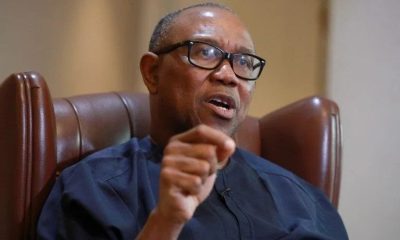
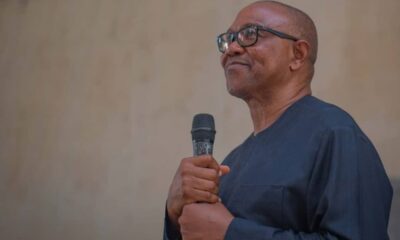
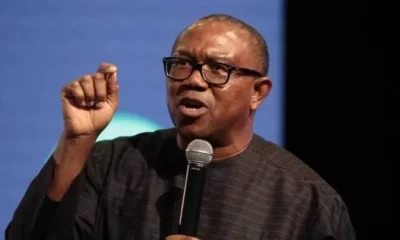
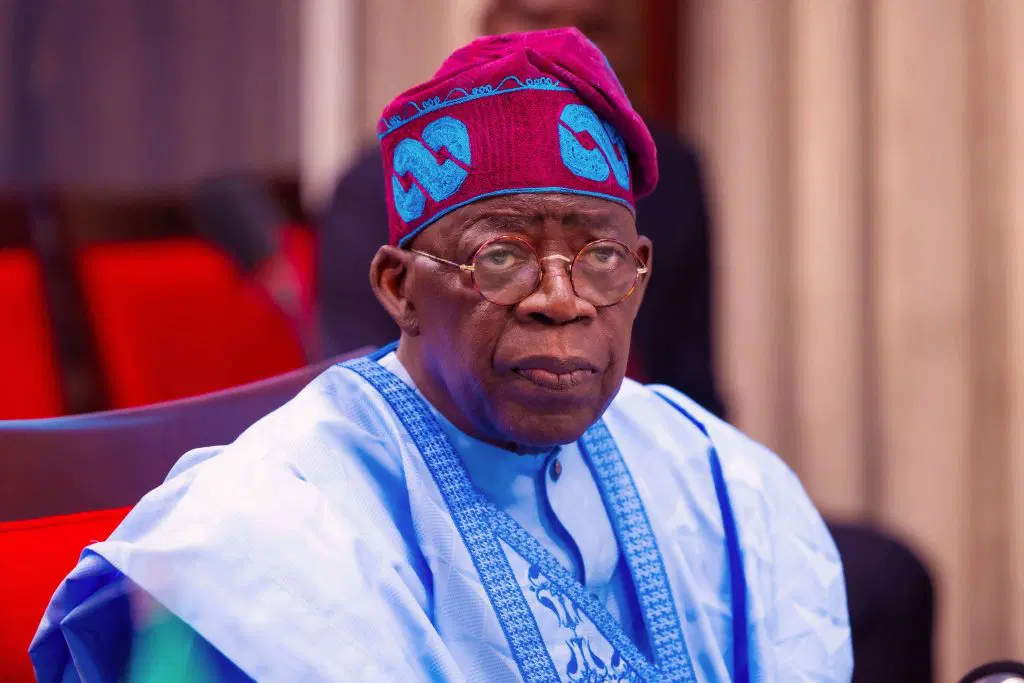
Peter Obi, the presidential candidate of the Labour Party, LP, in the last election, has slammed President Bola Tinubu over his continued absence from the country amid the economic challenges facing the nation.
Recall that Tinubu left Nigeria on October 2, for a two-week working vacation in the United Kingdom, UK, as part of his annual leave.
It was also recently reported that the president left the UK for Paris, France where he was expected to attend an “important engagement” after spending over a week in the UK.
Two weeks after his departure from the country, Obi in a statement on Friday, wondered why the president is not back.
He said:
“The President had told us he would only be gone for 14 days. The 14 days have passed now, and we are waiting to see him in the country.
One would have expected him to return earlier than expected, considering the volume of work that needs to be done in a troubled nation like ours.
“The untold hardship that has been unleashed on our people as a result of some of his administration’s policies is unimaginable and we need his urgent attention to pilot the nation out of this present situation.”
Ojogwu Godwin Chukwudi hailed from Delta State. A young talented personality, Alumnus of Delta State university,Abraka Studied Library and information science. He is an intellectual cyber communicator expert and a prolific blogger professional.
You may like
-
Rising Fuel Prices Show Consequences of Poor Planning — Peter Obi
-
Peter Obi to JAMB: Don’t Let System Failures Cost Students Their Future
-
Peter Obi Pays NECO Fees For 148 Inmates In Anambra
-
Peter Obi Donates ₦15m To Support Rural Health Centre In Enugu
-
Peter Obi Donates ₦20m To Health, Education In Anambra
-
Anambra Rising: APC’s Roar in the Rain
NEWS
Official vs Black Market: Dollar To Naira Rate Today Will Surprise You
Published
2 hours agoon
August 17, 2026By
Godwin Chi
The Nigerian naira opened the week relatively strong against the United States dollar, with the local currency trading around N1,357.61 per dollar at the official Nigerian Foreign Exchange Market (NFEM) window and about N1,420 per dollar at the parallel market.
Data from the Central Bank of Nigeria (CBN) showed that the NFEM rate stood at N1,357.61 per US dollar as of the latest available official market data. The rate is based on the volume-weighted average of transactions in the official foreign exchange market.
The parallel market, meanwhile, continued to quote the dollar at around N1,420, leaving a gap of approximately N62.39 between the two markets. Proshare reported that the naira had appreciated by 59 basis points at the official market to N1,357.61/$, while the parallel-market rate remained at N1,420/$.
The latest official rate represents an improvement for the naira compared with the previous week’s N1,365.69 per dollar. The appreciation has been linked to improved foreign exchange liquidity and supply conditions in the official market.
More recent market indicators also point to continued stability in the naira-dollar exchange rate. A live USD/NGN rate source put the dollar at about N1,358.30 as of the early hours of August 17, while other market data placed the currency around the N1,358 level.
The naira’s performance comes amid stronger external reserves and recent changes by the CBN aimed at improving liquidity and efficiency in Nigeria’s financial markets. Nigeria’s external reserves rose to $52.19 billion as of August 12, 2026, their highest level in 17 years, according to recent reports.
For Nigerians buying or selling dollars outside the official market, the parallel-market rate remains higher than the NFEM rate. The difference reflects continued segmentation between the two foreign exchange channels, although the spread remains relatively contained compared with periods of severe market volatility.
As trading progresses on Monday, August 17, the official NFEM rate and parallel-market quotations could change depending on dollar supply, demand from importers and other FX users, CBN interventions and broader global currency movements.
NEWS
You Won’t Believe What Fubara Is Launching Today: 10 Major Projects Across Rivers
Published
3 hours agoon
August 17, 2026By
Godwin Chi
Governor Siminalayi Fubara of Rivers State will today begin the inauguration ceremony of 10 new major people-oriented projects across the state as part of his administration’s drive to accelerate infrastructure development and improve the wellbeing of residents.
Briefing journalists at the weekend in Port Harcourt, Secretary to the State Government (SSG), Dr. Dagogo Wokoma, disclosed the inauguration ceremonies which will commence today, August 17, will end on August 31, 2026.
Wokoma, who explained that the projects include major roads, healthcare facilities, educational infrastructure and other critical public assets, said the inauguration programme will begin with the Buguma-Degema-Abonnema Road, which traverses Asari-Toru, Degema and Akuku-Toru Local Government Areas.
He said, on Tuesday, the Egwi-Afara-Mba Road in Etche Local Government Area will be inaugurated, while the Omademe Internal Roads in Omademe, Ikwerre Local Government Area, will be inaugurated on Thursday, followed by the New Air Force Base Runway in Port Harcourt on Friday.
Other projects ready for inauguration according to him the governor will also inaugurate the Elele-Egbeda-Omoku Dual Carriageway, which links Ikwerre, Emohua and Ogba/Egbema/Ndoni local government areas, and Captain Elechi Polytechnic Entrepreneurship Centre and Engineering Faculty Building at Rumuola, Obio/Akpor Local Government Area.
Also in the inauguration list is “The Agba Ndele Road and Bridge in Ndele, Emohua Local Government Area, the New Zonal Hospital, Omoku, in Ogba/Egbema/Ndoni Local Government Area, the Neuro-Psychiatric Hospital and New General Hospital at Rumuigbo, Obio/Akpor, and the Bonny National Grammar School in Bonny Local Government Area”, scheduled to be inaugurated on August 31st.
Wokoma described the projects as “tangible evidence” of Governor Fubara’s commitment to transforming communities and addressing the developmental needs of Rivers residents.
He said the projects demonstrated the administration’s determination to ensure that governance translated into “meaningful and measurable benefits” for citizens across the state’s 23 local government areas.
The SSG also acknowledged the contributions of government officials, contractors, host communities and other stakeholders to the completion of the projects.
He urged Rivers residents to participate in the inauguration ceremonies and continue supporting the administration’s agenda for peace, development, progress and prosperity.
“Together, we will continue to build a Rivers State where development reaches every community and every citizen has the opportunity to thrive,” Wokoma said.
NEWS
Niger Kidnap Ordeal Over: Missionary Reunited With Family
Published
3 hours agoon
August 17, 2026By
Godwin Chi
US President Donald Trump has confirmed that American missionary Kevin Rideout, who was released after more than nine months in captivity in Niger, is preparing to return to the United States.
Trump confirmed Rideout’s release in a post on his Truth Social platform on Sunday, saying the former hostage was preparing to return to the United States after being reunited with his wife, Krista.
“I am happy to reveal that former hostage Kevin Rideout is getting ready to fly home to the United States after having been reunited with his beautiful wife, Krista,” Trump wrote.
He said Rideout’s release marked the “110th captive American liberated” since he began his second term as President.
“I look forward to seeing Kevin and Krista at the White House soon!” Trump added.

Rideout, a Christian missionary and pilot with SIM International, had spent more than nine months in captivity after he was abducted outside his home in Niamey, Niger, in October 2025.
According to SIM International, Rideout was in good health and in the care of US officials following his release.
Three armed men reportedly abducted the missionary and took him to the Tillaberi region in western Niger, an area affected by militant activity.
Details surrounding his release, including the identity of his captors and how his freedom was secured, remained unclear.
Rideout had worked in Niger for 19 years and served as a pilot for SIM International, a Christian organisation operating in more than 70 countries.
NEWS
Itsekiri Worldwide: The Biggest Homecoming Yet
Published
3 hours agoon
August 17, 2026By
Godwin Chi
A single stick breaks, but together we stand like a bundle of strength across the land
By Peter Ogbobine
Among the Itsekiri people, there is an enduring wisdom passed down from generation to generation: a lone tree in the forest easily falls to the storm, but a forest standing together withstands even the fiercest wind. This timeless philosophy is beautifully captured in the theme: “A single stick breaks, but together we stand like a bundle of strength across the land,” rendered recently by Wikidadon in his song “One Voice.” As we, the children of Iwerre, scattered across the globe, prepare to gather for the historic Itsekiri Global Homecoming in Warri, 16–21 August 2026, coinciding with the 5th anniversary of the coronation of His Majesty Ogiame Atuwatse III, the Olu of Warri, this proverb is a call to shared destiny, unity, and national renewal.
The Itsekiri Nation is strongest when united. From the Kingdom of Warri, founded by Ginuwa I, our people built a civilisation in which unity was the lifeblood of survival and greatness. I believe there is a famous Itsekiri proverb which says “Ikà Íkanní ¹¹ gbe ¹ru”: “One finger cannot lift a heavy load.” This wisdom remains profoundly relevant today. No individual, no family, and no community of Itsekiri can truly prosper in isolation. Though few in physical number, the strength of the Itsekiri people has always rested in communal solidarity — in standing together during triumph and adversity alike.
Historically, the Itsekiri Nation survived difficult tides because of this spirit of togetherness. During periods of political uncertainty, economic struggle, and regional tensions, the Itsekiri people repeatedly demonstrated resilience rooted in collective identity.
From indelible conversations with my beloved late father and faint childhood memories — that even though prominent Itsekiris belonged to rival political parties (the NCNC and Action Group in the First Republic, and, in my adulthood, the Unity Party and NPN in the Second Republic) — they never let those differences undermine their unity on any issue that touched the Itsekiri as a people. Equally impressive, but in another sphere, was the defence of the Itsekiri Nation by a few of our very brave and indomitable young men during the internecine conflict with the Izon in the late 1990s. The modicum of respect and pride we enjoy today is owed to the valour and courage of these young men, and we remain deeply in their debt.
Recently, however, we have witnessed the tragedy of the single stick. Individual and group ambition have fractured community trust — fragmentation into the so-called 12 Disciples faction, the Ologbosere imbroglio, and various social media camps — an alarming balkanisation with little shared centre of gravity. Even long-respected norms such as lèse-majesté and Afomasin (Baba gin), once held in awe by our neighbours, have been desecrated with no regard for historical precedent. The Olu-in-Council, once the undisputed moral and political authority on Itsekiri affairs, no longer commands that universal reverence. Modern Itsekiris must learn from past legacies to place collective interest above personal rivalries and transient divisions.
We must therefore interrogate some uncomfortable questions during the Homecoming and beyond:
Has oil exploration and exploitation deepened internal hatred? What is the implication of our declining Itsekiri population? Why are many Itsekiris not resident in their homeland? How must we establish a high level of Lebensraum between us and our hostile neighbours and tackle their illegal occupation of Okerenghiho, Agbassa and other swathes of Itsekiri ancestral land presently occupied or about to be occupied? How have empowered non-state actors shaped our internal dynamics? Are we politically and economically marginalised within Delta State and Nigeria? Do disparities in financial resources affect our collective struggle? Why are we largely reactive rather than proactive? These are not questions to be asked rhetorically and abandoned; they are the honest reckoning that must precede any true reconciliation and form the basis for sustainable development. A people unwilling to confront their fractures in single sticks cannot bind themselves into a bundle of sticks.
The upcoming Itsekiri Global Homecoming is therefore not merely a social gathering. It is a sacred homecoming. It is the reunion of a people scattered across continents but united by language, ancestry, culture, and destiny. Whether in Nigeria, Europe, America, Asia, or elsewhere in Africa, every Itsekiri son and daughter remains spiritually tied to the ancestral homeland. Alone, each is a stick. Together, they form a bundle that can redirect the course of our collective future.
Our language itself encodes this truth: Ugbajo (community) is a living verb — the act of becoming strong together.
What can this bundle achieve?
Succinctly, it offers an opportunity to transform scattered success into organised progress. It is a chance to create stronger economic networks, invest in youth development, preserve the Itsekiri language and culture, support educational initiatives, strengthen traditional institutions, and advance the collective interests of the nation within Nigeria and globally. These aims are truly encapsulated in the official Homecoming website, which describes the central philosophy of the Homecoming very well: “Strengthening cultural identity and building long-term partnerships for the sustainable development of the Warri Kingdom.”
We have lamented, times without number, that most Itsekiri — especially those in national and international diaspora — have not taken time to instil Itsekiri identity in their children. Being Itsekiri is more than answering an Itsekiri name; it is our existence. We must raise the younger generation to embrace this responsibility. In an age of globalisation and cultural erosion, many indigenous identities are disappearing, and the Itsekiri tribe is fast approaching that dreadful plight if we do not arrest it NOW. Language, songs, cuisine, traditional attire, oral history, respect for elders, and reverence for the Olu institution are not outdated customs — they are the pillars of our continuity. And we must modernise our historical narrative according to the dictates of current trends. I believe it was Chinua Achebe who said, “Until the lion learns how to write, every story will glorify the hunter.” It’s not one Itsekiri man’s job, but something we all have to do as Itsekiris: to glorify and reflect our path as a God-ordained tribe. A tree without roots cannot stand for long.
But bundling requires sacrifice. It demands that we subordinate the ego of the single stick to the strength of the bundle; that we forgive old grievances, family land disputes, chieftaincy rivalries, political jealousies, etc., that have kept us splintered. Unity does not mean the absence of disagreement; rather, it means the willingness to prioritise the common good above individual ambition. Warri is the historical heartbeat of the Itsekiri Kingdom, a land of great antecedence in culture and heritage, and a prescience for greater things. We should gladly enjoy our city even if its growth has been stymied by unsavoury interlopers. To gather in Warri is to rekindle the spirit of our ancestors. The homecoming should therefore produce not only celebration, but practical resolutions and strategic planning for future generations of Itsekiris. The Itsekiri Nation is fortunate to have a truly quintessential king in His Majesty Ogiame Atuwatse III, the Olu of Warri, who has successfully blended ancestral traditions with modernity to elevate the Oluship as the rallying point for both Itsekiri elders and youth.
Under his leadership, the Oluship stands “gidigba” as a unifying institution — bringing our people together and reminding us of what binds us: one tribe, one language, one King. We should, we ought to, and we must embrace this unity with love, loyalty, and a shared sense of purpose. Whatever our differences, we must never allow them to obscure the greater truth that we are one people, bound together by a common heritage and a common destiny. For indeed, a single stick may break easily under pressure, but together the Itsekiri Nation shall continue to stand strong across the land for generations yet unborn.
Iwere ni o. So shall it be.
Ogiame Suo! Long live the Itsekiri Nation! Long live the Olu of Warri!
NEWS
FG Bets Big On China’s Zero-Tariff Deal To Industrialise Nigeria
Published
3 hours agoon
August 17, 2026By
Godwin Chi
The federal government has declared China’s decision to extend zero-tariff treatment to 100 per cent of tariff lines for African countries a potential turning point in Nigeria’s industrialisation drive, saying the policy could unlock jobs, investment and a new era of value-added exports.
Minister of Foreign Affairs, Ambassador Bianca Odumegwu-Ojukwu, who made the declaration, said Nigeria would work to transform the Chinese trade concession from a policy announcement into increased production, exports and actual shipments of Nigerian manufactured and value-added goods to China.
The minister spoke in a message to participants at an international seminar organised by the Centre for China Studies in Abuja at the weekend.
The seminar, themed “China’s Zero-Tariff Treatment on 100% of Tariff Lines for African Countries and its Implications for Structural Economic Transformation in Africa,” examined the opportunities and challenges presented by China’s expanded market access for African products.
Odumegwu-Ojukwu described the initiative as a major opportunity to accelerate industrialisation, create jobs and drive structural economic transformation across Africa.
She also commended the Centre for China Studies and the Embassy of the People’s Republic of China for convening the seminar, describing the zero-tariff policy as a historic development capable of shifting Africa-China relations from a traditional focus on “aid and loans” to “trade and production.”
According to the minister, the expanded market access provides African countries an opportunity to move away from exporting raw commodities and develop value-added products, including processed agricultural goods, textiles, leather products, pharmaceuticals and manufactured goods.
She said increased access to the Chinese market could attract Chinese and other foreign investments into African industrial parks, agro-processing facilities and manufacturing hubs, while strengthening regional value chains through the African Continental Free Trade Area (AfCFTA).
For Nigeria, the minister described duty-free access to China’s market of about 1.4 billion people as a “game-changer” for agro-processing, textiles, solid minerals and manufacturing.
She said the policy aligned with Nigeria’s foreign policy priorities under President Bola Ahmed Tinubu’s Renewed Hope Agenda, particularly the pursuit of prosperity diplomacy.
But she warned that market access alone would not deliver economic transformation if Nigeria failed to expand its productive capacity.
“Zero tariff is meaningless if we have nothing to export,” the minister stressed.
She said Nigeria would therefore prioritise building productive capacity in areas including cocoa processing, sesame, leather, garments, pharmaceuticals and renewable energy components.
Odumegwu-Ojukwu further disclosed that the Nigerian Investment Promotion Commission (NIPC) and other relevant agencies were prepared to work with Chinese investors to establish factories in Nigeria producing goods for export to China.
The minister identified a broad range of potential benefits from the zero-tariff arrangement, including increased export earnings, foreign exchange generation, growth of small and medium-sized enterprises, infrastructure development, job creation, poverty reduction, technology transfer and increased government revenue.
She said the initiative could also help Nigeria address its longstanding trade imbalance with China while strengthening economic ties between both countries.
However, she cautioned that zero tariffs by themselves would not guarantee industrialisation.
African countries, she said, must develop the productive capacity, reliable electricity, affordable financing, efficient logistics and infrastructure required to compete effectively in the Chinese market.
She also identified information gaps and limited access to Chinese buyers as challenges that must be addressed, alongside the need for Nigerian exporters to meet international standards.
The minister stressed the importance of maintaining effective rules of origin to prevent the trans-shipment of non-African goods through African countries to take advantage of the preferential access.
To help Nigerian exporters overcome regulatory barriers, Odumegwu-Ojukwu called for stronger technical cooperation between Nigerian and Chinese regulatory authorities.
She said Nigerian exporters must be equipped to meet Chinese requirements, particularly food safety and sanitary and phytosanitary standards.
The Ministry of Foreign Affairs, she said, would facilitate regulatory engagements between Nigerian agencies, including the National Agency for Food and Drug Administration and Control (NAFDAC) and the Standards Organisation of Nigeria (SON), and their Chinese counterparts.
On logistics and financing, the minister advocated streamlined shipping arrangements, trade finance and payment mechanisms in naira and renminbi, saying these could help reduce transaction costs for businesses.
Odumegwu-Ojukwu assured Nigerian businesses that the Ministry of Foreign Affairs would continue coordinating with the NIPC, Chinese Embassy in Abuja, Nigerian diplomatic missions in China and other stakeholders to support exporters seeking to penetrate the Chinese market.
She said the ministry would work to ensure that the zero-tariff initiative moved beyond diplomatic declarations to deliver tangible increases in Nigerian production, exports and shipments of value-added products to China.
While thanking the Chinese government and people for what she described as a gesture of solidarity with Africa, the minister issued a direct challenge to Nigeria’s private sector to seize the opportunity.
She said: “To our private sector, the door to China is now fully open. The question is: what are we taking through it?”
The question, coming at a time when Nigeria is seeking to diversify its economy, increase non-oil exports and attract productive investment, places the responsibility squarely on Nigerian producers to convert preferential access to the Chinese market into factories, jobs, exports and foreign exchange.
NEWS
“Stop The Blame Game” – Atiku Fires Back At Tinubu Over Dead Refineries
Published
3 hours agoon
August 17, 2026By
Godwin Chi
Former Vice President of Nigeria and Presidential Candidate of the African Democratic Congress (ADC), Atiku Abubakar, has told President Bola Tinubu to stop hiding behind the failures of his predecessors and account for the enormous resources committed to Nigeria’s refineries under his own watch.
Atiku said it was an extraordinary act of political escapism for Tinubu to now speak about inherited refinery liabilities when his own administration financed the facilities, celebrated their supposed rehabilitation and presented their return to operation as evidence of the success of his Renewed Hope Agenda.
In a statement issued by his Senior Special Assistant on Public Communication, Phrank Shaibu, Atiku said the numbers tell a story that propaganda cannot erase.
“NNPC’s financial records show that the combined obligations of the Port Harcourt, Warri and Kaduna refineries to the national oil company rose from approximately N4.52 trillion at the end of 2023 to N8.67 trillion at the end of 2024 — an increase of about 4.15 trillion in a single year under President Tinubu.
“President Tinubu cannot have it both ways. When the cameras were rolling in November 2024, his government told Nigerians that the Port Harcourt refinery was back. NNPC announced that it was operating at 70 per cent capacity and expressly presented it as an achievement under President Tinubu’s leadership.
“Now that the celebration has turned into embarrassment, the same administration wants Nigerians to believe that the refineries are merely liabilities inherited from previous governments. Mr President, you claimed the refinery when you thought it was working. You cannot disown it now that the smoke has cleared,” Atiku stated.
Atiku said the indictment has become even more devastating because Tinubu’s own NNPC leadership has subsequently admitted that the refineries were operating at a “monumental loss” and that the country was effectively wasting money.
“So Nigerians deserve answers. If the combined obligations of these refineries jumped by more than N4 trillion in 2024 alone, what exactly did Nigerians receive in return? Where did the money go? Where are the products? Where are the savings Nigerians were promised? And where is the refinery your government celebrated before television cameras?
“You cannot spend three years claiming credit for everything that appears to work and blaming your predecessors for everything that fails. Leadership does not work that way.
“President Tinubu repeatedly complains about the assets and liabilities he inherited. But after more than three years in office, Nigerians are entitled to examine the liability his own administration has become. The real liability today is a government that consumes trillions without delivering results; a government that celebrates projects before they work and searches for predecessors to blame when they collapse,” he stated.
Atiku said the refinery fiasco was particularly painful because Nigerians continue to pay painfully high prices for petrol while enormous public resources have been tied up in facilities that have failed to deliver sustainable refining capacity.
“Think about what N4 trillion could do for Nigeria. Think about the universities struggling with overcrowded lecture halls, hospitals without modern equipment, roads that have become death traps and communities without electricity or potable water.
“Yet trillions accumulate around refineries that the government itself now effectively acknowledges have been haemorrhaging public resources. This is not merely incompetence. It is an unforgivable failure of stewardship,” he added.
Atiku added that the contradiction between the government’s triumphant refinery announcements in 2024 and its subsequent admissions provides a fitting metaphor for Tinubu’s presidency.
“President Tinubu’s scorecard after more than three years is increasingly a story of fire and smoke — enormous expenditure, extravagant announcements and very little Nigerians can hold in their hands. Nigeria cannot afford another four years of paying for failure.
“Mr President, stop blaming your predecessors. After more than three years, you are no longer merely managing inherited liabilities. You are creating your own — and increasingly, your government itself has become the biggest liability Nigerians are being forced to carry,” the former vice president pointed out.
NEWS
So Who’s Really Awarding Oil Blocks If Not Ojulari? Insiders Reveal The Truth
Published
3 hours agoon
August 17, 2026By
Godwin Chi
The Group Chief Executive Officer of the Nigerian National Petroleum Company Limited (NNPC), Bayo Ojulari, neither awarded nor participated in the award of any oil block or marginal field, industry insiders have declared, describing allegations linking him to the process as ‘deliberately false, malicious and legally unsustainable.’
The sources stressed that neither Ojulari nor NNPC possesses the statutory authority to allocate oil blocks or issue petroleum licences in Nigeria.
Under the Petroleum Industry Act (PIA) upstream licensing is administered by the Nigerian Upstream Petroleum Regulatory Commission (NUPRC) while the authority to grant a Petroleum Prospecting Licence (PPL) rests with the Minister of Petroleum Resources.
Consequently, the sources said any suggestion that Ojulari personally awarded an oil block, influenced the allocation process or used his position to secure a field for any individual or company is not only unsupported by evidence but fundamentally inconsistent with the law.
“This allegation collapses under the slightest scrutiny,” a senior industry official said. “Ojulari did not conduct the bid process, evaluate applicants, select winners or award any oil block. He had absolutely no statutory role in the exercise. Those spreading this narrative know this, but they are deliberately misleading the public.”
They stated that powerful interests threatened by the reform programme of the NNPC leadership are allegedly behind a coordinated campaign to discredit Ojulari and force him from office, according to industry sources familiar with the developments.
The sources alleged that individuals whose commercial interests have been disrupted by Ojulari’s transparency drive, tighter financial controls and cost-reduction measures are supporting a group operating under the name Oil and Gas Professionals Forum (OGPF).
The group recently alleged that a company linked to Ojulari’s wife benefited from the award of a marginal oil field. However, it reportedly failed to produce corporate documents, beneficial ownership records, licensing papers or any other credible evidence establishing such a connection.
Industry insiders described the allegation as a calculated fabrication designed to stain Ojulari’s reputation, erode public confidence in his leadership and create artificial grounds for agitation against his continued tenure.
“This is not an innocent misunderstanding of the licensing process,” one source said. “It is a deliberate attempt to hold Ojulari responsible for an exercise over which he had no legal authority, no regulatory responsibility and no decision-making power.”
Sources said the attacks intensified as the NNPC leadership moved to improve transparency in commercial transactions, enforce financial discipline, reduce operating costs and review arrangements considered wasteful or inconsistent with the company’s commercial objectives.
They alleged that some individuals and companies that previously benefited from opaque transactions and weak institutional controls are fighting back because their interests have been affected by the reforms.
According to the sources, the strategy is to portray Ojulari as ethically compromised, weaken his moral authority and distract the NNPCL leadership from implementing far-reaching institutional changes.
Since assuming office, the sources said Ojulari has pursued reforms aimed at repositioning NNPC as a commercially driven, operationally efficient and globally competitive energy company.
“His leadership has prioritised cost reduction, improved production, stronger corporate governance, financial accountability and greater transparency across the company’s commercial operations.
“He has also demanded greater discipline in contracting and investment decisions, while seeking to eliminate waste, strengthen internal controls and ensure that commercial arrangements deliver measurable value to the company and the Nigerian people,” a source said.
Industry stakeholders said the measures have inevitably challenged entrenched interests accustomed to benefiting from questionable arrangements and weak oversight.
The insiders dismissed the claims against Ojulari as baseless, mischievous and politically motivated.
A senior company official, who requested anonymity because he was not authorised to speak publicly, said Ojulari had complied with the relevant asset-declaration and Code of Conduct requirements.
“The attempt to link his family to an oil-block award is false and can easily be tested against official corporate and licensing records,” the official said.
“More importantly, the GCEO of NNPCL does not award oil blocks. NNPCL did not conduct the licensing exercise, and Ojulari neither selected nor approved any beneficiary. The allegation is therefore built on a false premise,” the source added.
NEWS
EFCC Just Recovered $60 Million From Nestoil And You Won’t Believe How
Published
4 hours agoon
August 17, 2026By
Godwin Chi
The Chairman of the Economic and Financial Crimes Commission (EFCC), Mr. Olanipekun Olukoyede, has led a major breakthrough in the Commission’s ongoing investigation into the alleged criminal aspects of transactions involving Nestoil Limited and a consortium of its lenders.
At a meeting convened and chaired by the EFCC Chairman, a structured repayment plan was agreed between Nestoil Limited and the consortium of lenders as part of efforts to recover outstanding indebtedness. The agreement has already yielded significant results, with US$60 million recovered from Nestoil Limited and paid to the consortium during the course of the investigation.
The payment by Nestoil, facilitated by a team of operatives from the EFCC Lagos Zonal Directorate 2 led by the Head of Investigation, Mr. Oguzi Moses, represents a significant milestone in the Commission’s commitment to promoting accountability, protecting the interests of financial institutions, and safeguarding depositors’ funds.
While welcoming the payment as an encouraging development, the consortium of lenders noted that it represents only the first phase of the repayment process, as a substantial portion of the outstanding debt remains to be settled. The lenders reaffirmed their commitment to working closely with the EFCC and other relevant stakeholders to ensure the seamless continuation of the recovery process until the outstanding indebtedness is fully liquidated.
The lenders also reiterated their commitment to supporting the EFCC by providing all relevant documents required for the diligent prosecution of the investigation, while ensuring that all parties comply with the law and that the recovery process remains lawful, transparent, and commercially responsible.
The EFCC reaffirmed its resolve to pursue the investigation to its logical conclusion and to ensure the full recovery of depositors’ funds in accordance with the law.
NEWS
Gov Otti Drops N31m For 31 Abia Returnees From South Africa
Published
4 hours agoon
August 17, 2026By
Godwin Chi
Abia State governor, Dr. Alex Otti, has approved the immediate disbursement of N31 million as relief support for Abia indigenes who recently returned from South Africa following reported xenophobic attacks.
The approval covers N1,000,000 each for 31 verified returnees as an interim support measure to cushion the effect of their sudden return and to reassure them that the state government has not abandoned them.
In a statement issued on Sunday by the Chief Press Secretary to the governor, Mr. Ukoha Njoku Ukoha, the government said the gesture is aimed at providing immediate succor to the victims while a more comprehensive plan is being developed.
According to the statement, a detailed profiling of each returnee is currently ongoing to determine their individual circumstances and socio-economic realities.
The profiling, the government explained, will enable it to design appropriate interventions for sustainable reintegration and social protection tailored to the specific needs of each returnee.
“Governor Otti’s approval underscores his compassion and unwavering commitment to the welfare of vulnerable persons in communities across Abia State and beyond,” the statement said.
The governor said the support reflects the administration’s resolve that every Abian, regardless of circumstance or location, deserves an opportunity to recover, rebuild and contribute meaningfully to society.
Victims of xenophobic attacks in South Africa have in recent times faced displacement, loss of property and trauma, forcing many Nigerians, including Abians, to return home abruptly.
The state government noted that beyond the cash support, it is committed to ensuring that the returnees are not left to struggle alone in rebuilding their lives.
Officials said the intervention will cover areas such as skills acquisition, business grants, healthcare, and psycho-social support where necessary, depending on findings from the profiling exercise.
Since assuming office, Governor Otti has prioritized policies and programmes that protect the dignity and wellbeing of citizens, especially those facing hardship.
The administration has rolled out several social protection initiatives aimed at lifting vulnerable groups and reintegrating displaced persons into productive ventures.
The government reiterated that Abia remains home to all its sons and daughters, and that no Abian will be left behind irrespective of what they have gone through.
“Abia is home. We want our people to know that even in difficult times, their government stands with them,” the statement added.
The 31 beneficiaries are expected to receive their payments immediately as the profiling and planning for long-term reintegration continues.
Community leaders and stakeholders have welcomed the move, describing it as timely and a demonstration of responsive leadership in a period of distress.
Official vs Black Market: Dollar To Naira Rate Today Will Surprise You
You Won’t Believe What Fubara Is Launching Today: 10 Major Projects Across Rivers
Niger Kidnap Ordeal Over: Missionary Reunited With Family
Itsekiri Worldwide: The Biggest Homecoming Yet
FG Bets Big On China’s Zero-Tariff Deal To Industrialise Nigeria
“Stop The Blame Game” – Atiku Fires Back At Tinubu Over Dead Refineries
So Who’s Really Awarding Oil Blocks If Not Ojulari? Insiders Reveal The Truth
EFCC Just Recovered $60 Million From Nestoil And You Won’t Believe How
Gov Otti Drops N31m For 31 Abia Returnees From South Africa
Tinubu Calls Adeleke After Reelection Win, Gives Him One Key Task
Senator Ekwunife Appreciates FCE (Technical), Umunze for Distinguished College Fellowship Award (See Pictures)
Tinubu Calls Adeleke After Reelection Win, Gives Him One Key Task
OsunDecides2026: INEC Uploads 402 Results And Nigerians Are Asking Questions
Who’s Leaving? Arteta Hints At Arsenal Exits Before Deadline
Omotola Jalade-Ekeinde In Tears Of Joy As Daughter Meriah Gets Engaged
EFCC Just Recovered $60 Million From Nestoil And You Won’t Believe How
Niger Kidnap Ordeal Over: Missionary Reunited With Family
Adeleke Wins Osun Governorship In A Massive Victory
Gov Otti Drops N31m For 31 Abia Returnees From South Africa
So Who’s Really Awarding Oil Blocks If Not Ojulari? Insiders Reveal The Truth
Trending
-
NEWS2 years agoA MUST READ!! What Peter Obi Discussed With Atiku, Saraki, Lamido During Visits – Aide Reveals
-

MUSIC5 years agoMUSIC: Mohbad – Back Side [Free Download]
-
MUSIC5 years agoMUSIC: Papiwizzy – Oluwalonsola Ft Zlatan and Papisnoop [Download Mp3]
-
MUSIC3 years agoMUSIC: DEBHIE FEAT. EMMYBLAQ – TURN UP (DOWNLOAD HERE)